
Indonesia safety score
Indonesia has a high exposure to natural disasters and a low but ongoing terrorism risk. Petty crime is common in tourist areas, while road travel remains the biggest day-to-day safety concern.
Seismically active region
Earthquakes
Parts of Indonesia sit in an active seismic zone. The strongest earthquake near one of its destinations in the last 20 years was a magnitude 7.7 in 2026, near Sumba. Most are minor and pass unnoticed, but strong ones do occur from time to time.
Source: U.S. Geological Survey · Updated August 2026
How safe is Indonesia, really?
The biggest risks in Indonesia aren't violent crime, and the single most important thing to understand is that risk varies enormously by region. The main tourist islands are calm; a handful of remote areas carry genuine government warnings. Here's the honest ranking of what's most likely to affect a typical traveler:
- Scooter and traffic accidents. By far the number one cause of tourist injuries and deaths, the same across the whole country. Chaotic traffic and inexperienced riders are a bad mix.
- Sea and ferry accidents. Indonesia is island-hopping country, and overloaded boats, rough seas and patchy safety standards make ferries and fast boats a real risk.
- Petty theft and scams. Bag and phone snatching, pickpocketing in Jakarta and tourist crowds, taxi and money-changer scams. Annoying and costly, rarely dangerous.
- Natural disasters. Indonesia sits on the Ring of Fire: earthquakes, volcanic eruptions and, rarely, tsunamis. Mostly they disrupt flights rather than threaten tourist areas.
- Traveler's diarrhea ("Bali belly"). Stomach illness from food, water or ice affects a large share of visitors. Unpleasant rather than dangerous for most.
- Counterfeit alcohol. Rare but serious. Methanol in cheap, unbranded spirits has killed tourists, mainly in Bali and the Gili Islands.
- Regional unrest. Confined to specific areas, the Papua highlands and parts of Central Sulawesi, that governments advise against and ordinary tourists never go.
Notice that violent crime against tourists isn't on the list. The sections below take each of these in turn, plus a region-by-region breakdown. Heading to Bali specifically? See our full Bali safety guide.
Travel advisories for Indonesia
Government advisories are the thing most people search for, so here's the current picture. As of 2026 the major governments rate Indonesia as broadly safe with a note of caution, and single out a few specific regions to avoid.
- Overall: exercise increased caution. The US State Department has Indonesia at Level 2, and the UK, Australia and Canada give similar country-wide advice. That's normal for the region and reflects terrorism risk and natural disasters, not day-to-day danger in the tourist areas.
- Do not travel: the Papua highlands. Governments advise against all travel to Central Papua and Highland Papua because of an ongoing separatist conflict and civil unrest. These are remote areas with no tourist trail.
- Central Sulawesi has, in the past, carried extra advice following extremist activity, though most advisories now focus almost entirely on Papua. Check the latest advisory if you're traveling to remote parts of the province.
- Bali, Java, Lombok, the Gilis and the main islands carry no special warning beyond the country-wide caution.
Advisories change, especially around volcanic activity and elections, so always check your own government's official advice before you fly. The live government advisories are shown below.
Is it safe? Indonesia region by region
Because Indonesia is so spread out, the most useful thing you can do is know what to expect in the specific place you're visiting. Here's the quick read on the main tourist regions.
Even in the "moderate" regions the tourist routes are generally fine; the caution is about remote, rural travel. The one genuine no-go is the Papua highlands. For Bali in depth, see our Bali safety guide.
Crime in Indonesia
Violent crime against tourists is uncommon across Indonesia, and home invasions and violent robberies involving visitors are rare. The crime you actually plan for is opportunistic theft, most common in crowded cities and tourist areas.
- Pickpockets in Jakarta and the cities. Crowded markets, buses, trains and transport hubs are where wallets and phones disappear. Keep valuables in a front pocket or a zipped bag.
- Bag and phone snatching from scooters. A passing rider grabs a bag off your shoulder, so wear bags across your body on the side away from the road.
- ATM and card skimming. Use ATMs inside bank branches, cover the keypad, and if the card slot looks loose or bulky, walk away.
- Lock up your accommodation. Opportunist theft happens at budget rooms and villas. Use the safe and don't leave cash or passports on show.
- Watch for fake police or immigration officials. Rare, but if someone in "uniform" demands an on-the-spot cash fine, stay calm and ask to settle it with proper paperwork at a police station.
Common scams in Indonesia
Most scams in Indonesia are aimed at your wallet, not your safety, and nearly all are easy to sidestep once you know them.
-
Taxi meter dodges
LOW RISKTrigger:Airport arrivals and nightlife strips, where drivers refuse the meter or quote a flat "tourist" fare.
Metered taxis are cheap and everywhere, but a minority will try to charge two or three times the real price.
How to avoid: Book through the Blue Bird app, Grab or Gojek so the fare is fixed before you get in.
-
Money-changer short-changing
MEDIUM RISKTrigger:Tiny exchange booths advertising rates noticeably better than everyone nearby.
The headline rate is bait, clawed back with fast counting, folded notes and last-second "commission".
How to avoid: Use an authorized changer with a real shopfront, count every note yourself, and don't hand over your cash until you've checked theirs.
-
The "it's closed" diversion
LOW RISKTrigger:A driver or tout says your hotel, temple or attraction is closed, full or shut for a ceremony.
It's a setup to steer you somewhere that pays them commission.
How to avoid: Check for yourself. Call the venue or open its page before you let anyone reroute you.
-
Fake tickets and tours
MEDIUM RISKTrigger:Touts outside ferry terminals, stations and attractions selling "skip the line" tickets.
The ticket can be overpriced, part-fake or for a worse operator than the one you actually wanted.
How to avoid: Buy from official counters or the operator's own app, and book fast boats and tours through a reputable company.
-
Scooter-damage shakedowns
MEDIUM RISKTrigger:Handing back a rented scooter, when the shop suddenly "finds" scratches or a dent.
Old damage gets pinned on you, and if they're holding your passport as a deposit you have no leverage.
How to avoid: Photograph and film every panel before you ride off, rent from a place with reviews, and never leave your passport as a deposit.
-
Fake QR (QRIS) codes
LOW RISKTrigger:Parking spots, stalls and donation boxes where you scan a QRIS code to pay.
Indonesia runs heavily on QRIS, and scammers occasionally stick their own code over a genuine one.
How to avoid: Before you confirm, check the payee name matches the real business, and be wary of a QR sticker that looks freshly added.
Earthquakes, volcanoes and tsunamis
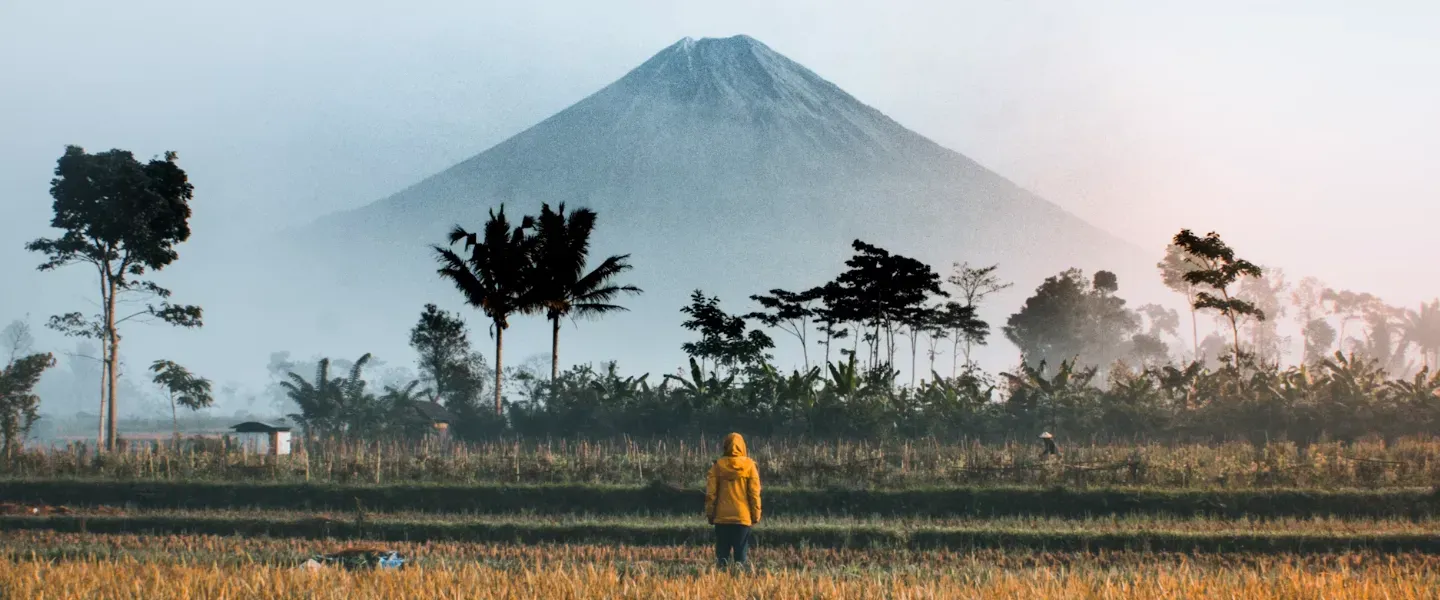
Indonesia sits on the Pacific Ring of Fire, with around 130 active volcanoes and frequent earthquakes. It sounds alarming, but these rarely affect a normal trip, and the country has real warning systems. The basics are enough.
- Earthquakes are frequent, serious damage is rare. Most are small. In a strong one, drop, cover and hold on, then follow your accommodation's staff and instructions.
- Volcanoes mostly disrupt flights. Eruptions like Mount Lewotobi in Flores, very active through 2024 and 2025, close regional airports and cancel Bali and Labuan Bajo flights at short notice. Watch your flight status and the Magma Indonesia alerts, and stay outside any official exclusion zone.
- There is a tsunami warning system. Indonesia runs coastal sirens and alerts (InaTEWS), but they aren't foolproof. If you feel a strong earthquake near the coast, don't wait for a siren: move to higher ground.
Volcanic activity is far more likely to disrupt your travel than to put you in danger. If you're passing through eastern Indonesia, leave a day or two of flexibility before an international flight, and keep travel insurance that covers disruption.
Terrorism in Indonesia
It's a fair question given the history. Indonesia suffered serious terrorist attacks in the 2000s, most infamously the 2002 Bali bombings that killed more than 200 people, plus later attacks in Jakarta. Since then, the country's counter-terrorism forces have dismantled the networks responsible, the main group has disbanded, and attacks have become rare, with the last major incident years ago and security visibly stepped up at airports and larger venues.
The risk today is low, though as anywhere not zero, so check your government's Indonesia travel advisory for the current assessment.
Roads, scooters and ferries
Getting around is where the real physical risk lies, and two things dominate: the roads and the sea.
Scooters cause the most tourist injuries. Many travel insurers won't pay a scooter-crash claim without the correct motorcycle license and an International Driving Permit, so check your policy, wear a helmet on every ride, and don't learn to ride in Indonesian traffic.
- Treat ferries and fast boats with care. Indonesia runs on boats between islands, and overloading, rough seas and weak safety standards cause regular accidents. Use reputable operators, avoid obviously overloaded boats, check that life jackets exist, and don't sail in bad weather.
- The Bali-Lombok-Gili fast boats have a mixed record. Pick an established operator over the cheapest ticket, and skip crossings when the sea is rough.
- Domestic flights are the safest way to cover distance and generally fine on the major carriers. Expect delays and cancellations, especially around volcanic activity.
- Hire a car with a driver for long overland trips. It's cheap and far safer than driving yourself on unfamiliar, unpredictable roads.
Malaria, dengue and staying healthy
Health is where Indonesia differs most from a Bali-only trip. The big one is that malaria risk depends entirely on where you go.
Malaria is about the region. There's essentially no risk in Bali, the Gili Islands, Jakarta or most of Java, the main tourist areas. Risk is concentrated in eastern Indonesia and some rural parts of the country: it's year-round in Papua, West Papua, Maluku and East Nusa Tenggara (including Flores, Sumba and Komodo), and present in rural Sumatra, Sulawesi, Kalimantan and Lombok/Sumbawa. Heading to any of those? See a travel clinic about anti-malarials before you go.
- Use mosquito repellent everywhere. Dengue (spread by daytime mosquitoes) occurs nationwide year-round, including Bali and Jakarta, and there's no tablet for it, so cover up and use repellent.
- Don't drink the tap water. It isn't safe to drink anywhere in Indonesia. Stick to sealed bottled or filtered water, be cautious with ice at small venues, and expect the odd bout of Bali belly.
- Rabies is present. Carried mainly by dogs, notably in Bali, Flores and Sulawesi. Treat any bite or scratch as a rabies risk: wash it thoroughly and get post-exposure shots fast.
- Check your vaccinations. Ask a travel clinic about hepatitis A and typhoid, and about rabies and Japanese encephalitis for longer or rural trips. A yellow fever certificate is only required if you're arriving from a country with yellow fever. This is general information, not medical advice.
Alcohol and methanol poisoning
This one is rare but genuinely serious. Cheap, counterfeit or home-distilled spirits (local "arak") have at times been cut with methanol, a toxic alcohol that can cause blindness, organ failure and death. It has killed tourists, mostly in Bali and the Gili Islands. It's easy to avoid, because the risk sits almost entirely with the cheapest drinks.
Sticking to sealed, branded bottles from reputable bars and shops is almost all the protection you need. Be wary of suspiciously cheap cocktails, buckets, unlimited deals and unlabelled spirits, and do not count on spotting it by taste or smell, because you cannot. Methanol symptoms, a severe headache with blurred vision, nausea and confusion, can be delayed by hours, so if you suspect it, get to a hospital immediately.
Drugs, the law and the new criminal code
Indonesia enforces some of the strictest drug laws in the world. Trafficking carries the death penalty (foreigners have been executed), and even small amounts for personal use can mean years in prison. Do not buy, carry or accept illegal drugs under any circumstances, and be alert that anyone offering them may be setting you up.
- Indonesia's new criminal code. The revised code, in force from January 2026, criminalizes sex outside marriage and unmarried couples living together. In practice it's very unlikely to affect tourists: a case can only begin if a spouse, parent or child files a complaint, and hotels don't check marriage certificates. Worth knowing, not worth worrying about.
- Vaping is legal, cannabis is not. Don't confuse Indonesia with Thailand: cannabis and other recreational drugs remain completely illegal and are treated as serious narcotics.
- Respect local customs. Indonesia is the world's largest Muslim-majority country and mostly conservative outside Bali. Dress modestly away from the beach, and be mindful during Ramadan and, in Bali, Nyepi (the Day of Silence).
- Don't overstay your visa. Overstays are fined per day and, if they run long, can lead to detention, deportation and a re-entry ban.
Solo, female and LGBTQ travelers
Indonesia is a comfortable place to travel solo, with a huge, well-worn trail. Most solo female travelers report feeling safe, especially in Bali and the main tourist areas. Catcalling and persistent vendors are far more common than threatening behavior, though the usual precautions around nightlife and isolated areas still apply.
- Dress for the context. Bali and the beaches are relaxed, but Indonesia is largely conservative and Muslim-majority, so cover shoulders and knees in cities, villages and at religious sites.
- Use ride apps at night. Grab and Gojek beat walking unlit streets or haggling with taxis, and the route is tracked in-app.
- LGBTQ travelers: be discreet outside Bali. Same-sex relationships are legal in most of Indonesia (Aceh, under sharia law, is the exception and criminalizes them), but the country is socially conservative, there's no legal recognition, and public affection draws attention. Bali is generally the country's most accepting tourist destination; elsewhere, discretion is wise.
Rainy season, dry season and haze
Indonesia has two seasons, and each shifts the risks a little.
The rainy season (roughly October to April) brings flooding, worst in Jakarta, rougher seas that disrupt and endanger ferries, slippery roads and more mosquitoes, with the odd landslide on mountain roads. The dry season (roughly May to September) is the busy, sunny stretch, but in Sumatra and Kalimantan forest and peat fires can blanket whole regions in haze for weeks, hurting air quality and grounding flights. The main tourist islands usually stay clear either way.
Emergency numbers and getting help
Save these before you go. For anything serious, private hospitals in Bali, Jakarta and other major cities are the go-to for tourists and are used to dealing with travel insurers. Keep your insurer's emergency line and policy number in your phone too.
- Single emergency line112
- Police110
- Ambulance118 / 119
- Fire113
- Search & rescue (Basarnas)115
Numbers change and English-speaking operators aren't guaranteed, so having your accommodation call on your behalf is often faster. For advisories issued at country level, see the full Indonesia advisories.
Traveling soon?
Where to be careful, what things should cost, and what to skip. Once a week.
Frequently Asked Questions
-
Is Indonesia safe for tourists?
Yes, for the most part. Violent crime against tourists is uncommon and the main tourist islands are calm. The real risks are ordinary ones: scooter and ferry accidents, petty theft and scams, the occasional natural disaster, and stomach bugs. The one genuine no-go is the Papua highlands, which governments advise against and ordinary tourists never visit.
-
Is Indonesia dangerous?
Not for the average traveler. There's no meaningful risk of violent street crime in the tourist areas. The things most likely to hurt you are a scooter or a boat, by a wide margin. A few remote regions carry real government warnings, but the islands people actually visit are safe.
-
Is Indonesia safe right now?
Under normal conditions, yes. The genuinely changeable risks are volcanic activity, which can ground flights at short notice, and occasional unrest in specific regions. Before you fly, check your government's travel advisory for Indonesia and the Magma Indonesia volcano alerts for anything active on your route.
-
Is Indonesia safer than Thailand?
They're broadly comparable, and both are safe for tourists. Both share the same biggest risk, scooter accidents. One key legal difference matters: Thailand restricted cannabis to medical use with a prescription in mid-2025, and in Indonesia it is flatly illegal with severe penalties, so don't assume the rules carry over. People have been jailed here for cannabis bought in Thailand.
-
Is Indonesia safe for American tourists?
Yes. There's no specific risk to American travelers beyond the general caution that applies to everyone. The US State Department rates Indonesia Level 2 (exercise increased caution), the same broad advice it gives for many popular destinations, with a Do Not Travel notice only for the Papua highlands. Follow the advisory and you're fine.
-
Is Indonesia safe for solo female travelers?
Broadly yes, and it's one of the easier places in Asia to travel solo. Most solo female travelers report feeling safe, especially in Bali and the main tourist areas, where there's a big, well-worn traveler trail. Catcalling and persistent vendors are more common than threatening behavior. Dress modestly away from the beaches, since Indonesia is mostly conservative and Muslim-majority, use Grab or Gojek at night, and take the usual precautions around nightlife and isolated areas.
-
Do I need malaria tablets for Indonesia?
It depends entirely on where you go. There's essentially no malaria risk in Bali, the Gili Islands, Jakarta or most of Java, so no tablets are needed for a typical trip. Risk is real and year-round in Papua, Maluku and East Nusa Tenggara (Flores, Sumba, Komodo), and in rural Sumatra, Sulawesi and Kalimantan, where anti-malarials are recommended. Ask a travel clinic about your specific route.