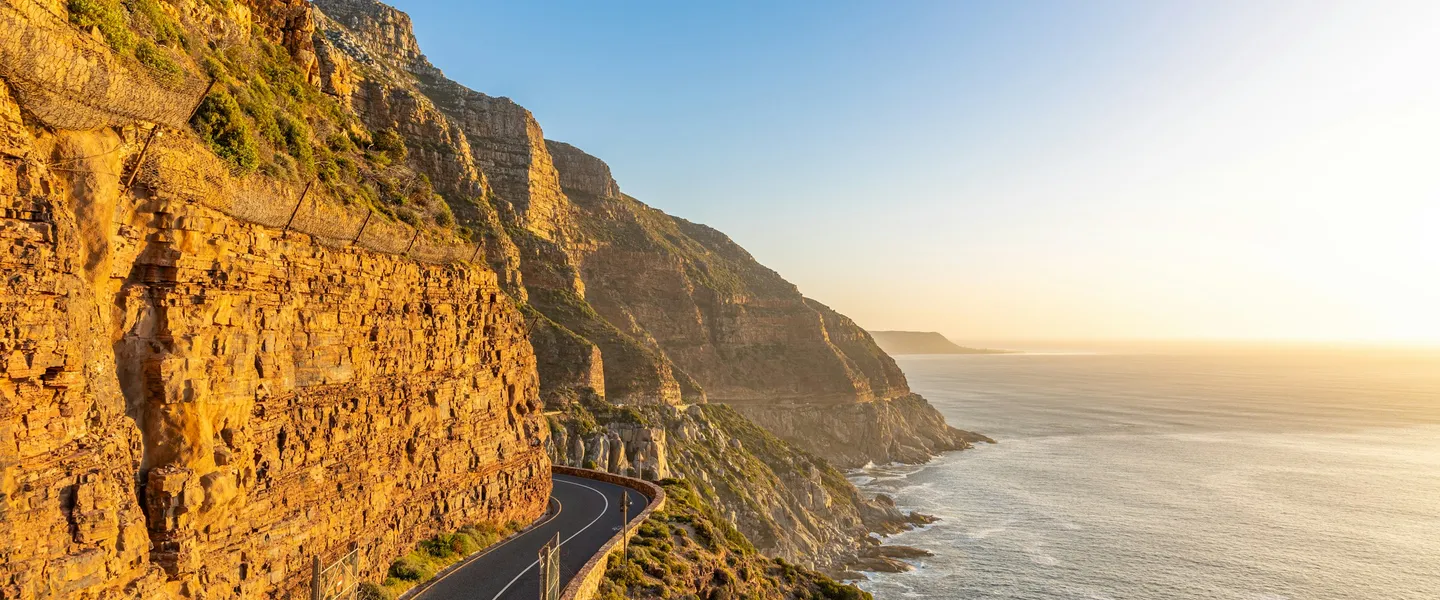
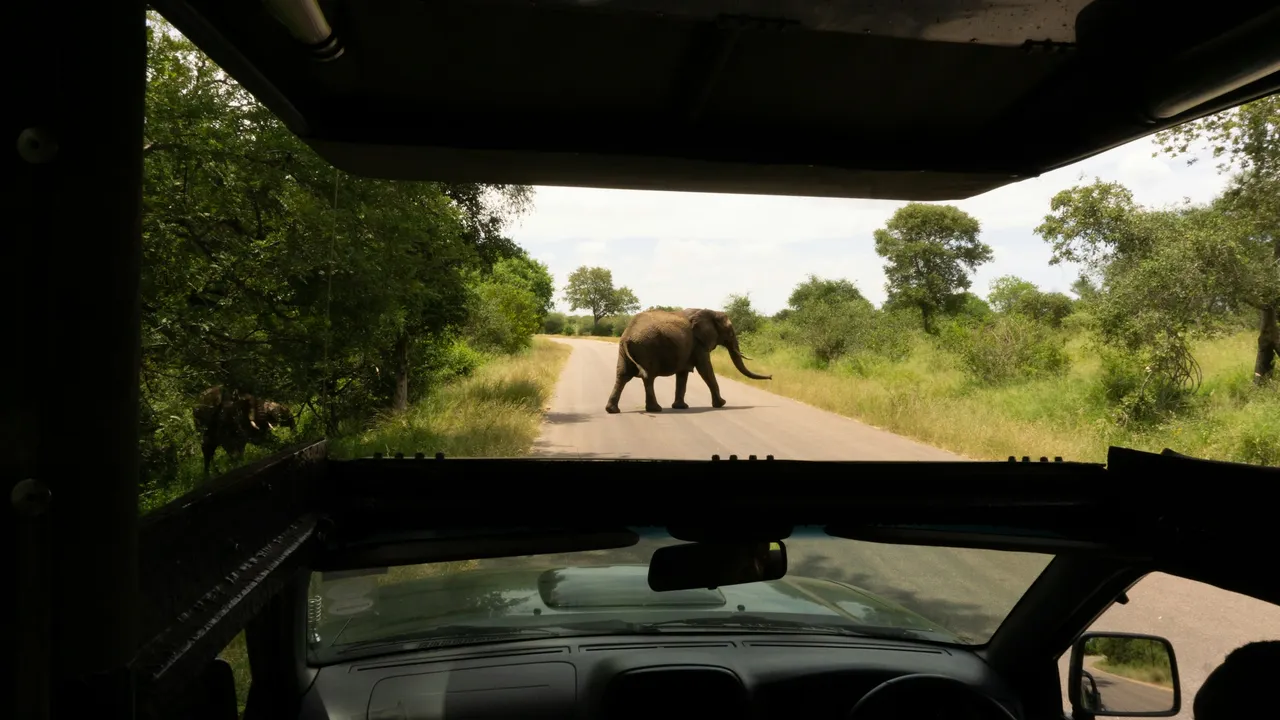
South Africa Right Now
Interest in travel to South Africa rose 31% from a year ago, suggesting demand is growing.
When to go to South Africa
April, May, September and October work across the whole country. Cape Town is best from November to March, when it is dry and warm, and gets most of its rain from May to August. Kruger is best from May to September, when the bush thins out and animals gather at water; December to February is hot, wet and in the malaria season.
Best monthsAvoid
| Region | Jan | Feb | Mar | Apr | May | Jun | Jul | Aug | Sep | Oct | Nov | Dec |
|---|---|---|---|---|---|---|---|---|---|---|---|---|
| Cape Town | Best month27°2 rainy days | Best month27°2 rainy days | Best month26°2 rainy days | Fine24°5 rainy days | Fine21°7 rainy days | Avoid18°10 rainy days | Avoid18°9 rainy days | Avoid18°9 rainy days | Fine20°7 rainy days | Fine22°4 rainy days | Best month24°4 rainy days | Best month26°3 rainy days |
| Johannesburg | Fine26°16 rainy days | Fine25°11 rainy days | Fine24°12 rainy days | Best month21°9 rainy days | Best month19°3 rainy days | Fine16°2 rainy days | Fine17°1 rainy days | Fine19°2 rainy days | Best month23°4 rainy days | Best month24°10 rainy days | Fine24°15 rainy days | Fine25°15 rainy days |
| Durban | Avoid28°15 rainy days | Avoid28°13 rainy days | Fine28°13 rainy days | Fine26°9 rainy days | Best month25°7 rainy days | Best month23°5 rainy days | Best month23°5 rainy days | Best month23°7 rainy days | Best month23°11 rainy days | Fine24°15 rainy days | Fine25°16 rainy days | Fine27°15 rainy days |
| Kruger | Avoid33°9 rainy days | Avoid32°9 rainy days | Fine31°9 rainy days | Fine29°6 rainy days | Best month28°3 rainy days | Best month26°2 rainy days | Best month26°2 rainy days | Best month27°2 rainy days | Best month29°3 rainy days | Fine30°7 rainy days | Fine31°10 rainy days | Avoid32°10 rainy days |
Each month shows the average daily high, and a weather icon with the number of rainy days.
Need to Know
- Population
- 63,522,380 Statistics South Africa · 2026 mid-year estimate
- International visitors
- 10,498,506 (2025) +17.7% YoY Statistics South Africa, Tourism reports (Report No. 03-51-02), tourists (overnight visitors) from all countries. 2019, 2024 and 2025 from the 2025 report, 2022 and 2023 from the 2023 report, 2020 and 2021 from the 2021 report. · Last updated: 2026
- Annual visitors per resident
- 0.17× Annual international visitors divided by the population
Top visitor markets
- Zimbabwe 22.0%
- Mozambique 19.8%
- Lesotho 13.3%
- Eswatini 9.1%
- Botswana 4.0%
Show fewer Show 5 more
- United Kingdom 3.8%
- United States 3.7%
- Germany 2.8%
- Malawi 2.2%
- Namibia 1.7%

Source: Statistics South Africa, Tourism 2025 (tourists by country of residence) · 2025
Annual visitor arrivals
- 2019 10,228,593
- 2020 2,802,320 COVID
- 2021 2,255,699 COVID
- 2022 5,698,062 COVID
- 2023 8,483,333
- 2024 8,919,370 +5.1%
- 2025 10,498,506 +17.7%
International visitor arrivals. COVID years (2020-2021) are included for completeness. Source: Statistics South Africa, Tourism reports (Report No. 03-51-02), tourists (overnight visitors) from all countries. 2019, 2024 and 2025 from the 2025 report, 2022 and 2023 from the 2023 report, 2020 and 2021 from the 2021 report. · Last updated: 2026
- Currency
- South African Rand (ZAR)
- Language
- 12 official languages, including Zulu, Xhosa, Afrikaans and English. English is used on signs, in hotels and in business across the country.
- Tap water
- Safe to drink in the main cities
- Time zone
- GMT+2 (SAST)
- Power plug
- Type M / N / C, 230V
- Dialing code
- +27
- Driving side
- Left
- Tipping
- Expected. 10% to 15% in restaurants, and a few rand for car guards and petrol attendants.
- Internet
- Good 4G and 5G in the cities and along the main highways, patchy in parts of Kruger and on remote mountain passes. Most guesthouses, cafes and malls have Wi-Fi.
- Emergency
- 10111 (Police), 10177 (Ambulance), 112 (Emergency from any mobile phone)
When not to go
-
Cape winter rain
Jun to Aug · wettest in JunCold fronts roll in from the Atlantic every few days, bringing rain on about a third of the days in Cape Town, gales and snow on the higher mountains inland. Highs sit around 18°C (64°F), many guesthouses have no central heating, and boat trips and the Table Mountain cableway close on stormy days. Whale watching starts in this season, and inland South Africa is dry and sunny, so it is a good time for Kruger and a poor one for the Cape.
Go here instead:
- Portugal Lisbon and the Algarve are dry and hot from June to August.
-
Summer holiday peak
Mid Dec to mid JanSouth African schools break for about a month over Christmas, and much of Gauteng drives to the coast. Cape Town, the Garden Route and the KwaZulu-Natal beaches are at their busiest, accommodation prices peak and the best places book out months ahead. Kruger limits day visitors at its gates over the festive season, and roads out of Johannesburg are jammed at the start and end of the holidays.
-
Hot, wet season in Kruger
Dec to Feb · malaria risk Nov to AprDaytime highs in Kruger reach about 33°C (91°F), afternoon storms are common and the bush grows thick, so animals are harder to spot and spread out away from the rivers. This is also when malaria risk is highest. In return the bush is green and many antelope give birth. Lodges are also cheaper outside the holiday weeks. If you want reliable game viewing, go between May and September.
Upcoming Holidays
Public holidays & observances, next 12 months
South Africa Visa & Entry
- Visa type
- Visa-free entry for US, UK, Canadian, Australian and most EU passports. There is nothing to apply for before you fly.
- Length of stay
- 90 days for US, UK, Canadian, Australian and most EU passports. The Home Affairs list gives Polish and Cypriot passports 30 days.
- Extension
- A visa-free stay can be extended once, by up to 90 days, through a VFS Global center in South Africa. Apply well before your permitted stay runs out.
- Passport validity
- Valid for at least 30 days after you leave, with at least two blank pages.
- Onward ticket
- Officers can ask for a return or onward ticket, so have one booked.
- Tourist tax
- None. National parks charge foreign visitors a daily conservation fee; in Kruger it is more than four times the rate South Africans pay.
- Eligible nationalities
- The US, UK, Canada, Australia, New Zealand, Japan and almost all EU countries are visa-exempt. South Africa's new ETA (Electronic Travel Authorisation) launched first for China, India, Indonesia and Mexico. Visa-exempt visitors do not need one.
- Entry process
-
Immigration and entry process
Since July 2026, every traveler has to complete the free SARS Customs Online Traveller Declaration in the 24 hours before the last flight to South Africa. Anyone who arrives without it is sent to a kiosk at the airport to fill it in.
Immigration stamps your passport with the date your stay ends, so check it before you leave the desk. If you are arriving from a country with yellow fever risk, bring your vaccination certificate. Children on foreign passports no longer have to show a birth certificate as standard, but carrying a copy saves trouble.
Source: Department of Home Affairs: countries exempt from South African visas
Getting To South Africa
-
From OR Tambo International (JNB)
Johannesburg's airport, about 25 km east of Sandton, and the main hub for flights from Europe, the Gulf and the rest of Africa
Most long-haul flights land here, and most domestic connections to Cape Town, Durban and the Kruger airports leave from here. The Gautrain airport line runs to Sandton in about 15 minutes, with connections to Rosebank, Park Station and Pretoria. You pay with a Gautrain card bought at the station. Criminals have followed travelers from this airport to rob them at their destination, so use the train, a booked transfer or Uber and keep valuables out of sight.
-
From Cape Town International (CPT)
About 20 km east of the city center, 20 to 30 minutes by car
Cape Town has direct flights from Europe, the Gulf and several African cities. The MyCiTi airport bus has been suspended since December 2022, so the options are ride-hailing, a metered taxi, a hotel transfer or a rental car. The N2 into the city passes informal settlements, so keep car windows up and bags out of sight.
-
From King Shaka International (DUR)
About 35 km north of central Durban, close to Umhlanga and Ballito
King Shaka has frequent domestic flights and a few international routes. There is no train, so most visitors take a shuttle, Uber or a rental car. Umhlanga, where many visitors stay, is closer to the airport than central Durban.
Safety Advice
Crime is the main risk, and violent crime is far more common than in Europe or North America, though most of it happens in townships and informal settlements. For visitors the risks are smash-and-grab theft at traffic lights, muggings on quiet streets and trails, and ATM scams. Plan routes, keep valuables out of sight and use Uber or Bolt after dark.
Travel Advisories
Natural disasters
- Heavy rainfall frequently causes widespread flooding throughout the year.
- Wildfires occur in urban and rural areas, particularly around Cape Town during hot and dry weather.
Health & vaccinations
Rabies is present in seals along the Cape Peninsula coastline, so seek immediate medical care if bitten.
Unrest & security
- Violent crime is common, including armed robberies, carjackings, and smash-and-grab attacks on vehicles.
- Express kidnappings target foreigners for cash withdrawals, and protests frequently turn violent without warning.
- Avoid Numbi gate when visiting Kruger National Park due to previous violent attacks and protests.
- Hikers face muggings in Table Mountain National Park, so stick to busy trails in groups of four or more.
Transport & infrastructure
- Carjackers use staged roadblocks, fake police blue lights, and thrown objects to force vehicles to stop.
- Avoid using minibus taxis and public trains due to high rates of crime and unreliable service.
- Frequent power outages disable traffic lights, security systems, and public lighting, increasing crime risks.
Other notes
- Drug trafficking carries severe prison sentences and heavy fines, and airport security uses advanced screening technology.
- Carry a copy of your passport photo page and visitor permit, but keep your actual passport locked in a hotel safe.
Always check your own government's official travel advice before traveling.
Money & Payments
Cards work in almost every shop, restaurant and petrol station. Carry small notes for car guards and tips, and use bank ATMs inside malls.
-
Cards work almost everywhere
Visa and Mastercard are taken in supermarkets, restaurants, hotels and petrol stations, and tap-to-pay is normal. Keep some R10 and R20 notes for car guards, petrol attendants, tips and craft markets. Every petrol station is full service, and you pay the attendant at the pump.
-
Use bank ATMs inside malls
South African banks charge foreign cards an ATM fee, usually around R50 to R80 per withdrawal depending on the bank, and your own bank may add its own fee. Use machines inside malls or bank branches in daytime, cover your PIN, and turn down anyone who offers to help you at the machine. Card skimming and distraction scams at ATMs are common.
-
Always pay in rand
When a card machine or ATM offers to charge you in your home currency, decline and pay in rand. The home-currency option uses a worse exchange rate.
-
VAT refund on shopping
Foreign visitors can reclaim the 15% VAT on goods taken out of the country when their purchases add up to more than R250. Keep the tax invoices, export the goods within 90 days, and show them to the VAT Refund Administrator before check-in. It has desks at OR Tambo, Cape Town and King Shaka airports. Services such as hotels and tours do not qualify.
Costs in South Africa
Eating out, wine, car hire and guesthouses are good value for anyone paid in dollars, pounds or euros. Flights in, private game lodges and Cape Town over December and January are expensive.
Groceries and fuel
Send money to South Africa
Compare Providers









Save money?
Sign up for our guide on how to save money on your next trip.
SIM Cards & Data
Best option for most travelers: an eSIM you set up before you arrive. You'll be online the moment you land, with no airport line and no tourist pricing.
Travel eSIMs Connect the second you land. Zero hassle. Skip the airport line and paperwork. Activate before you fly and land connected. Find the best eSIM →Prefer a local SIM?
4G and 5G cover the cities, the main highways and the Garden Route. Signal is patchy in parts of Kruger and on remote passes. Every SIM must be registered under RICA (South Africa's SIM registration law), which needs your passport and the address where you are staying; the carrier stores at the three main airports do it on the spot. Travel eSIMs bought before you fly skip RICA but give you no local number. Prices below are for visitor bundles and change often.
-
Vodacom
Largest network
Vodacom's travel bundles for visitors include calls, texts and airtime as well as data, and are sold at its airport stores. It is the default pick if you are driving into rural areas and the national parks.
30-day travel bundle with 3 GB: R299, 10 GB: R699
-
MTN
Second-largest network
MTN's Traveller bundles are data only and are sold only at its stores in the OR Tambo, Cape Town and King Shaka airports. Its coverage in the cities and along the main routes is as good as Vodacom's.
30-day Traveller bundle with 10 GB: R499, 20 GB: R699
-
Telkom
Third network
Telkom is the former state telephone company and sells prepaid SIMs in its own stores and at supermarkets. It has no bundle for visitors and its coverage outside the cities is thinner, so it suits a long city stay more than a road trip.
No visitor bundle; regular prepaid data
Liveability
Daily life is built around the car. Many suburban houses have high walls, an electric gate and an alarm linked to a private security company, and some areas still lose water or power for hours at a time.
Sustainability
Cape Town came close to running out of municipal water in the 2018 drought, and parts of Gauteng still have regular water outages. Most power comes from coal, though many homes added rooftop solar during the years of rolling blackouts.
Frequently Asked Questions
Planning & moving around
-
How long should I spend in South Africa?
Ten days to two weeks covers Cape Town, the Winelands and three or four nights in or around Kruger. With three weeks, add the Garden Route drive along the south coast or the Drakensberg mountains. Distances are long: Johannesburg to Cape Town is about 1,400 km by road, so most visitors fly between regions.
-
Do I need a visa or ETA to visit South Africa?
Not with a US, UK, Canadian, Australian or most EU passport. You get up to 90 days on arrival, free. South Africa's ETA is for nationalities that need a visa, and it is optional for visa-exempt visitors. Your passport needs at least 30 days of validity after you leave and two blank pages.
-
What are the most used ride-hailing apps in South Africa?
Uber and Bolt both work in Cape Town, Johannesburg, Pretoria and Durban, and most locals use them instead of hailing a taxi. Prices are low by European standards. Check the number plate and driver name before you get in. Minibus taxis (shared 15-seat vans that carry most public-transport commuters) are cheap but run without timetables or fixed stops, so they are hard to use without local knowledge.
-
Is load shedding still a problem in South Africa?
Much less than it was. Load shedding, the rotating national blackouts, has not been used since April 2025. Some areas of Gauteng and KwaZulu-Natal still have scheduled local cuts at peak times, and unplanned outages happen. Most hotels and guesthouses have backup power, but ask before you book.
-
Do I need malaria pills for Kruger?
Ask a travel doctor. Kruger is in a malaria area, though SANParks says the risk is usually low, and highest between November and April. Cape Town, the Garden Route, Johannesburg and Durban have no malaria. If you are traveling with young children or are pregnant, Madikwe, Pilanesberg and the Eastern Cape reserves are malaria-free alternatives.
-
Is South Africa a good place to retire?
It can be, if you budget for security and private health cover. The retired person visa needs an income of at least R37,000 a month from a pension, annuity or investments, lasts up to four years and can be renewed, and retirees who meet the same income test can apply separately for permanent residence. Tax residents are taxed on worldwide income, but a foreign pension paid for work done outside South Africa is exempt. Private hospitals are good and you will need private medical cover. Living costs are lower than in Western Europe, but plan around crime and security costs.
Safety & medical
-
Is South Africa safe for travelers?
It gets millions of visitors a year, but violent crime means it needs more care than Europe or North America. Violent crime is high, though most of it happens in townships and informal settlements. The risks for visitors are smash-and-grab theft from cars at traffic lights, muggings on quiet streets and some hiking trails in Cape Town, and scams at ATMs. Keep bags out of sight in the car, use Uber or Bolt at night, hike in a group, and visit townships with a local guide. Game reserves, wine farms and the main tourist areas are far calmer.
-
What numbers do I call in an emergency in South Africa?
Dial 10111 for the police and 10177 for an ambulance. From a mobile phone, 112 reaches your network's emergency center, which puts you through to the right service. If you have travel insurance, keep its emergency number saved too.
Money & costs
-
Do you tip in South Africa?
Yes. Leave 10% to 15% in restaurants, unless a service charge is already on the bill. Car guards (people who watch parked cars for tips) and petrol attendants expect a few rand. Safari rangers and trackers are usually tipped at the end of a stay, and lodges often suggest an amount.
-
Is South Africa expensive?
Not for most visitors from Europe, North America or Australia. Restaurant meals, wine, car hire and guesthouses cost less than in Western Europe. The expensive parts are the flights in, private game lodges and Cape Town over the Christmas holidays. The Costs in South Africa section on this page lists each price with its source.
Culture & etiquette
-
Do I need to speak Afrikaans or Zulu?
No. English is spoken in hotels, shops and restaurants across the country, and road signs are in English. People appreciate a greeting in their language: "sawubona" (hello in Zulu) in KwaZulu-Natal and Gauteng, or "dankie" (thank you in Afrikaans) in the Western Cape countryside.
Families & kids
-
Is South Africa good for kids?
Yes, with some planning. Self-drive safaris, the penguins at Boulders Beach and the beaches of the Garden Route work well for children. Many private game lodges set a minimum age for game drives, so check before you book. For young children, a malaria-free reserve is the easier choice.