Costa Rica Right Now
Interest in travel to Costa Rica remained about the same as a year ago, suggesting demand is holding steady.
When to go to Costa Rica
December to April is the dry season in San José and on the Pacific coast, and the best time for most trips. September and October are the wettest months there, with flooded rivers and closed roads. The Caribbean coast gets rain all year, with drier spells in February, March, September and October.
Best monthsAvoid
| Region | Jan | Feb | Mar | Apr | May | Jun | Jul | Aug | Sep | Oct | Nov | Dec |
|---|---|---|---|---|---|---|---|---|---|---|---|---|
| San José | Best month29°1 rainy days | Best month30°1 rainy days | Best month31°2 rainy days | Best month32°7 rainy days | Fine31°17 rainy days | Fine30°18 rainy days | Fine30°14 rainy days | Fine30°16 rainy days | Avoid30°22 rainy days | Avoid29°19 rainy days | Fine29°12 rainy days | Best month29°4 rainy days |
| Liberia | Best month35°0 rainy days | Best month36°0 rainy days | Best month37°0 rainy days | Fine38°2 rainy days | Fine37°11 rainy days | Fine35°14 rainy days | Fine35°10 rainy days | Fine35°12 rainy days | Avoid34°19 rainy days | Avoid34°17 rainy days | Fine33°7 rainy days | Best month34°2 rainy days |
| Quepos | Best month31°4 rainy days | Best month32°2 rainy days | Best month32°4 rainy days | Fine32°11 rainy days | Fine31°18 rainy days | Fine31°19 rainy days | Fine31°19 rainy days | Fine30°20 rainy days | Avoid30°21 rainy days | Avoid30°22 rainy days | Fine30°17 rainy days | Best month31°9 rainy days |
| Limón | Fine31°17 rainy days | Best month31°14 rainy days | Best month31°14 rainy days | Fine32°14 rainy days | Fine32°16 rainy days | Fine32°17 rainy days | Avoid32°21 rainy days | Fine32°16 rainy days | Best month33°11 rainy days | Best month33°12 rainy days | Avoid32°18 rainy days | Avoid31°18 rainy days |
Each month shows the average daily high, and a weather icon with the number of rainy days.
Need to Know
- Population
- 5,217,295 INEC (National Institute of Statistics and Census) · 2026 projection
- International visitors
- 2,943,991 (2025) +0.8% YoY ICT (Costa Rican Tourism Institute), international arrivals by all ports (air, land and sea), from DGME (immigration) records. Counts overnight visitors by nationality. Leaves out cruise passengers, foreign residents, Costa Ricans and crews. · Last updated: 2026
- Annual visitors per resident
- 0.56× Annual international visitors divided by the population
Top visitor markets
- United States 55.3%
- Canada 9.3%
- Mexico 3.3%
- Nicaragua 3.3%
- Germany 2.8%



Show fewer Show 5 more
- France 2.4%
- United Kingdom 2.4%
- Spain 2.0%
- Panama 1.6%
- Guatemala 1.6%



Source: ICT (Costa Rican Tourism Institute): international arrivals by nationality, all ports of entry, from DGME migration records · 2025
Annual visitor arrivals
- 2019 3,139,008
- 2020 1,011,912 COVID
- 2021 1,347,055 COVID
- 2022 2,349,537 COVID
- 2023 2,751,134
- 2024 2,919,483 +6.1%
- 2025 2,943,991 +0.8%
International visitor arrivals. COVID years (2020-2021) are included for completeness. Source: ICT (Costa Rican Tourism Institute), international arrivals by all ports (air, land and sea), from DGME (immigration) records. Counts overnight visitors by nationality. Leaves out cruise passengers, foreign residents, Costa Ricans and crews. · Last updated: 2026
- Currency
- Costa Rican Colón (CRC)
- Language
- Spanish. English is common in hotels, tour companies and beach towns, less so in rural areas.
- Tap water
- Safe in most towns, check in remote areas
- Time zone
- GMT-6 (CST). No daylight saving time.
- Power plug
- Type A / B, 120V
- Dialing code
- +506
- Driving side
- Right
- Tipping
- Restaurant bills include a 10% service charge by law, so no extra tip is needed. Tour guides and drivers are usually tipped.
- Internet
- 4G covers the towns and main roads. Signal drops in deep valleys and remote national parks. Fiber Wi-Fi is common in hotels and cafes in towns.
- Emergency
- 911 (Police, ambulance and fire)
When not to go
-
The wettest months on the Pacific side
Sep to Oct · rain most daysSeptember and October are the wettest months in San José, Guanacaste and around Manuel Antonio. Rain often starts in the afternoon and lasts into the night. Rivers flood, and landslides can close mountain roads for hours. The Caribbean coast is in one of its drier spells at the same time, so go there instead.
Go here instead:
- Portugal Lisbon and the Algarve are warm and mostly dry in September.
-
Holy Week and the Christmas holidays
Week before Easter (March or April) · late Dec to early JanCosta Ricans head to the beach in Holy Week, the week before Easter, and again between Christmas and New Year. Beach hotels sell out weeks ahead, and traffic is heavy on the roads to Guanacaste and the central Pacific. Holy Thursday and Good Friday are public holidays, so banks and many offices close. Book early, or plan these weeks in the mountains.
-
The Caribbean coast in its wet months
Nov to Jan, and JulThe Caribbean coast has two wet seasons. Cold fronts from the north bring heavy rain from November to January, and a second peak comes in July. In Limón, July and December are the wettest months. Floods can close roads in Limón province for a day or more. In these months, the Pacific side is drier.
Go here instead:
- Mexico Cancún and Mérida are mostly dry from December to April.
Upcoming Holidays
Public holidays & observances, next 12 months
Costa Rica Visa & Entry
- Visa type
- No visa needed for US, UK, Canadian, Australian and EU passports. Immigration stamps your passport on arrival.
- Length of stay
- Up to 180 days. The officer decides how many and writes the number on your entry stamp, so check it before you leave the desk.
- Extension
- The 180-day stay cannot be extended. If the officer gives you fewer than 90 days, you can ask Migración (the immigration service) for one extension of up to 90 days.
- Passport validity
- For first-group passports, valid for at least one day after you leave.
- Onward ticket
- You need a ticket out of the country, by air or by bus, within your permitted stay. Airlines often check it before you board. Officers can also ask for proof of at least USD 100 for each month of your stay.
- Tourist tax
- A USD 29 departure tax when you fly out, normally included in the ticket price. If it is not, pay at the airport by cash or card.
- Eligible nationalities
- The first group of visa-free countries includes the US, Canada, the UK, Australia, New Zealand and every EU country. Japan, South Korea, Mexico, Argentina, Brazil and Chile are in it too.
- Entry process
-
Immigration and entry process
There is no visa or online form to fill in before you fly. At the airport, the officer checks your passport and onward ticket and stamps the number of days you get.
Overstaying costs USD 100 for each month over, and you can be refused entry next time. Carry a copy of your passport photo page and entry stamp, because police can ask for ID. Declare cash or goods worth USD 10,000 or more when you arrive.
Getting To Costa Rica
-
From Juan Santamaría International (SJO)
In Alajuela, about 20 km northwest of central San José, 30 to 60 minutes by road
Most long-haul flights land here, and so do domestic flights on Sansa. There is no train to the airport. Many visitors pick up a rental car or a booked shuttle here and skip San José.
-
From Daniel Oduber Quirós International (LIR)
In Guanacaste, about 10 km west of Liberia, the airport for the northern Pacific beaches
Liberia has direct flights from the US and Canada. Tamarindo is about 1 h 15 min away by road. From San José it takes four hours or more, so fly into Liberia if you are going straight to the coast.
-
To the Caribbean coast
No international flights, so most visitors come by road from San José
Limón has a small airport, but almost all visitors reach the Caribbean by road. Public buses to Limón and Puerto Viejo leave from San José. Tortuguero has no road access: you take a bus or shuttle to the river docks, then a boat.
Safety Advice
Petty theft is the most common crime against visitors. Thieves target rental cars and bags left on the beach. Gang violence has grown in some urban areas, including places visitors go. In recent years, 50 to 60 people a year have drowned, many in rip currents, and many beaches have no lifeguard.
Travel Advisories
Natural disasters
- Expect frequent small tremors and occasional major earthquakes, though local infrastructure handles them well.
- Monitor active volcanoes including Poas, and avoid volcanic areas during heavy rainfall due to lava flow risks.
- Heavy seasonal rains from June to November cause flooding and landslides that block roads.
Health & vaccinations
- Avoid cheap local spirits and mixed drinks because criminal gangs manufacture them with fatal methanol.
- Watch for strong rip currents and crocodile populations while swimming, as drowning and attacks occur.
- Bring a properly fitted face mask if you have respiratory conditions, as volcanic ash plumes reduce air quality.
Unrest & security
- Secure your belongings and ignore strangers offering help with slashed tires or staged collisions, as these are robbery setups.
- Avoid walking alone at night and keep track of your drinks in bars to prevent assault and theft.
- Do not traffic or possess illegal drugs of any kind, because minimum prison sentences start at eight years.
Transport & infrastructure
- Drive defensively against aggressive local drivers, and leave your vehicle in place after an injury crash until traffic police arrive.
- Use only official red or orange metered taxis to avoid scams.
- Book adventure tours and small boats only through established companies with experienced staff.
Other notes
Carry your original passport or a printed copy with you at all times for police checks.
Always check your own government's official travel advice before traveling.
Money & Payments
Cards work in most places, and US dollars are taken for hotels and tours. Keep some colones for buses, sodas and small shops.
-
Cards work in most places
Visa and Mastercard are taken in hotels, supermarkets, tour companies and most restaurants, and contactless payment is common. Market stalls, small sodas (family-run diners) and many buses take cash only.
-
Dollars are accepted, change comes in colones
Hotels, tour companies and national parks quote prices in US dollars, and most shops take dollar bills. Change usually comes back in colones, at the shop's own exchange rate. Paying in colones avoids that rate.
-
ATMs give colones or dollars
Bank ATMs from BAC, Banco Nacional and BCR take foreign cards, and many let you choose colones or US dollars. Check the screen for the machine's fee before you confirm. Your own bank may charge a fee too.
-
Pay in colones on card machines
When a card machine or ATM offers to charge you in your home currency, decline and pay in colones. The home-currency option uses a worse exchange rate.
-
Check whether prices include tax
Some restaurant menus list prices before the 13% VAT and the 10% service charge. Together they add 23% to those prices. A price marked i.v.i. (impuestos incluidos, taxes included) already includes them. There is no VAT refund for visitors.
Costs in Costa Rica
Hotels, tours, park tickets and rental cars are priced in US dollars, and they add up quickly. A meal at a soda (a small family-run diner) and a public bus cost far less.
Groceries and fuel
Send money to Costa Rica

Compare Providers









Save money?
Sign up for our guide on how to save money on your next trip.
SIM Cards & Data
Best option for most travelers: an eSIM you set up before you arrive. You'll be online the moment you land, with no airport line and no tourist pricing.
Travel eSIMs Connect the second you land. Zero hassle. Skip the airport line and paperwork. Activate before you fly and land connected. Find the best eSIM →Prefer a local SIM?
4G covers the towns and main roads. Signal drops in deep valleys and remote national parks. You need your passport to buy and register a prepaid SIM. Prices below are for prepaid plans and change often.
-
Kolbi
State-owned network
Kolbi belongs to ICE, the state power and telecom company. Its SIM Turista, sold in Kolbi stores, includes 100 minutes of local calls, 30 texts and 5 GB of data for social apps. Regular prepaid packages start at CRC 2,000 for 7 days and 4 GB.
SIM Turista: CRC 12,095 including tax
-
Liberty
Most mobile lines
Liberty, formerly Movistar, is one of the three main networks. The Ultra plan renews by itself every 30 days, so cancel it or let the balance run out.
Prepago Ultra, 30 days, 5 GB: CRC 5,000
-
Claro
Smallest network
Claro covers San José and the main towns. Before a trip to a remote park, check that park on the coverage map of SUTEL, the telecom regulator.
Prepaid SIM and data packages sold in Claro stores
Liveability
Fiber internet is common in towns, and cards work in most shops and restaurants. Roads are slow: many are narrow, steep and unlit, and heavy rain can close mountain routes for hours.
Sustainability
In most years, almost all of the electricity comes from renewable sources, mainly hydropower. A drought in 2024 cut the share to 86%, and it rose to 98.6% in 2025. About a quarter of the land is protected as parks and reserves.
Frequently Asked Questions
Planning & moving around
-
How long should I spend in Costa Rica?
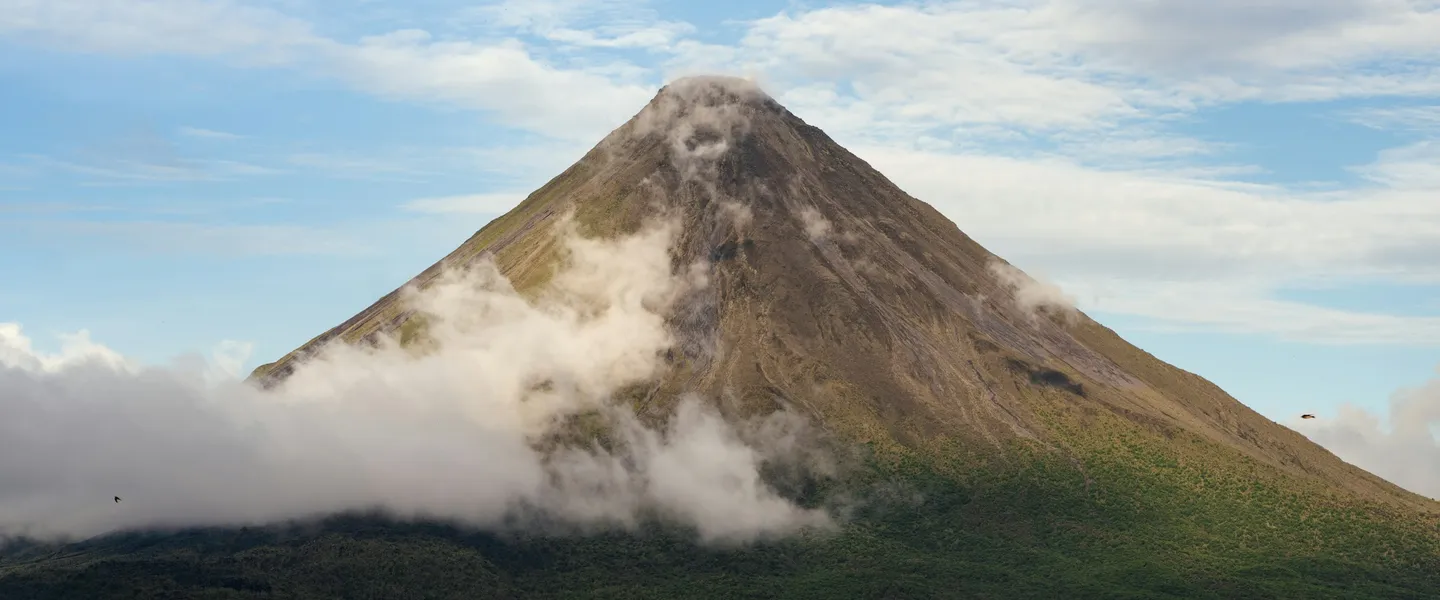
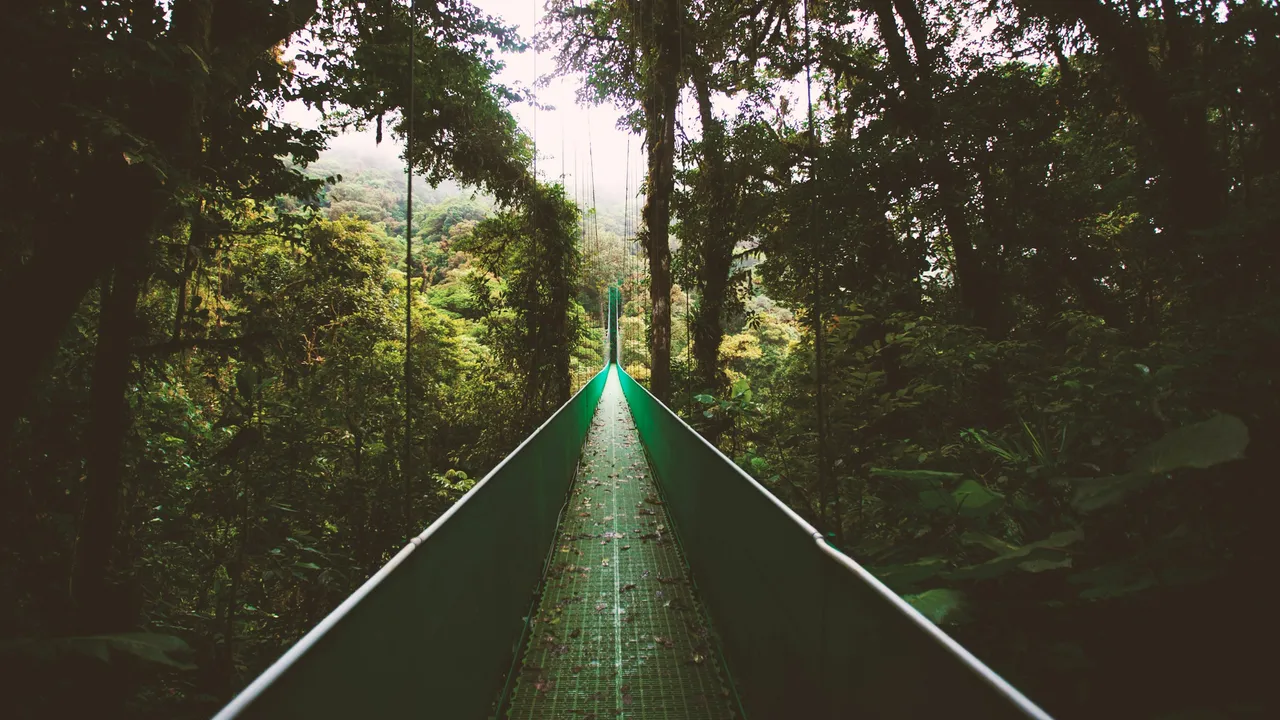
Ten days covers three areas: Arenal for the volcano and hot springs, Monteverde for the cloud forest, and one Pacific beach. With two weeks, add the Caribbean coast or the Osa Peninsula. Allow most of a day for each drive between regions.
-
How long can I stay in Costa Rica as a tourist?
Up to 180 days on a US, UK, Canadian, Australian or EU passport. The officer writes the number of days on your entry stamp, and it can be fewer. You also need a ticket out of the country within that time.
-
What are the most used ride-hailing apps in Costa Rica?
Uber and DiDi, with InDrive as a third option. All three work in San José, the Central Valley and some beach towns. Licensed taxis are red, with a yellow triangle on the door, and the driver must use the meter, called la maría.
-
Do I need a 4x4 in Costa Rica?
Not for the main routes. The roads to Arenal, Manuel Antonio and the big Guanacaste beaches are paved. Some dirt roads on the Osa and Nicoya peninsulas need one, especially in the rainy season, when rivers can cover the road. Never drive into a flooded river.
Safety & medical
-
Is Costa Rica safe for travelers?
Yes. Petty theft is the most common problem. Thieves target rental cars and bags left on the beach, so leave nothing in the car. Shootings linked to gangs have become more common in some cities, so ask your hotel which streets to avoid at night. In the sea, watch for rip currents: in recent years about a third of the people who drowned were tourists.
-
What numbers do I call in an emergency in Costa Rica?
Dial 911 for the police, an ambulance or the fire service. You do not need a Costa Rican SIM to call it. After a crash in a rental car, call 911 and the insurance line of your rental company. Leave the car where it is until the police tell you it can be moved.
Money & costs
-
Do you tip in Costa Rica?
Not in restaurants. The bill already includes a 10% service charge by law, so anything extra is optional. Tour guides, drivers and hotel staff are often tipped.
-
Is Costa Rica expensive?
Yes. Hotels, tours and rental cars cost more than in Mexico or Guatemala, and most tours and park tickets are priced in US dollars. Eating at sodas (small family-run diners) and taking buses keeps costs down. The Costs in Costa Rica section on this page lists each price with its source.
-
Is Costa Rica a good place to retire?
Yes. The pensionado residence needs a lifetime pension of at least USD 1,000 a month. Costa Rica taxes only income earned in the country, so a foreign pension is not taxed here. Residents must join the CCSS (the Caja), the public health system, and pay a monthly fee based on their income.
Culture & etiquette
-
Do I need to speak Spanish?
No. Hotels, tour companies and restaurants in tourist areas use English. A few words of Spanish help on buses and in rural areas. You will hear pura vida (the local catchphrase, roughly "all good") used for hello, goodbye and thanks.
Families & kids
-
Is Costa Rica good for kids?
Yes. Some parks have short, flat trails where children can look for sloths and monkeys. Plan shorter drives between stops, because mountain roads are slow and winding. On the beach, swim near other people, since rip currents are common.