
Japan at a glance
- Tax system
How a country decides what it can tax you on. "Worldwide" means income you earn anywhere; "territorial" means only income earned inside the country; "remittance basis" means only the foreign income you actually bring into the country.
- Remittance basis
- Foreign income
- Only if remitted
- Top income-tax rate
- 45%
- Tax residency
- Japan looks at where you actually live, not a day count: keep a home here or stay a year or more and you are a resident. For your first 5 years as a foreigner (a non-permanent resident) only Japan-source income and foreign income you bring into Japan is taxed. After 5 years of the last 10, worldwide income is taxed.
- Capital gains
The profit you make when you sell something for more than you paid, like shares or property.
- Listed shares and funds about 20.315%; property 20.315% if held over 5 years, about 39.63% if sold sooner
- Dividends
- About 20.315% on listed shares (or elect the graduated rates with a credit)
- Crypto
- Taxed as miscellaneous income at the progressive rates, so up to about 55%. A move to a flat ~20% is proposed but not yet law
- Permanent residency
- Permanent Resident (eijūken), Normally 10 years; as little as 1-3 on the Highly Skilled Professional points track, or about a year married to a Japanese citizen
- Path to citizenship
- Ten years of continuous residence from April 2026 (raised from five), matching permanent residency, plus Japanese-language ability and good conduct
- Dual citizenship
Whether you can keep your current passport after becoming a citizen here. "Conditional" means it is limited or not guaranteed: allowed only in certain cases, or tolerated in practice but not written into law.
- No (you must give up your current citizenship)
- Foreign property
- Freehold allowed
- Reports to your home country (CRS)
Under the Common Reporting Standard, tax authorities in participating countries automatically share information about each other's residents' bank accounts.
- Yes
Income tax for residents
| Annual taxable income | Rate |
|---|---|
| Up to JPY 2M | 5% |
| JPY 2M to JPY 3.3M | 10% |
| JPY 3.3M to JPY 7M | 20% |
| JPY 7M to JPY 9M | 23% |
| JPY 9M to JPY 18M | 33% |
| JPY 18M to JPY 40M | 40% |
| Over JPY 40M | 45% |
These are the national rates. A local inhabitant tax of about 10% (billed on the previous year's income) and a 2.1% reconstruction surtax sit on top, so the real top rate is around 55%. Non-residents pay a flat 20.42% on Japan-source employment income.
Sources: tax · immigration
Japan tax calculator
Japan taxes residents on a progressive scale, and a flat local inhabitant tax of about 10% plus a 2.1% surtax sit on top of the national rates. This adds them together for a rough all-in figure. For your first five years, only Japan-source income and foreign income you bring into the country counts.
Money you earn from work or business done inside Japan. Income earned where you live is almost always taxable there, so it feeds the brackets in full.
Foreign income only counts once you bring it into Japan, so enter what you actually plan to remit. It joins the same brackets as local income, and a tax treaty with the source country can reduce or credit what you owe. Pensions in particular are often taxed differently under a treaty, so treat this as a rough figure.
A rough guide only. It adds the national income-tax brackets, a flat 10% local inhabitant tax and the 2.1% reconstruction surtax, after a basic deduction. It ignores the employment-income deduction (so tax on a salary is usually lower than shown), social insurance, dependent and other reliefs, and any tax treaty. For your first five years as a non-permanent resident, foreign income is taxed only when you bring it into Japan. Confirm your own numbers with a tax adviser.
Tax rates from PwC Worldwide Tax Summaries.
Sending money to Japan
Key money, a deposit and an agent's fee can add up to several months' rent before you have a Japanese account, and the yen's swings make timing matter.
A wire from home adds its own cost on top of whatever the yen is doing that week. Compare what each service pays in yen, and our guide to money in Japan goes deeper.
Cost of sending money to Japan

Compare Providers









What living in Japan is like
Japan scores near the top on the things that define daily life: it is exceptionally safe, clean, well connected and superb on healthcare and infrastructure. The drags are the cost of the big cities and how long it takes an outsider to feel settled. Each score is out of 100 and compared with the other countries on RoamFX; tap the info icon on any row for the reasoning.
Where foreigners live in Japan
Foreigners in Japan concentrate in the big cities, and where you land tends to follow whether you are here for work, study, a slower pace, or a place to ski and buy.
- Tokyo (Minato, Setagaya, Meguro) Professionals · wealthy expats · families
The gravity well, and priced like it: a family-sized flat in Hiroo or Azabu can cost more than ¥500,000 a month. Minato holds the embassies, the international schools and the money; Setagaya and Meguro trade some of the prestige for space, greenery and cafes.
- Yokohama Families · commuters
A genuine port city with the Minato Mirai waterfront and the country's biggest Chinatown, about half an hour by train from central Tokyo. Families take the extra space and the shorter commute.
- Osaka Professionals · food lovers
Rents commonly a third below Tokyo, and blunter and funnier with it. The food capital of the country, around Dotonbori and Kuromon market, and an easy base for Kyoto and Kobe.
- Kyoto Creatives · students
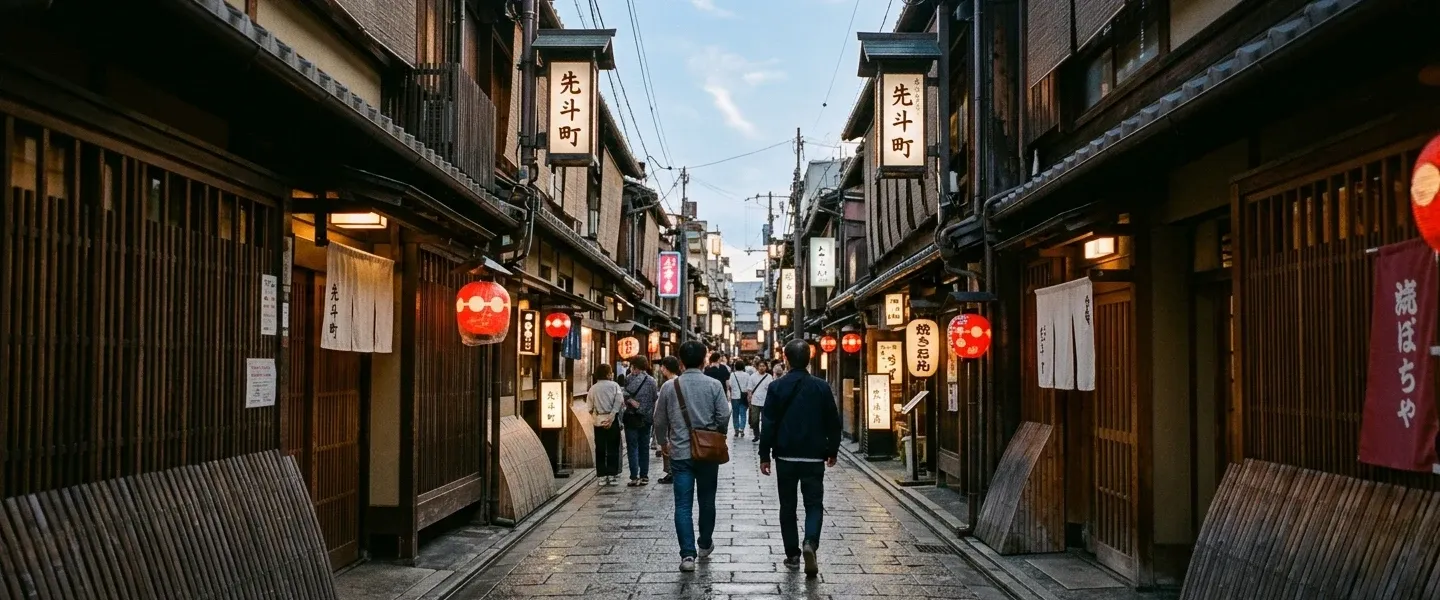
Old-capital calm, though the tourist-thronged center is not where people actually live: residents settle in the quieter northern and western wards. Housing is tight and the summers are punishing.
- Fukuoka Nomads · founders
The startup pick, built around Tenjin and Daimyo, with a city-run startup visa, low rents, and flights that reach Seoul faster than Tokyo. Young and walkable.
- Niseko (Hokkaido) Skiers · property buyers
Snow and foreign property money, first Australians and now a broader international crowd. The hottest freehold-property story in the country.
Is Japan right for you?
A good fit for
- People who value safety, healthcare and order, and will learn the language
- Skilled professionals, and entrepreneurs who will run a real business
- Buyers who want to own property freehold in Asia
Probably not for
- Retirees hoping to live on a pension: there is no retirement visa
- Anyone set on keeping dual citizenship for good
- People who need to get by in English alone
Before you move to Japan
The practical things people look up before a move.
- Healthcare
- Excellent, universal Residents must enroll in national health insurance or an employer scheme and pay about 30% of the bill, capped monthly. Premiums are income-based, so a working resident often pays a few tens of thousands of yen a month, split with an employer on the company scheme. Among the best value in the world.
- Banking
- Doable, bureaucratic early Far easier once you hold a residence card and My Number, which arrive within a week or two of moving, so a first account is realistic in your first month. Japan Post Bank and some online banks are the usual starters; the big banks can be stricter early, and a personal seal still helps.
- Driving
- Convert, sometimes by test Nationals of many countries convert a foreign license on a paper check; US, China and some others must pass a written and a practical test, and the practical is famously strict and often takes a few attempts. International permits are valid up to a year.
- Schooling
- Free local, costly international Local public schools are free but taught in Japanese; Tokyo and Yokohama international schools charge about ¥2 million to ¥3 million a year.
- Language
- English limited A real, persistent barrier. English gets you through a holiday, but housing, banking and government all lean on Japanese, and integration depends on learning it.
- Internet
- Fast and cheap Ubiquitous fibre, among the best connectivity anywhere.
- Electricity
- 100V, split frequency An unusually low 100V on type A and B plugs, and the grid runs at 50Hz in the east (Tokyo) and 60Hz in the west (Osaka), which matters for some appliances.
- Pets
- Strict, start early Dogs and cats need a microchip, two rabies shots, a blood-titer test and then a wait of up to 180 days, plus advance notice to quarantine. Start about seven months ahead or face quarantine on arrival.
- Mobile phone
- SIM easy, contract needs a card Cheap eSIMs and tourist SIMs on arrival; a full postpaid plan needs a residence card.
- Getting there
- Superb links Narita and Haneda in Tokyo, Kansai in Osaka and Chubu in Nagoya connect widely, with excellent domestic rail and air onward.
- Currency
- Yen, weak since 2022 The yen weakened sharply from 2022, a tailwind if you earn abroad and a headwind if you earn yen and spend overseas.
- Bringing your things
- Personal effects OK Used household goods come in duty- and tax-free as part of a move, if they arrive within about six months.
- Importing a car
- Rarely worth it Car duty is 0%, but meeting safety and emissions standards plus inspection usually makes buying locally the better call.
Common mistakes when moving to Japan
-
MythForeigners can't own property.
RealityThey can, freehold, with no residency or approval needed. Financing without residency is the real hurdle.
-
MythPermanent residency is basically citizenship.
RealityIt is not. PR lets you live and work freely, but you cannot vote, long absences can cost you it, and it is not a passport.
-
MythThe digital-nomad visa lets you settle.
RealityIt lasts six months, cannot be renewed, and gives you no residence status or path to staying.
-
MythJapanese inheritance tax won't touch my assets abroad.
RealityIt might. Permanent residency, a spouse visa or ten years here can pull your worldwide estate into a tax that reaches 55%.
-
MythYou can get by on English.
RealityFor a holiday, yes. For housing, banking and everyday admin, you will need Japanese.
Can you actually move to Japan?
Yes, and for working-age people it is more open than most of Asia, as long as you fit a route. Nearly all of them need a sponsor, a business or points on the board. We cover the detail in our Japan visa guide; the usual ways in are:
- Work visa, sponsored by an employer, for engineers, specialists, teachers and the like. The most common route.
- Highly Skilled Professional, a points-based visa that fast-tracks permanent residency to three years, or one year at the top tier.
- Business Manager visa, to run a company here. Since October 2025 it needs JPY 30 million in capital (up from 5 million), an employee, and business-level Japanese.
- Digital nomad visa, a six-month, non-renewable stay for remote workers earning at least JPY 10 million a year, from eligible countries. It does not lead to residence.
- Spouse of a Japanese national, work-unrestricted and the fastest family route toward permanent residency.
There is no retirement visa
Japan does not offer a retirement or passive-income visa, and there is no golden-visa route to buy your way to residency.
To retire here you have to qualify another way: a spouse visa, running a real business on a Business Manager visa (now JPY 30 million in capital), the skilled-professional track, or eventually permanent residency after years on one of those. Buying a house, which foreigners can do freely, comes with no right to live in the country.
The residency ladder: work visa to PR to citizenship
Most people start on a work visa tied to a specific job and employer, then build toward permanent residency. The standard wait is ten years, but the Highly Skilled Professional points system cuts it to three years, or one at the top tier; the spouse of a Japanese citizen can qualify after a year of residence, once the marriage has lasted three years. PR frees you from renewals and from being tied to a job, though you keep it with a re-entry permit, and long absences abroad put it at risk.
Citizenship is a separate decision, and a bigger one. From April 2026 it needs ten years of residence, the same as permanent residency and double the old five, plus Japanese-language ability and a clean record. And Japan does not allow dual citizenship, so becoming a citizen means giving up the passport you hold now. That last condition, more than the years, is why most otherwise-committed residents stop at permanent residency and never take the final step.
How Japan taxes you once you live there
Japan's income tax has a feature that matters enormously in the early years. For your first five years as a foreigner you count as a non-permanent resident, and Japan taxes only your Japan-source income plus any foreign income you actually bring into the country. Leave your overseas earnings overseas and they stay untaxed, which is why people watch their remittances closely at the start. That window closes after five years of the last ten: from then on you are a permanent tax resident, taxed on your worldwide income.
The rates themselves are high. National income tax is progressive up to 45%, and on top sit a local inhabitant tax of about 10% and a 2.1% reconstruction surtax, so the combined top rate lands near 55%. Investment income is taxed more gently and separately, at about 20.315% on listed shares, dividends and interest. The glaring exception is crypto, taxed as miscellaneous income at the full progressive rates, so up to roughly 55%; a move to a flat 20% has been proposed but is not yet law.
Two taxes catch wealthy movers off guard. Japan's inheritance tax is among the world's highest, up to 55%, and once you hold permanent residency or a spouse visa, or pass ten years here, it can reach your worldwide estate. People on work visas get a carve-out on their foreign assets.
There is also an exit tax. Leave with financial assets of JPY 100 million or more, after more than five of the last ten years as a resident, and you owe tax on your unrealized gains, though time on a work visa is excluded from that count. If you have real assets, have this conversation with an adviser before you move, not after.
Renting vs buying in Japan
Buying is the easy part in Japan; renting is the gauntlet. Foreigners can buy freehold with no strings, yet most people rent, at least at first, and the way in costs more and asks more of you than almost anywhere else on this list.
The move-in bill is the first shock. You typically pay key money (礼金), a non-refundable gift to the landlord of one to two months, on top of a refundable deposit (敷金) of one to two months. Add an agent fee of about a month, fire insurance and a lock-change fee, and the total lands at four to six months' rent before you carry a box through the door. You will also almost certainly need a guarantor company, since most foreigners have no personal guarantor; it charges 50 to 100% of a month's rent to start, plus a small yearly renewal.
Some landlords simply will not rent to foreigners. It is common enough to shape a search, and the way around it is to filter for listings marked foreigner-friendly (外国人OK) and to use bilingual agencies, which pre-screen for owners who accept foreign tenants and set up the guarantor company for you. Agencies like GTN, Able and MiniMini handle a lot of foreign renters. For a cheaper, lower-hassle start, public UR rentals charge no key money, no agent fee and no guarantor, and share-house operators such as Oakhouse and Sakura House rent furnished rooms by the month.
Two things surprise newcomers. Apartments are small, often a single room (a 1R or 1K) measured in tatami mats, so a Tokyo one-bedroom that would feel cramped at home is normal here. And pets are frequently barred outright, so if you have a cat or dog, the pet-friendly filter narrows the market sharply before you start.
Buying, by contrast, is one of the few in Asia a foreigner can do outright. You can buy land and buildings freehold, with the same rights as a Japanese citizen: no residency, visa, approval or minimum spend, and it is genuine ownership. Budget two lots of cost. At purchase, taxes and agent fees come to roughly 6 to 8% of the price. Then you pay an annual fixed-asset tax of about 1.4% of the assessed value for as long as you hold it. Financing is the catch: most Japanese banks want permanent residency, but a handful (SMBC Prestia, SBI Shinsei, Suruga, Tokyo Star) lend to non-PR residents with a 20 to 30% deposit and a higher rate, and buyers purchasing from abroad usually pay cash. From April 2026 foreign buyers also file a short post-purchase report, paperwork rather than a restriction. This is why Niseko (ski chalets and strong seasonal rental yields) and central Tokyo (stable values and steady rent) draw most of the foreign money.
The big portals are in Japanese, so use a translation tool or a bilingual agent:
- Property portals. Suumo, Homes and At Home list most of the market, almost all in Japanese. Filter for 外国人OK if you search yourself.
- Foreigner-friendly agencies. Bilingual agencies (see the names above) set up the guarantor and steer you to willing landlords, and are worth the fee for a first apartment.
- Lower-cost routes. Public UR rentals (no key money, agent fee or guarantor) and share houses are the cheapest ways in while you settle and build a local record.
Bringing your belongings over
Bringing your life over is straightforward. Used personal effects come in duty- and tax-free as part of a move, if they arrive within about six months. A car is legal to import but rarely worth it once you count compliance and inspection, so most people buy locally. The yen is fully convertible, with no currency controls beyond declaring large sums of cash at the border.
Moving to Japan with kids
In Japan the international-school bill is a choice, not a requirement. Public elementary and junior high school is free to foreign residents, textbooks included, and you enroll through the local board of education. The catch is language. Lessons run entirely in Japanese, and how much help a child gets depends on the municipality.
International schools in Tokyo charge about JPY 2.5 million to JPY 3.5 million a year for primary. Aoba-Japan is the cheapest of the well-known ones. The British School in Tokyo, Tokyo International School, the American School in Japan and Nishimachi all sit near the top. Most add a compulsory annual levy on top of tuition, and a one-time entry fee that can pass JPY 1.5 million.
Preschool is the surprise. Nursery and kindergarten are free for ages three to five at approved facilities, for every resident regardless of nationality or income. Below three, free places go only to households exempt from municipal residents tax. Meals, transport and uniforms are charged either way.
Last checked on: August 2026
Last checked on: August 2026
Fees vary by school. See the schools and more living costs on the Japan cost of living page.
Bottom line
For someone who will learn the language and put in the years, Japan is close to the best place you could move to: safe (our is Japan safe? guide has the detail), excellent on healthcare, with freehold property in Tokyo, Osaka or the snow around Niseko, and five years before it taxes your foreign income.
Just know that the finish line moved. As of April 2026, permanent residency and citizenship both take ten years, and citizenship still means handing back the passport you hold now.
This guide is based on public information and is not legal, tax or immigration advice. Rules change, so always confirm anything important with a qualified professional.
Living in Japan?
Get our guides before you go: the visa rules that keep changing, the tax traps, and what living somewhere costs.
Frequently Asked Questions
-
Does Japan tax my foreign income?
Not at first. For your first five years as a foreigner you are a non-permanent resident, taxed only on Japan-source income plus foreign income you bring into Japan. After five years of the last ten you become a permanent tax resident and are taxed on worldwide income. Combined national, local and surtax rates reach about 55% at the top. Check your own position with a tax adviser.
-
Can foreigners buy property in Japan?
Yes, freehold, on the same footing as Japanese citizens, with no residency, visa or approval required and no minimum spend. It is real ownership, not a lease. The catch is financing: a Japanese-bank mortgage is hard without permanent residency and local income, so non-residents usually pay cash. Owning a home gives you no right to live in Japan.
-
Is there a retirement visa for Japan?
No. Japan has no retirement or passive-income visa and no golden-visa route. To live there long-term you need a work visa, a Business Manager visa to run a company, the skilled-professional track, a spouse visa, or eventually permanent residency. Buying property does not grant residency.
-
Does the Japan digital-nomad visa let me settle?
No. The digital-nomad visa launched in 2024 lasts six months, cannot be renewed, and grants no residence status or path to permanent residency. It is for remote workers earning at least JPY 10 million a year from eligible countries, and to return you must spend six months outside Japan first.
-
Can I keep my current passport if I become Japanese?
No. Japan does not allow dual citizenship for adults, so becoming a citizen means giving up your existing nationality. From April 2026, citizenship needs ten years of residence (up from five), matching permanent residency, plus Japanese-language ability and good conduct. The no-dual-nationality rule is why many long-term residents stay on permanent residency instead.