
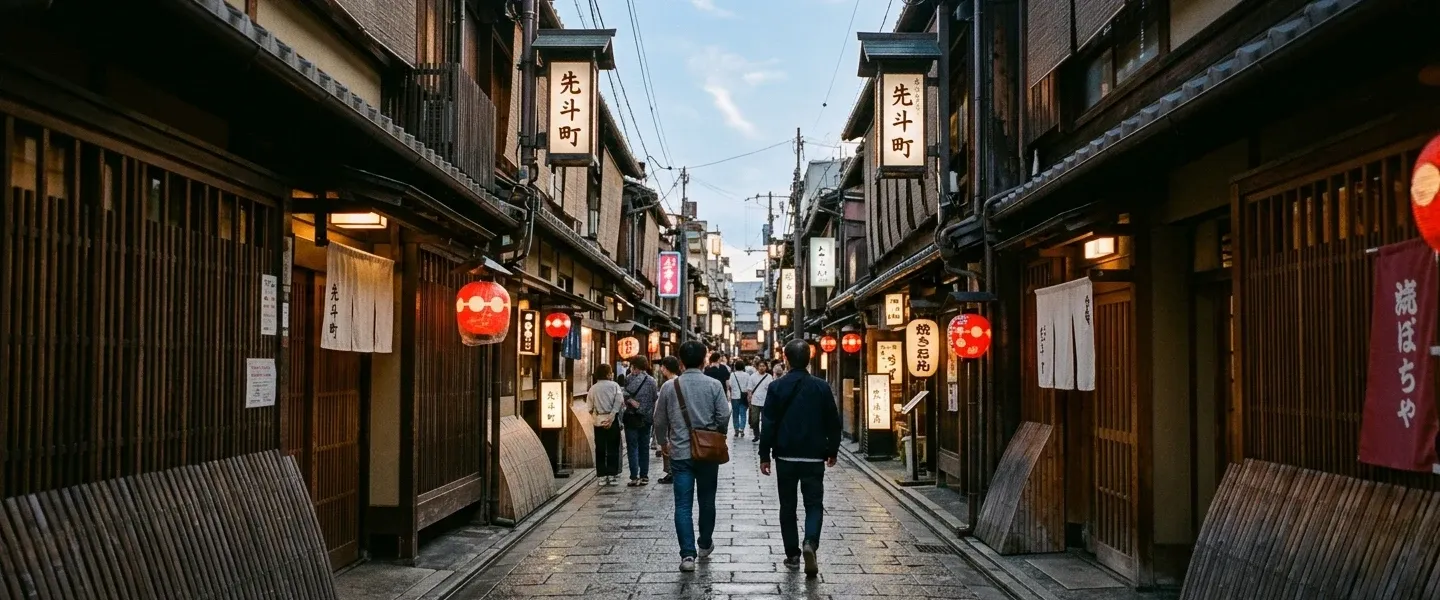
Currency in Japan: Japanese Yen (JPY)
Japan's currency is the yen (JPY), written ¥, and unlike most currencies it has no everyday subunit, so prices are whole numbers with no small change to fumble. Coins are ¥1, ¥5, ¥10, ¥50, ¥100 and ¥500, and notes come in ¥1,000, ¥5,000 and ¥10,000, with a rarely-seen ¥2,000. The ¥500 coin is worth several dollars, so your coin purse carries real money here; keep it for vending machines, lockers and ticket gates.
In 2024 Japan issued redesigned ¥1,000, ¥5,000 and ¥10,000 notes with new portraits and 3D holograms. The old notes stay legal tender indefinitely, so both designs circulate side by side and either is fine to spend. To orient yourself on prices: a convenience-store meal is about ¥400 to ¥700, a bowl of ramen ¥600 to ¥1,200, a short metro ride ¥170 to ¥310, and a coffee ¥300 to ¥500.
So what does that buy you? US dollars are worth about ¥157.67 each today, and the yen has traded between ¥146.78 and ¥163.91 to the dollar over the past year. The card below shows whether now is a good time to convert into yen, and the chart tracks how the dollar has held up against it over the past five years.
So ¥1,000 is about $6.34, and ¥10,000 is $63.42.
- US Dollar USD
- Euro EUR
- British Pound GBP
- Australian Dollar AUD
- Canadian Dollar CAD
- New Zealand Dollar NZD
- Swiss Franc CHF
- Singapore Dollar SGD
- Hong Kong Dollar HKD
- Chinese Yuan CNY
- Indian Rupee INR
- Indonesian Rupiah IDR
- Malaysian Ringgit MYR
- Thai Baht THB
- Philippine Peso PHP
- South Korean Won KRW
- South African Rand ZAR
- Mexican Peso MXN
- Brazilian Real BRL
- Turkish Lira TRY
- Israeli Shekel ILS
- Polish Zloty PLN
- Czech Koruna CZK
- Hungarian Forint HUF
- Romanian Leu RON
- Swedish Krona SEK
- Norwegian Krone NOK
- Danish Krone DKK
- Icelandic Krona ISK


























Rate is close to normal.
Today sits around the 12-month average of ¥157.45. No reason to rush, and no reason to wait.
Paying with card in Japan
In the cities your card handles most things. Visa and Mastercard are accepted across hotels, department stores, chain restaurants, all the major convenience stores and larger shops, and JCB (Japan's home network) is near-universal. American Express works at bigger and tourist-facing places but is patchier at small independents, so don't make Amex your only card. Where you'll still hit cash-only is the local end of things: owner-run restaurants and izakaya, ramen and gyudon ticket machines, temples and shrines, market and festival stalls, and smaller places in rural towns. Both debit and credit cards work anywhere Visa or Mastercard is: a debit card is what you'll lean on at ATMs, while a good travel credit card usually adds purchase protection and no foreign-transaction fee.
A pleasant difference from much of Asia: Japanese merchants generally don't surcharge for card payment, so the price on the tag is the price you pay. The cost to watch is your own bank's foreign-transaction fee on payments abroad, typically up to about 3%, which is exactly what the calculator below helps you dodge with the right card.
Contactless has spread quickly. Visa and Mastercard tap-to-pay now works at most chains, hotels and tourist businesses, and Apple Pay and Google Pay work wherever a reader takes contactless, handing over a one-time token instead of your card number. Trains are catching up too: contactless bank-card acceptance is expanding across the Tokyo-area rail and subway networks, so on a growing number of lines you can tap a card straight at the gate, alongside the IC cards below. Taxis mostly take cards and IC cards now, though older cabs in rural areas can still prefer cash.
Always pay in yen. At any ATM or card terminal, decline the offer to be charged in your home currency. Paying in JPY lets your card set the exchange rate, which almost always beats the machine's "dynamic currency conversion" by a few percent.
Compare travel cards on how you actually spend
Free travel cards available
New to comparing cards? See how the calculator works.
Cash in Japan
Japan is the rare high-tech country where you genuinely still need cash. Cards and IC cards cover the cities, but plenty of small restaurants, ticket machines, markets, rural shops and temples and shrines take only yen, and walking into a cash-only restaurant is one of the most common surprises for first-time visitors. Temple and shrine extras in particular (entry, charms, and the goshuin stamp books many visitors collect) are almost always cash. You don't need to carry a fortune, though: around ¥10,000 to ¥20,000 on you covers a day or two comfortably, and you can top up from a convenience-store ATM as you go rather than pulling out a huge sum.
- Keep coins, they're real money here. The ¥100 and ¥500 coins do a lot of work in vending machines, coin lockers (though many now take IC cards too), small shrines and ticket gates, so don't let them pile up unused.
- Withdraw from a convenience store, not a bank. Seven Bank (in 7-Eleven) and Japan Post machines take foreign cards and run in English; most big-bank ATMs won't. There's more on this in the ATM section below.
- Let a Suica carry your small spending. A topped-up Suica or Pasmo IC card taps for trains, buses, vending machines and convenience-store buys, so a lot of your daily cash never needs to come out. On an iPhone you can add one straight to Apple Wallet and reload it with a foreign card.
- Break ¥10,000 notes early. A convenience store, station machine or larger shop will happily change a big note into usable ones; small stalls and older taxis may struggle with it.
- Don't over-carry. Japan is exceptionally safe, but there's no reason to walk around with a week's cash. Pull a couple of days' worth at a time from a 7-Eleven ATM and top up when it runs low.
Best ATMs in Japan (fees by bank)
Here's the quirk that catches everyone: in one of the world's richest countries, most bank ATMs reject foreign cards. The machines that reliably work sit inside convenience stores, and once you know that, cash is easy. What follows is the local machine's fee only; your own bank may add its own foreign-ATM fee back home.
Three separate charges can land on one withdrawal, and it's easy to blur them: the local ATM fee added by the Japanese machine (the table below), your own bank's foreign-ATM or foreign-transaction fee charged at home, and DCC, where the screen offers to bill you in your home currency at a poor rate. Decline DCC every time. The one people underestimate is the middle one: the small fee on the Japanese screen is often much less than what your own bank quietly adds, which is exactly why a fee-free travel card pays off. The table below is the local fee only.
Head to a 7-Eleven first. Seven Bank ATMs are the traveler's default: they're in nearly every 7-Eleven, run 24/7, offer English and a dozen other languages, take almost any foreign card, and let you withdraw up to ¥100,000 in one go. Japan Post Bank machines are the backup, especially in rural areas without a 7-Eleven, though they follow post-office hours. If you want the lowest fee and you're near an AEON mall, an AEON Bank ATM is the cheapest, but it isn't open around the clock.
- Most Japanese bank ATMs won't take your card. The machines branded MUFG, SMBC or Mizuho frequently refuse foreign cards, or only accept them during limited daytime hours. Don't waste time on them; go to a convenience store instead.
- Seven Bank (7-Eleven) is the reliable default. Open 24/7, English menu, accepts foreign Visa, Mastercard, Amex and more, and the highest single-withdrawal limit at ¥100,000. The machine fee is small and sometimes zero (Mastercard withdrawals are often free), on top of whatever your home bank charges.
- Watch the opening hours on non-konbini machines. Japan Post and bank ATMs can close in the evening and at weekends, and some add an after-hours surcharge. Convenience-store ATMs (Seven Bank, Lawson) are the ones that run around the clock.
- Your own travel card may cap free withdrawals. Cards like Wise and Revolut give a set amount of fee-free ATM withdrawals each month, then add their own percentage. The Japanese machine fee stays the same either way, so pull larger amounts less often.
- Wait for the card, and read the on-screen fee. Take your card and cash before walking off, and check the fee the machine quotes before you confirm, since it varies by network and card.
Updated September 2026
Exchanging cash in Japan
Unlike much of Asia, Japan isn't a place where a back-street money changer beats everything else. Exchange rates at airports and banks are relatively fair by global standards, and for most people a convenience-store ATM withdrawal works out as cheap or cheaper than changing cash. So the honest advice here is short: don't overthink it, and don't bring a big wad of yen from home.
- Don't buy much yen before you fly. Home-country exchange desks usually give a poor rate. Bring a small amount for your first train or a taxi if you like, then withdraw yen from a Seven Bank ATM once you land.
- Airport rates are okay, not a trap. If you'd rather change cash than use an ATM, the airport and bank counters in Japan are reasonable, unlike the arrivals-hall booths in some countries. The dedicated World Currency Shop chain in the big cities is another fair option.
- An ATM usually wins on total cost. Once you count the spread on cash exchange, a foreign-card withdrawal at 7-Eleven is generally as good or better, and far more convenient, so save cash exchange for when you specifically want to offload home-currency notes.
- Change leftover yen back before you fly, or just spend it. Coins can't be exchanged and are easy to sink into a convenience-store run or a Suica top-up on your way out, so run them down rather than carrying them home.
For everyday spending an ATM is simpler and the effective rate is close, so there's rarely a reason to hunt for a money changer in Japan at all.
Paying by QR (PayPay) in Japan
Japan's cashless side splits into two things, and for a visitor the first matters far more than the second. IC cards (Suica, Pasmo and the regional ICOCA) are tap-and-go smartcards that pay for trains and buses and double as electronic money at convenience stores, vending machines and many shops. For a tourist they're functionally interchangeable, so just get whichever you're offered; a Suica works in Osaka and an ICOCA works in Tokyo. QR wallets like PayPay are what a lot of locals now pay with, but they're harder for tourists to use directly. Sort out an IC card and you've covered most of what QR does.
- Suica on an iPhone is the one to sort first. Any recent iPhone can add a Suica in Apple Wallet and top it up with a foreign Visa or Mastercard, no Japanese bank or SIM needed, then tap it for trains, buses, konbini and vending machines. It's the single most useful money move for a Japan trip. Card compatibility for topping up occasionally changes, so if one card is declined, try another.
- Android usually can't add a mobile Suica. Google Wallet's Suica generally needs a Japanese-issued phone, so most overseas Android users should buy a physical Suica, Pasmo or ICOCA instead. Physical cards went back on sale in March 2025 after a shortage, and the tourist Welcome Suica (no deposit) is sold at the airports and major stations.
- PayPay is the big QR wallet, but tricky for tourists. Opening a PayPay account still effectively needs a Japanese phone number and bank, so most short-term visitors can't set one up the normal way. If your home wallet is in the Alipay+ network (Alipay, AlipayHK, Kakao Pay, Touch 'n Go and others), you can scan PayPay QR codes at merchants and pay from your own app, billed in your home currency.
- Don't chase LINE Pay. It shut down in Japan in April 2025 and its balances moved into PayPay, so ignore older guides that still recommend it.
For a normal trip you don't need a QR wallet at all: a contactless Visa or Mastercard, a Suica on your phone or in your pocket, and some cash already cover everywhere PayPay does.
Tax-free shopping in Japan
Japan's consumption tax, its version of VAT, is 10%, or 8% on food and drink, and visitors can get it back on shopping at registered tax-free stores. Until 31 October 2026 the store takes the tax off at the register when you show your passport. From 1 November 2026 Japan switches to a refund system: you pay the full price in the store, customs confirms at the airport that you are taking the goods out, and the store then refunds the tax.
- Spend ¥5,000 or more before tax in one store on one day. Under the new system, general goods and consumables such as cosmetics and snacks count toward the same total.
- Show your passport when you pay. The store registers the purchase against it. You qualify within six months of entering Japan on a temporary visitor stay.
- Take the goods out within 90 days. Consumables you open or use in Japan no longer qualify, and goods you post home don't count.
- Scan your passport at the airport before you check in your bags. A tax-free kiosk in the departure lobby confirms the export, and customs may ask to see the items. Once your bags are checked, the goods can't be confirmed, and no confirmation means no refund.
- Check how the store pays the refund. Depending on the store or its refund service, it goes back to your card, to a bank account or, at some counters, in cash. Card refunds can take a week or two.
The refund is worth claiming on electronics, cosmetics and fashion, where 10% adds up quickly. Keep your purchases in your carry-on or easy to reach until the kiosk has cleared them.
Sending money to Japan
Most visitors never need this, so keep it short: if you're paying a hotel or apartment deposit, sending money to family, or funding a longer stay, the rate you're quoted is rarely the rate you get. What costs you is rarely the visible fee, it's a markup buried in the exchange rate.
The benchmark is the mid-market rate you'd see on Google. Specialist services (our default pick is Wise) track within about 1% of it and pay out in yen to a Japanese bank account within a day or two, where a high-street bank wire can quietly cost several percent once the rate markup and correspondent-bank fees are counted.
The exchange rate matters more than the advertised fee. A provider can advertise "zero fees" and still cost you the most if its exchange rate sits a few percent under mid-market. Compare the final yen that arrives, not the headline fee.
See what you'll actually receive today
Compare Providers









Travel tips?
Sign up for our guide on how to save money on your next trip.
Frequently Asked Questions
-
Which ATM in Japan accepts foreign cards?
Convenience-store ATMs are the answer. Seven Bank machines, in nearly every 7-Eleven, are the most reliable: open 24/7, English menus, they take almost any foreign card and let you withdraw up to ¥100,000. Japan Post Bank ATMs in post offices are the best backup, especially in rural areas. Most big Japanese bank ATMs (MUFG, SMBC, Mizuho) refuse foreign cards or only accept them at limited hours, so skip them.
-
Do I still need cash in Japan?
Yes, some. Japan is going cashless fast but is still more cash-reliant than most rich countries: small restaurants, ticket machines, shrines, markets and rural shops are often cash-only, while cards and IC cards cover the cities. So you don't need much, but you shouldn't arrive with none.
-
How much cash should I carry in Japan?
Around ¥10,000 to ¥20,000 on you is plenty for a day or two of the cash-only bits (small restaurants, temples, ticket machines and the like), with more if you're heading somewhere rural. Rather than pulling out a big lump sum, top up from a 7-Eleven (Seven Bank) ATM as you go; they're everywhere, open 24/7 and take foreign cards.
-
Can tourists use Suica in Japan?
Yes, and it's the best money move for a trip. On an iPhone you add a Suica to Apple Wallet and top it up with a foreign card, then tap for trains, buses, convenience stores and vending machines. Most overseas Android phones can't add a mobile Suica, so buy a physical Suica, Pasmo or ICOCA instead; physical cards are on sale again, and the deposit-free Welcome Suica is available to tourists at airports and big stations.
-
Can tourists use PayPay in Japan?
Not easily as your own account, since opening PayPay effectively needs a Japanese phone number and bank. But if your home wallet is in the Alipay+ network (Alipay, Kakao Pay, Touch 'n Go and others), you can scan PayPay QR codes and pay from your own app. For most Western visitors a contactless card plus a Suica already cover everywhere PayPay does, so it isn't worth chasing.
-
Do you tip in Japan?
No. Japan has a genuine no-tipping culture, and leaving money on the table can cause confusion or come across as rude. Good service is the norm and already included, so don't tip at restaurants, taxis or hotels. Upmarket restaurants, ryokan and hotels sometimes add a service charge of around 10 to 15% to the bill instead, which is the closest thing to a tip you'll pay.
-
Is Japan expensive right now?
Less than its reputation. The yen has been relatively weak against the dollar, euro and pound in recent years, which makes Japan noticeably better value for foreign visitors than it used to be. A convenience-store meal is around ¥400 to ¥700 and a bowl of ramen usually under ¥1,000. The live rate on this page shows exactly what your currency buys today.
-
Should I pay in yen or my home currency at the machine?
Always choose yen. Picking your home currency lets the terminal set the exchange rate (dynamic currency conversion), which is worse than your own bank's rate. This applies at both ATMs and card machines.
-
Should I exchange money before arriving in Japan?
Not really. Rates at home exchange desks are usually poor, and Japan is safe enough that carrying a lot of cash isn't worth it. Bring a small amount for your first train or taxi if you want, then withdraw yen from a Seven Bank ATM at the airport or in town. Airport and bank exchange rates in Japan are fair if you'd rather change notes.