The Philippines

Living in the Philippines

English-speaking, cheap, and it doesn't tax your foreign income. Here is what residency, tax and a passport really involve.

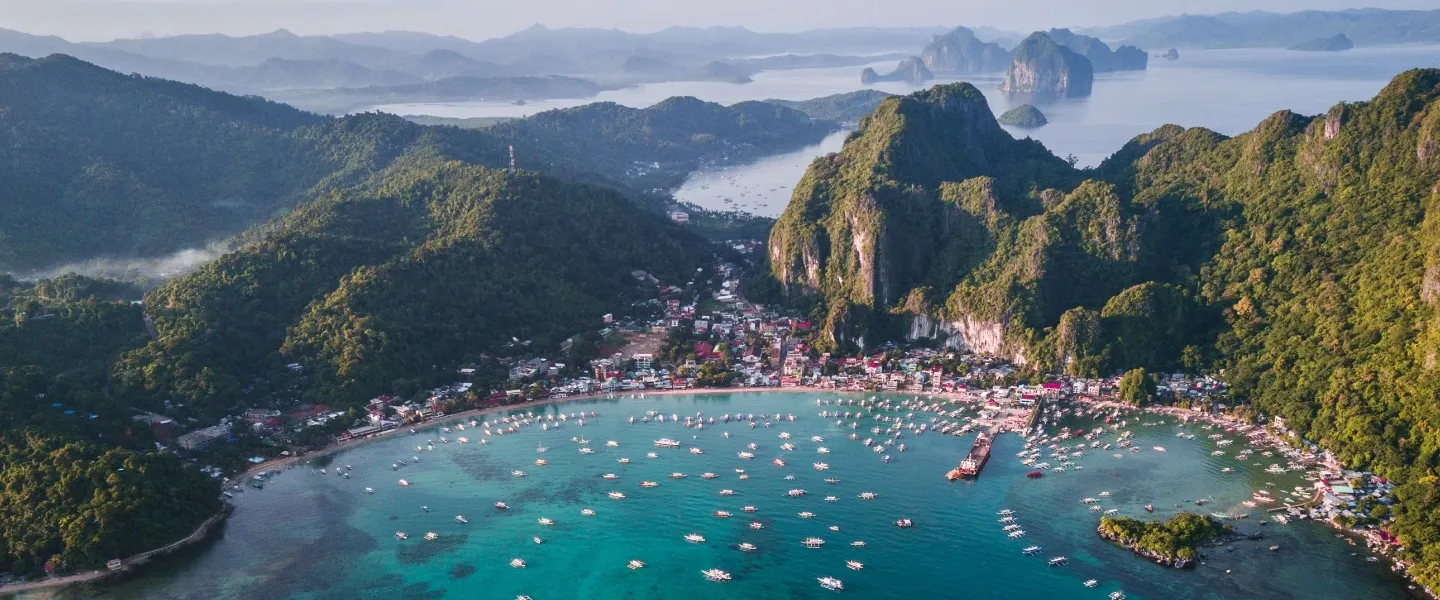
Photo by Eibner Saliba

What living in the Philippines actually takes

Living in the Philippines is one of the softer landings in Asia: people speak English, the retirement visa is generous, and it taxes foreigners only on what they earn locally. Owning land and getting a passport are where it closes up.

Living in the Philippines rarely tops anyone's list, which is surprising. Day to day it does a lot of things well: English is everywhere, living costs stay low, the retirement visa is unusually accessible, and foreign income is not taxed. There are real downsides too. You cannot own land, paperwork moves slowly, and citizenship takes patience.

Updated July 2026

The Philippines at a glance

Tax system

How a country decides what it can tax you on. "Worldwide" means income you earn anywhere; "territorial" means only income earned inside the country; "remittance basis" means only the foreign income you actually bring into the country.

Territorial
Foreign income
Exempt
Top income-tax rate
35%
Tax residency
Only resident citizens are taxed on worldwide income. Every foreigner is taxed only on Philippine-source income (NIRC section 23), so a foreign salary, pension, dividends and investment gains stay outside the Philippine net. An alien who lives here and is not a mere transient counts as a resident alien, but that status still reaches only Philippine-source income.
Capital gains

The profit you make when you sell something for more than you paid, like shares or property.

Real property 6% of price or zonal value; unlisted shares 15% of the gain; listed shares 0.6% of the sale price
Dividends
10% final on dividends from Philippine companies; foreign dividends are not taxed for a foreigner
Crypto
No specific crypto regime; the BIR generally treats gains under existing income-tax rules, and foreign-exchange crypto gains are foreign-source for a resident alien
Permanent residency
Permanent Resident (13(a), SRRV or SIRV), Fast on some routes: SRRV and the 13(a) marriage visa give indefinite residence (13(a) after a one-year probationary year)
Path to citizenship
10 years of continuous residence (5 if married to a Filipino or otherwise qualified)
Dual citizenship

Whether you can keep your current passport after becoming a citizen here. "Conditional" means it is limited or not guaranteed: allowed only in certain cases, or tolerated in practice but not written into law.

Conditional (you must give up your current citizenship)
Foreign property
Condos only
Reports to your home country (CRS)

Under the Common Reporting Standard, tax authorities in participating countries automatically share information about each other's residents' bank accounts.

Not yet

Income tax for residents

Annual taxable incomeRate
Up to PHP 250K0%
PHP 250K to PHP 400K15%
PHP 400K to PHP 800K20%
PHP 800K to PHP 2M25%
PHP 2M to PHP 8M30%
Over PHP 8M35%

These rates apply only to a foreigner's Philippine-source income. The first PHP 250,000 is tax-free and the top 35% rate starts above PHP 8,000,000. Self-employed people with gross receipts under PHP 3,000,000 can instead elect a flat 8% on gross in place of the brackets.

Sources: tax · immigration

The Philippines tax calculator

The Philippines taxes foreigners only on income earned inside the country, so this estimates the tax on your local income. Add foreign income too if you like: you will see it stays untaxed.

Income in
Per
What income will you have in the Philippines?

A rough guide only. It applies the graduated rates to Philippine-source income and leaves foreign income untaxed, which is the rule for foreigners. It ignores the optional 8% flat rate for the self-employed, social-security contributions and any treaty relief. Confirm your own numbers with a tax adviser.

Tax rates from PwC Worldwide Tax Summaries.

What residency costs in the Philippines

What each long-stay route costs to get and keep, cheapest first.

Marriage visa

13(a)
Valid 1-year probation, then permanent
You pay fee
US$300-700 Government and I-Card fees, roughly PHP 17,000-40,000; agents charge more on top
Investment yours
None No deposit
Income needed
None No income test, but the marriage to a Filipino citizen has to be genuine, not on paper

Retirement visa (SRRV Classic)

SRRV · age 40+
Valid for life
You pay fee
US$1,400 One-off application of about US$1,400, plus roughly US$360 a year to keep it (the PRA charges these in US dollars)
Investment yours
US$15,000-50,000 Refundable deposit, set in US dollars: US$15k at 50+ with a pension, up to US$50k at 40-49 with none. Convertible to property
Income needed
US$800 /mo Pension of about US$800 a month (≈PHP 46,000) for the reduced-deposit route (single); no pension needed if you post the larger deposit

Digital Nomad Visa

EO 86
Valid 1 year, renewable once
You pay fee
Not published Application fees are still being set as the visa is rolled out
Investment yours
None No deposit or capital
Income needed
US$24,000 /yr No figure is fixed in the order; agencies use about US$24,000 a year (≈PHP 1.4m) from foreign clients as the working benchmark

Investor visa (SIRV)

SIRV · age 21+
Valid for life
You pay fee
Not published Government processing fees vary; agents extra
Investment yours
US$75,000 Invested through a peso time deposit (about PHP 4.3m) into a BOI-approved enterprise; your money, not a fee
Income needed
None No income test; the investment above qualifies you

Indicative figures for mid-2026. The SRRV and SIRV thresholds are set in US dollars rather than pesos; the 13(a) figures are peso fees shown here in USD for comparison. The SRRV rules were restructured in September 2025 and the digital-nomad visa is still being rolled out, so amounts and fees change. Confirm current numbers with the Philippine Retirement Authority (pra.gov.ph) and the Bureau of Immigration, and see our Philippines visa guide for the detail on each route.

Sending money to the Philippines

Rent, a visa deposit and the SRRV time deposit are often due before you can open a local bank account, so getting money in cheaply matters from day one.

Your home bank's wire is rarely the best rate into the Philippines. Compare what each provider actually pays out in pesos before you send, and our guide to sending money to the Philippines goes deeper.

Cost of sending money to the Philippines

Live mid-market rate, then compare what each provider actually pays out.

See live rates from Wise, Remitly, Western Union + more

What living in the Philippines is like

71/100

The Philippines scores where you live rather than where you file: English everywhere, low costs, and a tax system that ignores your foreign money. It scores lower on property rights, the slow paperwork, and a passport that stays out of reach for most. Each score is out of 100 and compared with the other countries on RoamFX; tap the info icon on any row for the reasoning.

Safety 60

Our overall safety score for the country.

Source: How we score safety

Cost of living 90

How affordable everyday life is, from our cost data.

Source: How we score affordability

Getting by in English 90

English is an official language, used in schools, government, business and media. Getting by in English is easy almost everywhere, in the cities and the provinces alike.

Source: English Proficiency Index (EF Education First)

Taxes 82

It taxes foreigners only on Philippine-source income, so a foreign salary, pension or investments are left untouched. No wealth tax, and estate and gift tax are a flat 6%.

Climate 72

Hot and tropical year-round, with a real typhoon season from roughly June to November and flooding in low-lying cities. The heat and the storms are the main things to plan around.

Healthcare 60

Good private hospitals in Manila and Cebu at low prices; thin once you leave the cities. For the most serious cases some expats still fly to Singapore or Bangkok.

Family & schooling 56

English-medium schooling almost everywhere makes settling in easy, and Manila has excellent options (International School Manila, British School Manila). Depth drops off fast outside Manila and Cebu, and the public system is among the region's weakest.

Source: In-house research

Visa options 78

One of the friendlier line-ups in Asia: an accessible retirement visa, an investor route, a marriage visa, and now a digital-nomad visa. Most need money or a sponsor behind them.

Liveability 63

Our overall liveability score for the country.

Source: How we score liveability

Sustainability 51

Our overall sustainability score for the country.

Source: How we score sustainability

Property rights 30

Foreigners cannot own land, only condo units and long leases. The same wall as most of the region.

Bureaucracy 35

Slow, paper-heavy and fond of lines. Most things get done, just not quickly, and a fixer often helps.

Path to citizenship 15

Ten years of residence, and you would normally give up your current passport. Rare in practice.

Where foreigners live in the Philippines

Expats in the Philippines cluster in a handful of places, and most never live far from them. Where people land follows what they are: a retiree, a remote worker, or someone on a city posting. How safe each place feels varies by area, which our <a href="/countries/philippines/safety/">is the Philippines safe?</a> guide gets into.

  • Metro Manila (Makati & BGC) Corporate expats · professionals

    Where the jobs, embassies and international schools are. BGC is walkable and newly built; Makati is the business core. The trade-off is EDSA gridlock and scarce parking.

  • Cebu Retirees · remote workers · families

    The all-rounder many expats pick. Remote workers gather around IT Park; retirees tend to spread out to Mactan island and the quieter southern towns.

  • Angeles & Clark (Pampanga) Retirees · long-stayers

    A long-standing, budget-friendly retiree scene north of Manila, built around the old US base and its airport.

  • Dumaguete Retirees · budget expats

    A small, walkable university city that markets itself to retirees for its low cost and easy pace.

  • Davao Retirees · families

    Orderly and reputedly among the safer big cities, on the southern island of Mindanao.

  • Siargao & Bohol Nomads · surfers · lifestyle movers

    Island bases for the remote-work-and-beach crowd, quieter and more seasonal than the cities.

Is the Philippines right for you?

A good fit for

  • Retirees who want an English-speaking, low-cost base
  • Remote workers and investors who want their foreign income left alone
  • Anyone with a Filipino spouse or family ties

Probably not for

  • People who want to own land outright
  • Anyone chasing a quick second passport
  • Those who need fast, first-world bureaucracy

Before you move to the Philippines

The practical things people look up before a move.

Healthcare
Private cover advised Big private hospitals like St. Luke's and Makati Medical Center in Manila, and Cebu Doctors' in Cebu, are good and cheap by Western standards; public care and rural clinics are basic. For anything specialized, people outside the big cities usually travel in. PhilHealth is open to resident foreigners, but most rely on private insurance.
Banking
Easier with a resident visa A tourist can open a limited account; a full peso account is straightforward once you hold an SRRV, 13(a) or work visa. Banks often ask for more paperwork than newcomers expect. Wise and Instarem are widely used to send money in.
Driving
Convert after residency A foreign or international permit covers you short-term; residents switch to a Philippine license. City traffic is heavy and the driving assertive.
Schooling
International schools in cities Strong international and English-medium schools in Manila and Cebu; far fewer elsewhere. Fees are lower than in the West but still add up.
English
Spoken almost everywhere One of the most English-fluent countries in Asia. It is an official language, used in schools, business and government, which makes daily life far easier than most of the region.
Internet
Improved, still uneven Home fiber from PLDT, Globe and Converge is good in the cities and getting better; rural and island connections lean on mobile data and can drop in storms.
Electricity
220V, US-style plugs Runs at 220V on US-style flat plugs (type A/B). Among the pricier power in the region, and brownouts are common enough that many homes keep a backup.
Pets
Possible, plan ahead Vaccinations, an import permit and paperwork are needed, but no long quarantine for cats and dogs from most countries.
Mobile phone
SIM cheap, register it Globe and Smart dominate, and most people grab a cheap prepaid SIM at the airport. Since a 2022 law, SIMs must be registered to your ID.
Getting there
Well connected Manila and Cebu have wide regional networks and long-haul routes to the US, the Middle East and Australia; Europe usually means one stop. Domestic flights are cheap, but delays are common.
Currency
Peso, fairly stable The peso is reasonably stable and moves in a managed band, though it has slowly weakened over the years.
Bringing your things
Personal effects OK Approved immigrants, returning residents and SRRV holders can bring used household goods in duty- and tax-free, within limits.
Importing a car
Very hard Used-vehicle imports are largely restricted and heavily taxed. Almost everyone buys locally instead.

Common mistakes when moving to the Philippines

  • MythA retirement visa means you owe tax here.

    RealityNo. The Philippines taxes foreigners only on Philippine-source income, so your pension and foreign earnings sit outside its net whatever visa you hold.

  • MythYou can buy a beachfront lot in your own name.

    RealityYou cannot. Foreigners can own a condo unit or a house, but not the land under it; land is leased or held through a spouse or company.

  • MythEveryone speaks English, so the paperwork is easy.

    RealityEnglish helps a lot, but government offices still run slow and paper-heavy. Speaking the language does not speed up the line.

  • MythMarry a Filipino and you are a citizen.

    RealityMarriage gets you a residence visa, not a passport. Citizenship still means years of residence and, for most, renouncing your own.

  • MythThe digital-nomad visa is a tax-free hack.

    RealityYour foreign income is untaxed here anyway, visa or not. The nomad visa is about staying legally, not about tax.

Can you actually move to the Philippines?

Yes, and there are more routes than most of the region offers. There is no single "just move here" permit, so the question is which one fits you. We cover each in our Philippines visa guide; the usual ways in are:

  • Retirement visa (SRRV), from age 40, in exchange for a refundable deposit and, on the cheaper tier, a pension. One of the most accessible retirement visas in Asia.
  • Marriage visa (13(a)), if you are married to a Filipino citizen. It leads to permanent residence and, in time, the option of citizenship.
  • Investor visa (SIRV), if you invest about USD 75,000 in a qualifying local enterprise.
  • Work visa (9(g)), sponsored by a Philippine employer, for people moving for a job.
  • Digital Nomad Visa, new in 2025 and still being rolled out, for remote workers earning from foreign clients or employers, renewable to two years.

Staying long-term, and the road to a passport

How you settle depends on the route. The SRRV gives indefinite residence for as long as you keep the deposit in place, which is why so many retirees pick it. A 13(a) marriage visa starts with a one-year probation before it converts to permanent residence. Work and nomad visas just have to be renewed.

Citizenship is the hard part. Naturalization normally needs ten years of continuous residence, dropping to five if you are married to a Filipino or meet other conditions, plus good character, a steady income, and literacy in English or Spanish and a Philippine language. For most foreigners it also means renouncing your current citizenship: the Philippines allows dual nationality mainly for former natural-born Filipinos reacquiring it, not for foreign spouses. That renunciation, more than the paperwork, is why few long-term residents naturalize.

Most long-term foreigners stop at permanent residence rather than citizenship, and it is enough to build a life around.

What the Philippines taxes, and what it leaves alone

The Philippines is unusual here. It taxes resident citizens on their worldwide income, but every foreigner, whether or not you count as a "resident alien", is taxed only on Philippine-source income. A foreign salary, a pension, foreign dividends, rent on a house back home and gains on foreign investments are simply outside its reach. For most foreigners, that effectively makes the system territorial.

What it does tax is money you make inside the country. Local employment or business income runs through progressive brackets up to 35%, with the first PHP 250,000 tax-free; self-employed people under PHP 3,000,000 of gross can elect a flat 8% instead. Philippine dividends carry a 10% final tax, peso bank interest 20%, and selling Philippine property or unlisted shares triggers a 6% or 15% capital-gains tax. All of it applies only to money earned inside the country.

Immigration residency and tax residency are still different things, and 0% on foreign income only helps if your home country agrees you have genuinely left. The Philippines is also not yet automatically exchanging account data under the Common Reporting Standard, though it has committed to start, so do not assume that lasts. The low tax on foreign income is real, but it does not by itself close the door on your home tax office.

Renting vs buying in the Philippines

Rent first. Foreigners cannot own land, so buying is limited from the outset, and renting keeps you free to move between Manila, Cebu or an island until you settle on one. The process is straightforward and runs in English, which removes most of the friction; the exceptions are older contracts, barangay paperwork and the land registry, which still lean on Filipino and legalese.

Terms are fairly standard. One-year contracts are the norm, with two months' deposit plus one or two months' advance up front, and some landlords still ask for post-dated cheques covering the year. Condos in the cities are the usual expat choice, and they carry monthly association dues on top of rent, which can run several thousand pesos and cover security, the pool and the gym. Brownouts and water interruptions are a fact of life, so before you sign, ask whether the building has a backup generator and water tanks; in a house, ask the same about a genset and a deep well or storage.

Buying runs into the same wall as the rest of the region. Foreigners cannot own land; you can own a condominium unit, as long as foreigners hold no more than 40% of the building, or a house but not the land under it. Land can be taken on a long lease, up to 50 years with a 25-year renewal. Many people buy through a Filipino spouse or a majority-Filipino company, which works but ties the asset to someone else's name. Whatever the route, verify the title yourself: property fraud is real, so get a certified true copy of the title from the Registry of Deeds and have a lawyer check it before any money moves.

For finding a place, English keeps it simple:

  • Property portals. Lamudi, Dot Property and Rentpad carry the most listings, and Carousell and Facebook Marketplace are widely used too, all in English.
  • Local groups. City and expat rental groups in Manila, Cebu and the island hubs are active; see the unit and meet the owner or agent before paying a deposit.
  • Agents. Brokers are common for condos and save legwork; a licensed one (check the PRC registration) matters most when buying, alongside your own title check.

Bringing your belongings over

Bringing your life over is manageable. Approved immigrants, returning residents and SRRV holders can import used household goods duty- and tax-free within limits. Cars are the exception: used-vehicle imports are largely restricted and heavily taxed, so nearly everyone sells up and buys locally.

Bottom line

The Philippines is an easy place to live and a hard one to own a piece of. For an English-speaking, low-cost base in Asia that leaves your foreign earnings alone, few countries in the region make it as straightforward, and the retirement visa is one of the most accessible around.

Two rules shape almost every long-term decision here: foreigners cannot own land outright, and taking citizenship usually means giving up the passport you already hold. Weigh everything else against those two.

This guide is based on public information and is not legal, tax or immigration advice. Rules change, so always confirm anything important with a qualified professional.

Living in the Philippines?

Get our guides before you go: the visa rules that keep changing, the tax traps, and what living somewhere costs.

Frequently Asked Questions

  • Does the Philippines tax my foreign income?

    Generally no. It taxes foreigners only on Philippine-source income, so a foreign salary, pension, dividends and investment gains sit outside its net, whatever visa you hold. Only resident citizens are taxed on worldwide income. Your home country may still tax you until you have properly broken tax residence there, so check both sides.

  • What is the easiest visa to move to the Philippines?

    For most people it is the SRRV retirement visa, open from age 40 in exchange for a refundable deposit (and a pension on the cheaper tier). If you are married to a Filipino, the 13(a) visa is the natural route; if you work remotely, the 2025 digital-nomad visa is worth a look.

  • Can foreigners own property in the Philippines?

    You can own a condo unit (subject to a 40% foreign cap per building) or a house, but not the land under it. Land is either leased long-term or held through a Filipino spouse or company. Freehold land ownership is reserved for Filipino citizens.

  • How long until I can get citizenship?

    Usually ten years of continuous residence, or five if you are married to a Filipino or otherwise qualify, plus income, good-character and language requirements. For most foreigners it also means giving up your current passport, since dual citizenship is mainly for former natural-born Filipinos.

  • Is there a digital-nomad visa?

    Yes, introduced by executive order in 2025 and still being implemented. It lets remote workers earning from foreign clients or employers stay up to a year, renewable once, and you must be a national of a country that offers Filipinos the same. It does not change your tax position: your foreign income is untaxed here regardless.

← Back to the full Philippines guide