
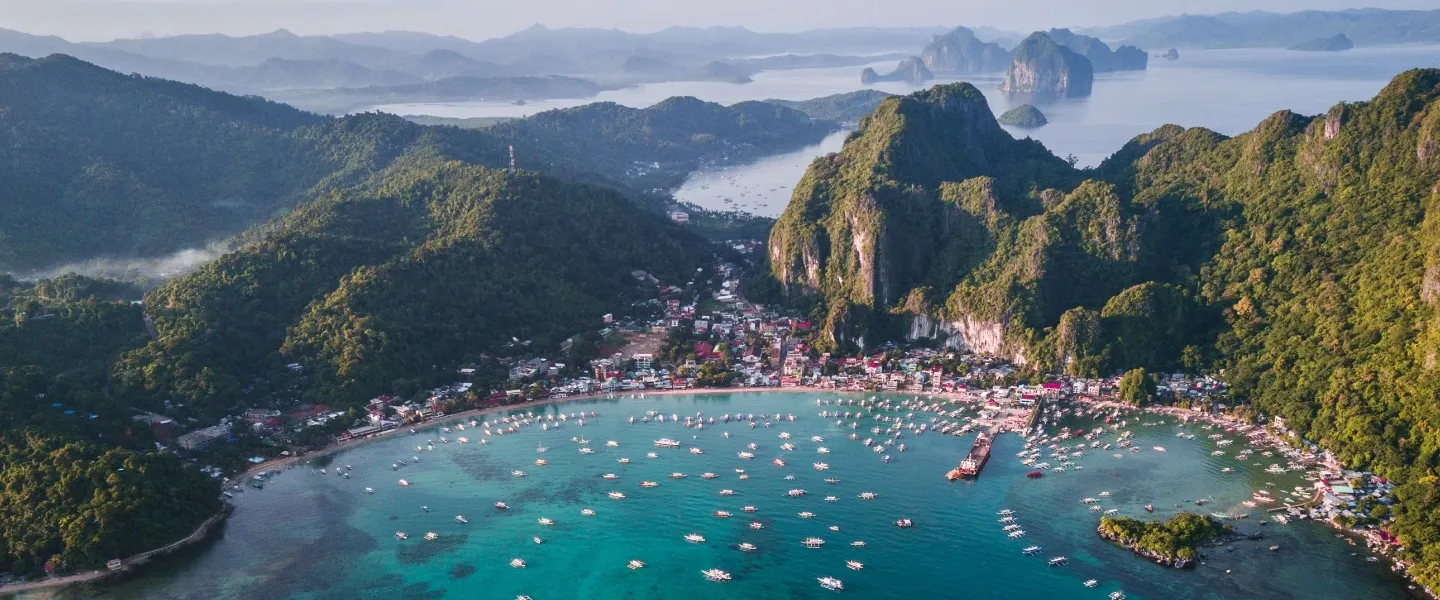
The Philippines Right Now
Tropical cyclone risk is elevated, with one to two tropical cyclones expected to enter the Philippine Area of Responsibility this month.
Where to go in The Philippines
8 destinations across The Philippines, sorted west to east. Each card shows this month's daytime high, how many days it rains and how busy it gets, so you can see where the season is working right now.
-
 Mixed1
Puerto Princesa
More transport hub than beach town, yet it guards Palawan's most famous cave river.
- Daytime high
- 30°C 86°F
- Rain days this month
- 17 rain days
- Crowds
- Quiet
-
 Good2
Good2El Nido
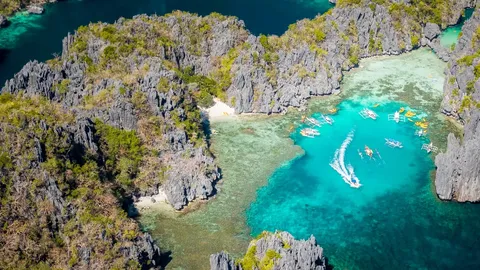
Limestone towers ring Bacuit Bay, and every banca in town runs the same four island-hopping loops.
- Daytime high
- 30°C 86°F
- Rain days this month
- 18 rain days
- Crowds
- Quiet
-
 Good3
Good3Coron
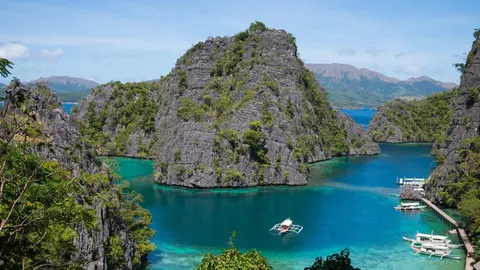
Days are spent island-hopping; nights end early once the boats are tied up.
- Daytime high
- 29°C 84°F
- Rain days this month
- 14 rain days
- Crowds
- Quiet
-
 Southwest monsoon Mixed4
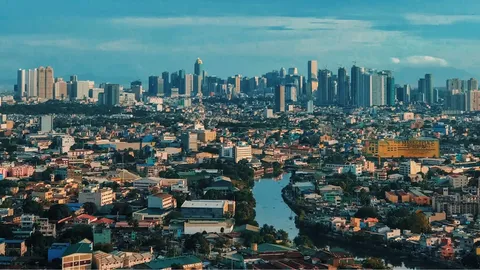
Manila
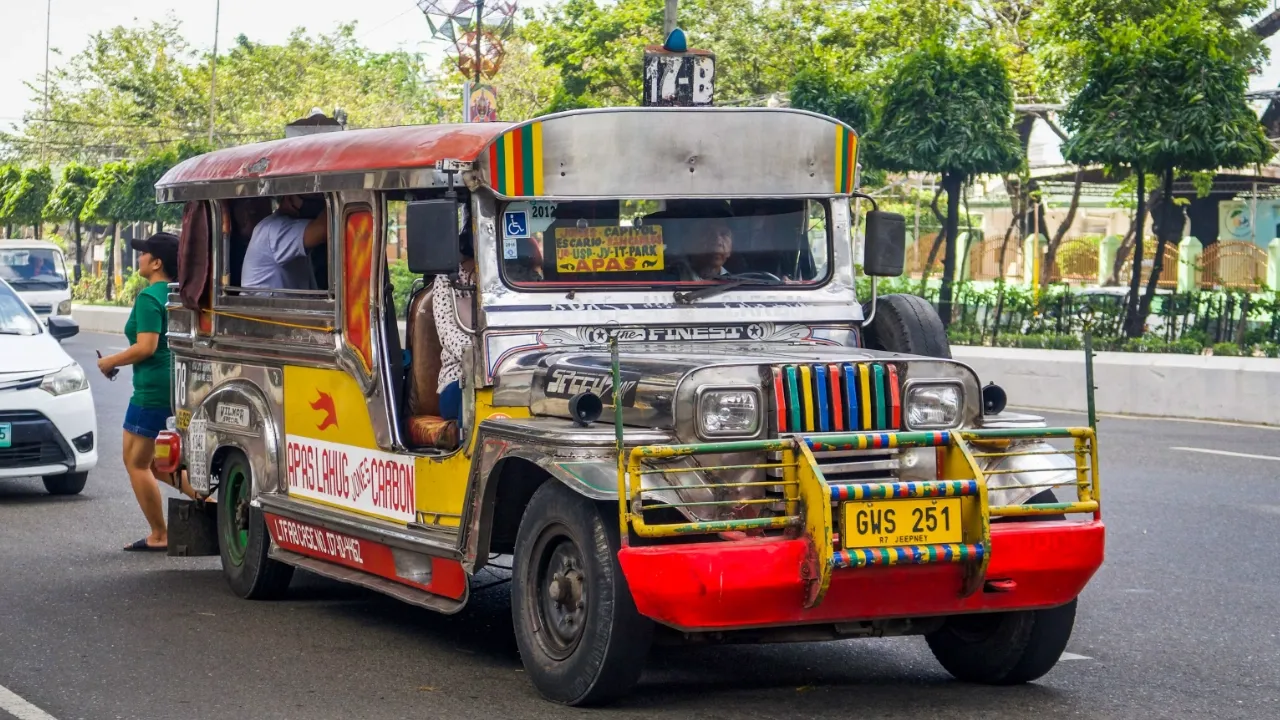
Most visitors pass through too fast and miss how much everyday Filipino life happens here.
- Daytime high
- 31°C 88°F
- Rain days this month
- 18 rain days
- Crowds
- Quiet
-
 Good5
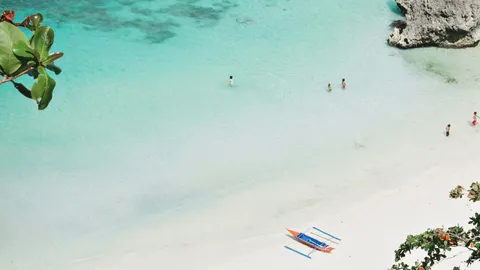
Good5Boracay
Best for beach lovers who want clear water and don't mind sharing the shoreline.
- Daytime high
- 32°C 90°F
- Rain days this month
- 18 rain days
- Crowds
- Quiet
-
 Mixed6
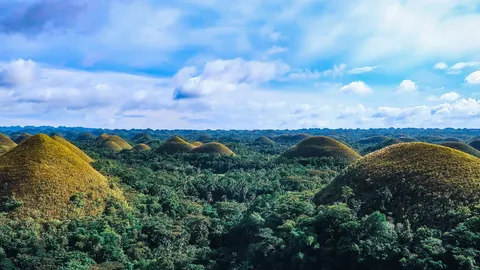
Bohol
Chocolate Hills rise inland while dive boats drift above Balicasag's wall off Panglao.
- Daytime high
- 30°C 86°F
- Rain days this month
- 13 rain days
- Crowds
- Quiet
-
 Mixed7
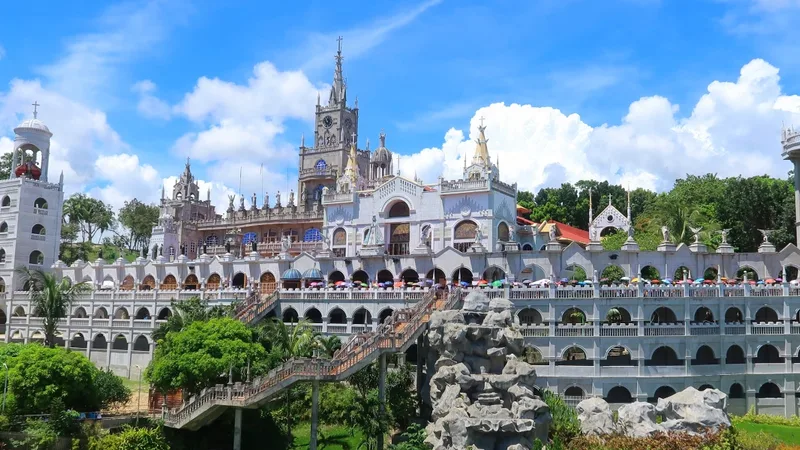
Cebu
Big city traffic on one side, whale sharks and white-sand islands on the other.
- Daytime high
- 31°C 88°F
- Rain days this month
- 15 rain days
- Crowds
- Quiet
-
 Mixed8
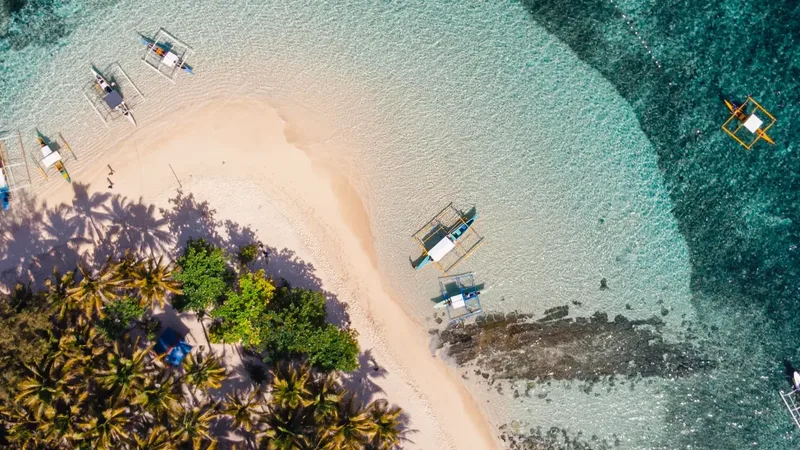
Siargao
A surf hotspot that still runs on muddy backroads, brownouts and island time.
- Daytime high
- 30°C 86°F
- Rain days this month
- 19 rain days
- Crowds
- Peak
When to go to The Philippines
Need to Know
- Population
- 112,729,484 PSA · 2024 Census
- International visitors
- 5,940,975 (2025) +9.2% YoY DOT · Last updated: 2026
- Annual visitors per resident
- 0.05× Annual international visitors divided by the population
Top visitor markets
- South Korea 26.5%
- United States 18.1%
- Japan 7.5%
- China 5.3%
- Australia 5.0%




Show fewer Show 4 more
- Canada 4.5%
- Taiwan 3.6%
- Singapore 3.3%
- United Kingdom 3.0%


Source: DOT · 2024
Annual visitor arrivals
- 2025 5,940,975 +9.2%
- 2024 5,438,967 +8.7%
- 2023 5,003,475 +147.0%
- 2022 2,025,413
- 2021 163,879 COVID
Show fewer Show 2 more
- 2020 1,482,535 COVID
- 2019 8,260,913
International visitor arrivals. COVID years (2020-2021) are included for completeness. Source: DOT · Last updated: 2026
- Currency
- Philippine peso (PHP)
- Language
- Filipino and English; English is widely spoken in cities, tourist areas, and most hotels, restaurants, and transport services.
- Tap water
- Not safe
- Time zone
- PHT (UTC+8)
- Power plug
- Type A / B / C, 220V
- Dialing code
- +63
- Driving side
- Right
- Tipping
- Not expected, but rounding up or leaving 5% to 10% for good service is common. Check for a service charge before adding extra.
- Internet
- 4G is widely available in cities and tourist areas, with growing 5G coverage in major urban centers. Remote islands and mountainous regions can still have weak or unreliable service.
- Emergency
- 911 (police, fire, ambulance), 143 (Philippine Red Cross)
Upcoming Holidays
Public holidays & observances, next 12 months
The Philippines Visa & Entry
Getting To The Philippines
-
From Ninoy Aquino International (MNL)
Manila's main international gateway
Most long-haul international flights arrive here. The four terminals are poorly connected, so leave extra time if you have a domestic connection. Grab is the simplest option into Makati, BGC, and central Manila, where traffic can turn a short distance into a long ride.
-
From Mactan-Cebu International (CEB)
Main gateway for the Visayas
A popular arrival point for travelers heading to Cebu, Bohol, Siquijor, Negros, and other central islands. International and domestic connections are straightforward, and transfers into Cebu City or Mactan's resort area are usually much easier than in Manila.
-
From Clark International (CRK)
Alternative gateway for Luzon
Clark serves a growing number of international routes and avoids Manila's airport congestion. It works well for travelers heading to northern Luzon, Angeles City, or even Manila if flight prices are better.
Safety Advice
For the islands most people visit, the Philippines is a safe trip, and the dangers are ordinary rather than dramatic: the roads come first, then petty theft and scams, with typhoons the thing most likely to upend a wet-season plan. Muggings and violent crime seldom involve tourists. The clear exception is the far south, western and central Mindanao and the Sulu Archipelago, which every government warns against and no normal route touches.
Travel Advisories
Natural disasters
- Typhoons are common between June and November; follow local authority advice.
- Earthquakes occur; be aware of aftershocks and avoid damaged buildings.
- Volcanoes can erupt without warning; check local advice before visiting.
- Ash plumes from volcanoes can affect air quality and respiratory health.
Health & vaccinations
Drink only sealed bottled water to avoid methanol poisoning from contaminated alcohol.
Unrest & security
- Avoid western and central Mindanao, the Sulu Archipelago, and Marawi City due to terrorism and unrest.
- Terrorists and armed groups have kidnapped and attacked public areas.
- Violent crime like robbery and assault is common; do not display cash or jewelry.
- Protests can turn violent; avoid demonstrations and large gatherings.
Transport & infrastructure
- Road accidents are frequent due to poor roads and dangerous driving; avoid driving at night.
- Taxi and bus safety standards can be low; use reputable companies or hotel transfers.
- Piracy is a risk in the Sulu and Celebes seas; be cautious on boats.
- Ferry and passenger boat safety is poor; avoid overcrowded boats.
Other notes
- Carry a copy of your passport photo page as identification.
- Do not get involved with illegal drugs; penalties are severe.
- Child abuse and rape carry long prison sentences; be wary of extortion attempts.
Always check your own government's official travel advice before traveling.
Money & Payments
In the Philippines, the money you lose is rarely what you spend, it's the flat ATM fee and the exchange rate. Which ATM you pick, drawing enough cash before the smaller islands, and paying in pesos rather than your home currency are the calls that decide how far your budget goes.
-
Cards, cash and QR Ph
Visa and Mastercard cover city malls, hotels and larger restaurants, but cash is still king for jeepneys, tricycles, markets, sari-sari stores and most of the islands. QR Ph, GCash and Maya are how many locals pay day to day, but they are hard for a short-term visitor to set up.
-
Avoid the flat ATM fee and bad rates
Almost every Philippine ATM charges a flat ₱250 on a foreign card and caps each withdrawal low, so the fee stings. Taking out the maximum each time, using the right bank, and declining currency conversion save you more than most people realize over a trip.
Costs in The Philippines
The Philippines is one of the cheapest countries in the region, and the easiest if you speak English. Rent, local food and a scooter cost little. What costs more is flights between the islands, imported goods, and resort spots like Boracay and El Nido.
Spend money in The Philippines

Free travel cards available
Send money to The Philippines
Compare Providers









Save money?
Sign up for our guide on how to save money on your next trip.
SIM Cards & Data
Best option for most travelers: an eSIM you set up before you arrive. You'll be online the moment you land, with no airport line and no tourist pricing.
Travel eSIMs Connect the second you land. Zero hassle. Skip the airport line and paperwork. Activate before you fly and land connected. Find the best eSIM →Prefer a local SIM?
You can buy a prepaid SIM at the airport on arrival or at any Globe, Smart, or DITO shop and mall kiosk, with your passport for the mandatory SIM registration. Coverage is strong in cities and tourist hubs and patchy on remote islands, so load a data promo before heading off-grid.
-
Globe
Best reach in tourist areas
Globe has the widest coverage across the main tourist islands and the simplest tourist data promos. Its GoSURF and Easy Surf packs are sold everywhere and are the safe default for a short trip.
GoSURF 2GB/day, 7 days: ~PHP 299 (~5 USD)
-
Smart
Strong nationwide signal
Smart, run by PLDT, matches Globe on reach and often has the edge on signal in the south and on ferry crossings. Giga promos bundle data with social and video apps.
Giga 7GB + extras, 7 days: ~PHP 299 (~5 USD)
-
DITO
Cheapest data, newer network
DITO is the third carrier and undercuts the other two on price, with fast 5G in the cities. Coverage is thinner on far-out islands, so pair it with Globe or Smart if you are island-hopping deep.
25GB, 30 days: ~PHP 199 (~3.50 USD)
What The Philippines is Like
The Philippines does not work like its neighbors, and the reason is geography. This is 7,641 islands, which means the overland route that defines travel in Vietnam or Thailand barely exists here. You move by plane and boat. A week that looks compact on a map turns into three flights through Manila or Cebu, a ferry that leaves when it leaves, and a tricycle down a road that gave up on tarmac years ago. Visitors who plan it like one country get frustrated. The ones who pick two or three islands and stay put have a far better time.
English is everywhere, and it changes the whole experience. You ask for directions at a roadside bakery, chat with a boatman waiting out rough seas, or order lunch in a small-town eatery, and the conversation happens naturally. That removes a layer of travel friction that exists in much of Southeast Asia. The cultural mix is visible rather than academic: Spanish-era churches facing basketball courts, family compounds beside giant shopping malls, karaoke spilling into the street long after dark. Manila is loud, crowded, and often exhausting. The smaller cities and provincial towns feel more relaxed than Manila.
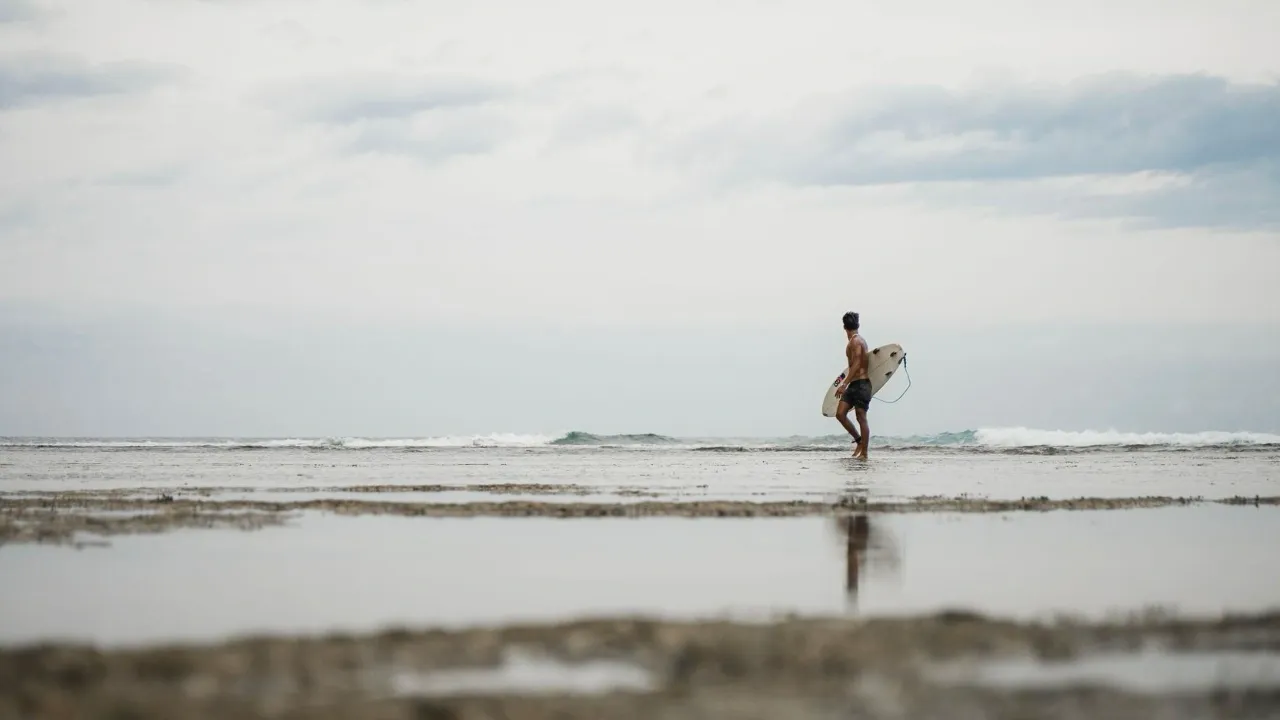
What people come for is the water, and on that the Philippines delivers more than almost anywhere. Thresher sharks off Malapascua, the limestone lagoons around El Nido and Coron, the surf at Siargao, reefs that still have fish on them. The catch is that the best of it sits at the end of the longest journeys, and typhoon season from June to November can shut a route for days. Come for the diving, the island-hopping, and a slower pace than the brochures suggest.
If your ideal trip involves fast trains, tightly connected cities, and the ability to improvise day by day, this can be a frustrating place. Delays are common, weather still has the final say in many parts of the country, and even simple journeys can consume an entire day. People who enjoy ticking off ten destinations in two weeks often leave feeling they spent more time moving than experiencing anything.
The OFW Effect
Walk through a provincial town on a Sunday afternoon and you will eventually notice the pattern. A newly painted house stands beside older concrete homes. A pickup truck sits in the driveway. The local restaurant is busy even though there is no obvious industry nearby. Ask around and someone will mention a daughter in Dubai, a brother on a ship, or parents working in Canada. Millions of Filipinos work overseas, and the money they send home has reshaped entire communities. Once you see it, you start noticing it everywhere.
The country's airports make more sense when viewed through that lens. Families crowd arrival halls holding handmade signs. Suitcases wrapped in plastic arrive stuffed with gifts, chocolates, sneakers, electronics, and items requested months in advance through family group chats. The emotional center of many flights is not tourism but reunion. A visitor might see an airport as a gateway to beaches or diving spots. For many Filipinos, it is the front door to family life.
It also explains some of the country's travel rhythms. Long weekends become family migrations. Christmas travel turns into a nationwide movement of people trying to get home. Ferry terminals fill, domestic flights sell out, and buses leave cities packed with passengers carrying boxes and oversized luggage. What looks like holiday traffic is often something deeper. Family remains the organizing principle behind much of daily life here, and distance has not weakened that.
Visitors often leave with the impression that the Philippines feels unusually warm and personal compared with much of Asia. Part of that comes from language, but part of it comes from a society built around separation and return. Almost everyone knows someone working abroad. Conversations regularly drift toward relatives overseas, plans for homecoming visits, or children being raised by grandparents while parents earn money elsewhere. It is not a side story. It is one of the forces that shaped the modern country.
Liveability
City internet is fast enough for remote work in Manila, Cebu, and Siargao and drops off on smaller islands. English is universal, healthcare is good in the cities, and a comfortable life is cheap. Bureaucracy and traffic are the daily frictions.
Living in the Philippines
Sustainability
Plastic waste and urban air pollution are the visible problems, and reefs take a hit from heavy tourism. The marine parks around Palawan and Apo Island show the better side, and booking through local operators keeps more of your money in the islands.
Frequently Asked Questions
Planning & moving around
-
How many days should I spend in the Philippines?
Ten to fourteen days is a good first trip. That gives you enough time for two or three islands without spending half the holiday in airports and ferry terminals. Trying to cover five or six regions in one trip is the mistake many first-time visitors make.
-
What's the best way to travel around the Philippines?
Domestic flights do most of the heavy lifting because the country is spread across thousands of islands. Ferries connect many destinations, but schedules are slower and weather can cause disruptions. Trains play only a minor role outside parts of Luzon.
-
What's the most common mistake first-time visitors make in the Philippines?
Trying to see too many islands in one trip. Distances look short on a map but flights, ferries, and weather delays consume far more time than expected. Fewer destinations almost always leads to a better experience.
Safety & medical
-
What are common tourist scams in the Philippines?
The most common issues are transport overcharging, unofficial tour operators, and rental disputes involving motorcycles or water sports equipment. Use Grab where available, agree on prices before departure when no meter exists, and photograph rental vehicles before accepting them. Most scams are low-level attempts to extract extra money rather than serious criminal schemes.
-
What are common illnesses for travelers in the Philippines?
Stomach bugs, dehydration, sun exposure, and dengue fever are the most common issues. Mosquitoes are a bigger concern than food in many parts of the country. Bottled or filtered water is the safer choice throughout the trip.
-
What kind of travel insurance do I need for the Philippines?
Medical coverage is the priority. Island destinations often require evacuation by boat or domestic flight before reaching a major hospital, which can be expensive without insurance. Coverage for flight disruptions is also useful because weather-related delays are common.
-
Is the Philippines safe for tourists?
Most tourist areas are safe for visitors who use normal precautions. Petty theft and scams are more common than violent crime. Some parts of western and southern Mindanao have separate travel advisories and are not part of the standard tourist route.
-
Can you drink the tap water in the Philippines?
No. Even where locals drink it, visitors are better off using bottled or filtered water. This applies throughout the country, including major cities and tourist destinations.
Laws & local norms
-
What are the drug laws in the Philippines?
Drug laws are strict and penalties can be severe, including lengthy prison sentences. Do not assume casual attitudes seen elsewhere apply here. Avoid any involvement with illegal drugs.
-
Can you vape in the Philippines?
Vaping is legal for adults but is restricted in many public places where smoking is prohibited. Rules vary by venue and local government. Do not assume you can vape indoors just because a venue allows smoking.
-
What is the dress code for tourists in the Philippines?
Casual clothing is fine in most situations because of the tropical climate. Cover shoulders and knees when visiting churches or religious sites, and avoid walking around towns in swimwear away from the beach.
-
What cultural etiquette should visitors know?
Politeness matters more than formality. Public confrontations, shouting, and visible frustration tend to be viewed negatively. Respect for elders and family remains important across much of the country.
-
Is it okay to take photos of people in the Philippines?
In tourist areas it is usually fine, but asking first is the respectful approach when photographing individuals. This is particularly true in rural communities, religious events, and family gatherings.
-
How can I get a digital nomad visa for the Philippines?
The digital nomad visa is aimed at remote workers earning income from outside the country. Requirements include proof of foreign income, health insurance, and a clean criminal record. Rules continue to evolve, so verify the latest requirements before applying.
-
What are the requirements for a long-term stay in the Philippines?
Many visitors extend tourist status through successive immigration extensions, while others use retirement, family, or remote-work pathways. The right option depends on your nationality and reason for staying. Long-term stays require more planning than a standard holiday.
Money & costs
-
Is the Philippines expensive to travel in?
-
Is it better to use cash or card in the Philippines?
Use both. Cards work well in malls, hotels, chain restaurants, and larger tourist businesses, but cash is still essential for transport, small eateries, markets, and many businesses outside major tourist centers. Carry cash before heading to smaller islands.
Culture & etiquette
-
How much English is spoken in the Philippines?
More than in almost any other country in Southeast Asia. You can usually handle transport, accommodation, restaurants, and day-to-day conversations entirely in English. The language barrier is rarely the difficult part of traveling here.
-
Is the Philippines LGBTQ+ friendly?
The country is socially more accepting of LGBTQ+ people than many of its regional neighbors, particularly in larger cities and tourist destinations. Same-sex marriage is not recognized, but most visitors encounter little difficulty traveling openly. Attitudes tend to be more conservative in some rural areas.
-
What do most tourists get wrong about the Philippines?
They assume it works like a typical Southeast Asian backpacking route with easy overland travel. In reality, it functions more like a collection of separate island destinations connected by flights and ferries. Planning around geography matters more here than in most neighboring countries.
Food & drink
-
What are some local dishes to try in the Philippines?
Start with adobo, sisig, lechon, sinigang, and fresh grilled seafood. Regional food varies considerably across the islands, so the menu in one province may look very different from another. The country's food scene is broader than many visitors expect.
-
Can I find vegetarian or vegan food in the Philippines?
You can, but it takes more effort than in places like Vietnam. Traditional Filipino cooking relies heavily on meat, seafood, and broths. Larger cities and tourist destinations offer the best range of vegetarian and vegan options.
-
Where do locals eat in the Philippines?
Many locals eat at carinderias, which are small eateries serving prepared dishes throughout the day. Mall food courts are also extremely popular and often provide a good introduction to everyday Filipino food. They are usually a better reflection of local eating habits than tourist restaurants.
Families & kids
-
Is the Philippines a good destination for families with kids?
Yes, especially if you focus on a small number of destinations rather than constant island-hopping. Filipinos are notably welcoming toward children, and family-friendly resorts are common. The biggest challenge is the amount of travel required between islands.
-
Is it easy to use strollers in the Philippines?
In major shopping districts, airports, and newer developments it is manageable. Outside those areas, uneven sidewalks, limited sidewalks, ferry terminals, and crowded streets can make strollers frustrating. A baby carrier is often easier.
-
What if my child needs a doctor in the Philippines?
Major cities have good private hospitals and paediatric care. Smaller islands and remote regions often have more limited facilities, making medical evacuation insurance worthwhile. Serious cases are frequently transferred to larger urban centers.
After dark
-
Does the nightlife change much during the week versus weekends?
Yes. Fridays and Saturdays are noticeably busier across the country, particularly in beach destinations and major cities. Weeknights tend to be more relaxed, with smaller crowds and shorter opening hours.
-
What is the dating scene like for foreigners in the Philippines?
Dating apps are widely used and many foreigners date successfully while traveling or living in the country. Use the same common sense you would anywhere else. Romance scams exist, particularly online and in long-distance relationships.