
Singapore Right Now
Air quality is in the unhealthy range across Singapore due to haze from regional forest fires.
Formula 1 Singapore Grand Prix · Marina Bay Street Circuit, Marina Bay, Singapore
BIGBANG 2026 World Tour · Singapore National Stadium, Singapore
Interest in travel to Singapore remained about the same as a year ago, suggesting demand is holding steady.
When to go to Singapore
Not the best time to visitRegional haze episodes
The second inter-monsoon phase brings unpredictable afternoon downpours, though mornings usually stay clear. The Formula 1 night race falls in late September or early October depending on the year, and closes off much of central Marina Bay for the weekend.
Score by month
Singapore sits just north of the equator, so it is hot and humid every month and there is no real high or low season for weather. February and March are the driest and sunniest stretch. The wettest months are November to January under the northeast monsoon, and haze from regional fires can settle over the city between August and October.
Visitor data: Singapore Tourism Board, monthly international visitor arrivals (2024-2025 average)
February, the driest month of the year and one of the quieter ones. It is hot and humid whenever you come, so the choice is really about rain, haze and crowds rather than about weather.
Day-to-day in Singapore
Walkability
81/100
Singapore is excellent to walk in short stretches and hard to cover entirely on foot, and the weather is why. The infrastructure is first-rate: covered link-ways, wide sidewalks and an MRT that reaches most districts. By mid-morning the heat and humidity push most people onto a train or into a Grab. The MRT itself is cheap; it is taxis and ride-hailing that cost what you would expect in a rich city.
Wide, well-kept sidewalks almost everywhere, with sheltered link-ways tying MRT stations, malls and HDB blocks together so you cross much of the city out of the sun and rain.
The island is about 50 km east to west, and the MRT reaches most districts, so trips usually start with a short walk to a station rather than a long haul on foot.
Drivers stop for signals, crossings are everywhere and enforcement is strict, so walking feels safe day and night. The one thing to watch is cyclists and PMDs on shared paths.
Heat and humidity are the real limit on walking. Open stretches in the middle of the day are draining year-round, though the covered link-ways take the edge off.
-
Monthly cost
$3,813 / month
VERY EXPENSIVESolo mid-range stay including rent, daily eating out, groceries, and routine costs.
-
Food And Cafes
Daily life in Singapore revolves around eating. Locals move from a hawker-center breakfast to a third-wave coffee in the afternoon to supper at a zi char stall, and the rhythm of the city follows the food. Beyond that, East Coast Park, the Rail Corridor, and the Southern Ridges give you long green walks and cycling without leaving town.
-
Coworking
$373 / month
VERY EXPENSIVECoworking is everywhere and priced for business, not budgets. WeWork, JustCo, and The Great Room run polished spaces across the CBD and Tanjong Pagar, with reliable hot desks that are not cheap. For lighter days the cafe scene around Tiong Bahru, Telok Ayer, and Chinatown works well, with strong wifi and good coffee.
-
Local gym
$63 / month
AFFORDABLEGyms are easy and cheap by Singapore standards. ActiveSG runs public gyms across the island for a few dollars a session, Anytime Fitness has 24-hour branches in most neighborhoods, and Virgin Active and Fitness First cover the premium end around the CBD and Orchard. Short-stay and class passes are common, so you do not need a long contract.
Need to Know
- Population
- 6,111,200 SingStat · Jun 2025
- International visitors
- 16,912,288 (2025) +2.3% YoY STB · Last updated: 2026
- Annual visitors per resident
- 2.8× Annual international visitors divided by the population
Top visitor markets
- China 18.3%
- Indonesia 14.4%
- Malaysia 7.5%
- Australia 7.5%
- India 7.1%





Show fewer Show 5 more
- Philippines 4.3%
- United States 4.2%
- Japan 3.7%
- United Kingdom 3.5%
- South Korea 3.5%





Source: STB · 2025
Annual visitor arrivals
- 2025 16,912,288 +2.3%
- 2024 16,526,344 +21.5%
- 2023 13,602,215 +115.7%
- 2022 6,305,744
- 2021 330,059 COVID
Show fewer Show 2 more
- 2020 2,742,443 COVID
- 2019 19,116,016
International visitor arrivals. COVID years (2020-2021) are included for completeness. Source: STB · Last updated: 2026
- Currency
- Singapore Dollar (SGD)
- Language
- English is the de facto main language and widely spoken; Malay, Mandarin, and Tamil are also official languages.
- Tap water
- Safe to drink
- Time zone
- GMT+8 (SGT)
- Power plug
- Type G, 230V
- Dialing code
- +65
- Driving side
- Left
- Tipping
- Tipping is not customary; a service charge is often added to bills.
- Internet
- Mobile coverage is excellent across the island, including 4G and 5G, with reliable Wi-Fi in most visitor areas.
- Emergency
- 995 (Ambulance/Fire), 999 (Police)
When not to go
-
Haze can ruin the skyline
Aug – early Oct · peaks SepSkip this window if clear views and outdoor sightseeing are a big part of the trip. In bad haze years, smoke from fires in Sumatra and Kalimantan can turn Marina Bay into a grey blur and make long walks unpleasant. Some years barely notice it, others are significantly affected. If clean air matters, pick another season.
Go here instead:
- Japan Clear autumn weather and far lower haze risk.
-
Formula 1 takes over downtown
Late Sep – early Oct · shifts yearlyAvoid that weekend unless the race is why you are coming. The date moves between late September and early October, so check it before you book. Large sections of Marina Bay are fenced off, road closures spread across the center, and the city feels focused on a single event. Singapore works best when you can wander freely through its core. During race weekend, that becomes harder.
Events & Holidays
Upcoming events, next 30 days
Public holidays & observances, next 12 months
Singapore Visa & Entry
Getting To Singapore
-
Changi Airport (SIN)
20 km east of the city, on the MRT East-West line
Changi is the main gateway and one of the best-connected airports anywhere, with four terminals and the Jewel mall attached. The MRT runs from Terminals 2 and 3 to the city for about S$2.50 but stops near midnight. Taxis to Marina Bay run S$20-40 with a Changi surcharge added in the evenings, and Grab or the fixed-price airport limousines cost a few dollars more.
Direct flights to Singapore
Serves 157 direct destinations, all international, about 538 flights a day.
International 157- Kuala Lumpur KUL Malaysia
 AirAsia
  Ethiopian Airlines F Firefly
  Malaysia Airlines
  Malindo Air
  Scoot
Scoot  Singapore Airlines 40/day
 - Jakarta CGK Indonesia Batik Air
 Citilink
  Garuda Indonesia Indonesia AirAsia M My Indo Airlines
  Pelita Air Scoot Singapore Airlines
  TransNusa 37/day
 - Bangkok BKK ThailandF FedEx - Federal Express Scoot Singapore Airlines
 Thai Airways International 19/day
 - Bali DPS Indonesia Garuda Indonesia
 Jetstar
  KLM
KLM  Saudi Arabian Airlines Scoot Singapore Airlines TransNusa 19/day
- Shanghai PVG China
 Air China C China Cargo
  China Eastern Airlines
  Juneyao Airlines S Shanghai Airlines Singapore Airlines
  Spring Airlines 17/day
 - Hong Kong HKG Hong KongC Cargolux
 Cathay Pacific Scoot Singapore Airlines 16/day
 - Penang PEN Malaysia AirAsia
 China Airlines M My Indo Airlines Scoot Singapore Airlines U UPS 14/day
 - Ho Chi Minh City SGN Vietnam Scoot Singapore Airlines
 VietJetAir
  Vietnam Airlines 13/day
 - Manila MNL Philippines
 Cebu Pacific Air
  Philippine Airlines Scoot Singapore Airlines 13/day
 - Melbourne MEL Australia Jetstar
 Qantas Scoot Singapore Airlines
  Turkish Airlines 11/day
 - Taipei TPE Taiwan China Airlines
 EVA Air Scoot Singapore Airlines
  Starlux Airlines 11/day
 - Sydney SYD AustraliaB British Airways
 Emirates Qantas Scoot Singapore Airlines 11/day
 - London LHR United KingdomB British Airways Qantas Singapore Airlines 9/day
- Seoul ICN South Korea
 Asiana Airlines
  Jeju Air
  Korean Air Scoot Singapore Airlines
  T'Way Air 9/day
 - Guangzhou CAN China
 China Southern Airlines E ET Scoot
 S Sichuan Airlines
Singapore Airlines Spring Airlines V Virgin Australia 9/day - Perth PER Australia Jetstar Qantas Scoot Singapore Airlines 9/day
- Phuket HKT Thailand Scoot Singapore Airlines 9/day
- Tokyo HND Japan
 ANA
ANA  Japan Airlines Scoot Singapore Airlines 9/day
 - Shenzhen SZX China China Southern Airlines
 Shenzhen Airlines Singapore Airlines 7/day
 - Hanoi HAN Vietnam Scoot Singapore Airlines U UPS VietJetAir Vietnam Airlines 7/day
- Ko Samui USM Thailand
 Bangkok Airways Scoot 7/day
 - Brisbane BNE Australia Qantas Singapore Airlines 6/day
- Chennai MAA India
 IndiGo Scoot Singapore Airlines 6/day
 - New Delhi DEL India
 Air India IndiGo Singapore Airlines 6/day
 - Mumbai BOM India Air India IndiGo Singapore Airlines 6/day
- Yangon RGN Myanmar
 Myanmar Airways International M Myanmar National Airlines Singapore Airlines 6/day
 - Da Nang DAD Vietnam Scoot Singapore Airlines VietJetAir 5/day
- Surabaya SUB Indonesia Scoot Singapore Airlines 5/day
- San Francisco SFO United States Singapore Airlines
 United Airlines 5/day
 - Osaka KIX Japan
 Peach Aviation Scoot Singapore Airlines 5/day
 - Tiruchirappally TRZ India Air India Express IndiGo Scoot 4/day
- Bangalore BLR India IndiGo Singapore Airlines 4/day
- Colombo CMB Sri Lanka Singapore Airlines S SriLankan Airlines 4/day
- Hangzhou HGH China China Eastern Airlines L Loong Air Scoot Singapore Airlines
 Xiamen Airlines 4/day
 - Phnom Penh KTI Cambodia Emirates Singapore Airlines 4/day
- Chengdu TFU China Air China S Sichuan Airlines Singapore Airlines 4/day
- Dhaka DAC BangladeshB Biman Bangladesh Airlines Singapore Airlines U US-Bangla Airlines 4/day
- Paris CDG FranceA Air France Singapore Airlines 4/day
- Xiamen XMN China Singapore Airlines Xiamen Airlines 4/day
- Istanbul IST Türkiye Singapore Airlines Turkish Airlines 4/day
- Auckland AKL New ZealandA Air New Zealand Singapore Airlines 3/day
- Dubai DXB United Arab Emirates Emirates 3/day
- Frankfurt FRA Germany
 Lufthansa Singapore Airlines 3/day
 - Haikou HAK China
 Hainan Airlines Scoot 3/day
 - Ipoh IPH Malaysia Scoot 3/day
- Kuching KCH Malaysia AirAsia Scoot 3/day
- Lapu CEB Philippines Cebu Pacific Air Scoot Singapore Airlines 3/day
- Bandar Seri Begawan BWN BruneiR Royal Brunei Airlines Singapore Airlines 3/day
- Beijing PEK China Air China 3/day
- Chongqing CKG China Air China C Chongqing Airlines Singapore Airlines
W West Air
3/day - Kunming KMG China China Eastern Airlines Scoot 3/day
- Doha DOH Qatar
 Qatar Airways 3/day
 - Hyderabad HYD India IndiGo Singapore Airlines 3/day
- Amsterdam AMS Netherlands KLM Singapore Airlines 1-2/day
- Bangkok DMK Thailand Thai AirAsia
 Thai Lion Air 1-2/day
 - Malé MLE Maldives Singapore Airlines 1-2/day
- Nanjing NKG China China Eastern Airlines Scoot 1-2/day
- Zurich ZRH Switzerland Singapore Airlines S SWISS 1-2/day
- Duong Dong PQC Vietnam Scoot VietJetAir 1-2/day
- Langkawi LGK Malaysia AirAsia Scoot 1-2/day
- Munich MUC Germany Lufthansa Singapore Airlines 1-2/day
- Jo'anna JNB South Africa Singapore Airlines 1-2/day
- Kochi COK India Singapore Airlines 1-2/day
- Xianyang XIY China China Eastern Airlines Scoot 1-2/day
- Beijing PKX China China Eastern Airlines Singapore Airlines 1-2/day
- Busan PUS South Korea Jeju Air Singapore Airlines 1-2/day
- Fuzhou FOC China Scoot Xiamen Airlines 1-2/day
- Hat Yai HDY Thailand Scoot 1-2/day
- Subang SZB Malaysia Malindo Air Scoot 1-2/day
- Angeles City CRK Philippines Cebu Pacific Air Scoot 1-2/day
- Davao City DVO Philippines Scoot 1-2/day
- Kota Kinabalu BKI Malaysia Scoot 1-2/day
- Los Angeles LAX United States Singapore Airlines 1-2/day
- Port Darwin DRW Australia Qantas Singapore Airlines 1-2/day
- Siem Reap SAI Cambodia Singapore Airlines 1-2/day
- Tokyo NRT JapanA Air Japan
 ZIPAIR Tokyo 1-2/day
 - Wuhan WUH China China Eastern Airlines Scoot 1-2/day
- Yogyakarta YIA Indonesia Scoot 1-2/day
- Adelaide ADL Australia Singapore Airlines 1-2/day
- Kolkata CCU India IndiGo Singapore Airlines 1-2/day
- Krabi KBV Thailand Scoot 1-2/day
- Lombok LOP Indonesia Scoot 1-2/day
- Taipa MFM Macau
 Air Macau Scoot 1-2/day
 - Chiangmai CNX Thailand Scoot ~1/day
- Jeju City CJU South Korea Scoot T'Way Air ~1/day
- Abu Dhabi AUH United Arab Emirates
 Etihad Airways ~1/day
 - Ahmedabad AMD India Singapore Airlines ~1/day
- Christchurch CHC New Zealand Singapore Airlines ~1/day
- Coimbatore CJB India Scoot ~1/day
- Copenhagen CPH Denmark Singapore Airlines ~1/day
- Fukuoka FUK Japan Singapore Airlines ~1/day
- Helsinki HEL FinlandF Finnair~1/day
- Kathmandu KTM Nepal Singapore Airlines ~1/day
- Manado MDC Indonesia Scoot ~1/day
- Milan MXP Italy Singapore Airlines ~1/day
- New York JFK United States Singapore Airlines ~1/day
- Newark EWR United States Singapore Airlines ~1/day
- Tokoname NGO Japan Singapore Airlines ~1/day
- Changsha CSX China China Southern Airlines Scoot ~1/day
- Addis Ababa ADD Ethiopia Ethiopian Airlines ~1/day
- Athens ATH Greece Scoot ~1/day
- Jeddah JED Saudi Arabia Saudi Arabian Airlines Scoot ~1/day
- Balikpapan BPN IndonesiaM My Indo Airlines Scoot ~1/day
- Manama BAH BahrainG Gulf Air~1/day
- Manchester MAN United Kingdom Singapore Airlines ~1/day
- Pekanbaru PKU Indonesia Scoot ~1/day
- Qingdao TAO China Scoot ~1/day
- Rome FCO Italy Singapore Airlines ~1/day
- Seattle SEA United States Singapore Airlines ~1/day
- Trivandrum TRV India Scoot ~1/day
- Barcelona BCN Spain Singapore Airlines 5/week
- Brussels BRU Belgium Singapore Airlines 5/week
- Cairns CNS Australia Singapore Airlines 5/week
- Iloilo City ILO Philippines Scoot 5/week
- Jinan TNA China
 Shandong Airlines 5/week
 - Naha OKA Japan Scoot 5/week
- Nha Trang CXR Vietnam Scoot 5/week
- Shenyang SHE China Scoot 5/week
- Sibu SBW Malaysia Scoot 5/week
- Tianjin TSN China Scoot 5/week
- Makassar UPG Indonesia Scoot 5/week
- Vienna VIE Austria Scoot 5/week
- Zhengzhou CGO China Scoot 5/week
- Amritsar ATQ India Scoot 4/week
- Guiyang KWE ChinaT Tianjin Airlines4/week
- Kuantan KUA Malaysia Scoot 4/week
- Labuan Bajo LBJ Indonesia Scoot 4/week
- Malacca MKZ Malaysia Scoot 4/week
- Muscat MCT OmanO Oman Air4/week
- Nanning NNG China Scoot 4/week
- Palembang PLM Indonesia Scoot 4/week
- Port Moresby POM Papua New GuineaA Air Niugini4/week
- Semarang SRG Indonesia Scoot 4/week
- Wuxi WUX China Juneyao Airlines 4/week
- Chiang Rai CEI Thailand Scoot 3/week
- Guwahati GAU IndiaD Drukair3/week
- Hefei HFE China China Eastern Airlines 3/week
- Kaohsiung City KHH Taiwan China Airlines 3/week
- Kota Baharu KBR Malaysia Scoot 3/week
- Miri MYY Malaysia Scoot 3/week
- Nanchang KHN China China Eastern Airlines 3/week
- Ningbo NGB China China Eastern Airlines 3/week
- Nouméa NOU New CaledoniaA Aircalin3/week
- Padang PDG Indonesia Scoot 3/week
- Pontianak PNK Indonesia Scoot 3/week
- Shantou SWA China Scoot 3/week
- Tanjung Pandan TJQ Indonesia Scoot 3/week
- Vancouver YVR Canada
 Air Canada 3/week
 - Vientiane VTE Laos Scoot 3/week
- Visakhapatnam VTZ India Scoot 3/week
- Anchorage ANC United StatesF FedEx - Federal Express2/week
- Bandung KJT Indonesia Scoot 2/week
- Dili DIL Timor-LesteA Aero Dili2/week
- Nadi NAN FijiF Fiji Airways2/week
- Wenzhou WNZ ChinaL Loong Air2/week
- Dayong DYG ChinaL Loong Air1/week
- Paris LBG France Qantas 1/week
Nonstop routes only. Flights per day are an average, each way. Data: AeroDataBox, updated July 2026.
-
-
Woodlands & Tuas Causeway (from Malaysia)
Two land crossings from Johor Bahru, Malaysia
Most overland arrivals come from Johor Bahru over the Woodlands Causeway or the Second Link at Tuas. The crossing itself is cheap, but immigration lines at Woodlands are brutal at rush hour and on weekends, sometimes over an hour each way. The five-minute JB Sentral to Woodlands shuttle train and the cross-border buses are the smoothest options.
-
Ferry terminals (from Indonesia)
Tanah Merah, serving Batam and Bintan
Ferries from the Indonesian islands of Batam and Bintan dock at Tanah Merah Ferry Terminal in the east, running several times a day. Crossings take 45 to 90 minutes. From Tanah Merah a short bus or taxi connects to the MRT for the ride into the city.
Safety Advice
Singapore is one of the safest countries in the world, and every major government rates it at the lowest advisory level. Violent crime is exceptionally rare and the streets are safe day and night. What you actually manage here isn't crime, it's the law: some of the strictest drug, vaping and public-order rules anywhere, with heavy fines, caning and, for serious drug trafficking, the possibility of the death penalty. The main health risk is dengue.
Travel Advisories
Unrest & security
- Terrorist attacks are possible; stay aware of your surroundings.
- Violent crime and theft are rare; secure your passport and valuables.
- Online and phone scams are common; do not share personal information.
- Possessing or using vapes and e-cigarettes is illegal and carries fines.
- You must be 21 or older to buy, use, or sell tobacco products.
- Public drinking is banned between 10:30pm and 7am, except in licensed venues.
Transport & infrastructure
- You can drive with your home country license for 30 days; get an IDP after that.
- Stay at the scene of an accident and report damage or injury to police within 24 hours.
- Piracy and armed robbery occur in surrounding waters; report all incidents.
Other notes
- Same-sex marriage is not recognized; this affects partner visas and child recognition.
- Male citizens and dual nationals aged 20 and under may be liable for National Service.
Always check your own government's official travel advice before traveling.
Common Scams in Singapore
-
Bar bill shock
MEDIUM RISKTrigger:A tout waves you into a bar without prices
A small number of hostess bars and nightlife venues use vague pricing and inflate bills, especially when customers buy drinks for staff. Most reports come from late-night entertainment areas rather than mainstream bars.
How to avoid: Check menu prices before ordering and walk away if costs are unclear. Stick to venues with visible menus and recent reviews.
-
Fake tax-refund help
LOW RISKTrigger:Someone offers help at the airport refund kiosks
A stranger claims the GST refund process is complicated and asks for a fee, your card, or your documents. The eTRS system is self-service and does not require paid assistance.
How to avoid: Use the kiosks yourself or speak only to official airport staff. Nobody should charge you to process a GST refund.
-
Hard-luck money con
LOW RISKTrigger:A stranger needs cash for an emergency
Someone claims they lost a wallet, missed a train, or need money for a sick relative. The story is designed to create urgency and guilt rather than solve a real problem.
How to avoid: Politely decline and move on. Genuine emergencies are usually handled through family, friends, police, or social services.
Mistakes to Avoid
-
Forgetting Singapore's fines
SERIOUS CONSEQUENCEEating or drinking on the MRT, littering, smoking outside designated areas, and other rule breaches can result in real fines. Visitors sometimes assume the rules are mostly symbolic and find out otherwise.
Fix: Read posted signs and follow them. Singapore's regulations are generally enforced rather than ignored.
-
Packing a vape
SERIOUS CONSEQUENCEMany travelers arrive with e-cigarettes assuming personal use is allowed. Importing, carrying, or using vaping devices can lead to confiscation and significant penalties.
Fix: Leave vaping devices and related products at home. If you are unsure about an item, check customs rules before flying.
-
Not tapping out
MINOR CONSEQUENCEForgetting to tap out on the MRT or bus system usually triggers the maximum fare for that trip. It is an easy mistake that quietly adds up.
Fix: Always tap in and tap out, and check that your card or phone registered correctly.
-
Eating only tourist restaurants
MINOR CONSEQUENCEMany first-timers stick to Marina Bay and mall restaurants, then conclude Singapore's food is overpriced. Some of the city's best meals are found in ordinary hawker centers.
Fix: Eat at places such as Maxwell, Old Airport Road, Tiong Bahru, and Tekka before judging the local food scene.
-
Underestimating heat and rain
MINOR CONSEQUENCELong outdoor itineraries often fall apart by midday. High humidity, strong sun, and sudden thunderstorms can turn a simple walk into an exhausting slog.
Fix: Schedule indoor breaks during the hottest hours and carry water plus a compact umbrella.
Money & Payments
Singapore is one of the easiest places in the world to pay. Cards and phone wallets work almost everywhere, right down to the hawker stall, and you can tap a contactless card straight onto the MRT gate. You barely need cash, and if you do carry some, changing it here can genuinely pay: Singapore's licensed money changers are among the most competitive anywhere.
-
Cards, contactless and the MRT
Visa, Mastercard and Amex are accepted nearly everywhere, Apple Pay and Google Pay too, and many hawker stalls now accept them. Best of all, SimplyGo lets you tap a foreign contactless card or phone straight on the bus and MRT gates, no separate travel card needed. Carry a little cash for the odd stall and you're set.
-
Where Singapore is different: money changers
Unlike most places, Singapore's licensed money changers give consistently strong rates, better than the airport, the hotels and a traditional bank card. The Arcade at Raffles Place and Mustafa in Little India are the go-to clusters. ATMs take foreign cards fine too. We show the fees, the SimplyGo trick and how to dodge dynamic currency conversion.
Costs in Singapore
Singapore is among the most expensive cities in Asia and one of the priciest in the world. Rent is the reason: a central condo costs thousands a month. Hawker food, healthcare and the MRT stay cheap; housing, cars and anything with alcohol in it are where it gets expensive.
Spend money in Singapore
Free travel cards available
Send money to Singapore
Compare Providers









Save money?
Sign up for our guide on how to save money on your next trip.
SIM Cards & Data
Best option for most travelers: an eSIM you set up before you arrive. You'll be online the moment you land, with no airport line and no tourist pricing.
Travel eSIMs Connect the second you land. Zero hassle. Skip the airport line and paperwork. Activate before you fly and land connected. Find the best eSIM →Prefer a local SIM?
You can buy a prepaid SIM at Changi Airport on arrival, at any telco shop, or at 7-Eleven and Cheers convenience stores, and you need your passport to register it. Tourist SIMs come pre-loaded with data and local credit, and 5G reaches everywhere you are likely to go.
-
Singtel
Largest network, hi! Tourist SIM
Singtel has the widest coverage and the most-stocked tourist SIM. The hi! Tourist SIM is sold at Changi and in convenience stores and is the safe default for a short visit.
hi! Tourist SIM 100GB / 30 days: ~S$30 (~22 USD)
-
StarHub
Strong urban coverage
StarHub's Travel SIM matches Singtel on data for a little less and works well across the dense city core. Easy to find at the airport and in malls.
Travel SIM 100GB / 30 days: ~S$22 (~16 USD)
-
M1
Cheapest tourist plans
M1 undercuts the other two on price, and coverage is fine in a city-state where you are never far from a tower. A good pick for budget travelers.
Tourist SIM 100GB / 30 days: ~S$18 (~13 USD)
What Singapore is Like
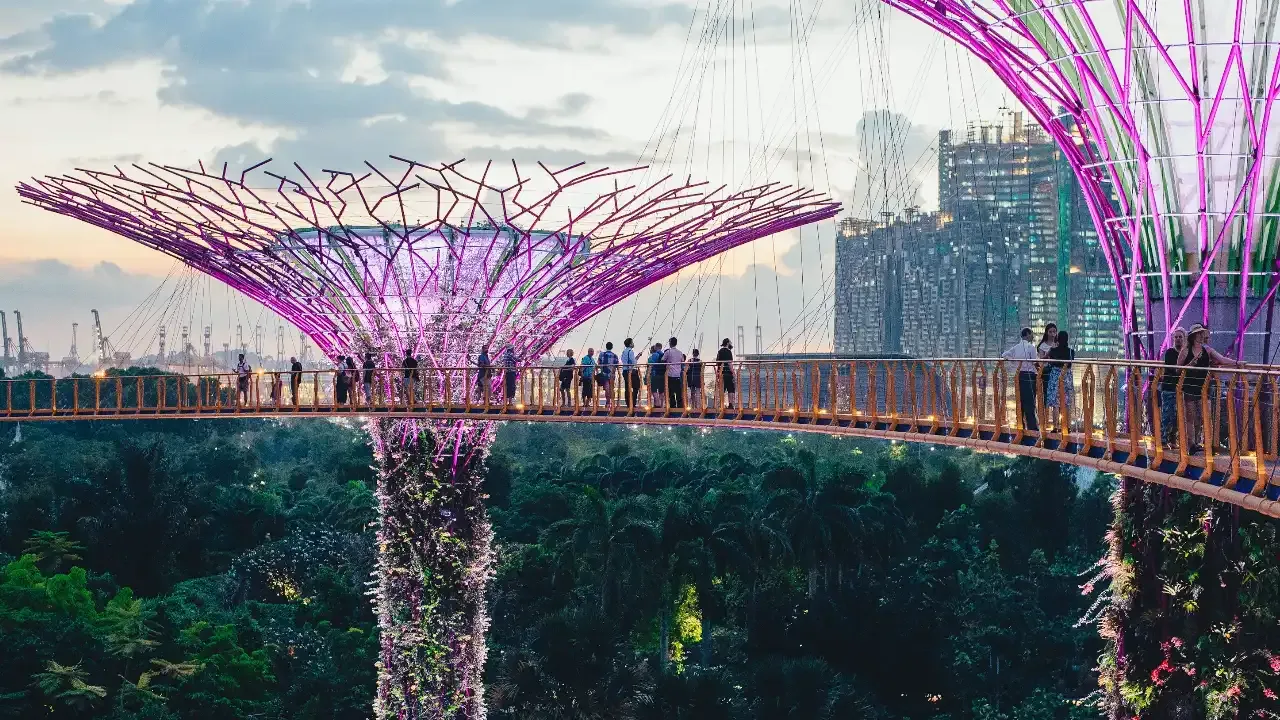
Singapore is the easiest place to travel in Southeast Asia and the least like the rest of it. The whole country is one city of six million people on an island about 50 km wide. The MRT is clean and on time, the tap water is safe, the streets are spotless, and you can eat a plate of chicken rice at a hawker stall an hour after a cocktail sixty floors up.
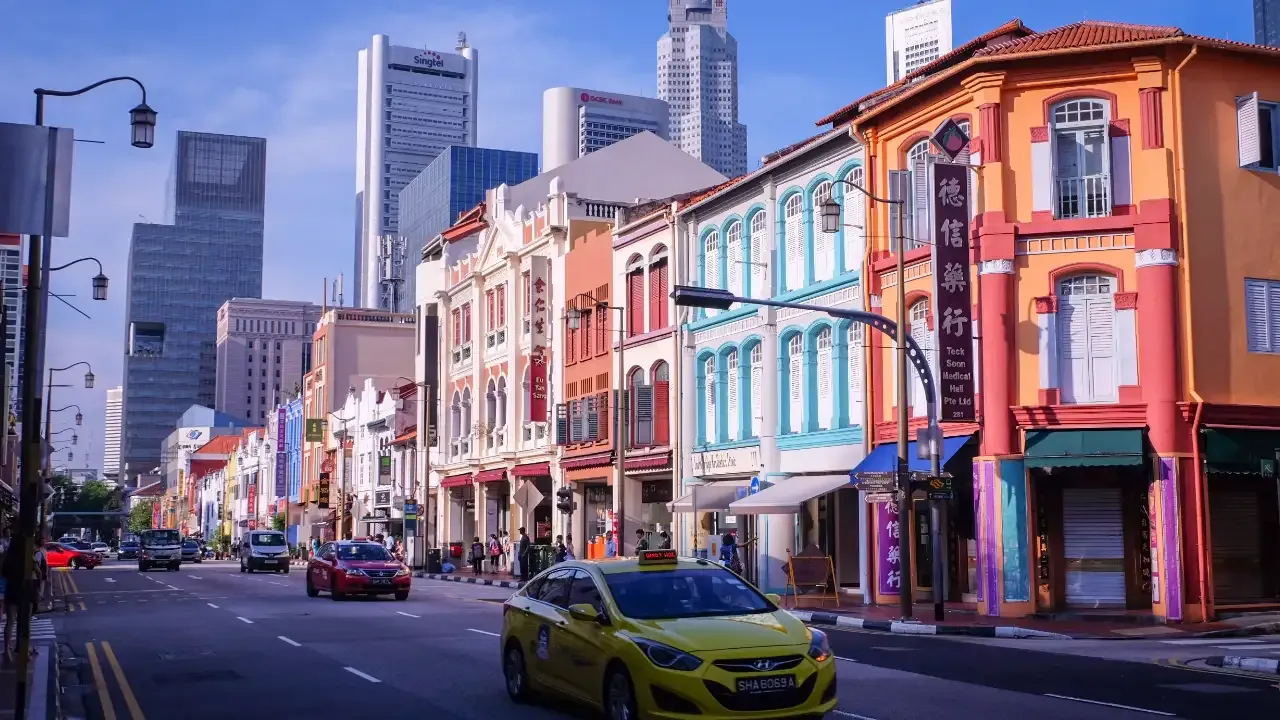
What makes it interesting is the layering. Chinese, Malay and Indian communities have lived side by side here for generations, so a single afternoon can run from a Hindu temple on Serangoon Road to a mosque in Kampong Glam to a Taoist shrine in Chinatown, with lunch in between at a hawker center selling all three cuisines from neighboring stalls. English ties it together, spoken by everyone and mixed with Malay and Hokkien into the local Singlish. The hawker centers are where most of the eating happens, at a few dollars a plate.
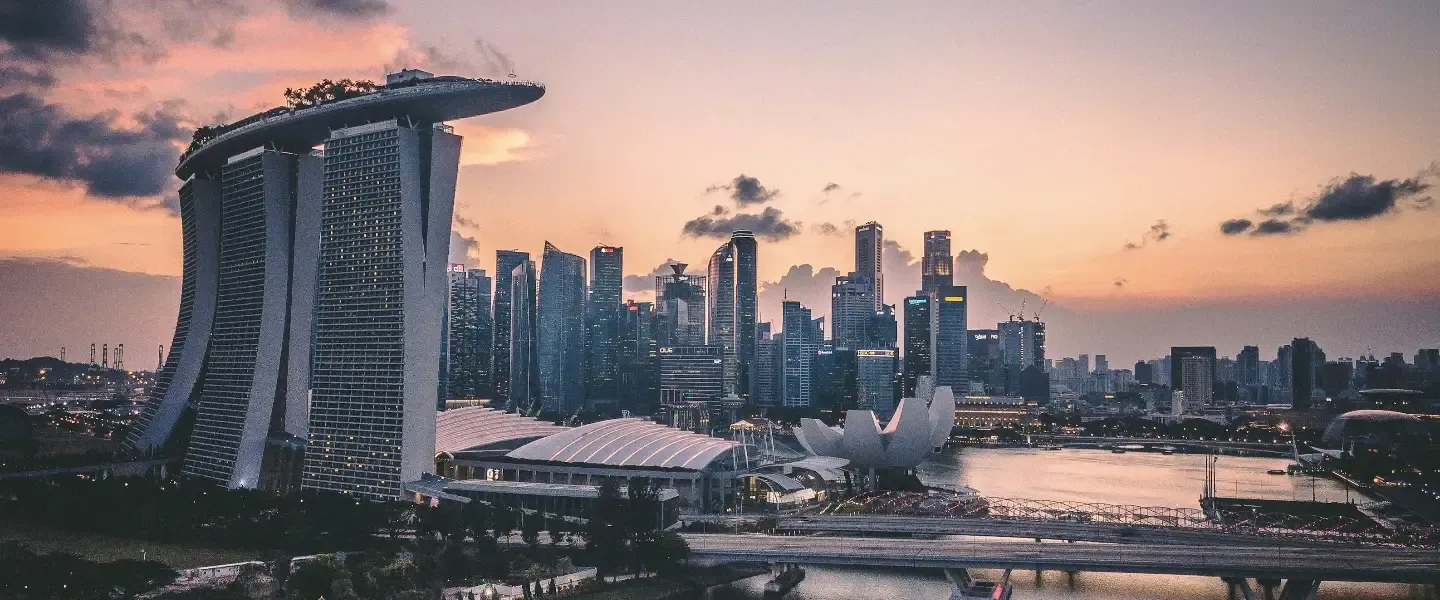
Most first-time visitors spend a lot of time around Marina Bay. The skyline is the postcard, but what stays with you is the sense that an entire city has been planned down to the last tree, footpath and drainage canal. Gardens by the Bay looks absurd when you first see it, like a science-fiction set dropped into the tropics, and it works anyway.
Look beyond the CBD and the city gets less uniform. Tiong Bahru still feels residential despite the cafes. Katong and Joo Chiat hold traces of old Peranakan Singapore beneath the modern shopfronts. Little India stays noisy and crowded in a way that feels almost rebellious by local standards. Ten minutes on foot in the right direction changes the mood completely.
The catch is the cost and the polish. Rent, hotels and anything with alcohol in it are priced well above the rest of the region, and the order that makes the city run so well also sands off the improvisation travelers love elsewhere. Rules are everywhere and enforced. Even the hawker centers, for all their character, run inside a system that is tidy and controlled.
This is not the place for beaches, wilderness or weeks of slow wandering. Many travelers use it as a base for a few days before heading to Bali, Phuket or Tokyo. Three or four focused days is the right length, enough for the neighborhoods, the food and a day on Sentosa without stretching it.
Sentosa Strategy
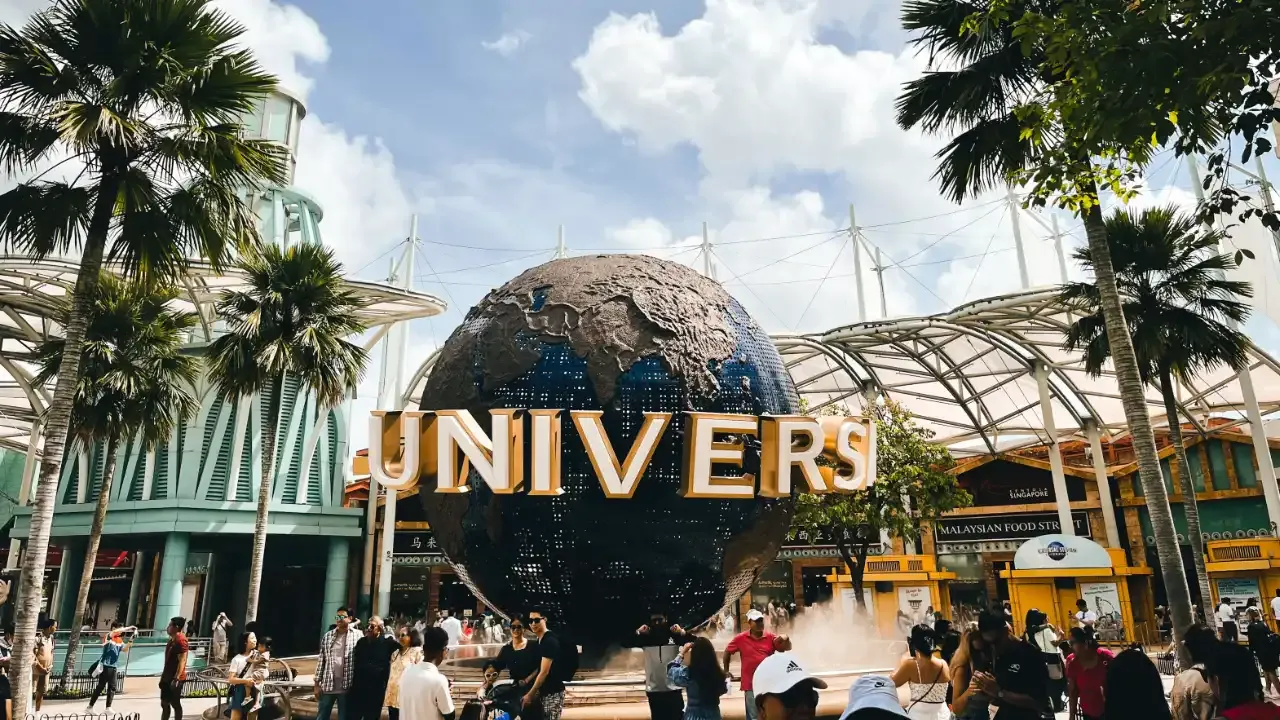
Universal Studios sits inside Resorts World on Sentosa, the island Singapore bolted onto its southern tip to hold what a tidy downtown cannot: a casino, an aquarium, trucked-in beaches, and a theme park. The casino runs around the clock and pulls a very Singapore trick, taxing locals to walk in while waving tourists through free, though it has nothing to do with why you came. The park is small by Universal standards, seven zones you can lap in a morning, and that compactness is the appeal. The Transformers dark ride and the dueling Battlestar Galactica coasters are the equal of anything in the bigger parks abroad. Minion Land, which replaced the old Madagascar corner, draws the longest lines. Come on a weekday outside school holidays, or you will spend the day in line.
Heat is the variable nobody plans for. Sentosa sits almost on the equator, and by mid-morning the open-air lines in Ancient Egypt and Sci-Fi City become standing saunas, usually broken by an afternoon thunderstorm that clears the outdoor rides for half an hour. Buy tickets before you go, get through the gates at opening, and ride the coasters first while the lines are short and the sky holds. An Express pass is wasted money on a quiet weekday and the only thing that saves a packed holiday, where it turns a day of waiting in line into a day of riding. Bring water and reapply the sunscreen you will sweat straight off.
The rest of Sentosa is where a day quietly unravels. The sand at Siloso and Palawan is imported, and the view from your towel is the Singapore Strait jammed with anchored tankers and container ships, not open sea. The aquarium earns its ticket and the Skyline Luge is more fun than it should be, but most of the island is a row of separately priced attractions built to keep you tapping a card. Getting over is easy, by the Sentosa Express monorail from VivoCity, the cable car down from Mount Faber, or the boardwalk on foot. Pick one or two things and ignore the bundle deals.
This is a day for families, coaster people, and anyone traveling with kids who have hit their limit on temples and hawker centers. It is not the real Singapore and never pretends to be, which suits a day when you want a clean, well-run park and a wave pool over another museum. Treat Universal as the headliner, give it half a day, and leave before the evening crowds arrive for the light shows. Traveling without kids and short on time, you can skip the whole island and miss nothing of the country.
The rules myth
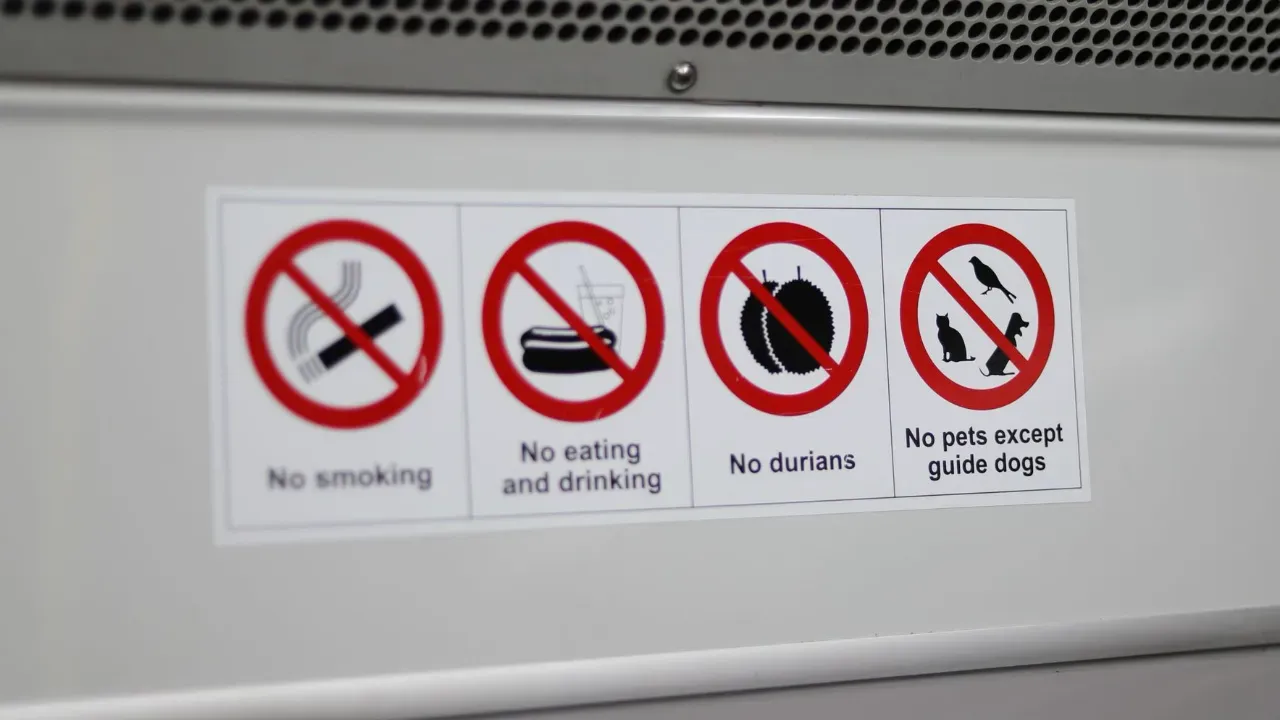
Drop the chewing-gum panic first. You can chew gum here all you like; the law bans selling and importing it, so the worst case is you cannot buy a pack at the corner shop. Most of what tourists trade is like this, half true and decades stale: the arrested-for-jaywalking stories, the obscure fines passed around like trivia. Nobody is running stings on visitors crossing an empty street. The rules that actually catch people are duller and more specific than the legends, and they are easy to walk straight into if you arrive treating the whole thing as a joke.
The one that catches travelers most often is vaping. E-cigarettes are illegal to bring in, carry, or use, and officers at Changi do check; a vape in your bag means confiscation and a heavy fine, and enforcement has only tightened. Cigarettes come next: every stick is taxed, there is no duty-free allowance, and strolling through the green channel with a carton is an expensive mistake. Smoking is confined to marked zones, even outdoors. Drinking in public is banned between 10.30pm and 7am, a rule brought in after a riot in Little India left the government nervous about alcohol on the streets.
One category is not a quirk and not a fine. Singapore executes people for drug trafficking, and the amounts that legally count as trafficking are lower than most visitors assume. Above those amounts the death sentence is mandatory, with only narrow exceptions, and the state carries it out. Whatever you are relaxed about in Thailand or back home, leave it at the border. There is no version of this where the rule bends for a tourist who did not know.
None of this makes Singapore hard to travel. The rules are consistent, posted, and aimed at behavior rather than at foreigners, so you follow them the way you follow them at an airport and soon stop noticing. The people who struggle are the ones who treat every regulation as a dare, usually for an audience. Everyone else adjusts in a day. Read the signs in the MRT and at customs, ditch the vape before you fly, and the strictness stops being the attraction and becomes the infrastructure that makes the city so easy to move through.
Areas of Singapore
- Beach, resorts, families
Sentosa
Sentosa sits apart from the main city and feels almost like a separate destination. Beaches, resorts, attractions, and family-oriented activities dominate the island. It is easy enough to reach the center, but staying here means accepting some distance from Singapore's food and neighborhood culture. The sand on the beaches is imported and the view from it is the shipping lane.
Good for: Beach time, family trips, resort stays.
Skip if: You want to spend most of your time exploring the city itself.
- Heritage, cafés, local life
Tiong Bahru
Tiong Bahru mixes low-rise art deco housing blocks with bakeries, cafés, and long-running local food stalls. It feels more residential than the major tourist districts and gives a better sense of everyday Singapore. The evenings are quieter and the pace is slower.
Good for: Neighborhood walks, cafés, local atmosphere.
Skip if: You want major attractions within walking distance.
- Shopping, transport, city access
Orchard Road
Orchard Road is a long corridor of shopping centers connected by underground walkways, food courts, and MRT stations. Locals use it as much as visitors, especially on weekends and evenings. It is a practical base for reaching the rest of the city, but much of the neighborhood revolves around retail.
Good for: Shopping, transport links, easy city access.
Skip if: You want heritage streets and neighborhood character.
- Food, heritage, walkability
Chinatown
Chinatown puts temples, hawker centers, cocktail bars, and office towers within a few minutes of each other. Tourist crowds cluster around the main streets, but the area quickly becomes more local once you drift away from the souvenir shops. It is one of the easiest parts of Singapore to explore without constantly using the MRT.
Good for: Hawker food, cultural sights, exploring on foot.
Skip if: You prefer modern towers and a polished business-district feel.
- Culture, food, local life
Little India
Little India packs flower stalls, spice merchants, temples, and crowded eateries into a surprisingly small area. The streets are louder, busier and more visually chaotic than almost anywhere else in Singapore, and it is the one part of the city where the crowd spills off the sidewalk.
Good for: Indian food, street life, temples.
Skip if: You want a calm and highly polished environment.
- Skyline, sightseeing, first-time visitors
Marina Bay
Marina Bay revolves around the waterfront, the financial district, and the landmarks that appear on nearly every postcard. Days here are spent walking promenades, crossing air-conditioned malls, and moving between attractions that feel built to impress. Once office workers head home, parts of the area can feel quieter than visitors expect.
Good for: Landmark sightseeing, skyline views, short first visits.
Skip if: You want old shophouse streets and hawker centers outside your door.
- Nightlife, dining, culture
Kampong Glam
Kampong Glam centers on Sultan Mosque and a network of side streets filled with cafés, bars, record shops, and independent boutiques. The neighborhood has more evening energy than most of Singapore without turning into a party district. It feels less polished than Marina Bay and less tourist-heavy than parts of Chinatown.
Good for: Restaurants, nightlife, urban exploration.
Skip if: You want quiet nights and early mornings.
Liveability
Fast internet, reliable public transport, safe streets, and drinkable tap water remove most of the friction from daily life. Getting around is easy without a car, hawker centers keep food affordable, and the biggest day-to-day annoyance is the constant heat and humidity.
Living in Singapore
Sustainability
Tap water is safe to drink, streets and public spaces are exceptionally clean, and air quality is good most of the year. The environmental issues visitors actually notice are the year-round heat and humidity, flash flooding on low-lying roads during the heaviest monsoon rain, and the haze that blows in from regional fires between August and October.
Frequently Asked Questions
Planning & moving around
-
How many days do you need to see Singapore?
Three or four days suits most first-time visitors. That is enough for Marina Bay, a few neighborhoods, the food and a day on Sentosa without rushing. People who treat Singapore as a one-night stopover often leave wishing they had stayed longer.
-
What's the most common mistake first-time visitors make in Singapore?
Trying to do outdoor sightseeing through the hottest part of the day. The heat and humidity hit harder than many visitors expect, especially around Marina Bay and Gardens by the Bay. Start early, slow down at midday, and use museums, malls, or hawker centers as air-conditioned breaks.
-
What's the best way to get around Singapore, MRT or bus?
The MRT does most of the heavy lifting and will get you to almost anything on a visitor's list. Buses are useful for short hops and routes that would otherwise require train changes. Both accept contactless cards and mobile payments, so there is no need to buy special tickets.
-
What apps should I download for getting around Singapore?
Google Maps handles public transport routing very well. Grab is the main ride-hailing app, while Gojek and TADA are worth checking when prices surge. The MyTransport SG app provides more detailed local transport information.
-
Can you do day trips from Singapore?
Yes. Johor Bahru in Malaysia is the most common option for shopping and food, though border lines can be painful on weekends. Pulau Ubin offers a completely different side of Singapore, while ferries also reach Batam and Bintan in Indonesia.
Safety & medical
-
Is Singapore safe to walk around at night?
Yes. Singapore has one of the lowest crime rates in the world, and walking alone after dark is normal across most of the city. Solo women generally report few problems. Basic caution around alcohol-heavy nightlife areas is enough for most visitors.
-
Can you drink the tap water in Singapore?
Yes. Tap water is safe to drink across the island, and locals use it without thinking twice. Ice, salads, and brushing your teeth with tap water are all fine. Buying bottled water is usually unnecessary.
-
What are common scams in Singapore to watch out for?
Singapore has far fewer tourist scams than most cities in the region. The most common visitor problem is inflated drink bills at a handful of nightlife venues. Check prices before ordering and be cautious around aggressive touts.
Laws & local norms
-
What are the drug laws in Singapore?
Singapore has some of the strictest drug laws in the world. Trafficking above certain thresholds carries the death penalty, while possession and consumption can lead to prison, caning, or both. Whatever your habits elsewhere, leave drugs completely out of your Singapore trip.
-
Is vaping legal in Singapore?
No. Importing, carrying, buying, selling, or using e-cigarettes is illegal. Devices are regularly confiscated at the airport and fines can be substantial. The simplest advice is to leave all vaping gear at home.
-
What are the LGBTQ+ laws in Singapore?
Same-sex activity is legal, and Singapore is generally safe and comfortable for LGBTQ+ visitors. Same-sex marriage is not recognized, and legal protections are more limited than in many Western countries. Social attitudes are usually polite but somewhat more reserved than in Bangkok.
-
What are some general etiquette rules in Singapore?
Wait your turn in line, keep noise levels down on public transport, and do not eat or drink on the MRT. Littering fines are real and widely enforced. A handshake works for most greetings, and public behavior tends to be fairly restrained.
-
What's the dress code for visiting mosques in Singapore?
Cover your shoulders and knees, and women should cover their hair in prayer areas. Most major mosques provide robes or scarves if needed. Shoes come off before entering the prayer hall.
-
Is using a VPN legal in Singapore?
Yes. VPNs are legal for personal use and widely used by residents and visitors. Using a VPN does not make illegal activities legal, but ordinary travel use is not an issue.
-
Can tourists gamble in Singapore's casinos?
Yes. Tourists can enter the casinos at Marina Bay Sands and Resorts World Sentosa with a passport and do not pay the entry levy charged to locals. You must be at least 21 years old to enter.
Money & costs
-
Should I use cash or card in Singapore?
Cards and phone payments work almost everywhere, including public transport. Hawker centers and older independent stalls are the main exception, with some still preferring cash. Carry a few small notes and you will be covered.
-
Do you tip in Singapore?
No. Restaurants already add a service charge, and tipping is not part of local culture. Taxi drivers, hawker stalls, and cafés do not expect it either. Rounding up is fine, but nobody expects extra money.
-
How much does a meal cost at a hawker center in Singapore?
A filling hawker meal usually costs around S$5 to S$8. Seafood dishes and tourist-heavy locations can cost more, but hawker centers remain one of the best value parts of Singapore. Alcohol is where costs rise quickly.
Culture & etiquette
-
What does almost every tourist get wrong about Singapore?
Many visitors think Singapore is just Marina Bay Sands, shopping malls, and an airport stopover. The most interesting parts are often the older neighborhoods, hawker centers, temples, and residential districts. A trip built only around the postcard sights can feel surprisingly shallow.
-
How much English is spoken in Singapore?
Almost everyone speaks English, and it is the main language used in government, business, education, and public transport. Visitors can comfortably navigate the city without learning another language. You will also hear Mandarin, Malay, Tamil, and local Singlish in daily life.
Food & drink
-
Where do locals eat in Singapore?
Hawker centers are still the default answer. Maxwell, Old Airport Road, Tekka, and Tiong Bahru all attract large local crowds. Long lines are often a better recommendation than online rankings.
-
What are some must-try local dishes in Singapore?
Start with Hainanese chicken rice, laksa, char kway teow, satay, and Hokkien mee. Chilli crab and black pepper crab are the famous splurge dishes. For breakfast, copy the locals and order kaya toast, soft-boiled eggs, and kopi.
Families & kids
-
Is Singapore good for families with young kids?
Yes. Attractions such as the zoo, Bird Paradise, Sentosa, and the aquarium are built with families in mind. Clean public facilities, reliable transport, and easy access to healthcare make traveling with children straightforward. The heat is usually the biggest challenge.
-
Is Singapore stroller-friendly?
Yes. MRT stations, buses, malls, and major attractions are built with lifts and ramps. Wide sidewalks and accessible crossings make moving around easy with a stroller. The climate is a bigger obstacle than the infrastructure.
Staying longer
-
What's the best neighborhood to stay in Singapore for a first-timer?
Chinatown is the easiest base: central, well connected, and packed with good cheap food. Marina Bay puts you beside the headline sights but comes with the highest hotel prices. Kampong Glam is a good middle ground for bars and cafés, while Little India is cheaper and noisier.
After dark
-
What are the main nightlife areas in Singapore?
Clarke Quay is the busiest nightlife district, while Robertson Quay is quieter and more bar-focused. Marina Bay is rooftop bars and expensive views. Tanjong Pagar, Kampong Glam, and Tiong Bahru usually offer better value and more local crowds.
-
Does Singapore have a red-light district?
Yes. Geylang is Singapore's best-known red-light district, with licensed brothels operating under a regulated system. It is also one of the city's best late-night food areas, so many visitors go purely for the restaurants. The area is easy to avoid if it does not interest you.