
Boracay Right Now
Saturday Beach Parties (Oktoberfest) · Cove 2, Boracay Newcoast, Malay, Aklan
Interest in travel to Boracay remained about the same as a year ago, suggesting demand is holding steady.
Best time to visit Boracay
Not the best time to visitSouthwest monsoon (Habagat)Typhoon risk window
Rough seas and persistent wet weather keep visitor numbers low, making this one of the island's quietest months for beach holidays.
SCORE BY MONTH
December through April brings the calm seas and sunny beach days most visitors come for. Christmas, New Year and Easter are the busiest and most expensive weeks, so book early or visit later in the dry season. July through September often brings rough seas, stronger winds and disrupted boat trips.
Day-to-day in Boracay
Walkability
42/100
Boracay is easy to explore on foot if you stay around White Beach, but walking becomes less pleasant once you leave the beachfront promenade for the island's main road.
The beachfront promenade is pedestrian friendly, but many roadside sidewalks are narrow, broken or blocked.
Most beaches, restaurants and shops around White Beach are within an easy walk from one base.
E-trikes and motorbikes crowd the main road, making road crossings less comfortable than the beachfront path.
Heat and humidity make twenty-minute walks uncomfortable for most of the year, and wet months pile on top.
-
Monthly cost
$892 / month
AFFORDABLESolo mid-range stay including rent, daily eating out, groceries, and routine costs.
-
TROPICAL WATER SPORTS
Bulabog Beach becomes the island's kitesurfing center during the Amihan season, with schools lining the shore and steady winds attracting everyone from beginners to experienced riders.
-
Coworking
Dedicated coworking options are limited, with Boracay Coworking among the few purpose-built spaces. Many remote workers split their time between coworking spaces and quieter cafés with reliable internet around Station 2 and Balabag.
-
Gym
$34 / month
VERY AFFORDABLEBoracay has a handful of solid independent gyms, including Legacy Gym Boracay, plus several hotel fitness rooms that accept outside visitors. Enough for a short stay, but not the selection you'll find in larger Philippine cities.
Need to Know
- Population
- 60,077 PSA · 2020 Census
- International visitors
- 412,803 (2024) -2.2% YoY Malay LGU · 2024
- Annual visitors per resident
- 6.9× Annual international visitors divided by the population
Top visitor markets
- South Korea 36.3%
- China 10.9%
- United States 10.3%
- Russia 3.5%
- United Kingdom 3.2%





Show fewer Show 5 more
- Germany 2.2%
- France 1.4%
- Ireland 1.3%
- Italy 1.2%
- Poland 0.7%





Source: Malay LGU · 2024
Annual visitor arrivals
- 2024 412,803 -2.2%
- 2023 422,201
International visitor arrivals. COVID years (2020-2021) are included for completeness. Source: Malay LGU · 2024
- Currency
- Philippine peso (PHP)
- Language
- Filipino and English; English is widely spoken in tourist areas.
- Tap water
- Not safe to drink
- Time zone
- PHST (UTC+8)
- Power plug
- Type A / B / C, 220V
- Dialing code
- +63
- Driving side
- Right
- Tipping
- Not expected, but rounding up or leaving around 5 to 10% at restaurants is appreciated if service is good.
- Internet
- Reliable 4G and 5G coverage, with good Wi-Fi in most hotels, cafés and restaurants.
- Emergency
- 911
When not to go
-
Skip the southwest monsoon
Jul – SepDon't come during the heart of the Habagat season if your trip revolves around White Beach. Rough western seas, stronger winds and frequent rain regularly disrupt boat trips and beach days, and the island loses much of what people travel here for.
Upcoming Events & Holidays in Boracay
Upcoming events, next 30 days
Public holidays & observances, next 12 months
Dates are researched and checked, but events move. Always confirm with the official source before you book anything around them.
Getting To Boracay
-
From Godofredo P. Ramos Airport (MPH)
About 40 to 60 minutes to most Boracay hotels.
This is the closest airport to Boracay. A short tricycle ride takes you to Caticlan Jetty Port, followed by a short ferry crossing to Cagban or Tambisaan Port before continuing to your hotel by e-trike or van.
Direct flights to Boracay
Serves 6 direct destinations, 2 international and 4 domestic, about 30 flights a day.
International 2- Nanjing NKG ChinaR Royal Air Charter3/week
- Seoul ICN South KoreaR Royal Air Charter2/week
Within Philippines 4
- Manila MNL
 Cebu Pacific Air
  Philippine Airlines
  Philippines AirAsia 23/day
 - Lapu CEB Cebu Pacific Air Philippine Airlines 4/day
- Angeles City CRKA Atlantis European Airways Cebu Pacific Air 1-2/day
- Davao City DVO Cebu Pacific Air 3/week
Nonstop routes only. Flights per day are an average, each way. Data: AeroDataBox, updated July 2026.
Visa rules apply at the country level. See the full The Philippines visa guide, with every visa and its official do-it-yourself cost. -
-
From Kalibo International Airport (KLO)
Usually 2 to 3 hours to Boracay hotels.
Kalibo often has more flight options but sits much farther from the island. Travel by shared van or bus to Caticlan Jetty Port, then continue by ferry before transferring to your accommodation.
-
From Caticlan Jetty Port
Main ferry gateway to Boracay.
Everyone arriving by air passes through Caticlan Jetty Port before boarding a short ferry to Boracay. Ferry services run frequently during the day, with weather occasionally affecting crossings during the southwest monsoon.
Safety Advice
Scooter crashes are the biggest risk, especially on unfamiliar roads or after drinking. Petty theft and inflated tourist prices happen around busy beach areas, while rough seas and stronger winds during the Habagat monsoon can disrupt swimming and boat trips.
Occasional seismic activity
Earthquakes
Boracay gets the odd earthquake, but damaging earthquakes are rare and most tremors go unnoticed.
See the 5 strongest nearby earthquakes
- M5.92009 · 178 km · Batasan
- M5.92006 · 167 km · Estrella
- M5.82010 · 149 km · Mabiton
- M5.72019 · 117 km · San Agustin
- M5.62012 · 198 km · Mobo
Source: U.S. Geological Survey · Updated August 2026
Common Scams in Boracay
-
Water Sports Equipment Damage
HIGH RISKTrigger:Staff claim your rental has new damage after you return it
Some unlicensed beach operators blame customers for scratches or dents that were already there, then demand expensive compensation before returning your deposit or ID.
How to avoid: Photograph or film the equipment before leaving and rent from established operators with clear paperwork.
-
Fake Online Tour & Resort Bookings
HIGH RISKTrigger:A resort or tour asks for payment to a personal account
Fake social media pages copy legitimate businesses and collect payment through bank transfer or GCash before disappearing or providing fake bookings.
How to avoid: Book directly with established businesses or Department of Tourism accredited operators and verify contact details before paying.
-
ATM Skimming
HIGH RISKTrigger:An ATM looks tampered with or someone distracts you while withdrawing
Criminals occasionally fit skimming devices to busy ATMs, including those near D'Mall, to copy card details and PINs.
How to avoid: Use ATMs inside banks where possible, inspect the card slot and cover the keypad while entering your PIN.
-
Tricycle Overcharging
MEDIUM RISKTrigger:A driver quotes a fare before you get in
Some drivers charge tourists several times the local fare or later claim the quoted amount was per passenger instead of for the whole ride.
How to avoid: Agree on the total fare before leaving and ask your hotel what a normal fare should be.
-
Unlicensed Tour Guides
MEDIUM RISKTrigger:Someone approaches you on the beach offering discounted tours
Some beach touts collect deposits for tours that never happen or sell overpriced trips through unlicensed operators.
How to avoid: Book through your hotel or a Department of Tourism accredited operator rather than beach solicitors.
Mistakes to Avoid
-
Drinking tap water
SERIOUS CONSEQUENCETap water is not considered safe for visitors to drink and stomach illness can derail your trip.
Fix: Drink bottled or properly filtered water, including when brushing your teeth if you have a sensitive stomach.
-
Collecting sand or pebbles
SERIOUS CONSEQUENCERemoving sand or pebbles from Boracay is illegal and penalties include fines, possible imprisonment or both.
Fix: Leave shells, sand and stones where they are and buy legal souvenirs instead.
-
Smoking or drinking on White Beach
SERIOUS CONSEQUENCESmoking and drinking alcohol on White Beach are restricted and enforcement is active. Fines apply if you ignore the rules.
Fix: Smoke only in designated areas and drink inside licensed bars or restaurants.
-
Not booking accommodation in advance
SERIOUS CONSEQUENCEVisitors are expected to have a confirmed booking at an accredited accommodation before traveling to Boracay. Without one you can be refused onward travel to the island.
Fix: Book an accredited property before departure and keep your confirmation accessible.
-
Ignoring beach warning flags
SERIOUS CONSEQUENCEBeach flags reflect current sea conditions and dangerous currents. Ignoring them has led to rescues and drownings.
Fix: Only swim when conditions match your ability and obey the warning flags.
Money & Payments
Carry cash for tricycles and small businesses, use cards at larger venues, and always pay in Philippine pesos to avoid DCC.
-
Carry Small Cash
Keep Philippine pesos on hand, especially ₱20, ₱50 and ₱100 notes. Many tricycle drivers, beach vendors and smaller activity operators are still cash only, and arrival fees at the jetty are commonly paid in cash.
-
Cards Work Widely
Visa and Mastercard are accepted at most hotels and larger restaurants around White Beach and D'Mall. American Express is uncommon, and some businesses add a card surcharge.
-
ATM Fees and Limits
BDO, BPI and Metrobank ATMs are easy to find around Boracay. Foreign cards often incur withdrawal fees of about ₱200 to ₱250 (US$3.50 to US$4.40), and many machines limit each withdrawal to ₱10,000 to ₱20,000.
-
Decline DCC
If an ATM or card terminal offers to charge your home currency, decline it and choose Philippine pesos instead. Dynamic Currency Conversion almost always gives a worse exchange rate.
-
GCash and Maya
Many businesses accept GCash and Maya, but both are mainly designed for Philippine users. Most short-term visitors should expect to rely on cards and cash instead.
-
Arrival Fees
Most visitors pay environmental and terminal fees before boarding the ferry to Boracay. Check the latest payment process before traveling, as accepted payment methods and collection systems occasionally change.
-
International Transfers
To send money to a bank account in The Philippines, for things like rent or day-to-day expenses, services like Wise or Remitly usually offer better rates than traditional banks and faster delivery.
You'll typically need the recipient's full name, account number, and SWIFT/BIC code. Some banks may also require a local address.
Costs in Boracay
A comfortable mid-range trip typically costs about $100 to $180 per day, including a good hotel, meals, local transport and a few activities. Food is reasonable, but beachfront hotels jump sharply in peak season, and flights plus island transfers often cost more than expected.
Save money?
Sign up for our guide on how to save money on your next trip.
SIM Cards & Data
Best option for most travelers: an eSIM you set up before you arrive. You'll be online the moment you land, with no airport line and no tourist pricing.
Travel eSIMs Connect the second you land. Zero hassle. Skip the airport line and paperwork. Activate before you fly and land connected. Find the best eSIM →Prefer a local SIM?
If you prefer not to use an eSIM, physical SIM cards are easy to buy at Caticlan Airport or from official carrier stores and mobile phone shops around Boracay. Smart is the one to get. Bring your passport, as SIM registration is required by law before the card can be activated.
What Boracay is Like
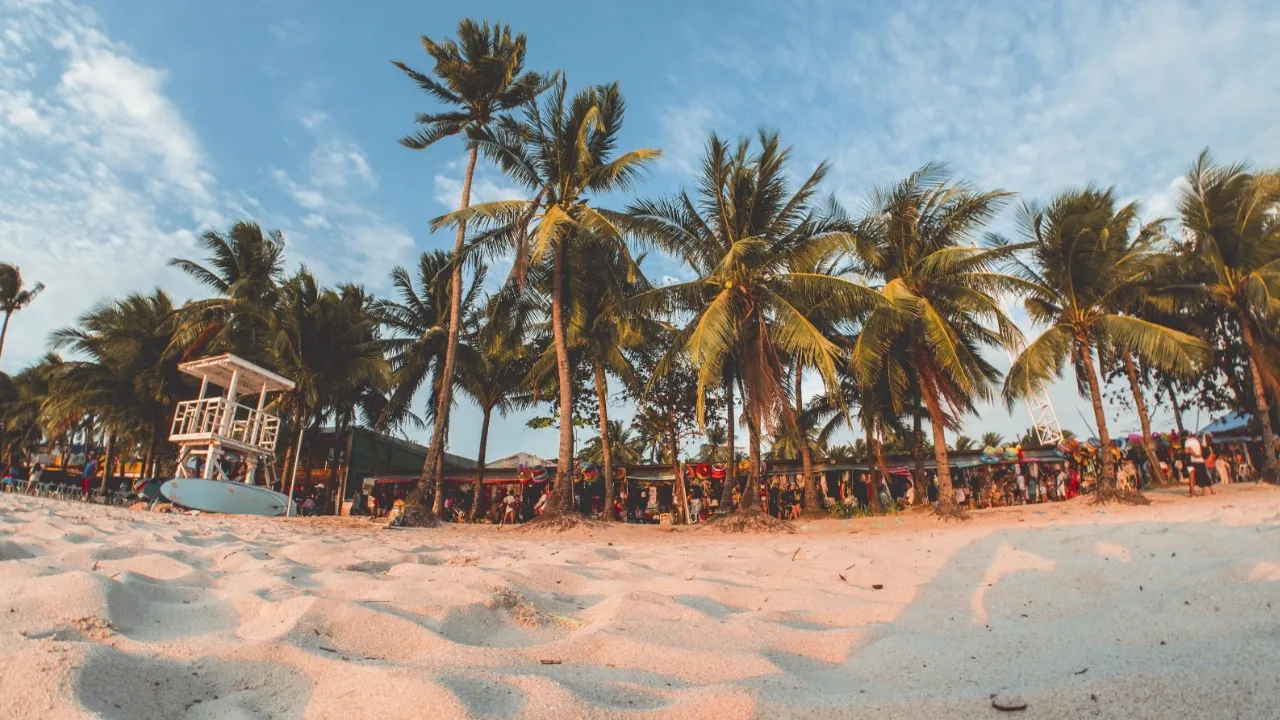
White Beach remains the undeniable center of the island, a long ribbon of powdery coral sand that feels unusually soft underfoot and stays comfortable even under the midday sun. The water is the reason most people come, clear enough that the postcard version barely exaggerates reality. Years of unchecked development eventually forced a government rehabilitation that removed illegal structures, improved water quality and imposed strict rules that still shape the island today. The result is a beach that feels cleaner and better managed than it once was, even if it is also far more regulated. You will not find Boracay's old party reputation here anymore. You will find one of Southeast Asia's best urban beaches.
Navigation on this narrow island revolves around the three stations that divide White Beach. Station 2 is the commercial center, with D'Mall, restaurants, bars and souvenir shops packed into a surprisingly small area that rarely stays quiet after sunset. Walk north toward Station 1 and the crowds thin out as larger resorts occupy wider stretches of sand. Head south to Station 3 and the pace slows again, with smaller guesthouses, older trees and simpler beach bars replacing much of the noise. A few hundred meters makes a noticeable difference.
Crossing the island takes only a few minutes by electric tricycle, yet Bulabog Beach feels like another destination altogether. During the Amihan season the steady wind turns the eastern shore into one of the country's busiest kitesurfing spots, with instructors, rental shops and colorful kites replacing rows of sun loungers. The beach itself is functional rather than pretty, and patches of sea grass often cover the shoreline, but that misses the point. People come here to be on the water, not to lie beside it.
Boracay works best when you accept it for what it is instead of expecting a deserted tropical island. Nearly everything revolves around visitors, from international restaurants to organized boat trips, dive shops and beachfront hotels, and very little feels accidental anymore. If you are chasing quiet villages, empty beaches or a strong sense of local daily life, Cebu or a less developed island will probably suit you better. If your ideal holiday is walking from breakfast straight into calm turquoise water without thinking much harder than that, Boracay still does that exceptionally well.
After Rehabilitation
The biggest mistake first-time visitors make is judging Boracay by stories from people who came before the environmental shutdown. They remember beachfront bars spilling onto the sand, all-night parties and a shoreline that felt far less controlled. What you arrive to now is a beach where businesses follow tighter rules, smoking is pushed into designated areas, beachfront clutter has largely disappeared and enforcement is visible. The island feels less spontaneous than it once did. It also functions far better.
Walk White Beach early in the morning and the change is obvious. The sand is cleaner, the water is clearer and the view is no longer interrupted by rows of plastic chairs, makeshift bars or pipes running across the beach. The government did not simply tidy the place up. It forced hotels, restaurants and tour operators to adapt to stricter environmental standards that still shape daily life long after the reopening.
Not everyone thinks the new Boracay is an improvement. If your idea of a beach holiday involves loud parties until sunrise and a slightly chaotic atmosphere where anything goes, that version is gone. What replaced it is closer to a resort town with clear boundaries, predictable rules and a shoreline that feels far more family friendly. The island traded freedom for cleanliness, and for most visitors that was a trade worth making.
Where to Stay in Boracay
- Quiet, cove, couples
Diniwid Beach
Diniwid Beach sits beyond Station 1 in a small cove that feels separate from the rest of Boracay despite being within walking distance. The beach is much smaller, restaurants are fewer and evenings stay peaceful after day visitors leave. You trade variety for quiet. Many people consider that a fair exchange.
Good for: Couples, quiet holidays, small boutique stays.
Skip if: You want dozens of restaurants and bars outside your door.
- Puka Beach, quieter, nature
Yapak
Yapak sits at the northern end of the island, where resorts are spread out and Puka Beach replaces the constant activity of White Beach. Distances are longer, so walking is less practical and tricycles become part of daily life. Mount Luho is also nearby if you want the island's best viewpoints. Choose Yapak for space rather than convenience.
Good for: Quiet resorts, Puka Beach, scenic viewpoints.
Skip if: You want to walk to restaurants, bars and nightlife every evening.
- Wide beach, resorts, quieter
Station 1, White Beach
Station 1 sits at the northern end of White Beach where the sand is widest and the shoreline feels noticeably less crowded than the center. Most accommodation leans toward larger resorts, but restaurants and bars are still within walking distance. Nights stay quieter without feeling isolated. Many repeat visitors end up here for that reason.
Good for: Couples, beach time, quieter stays.
Skip if: You want to step straight into Boracay's busiest nightlife.
- Central, dining, nightlife
Station 2, White Beach
Station 2 is where Boracay rarely slows down, with D'Mall, busy restaurants, bars and most of the island's foot traffic packed into a compact stretch of White Beach. Staying here means walking almost everywhere instead of relying on tricycles. Sunset is busy and dinner lines are common during peak season. If convenience matters more than peace, this is the obvious choice.
Good for: First visits, nightlife, restaurants, walking everywhere.
Skip if: You want quiet evenings and an uncrowded beach.
- Kitesurfing, sunrise, quieter
Bulabog Beach
Bulabog Beach faces the opposite side of the island and revolves around wind instead of swimming. During the Amihan season the shoreline fills with kitesurfers, instructors and equipment instead of sunbeds, while mornings begin with sunrise rather than sunset. White Beach is only a short walk away, making it easy to split your time between both coasts. Stay here if you want activity instead of postcard sand outside your room.
Good for: Kitesurfing, wind sports, sunrise walks.
Skip if: You expect calm swimming straight outside your accommodation.
- Relaxed, hostels, local
Station 3, White Beach
Station 3 slows the pace without sending you far from the action. Guesthouses, hostels and simpler beachfront stays replace many of the larger resorts, and the beach has more open space outside holiday periods. You can still walk to Station 2, although it takes long enough that many people use a tricycle after dark. It feels more lived in than polished.
Good for: Hostels, longer stays, relaxed beach days.
Skip if: You want luxury resorts and the island's busiest restaurant scene.
- Local, ferry, quieter
Manoc-Manoc
Manoc-Manoc feels more residential than resort focused, with local homes, small eateries and Tambisaan Beach replacing long rows of beachfront hotels. Many island hopping boats depart nearby, but you will rely on tricycles for White Beach after dark. It is a practical base rather than a glamorous one. That suits some travelers perfectly.
Good for: Local neighborhoods, island hopping, quieter stays.
Skip if: You want to spend every day on White Beach without commuting.
Frequently Asked Questions
Planning & moving around
-
How many days do you need in Boracay?
Three to five days is enough for most visitors. That gives you time to enjoy White Beach, try a few activities and fit in an island hopping trip without rushing. A week only makes sense if you plan to dive, kitesurf or spend most of your trip relaxing.
-
What are the best day trips from Boracay?
Island hopping tours usually include Crystal Cove, Crocodile Island and nearby snorkeling spots. Ariel's Point is a popular separate excursion if you want cliff jumping. Private boats offer more flexibility, but shared tours are much cheaper and suit most travelers.
-
What is the best way to get around Boracay?
Electric tricycles are the main way to travel between beaches, hotels and the ferry port. White Beach itself is easiest to explore on foot because many areas are pedestrian friendly. Traffic on the island's main road can become slow during busy afternoons.
-
Is Grab available in Boracay?
Grab is not a reliable way to get around Boracay. Most people use electric tricycles instead, either by flagging one down or arranging transport through their hotel. Agree on the fare before setting off if there is no fixed price.
-
Do you need a license to rent a scooter in Boracay?
Yes. You legally need a valid motorcycle license that is recognized in the Philippines. Many visitors skip scooters altogether because the island is small, tricycles are everywhere and rental disputes over damage are common.
-
Is Boracay a good place for digital nomads?
Boracay works better for a short workation than a long-term base. Cafes and hotels offer decent Wi-Fi, but connections are not always consistent enough for important video calls without a backup. Most remote workers stay for a few weeks rather than several months.
-
What's the most common mistake first-time visitors make in Boracay?
Booking at the last minute during peak season catches many people out. The best hotels sell out early and prices rise sharply, especially around Christmas, Easter and long weekends. Reserve accommodation well ahead if you're traveling during those periods.
-
What do almost all tourists get wrong about Boracay?
Many people still expect Boracay to be a nonstop party island. Since the government's rehabilitation, environmental rules are enforced, beach drinking is restricted and the atmosphere is much more relaxed than its old reputation suggests. Plan your trip around the beach rather than expecting all-night parties.
Safety & medical
-
Is Boracay safe at night?
Boracay is one of the safer beach destinations in Southeast Asia and White Beach stays busy well into the evening. Petty theft can happen and there have been occasional reports of drink spiking, so keep an eye on your belongings and don't leave drinks unattended. Walking between the stations at night is usually fine.
-
What common illnesses should I be aware of in Boracay?
Most visitors who get sick end up with stomach problems or bad sunburn rather than anything serious. Drink bottled or filtered water, use sunscreen and mosquito repellent, and choose busy restaurants where food turnover is high. Dengue exists but is not the biggest risk for most short visits.
-
Do I need travel insurance for Boracay?
Yes. Medical care for routine problems is available on the island, but serious cases may require transfer to larger hospitals. Insurance is also worthwhile if you plan to dive, parasail or join other water sports.
-
Can you drink the tap water in Boracay?
No. Stick to bottled or properly filtered water because many visitors develop stomach problems from untreated tap water. Ice at established restaurants is usually made from purified water, and brushing your teeth with tap water is fine for most people, although those with sensitive stomachs may prefer bottled water.
Laws & local norms
-
What are the drug laws in Boracay for tourists?
The Philippines has some of the toughest drug laws in the region and tourists are not treated differently. Possessing or using illegal drugs can lead to lengthy prison sentences. There is no sensible reason to take the risk.
-
Can you vape in Boracay?
Vaping is legal but restricted. The island enforces smoking and vaping rules in many public places, including parts of White Beach, and designated smoking areas are provided instead. Ignore the signs and you can be fined.
-
What is the dress code for tourists in Boracay?
Swimwear is normal on the beach but should be covered when walking through shops, restaurants or D'Mall. Casual clothing is accepted almost everywhere. Dress modestly if you visit churches or attend local religious events.
-
What are some local etiquette tips for Boracay?
Filipinos are polite and friendly, and returning that attitude goes a long way. Treat resort staff and tricycle drivers respectfully, ask before photographing people and follow beach rules instead of assuming they are ignored. The island takes its environmental regulations seriously.
Money & costs
-
Is it better to use cash or card in Boracay?
Carry both. Hotels, supermarkets and many restaurants accept cards, but smaller eateries, market stalls and tricycles often only take cash. ATMs are easy to find around Station 2 but occasionally run out of cash during busy holidays.
-
What is the tipping etiquette in Boracay?
Tipping is appreciated but not compulsory. Check whether a service charge has already been added before leaving around 10 percent at restaurants. Rounding up fares for tricycle drivers is common if the service was good.
Culture & etiquette
-
Is Boracay LGBTQ+ friendly?
Yes. Boracay is one of the more welcoming beach destinations in the Philippines and same-sex couples generally travel without problems in tourist areas. Public attitudes are usually relaxed, although legal recognition of same-sex marriage does not exist.
Food & drink
-
Where do locals eat in Boracay?
D'Talipapa is a good place for fresh seafood if you choose your own fish and pay a nearby restaurant to cook it. Kolai Mangyan is popular for inexpensive Filipino meals, while Merly's BBQ is well known for its chori burger. Expect better value away from the beachfront.
-
What local dishes should I try in Boracay?
Try adobo, sisig, sinigang and fresh grilled seafood while you're on the island. For dessert, halo-halo is a classic choice, and the calamansi muffins from Real Coffee are a Boracay favorite. Boracay is known more for its beach restaurants than for unique local cuisine.
-
Are there good vegetarian options in Boracay?
Yes. Restaurants such as Nonie's serve plenty of vegetarian and vegan dishes, and many international restaurants have meat-free choices. Eating vegetarian is much easier here than in many smaller Philippine islands.
Families & kids
-
Is Boracay good for families with kids?
Yes, especially if your children enjoy the beach. White Beach has calm water for much of the year, family resorts are common and restaurants are used to serving young children. Watch the beach warning flags because sea conditions can change.
-
Is Boracay stroller friendly?
Only partly. White Beach promenade is fairly easy with a stroller, but crowded areas around D'Mall, uneven paths and beach access points can be awkward. A baby carrier is often the easier option for younger children.
Staying longer
-
Which area of Boracay should I stay in for my first visit?
Station 1 is the best choice if you want a quieter beach and higher-end resorts. Station 2 puts you within walking distance of most restaurants, bars and D'Mall, while Station 3 is cheaper, less crowded and popular with budget travelers. Pick your station based on how much nightlife you want outside your hotel.
After dark
-
What is the nightlife like in Boracay?
Station 2 is the center of the nightlife with beach bars, live music and DJs that stay busy until late. The party scene is much calmer than it was before the island's rehabilitation, with stricter rules on beach drinking and noise. Station 1 is quieter, while Station 3 has a handful of relaxed bars.