
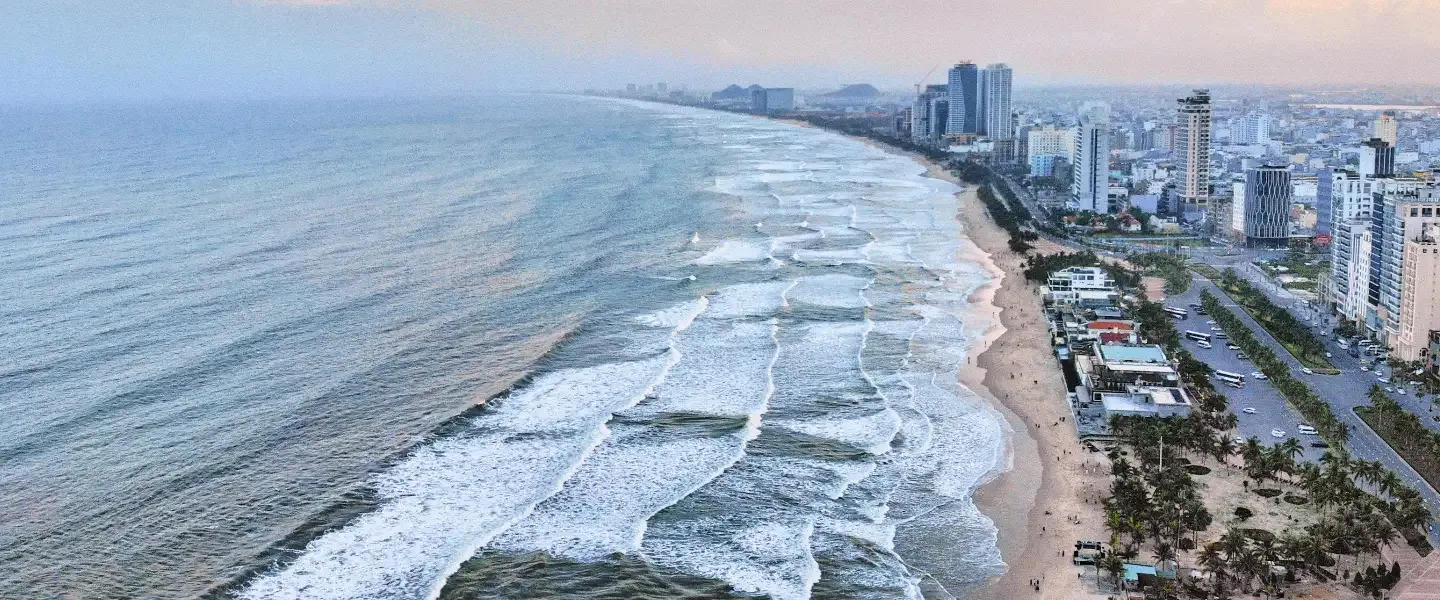
Da Nang Right Now
Ongoing infrastructure works are affecting traffic flow in several areas as Da Nang invests in flood drainage and new transport links.
Pickleball PPA Tour Asia – Vietnam Cup 2026 · Tien Son Sports Palace & Tuyen Son Sports Village, Da Nang
GBA Oktoberfest Vietnam 2026 · Furama Resort Danang, Da Nang
Interest in travel to Da Nang rose 19% from a year ago, suggesting demand is growing.
Best time to visit Da Nang
Not the best time to visitTyphoon seasonFlooding risk
Rain showers become more frequent and typhoon season starts affecting flights, boat trips, and coastal conditions around Da Nang.
SCORE BY MONTH
February through June delivers the dry weather and calm seas needed for great beach days around My Khe, though booking before May avoids the peak summer crowds and oppressive heat. Avoid September through November completely. High typhoon risks and severe flooding regularly interrupt travel plans and trigger rough surf.
Day-to-day in Da Nang
Walkability
48/100
Walking in Da Nang's tourist zones means dodging motorbikes that frequently use sidewalks. While the beachfront promenade is pleasant, venturing inland requires careful attention to dense, fast-moving traffic.
Sidewalks are often narrow, discontinuous, and frequently obstructed by parked motorbikes and street vendors.
Most tourist amenities, restaurants, and shops are clustered along the coast and in the central districts, walkable within 15 minutes.
Motorbike traffic is dense and drivers show little regard for pedestrians, making crossings hazardous.
Climate works against walking for much of the year. Plan around weather windows.
-
Monthly cost
$894 / month
AFFORDABLESolo mid-range stay including rent, daily eating out, groceries, and routine costs.
-
STREET FOOD
Da Nang is a street food paradise, especially around the Son Tra Night Market and various back alleys. Expect delicious and affordable local specialties like Banh Xeo and Bun Thit Nuong.
-
Coworking
$90 / month
VERY AFFORDABLEThe coworking scene is growing, with several options near the beach and in the city center. Expect around five to ten dedicated spaces, with many cafes also offering good work environments.
-
Local gym
$23 / month
VERY AFFORDABLEGyms are cheap here, with many local spots offering day passes for under $2. You'll find a mix of small, community-focused gyms and larger, modern facilities, especially in Hai Chau and An Thuong.
Need to Know
- Population
- 1,134,310 GSO · 2019 Census
- Currency
- Vietnamese Dong (VND)
- Language
- Vietnamese, with practical English spoken in tourist areas.
- Tap water
- Bottled recommended
- Time zone
- GMT+7 (ICT)
- Power plug
- Type A / C / F, 220V
- Dialing code
- +84
- Driving side
- Right
- Tipping
- Tipping is not mandatory but appreciated for good service, especially in tourist areas.
- Internet
- 4G and 5G coverage is excellent in Da Nang, with widespread free Wi-Fi in hotels, cafes, and restaurants.
- Emergency
- 113 (Police), 114 (Fire), 115 (Ambulance)
Upcoming Events & Holidays in Da Nang
Upcoming events, next 30 days
Public holidays & observances, next 12 months
Dates are researched and checked, but events move. Always confirm with the official source before you book anything around them.
Getting To Da Nang
-
Da Nang International Airport (DAD)
3 km southwest of Da Nang city center, serving both domestic and international flights.
Da Nang International Airport is conveniently close to the city. Taxis are readily available outside the arrival halls of both terminals. Expect to pay around VND 60,000-120,000 (about $2.50-5.00 USD) for a 10-15 minute ride to most central hotels. Ride-hailing apps like Grab are also an option, often slightly cheaper, with fares from VND 40,000-130,000 (about $1.60-5.20 USD) for a 10-20 minute trip. Public buses are the most economical choice, costing VND 8,000-28,000 (about $0.32-1.12 USD), but require a 5-10 minute walk to Nguyen Van Linh or Duy Tan Street for pick-up and take 20-30 minutes.
Direct flights to Da Nang
Serves 28 direct destinations, 21 international and 7 domestic, about 166 flights a day.
International 21- Seoul ICN South KoreaA Air Seoul
 Asiana Airlines
  Jeju Air
  Jin Air
  Korean Air P Parata Air P Perimeter Aviation
  T'Way Air
  VietJetAir
  Vietnam Airlines 12/day
 - Hong Kong HKG Hong KongH Hong Kong Airlines
 Hong Kong Express 6/day
 - Bangkok BKK Thailand
 Emirates Thai Vietjet Air Vietnam Airlines 5/day
 - Singapore SIN Singapore
 Scoot
Scoot  Singapore Airlines VietJetAir 5/day
- Kuala Lumpur KUL Malaysia
 AirAsia
  Malaysia Airlines
  Malindo Air 4/day
 - Taipei TPE Taiwan
 China Airlines
  EVA Air
  Starlux Airlines
  Tigerair Taiwan 4/day
 - Manila MNL Philippines
 Cebu Pacific Air
  Philippine Airlines Philippines AirAsia 4/day
 - Bangkok DMK Thailand Thai AirAsia 3/day
- Busan PUS South Korea
 Air Busan Jin Air VietJetAir 1-2/day
 - Taipa MFM Macau
 Air Macau 1-2/day
 - Tokyo NRT Japan Vietnam Airlines 1-2/day
- Siem Reap SAI Cambodia
 Cambodia Angkor Air ~1/day
 - Phnom Penh KTI Cambodia Cambodia Angkor Air ~1/day
- Kaohsiung City KHH Taiwan Tigerair Taiwan ~1/day
- Osaka KIX Japan Vietnam Airlines ~1/day
- Almaty ALA KazakhstanA Air Astana3/week
- Cheongju CJJ South Korea
 Aero K Airlines 3/week
 - Vientiane VTE LaosL Lao Airlines3/week
- Astana NQZ KazakhstanA Air Astana2/week
- Tashkent TAS UzbekistanC Centrum Air2/week
- Yangon RGN Myanmar
 Myanmar Airways International 2/week
Within Vietnam 7
- Hanoi HAN9 9G Rail V VECA VietJetAir Vietnam Airlines 52/day
- Ho Chi Minh City SGN9 9G Rail V VECA VietJetAir Vietnam Airlines 41/day
- Duong Dong PQC9 9G Rail VietJetAir 6/day
- Haiphong HPH VietJetAir Vietnam Airlines 4/day
- Nha Trang CXR VietJetAir Vietnam Airlines 4/day
- Can Tho VCA VietJetAir Vietnam Airlines 3/day
- Buon Ma Thuot BMV Vietnam Airlines ~1/day
Nonstop routes only. Flights per day are an average, each way. Data: AeroDataBox, updated July 2026.
Visa rules apply at the country level. See the full Vietnam visa guide, with every visa and its official do-it-yourself cost. -
-
Da Nang International Airport (DAD) to Hoi An
28 km south of Hoi An, with direct bus and taxi services.
Getting to Hoi An from Da Nang Airport takes about 45-90 minutes. Taxis are the fastest option, costing around VND 320,000-450,000 (about $12.50-18.00 USD). Shared shuttle buses, like those offered by Hoi An Express, are a good budget choice, costing about VND 140,000 (about $5.60 USD) per adult and taking approximately 1 hour 30 minutes. Public buses are available, with tickets ranging from VND 20,000-30,000 (about $1.00-1.50 USD) for a 1.5-2 hour journey, though direct airport shuttles are more convenient.
Safety Advice
Da Nang is one of the safest cities in Vietnam, so the risks that matter aren't the ones travelers tend to worry about. The traffic, the rip currents at My Khe and the autumn typhoons cause far more trouble than crime, which is rare. Knowing the handful of things to watch makes them easy to sidestep.
Common Scams in Da Nang
Money & Payments
Da Nang takes cards at the beach hotels and the An Thuong restaurants, but the day still runs on cash: street food, the markets and the small local spots. The two costs that catch most visitors out are the ATM fee and the exchange rate, and both are easy to dodge once you know which machine to use.
-
Cards, cash and VietQR
Visa and Mastercard cover hotels, malls and the bigger An Thuong and My An restaurants. You'll still need cash for street food, markets and short rides. VietQR is what locals scan, but it needs a Vietnamese bank account, so it rarely helps a visitor.
-
Avoid expensive ATM and exchange fees
Most Da Nang banks now add a fee and cap each withdrawal low, and the old TPBank tip is out of date. Picking the right ATM and always paying in dong can save you far more than most travelers expect.
Costs in Da Nang
Vietnam is one of the cheapest countries in the region. Local food, coffee and a scooter cost very little, and rent is low outside the big cities. Imported goods and Western restaurants are the pricey exceptions.
Save money?
Sign up for our guide on how to save money on your next trip.
SIM Cards & Data
Best option for most travelers: an eSIM you set up before you arrive. You'll be online the moment you land, with no airport line and no tourist pricing.
Travel eSIMs Connect the second you land. Zero hassle. Skip the airport line and paperwork. Activate before you fly and land connected. Find the best eSIM →Prefer a local SIM?
You can easily buy a physical SIM card upon arrival at Da Nang International Airport, with kiosks from major carriers like Viettel, Vinaphone, and MobiFone located right after customs in the international arrivals hall. Remember to bring your passport, as Vietnamese law requires it for SIM registration. While coverage is generally strong in Da Nang city, Viettel offers the most reliable signal for areas like Ba Na Hills or if you plan to travel to Hoi An and Hue.
What Da Nang is Like
Most people land in Da Nang expecting a beach town and leave slightly confused that it functions more like a working city that happens to have a coastline. The stretch around My Khe and An Thuong is all smoothie bowls, Korean barbecue joints, apartment towers and laptop people moving between cafes with noise-cancelling headphones on, but five minutes inland the rhythm changes completely. Mechanics squat on plastic stools beside open garages, seafood places spill onto the sidewalk under fluorescent lights, and every intersection seems to involve somebody hauling impossible amounts of cargo on a motorbike. Da Nang rarely performs for visitors the way Hoi An does. That's partly why some people end up staying longer than planned.
Around sunset, the promenade along Vo Nguyen Giap fills with domestic tourists taking staged family photos while hotel staff try to funnel guests toward rooftop bars charging resort prices for drinks that taste like melted ice. A lot of the beachfront now feels designed by committee. Too clean, too interchangeable, too eager to become the next version of somewhere else. If your idea of Vietnam is narrow alleyways, ancient shop houses, tiny plastic stools and the smell of charcoal smoke hanging in humid air, Da Nang can feel strangely sterile in places. The city has convenience down cold. Character is more uneven.
What saves Da Nang from becoming another anonymous coastal development is that ordinary life still pushes through the polished bits constantly. Early in the morning near Han Market, you'll see old women balancing baskets of herbs across the street while office workers crouch over bowls of mi quang before work. The seafood places near Thanh Khe stay loud and gloriously chaotic long after the polished riverfront restaurants empty out. Even the beaches are more interesting at dawn than midday, when retirees swim in the grey-blue water before the heat settles in and vendors start circling tourists selling coconuts and grilled squid. The city makes more sense when you stop treating it like a resort.
People chasing silence usually burn out on Da Nang quickly. Construction noise starts early, traffic gets impatient fast, and large parts of the city now exist in a permanent state of development where another tower always seems to be going up behind the one that finished last month. The digital nomad crowd loves the reliable internet, gyms and imported food, but if you need spontaneity or rough edges to enjoy a place, the international bubble around An Thuong can start feeling repetitive after a week or two. Da Nang works best for travelers who like structure and ease with occasional glimpses of disorder breaking through. Not everyone wants that balance.
Golden Bridge
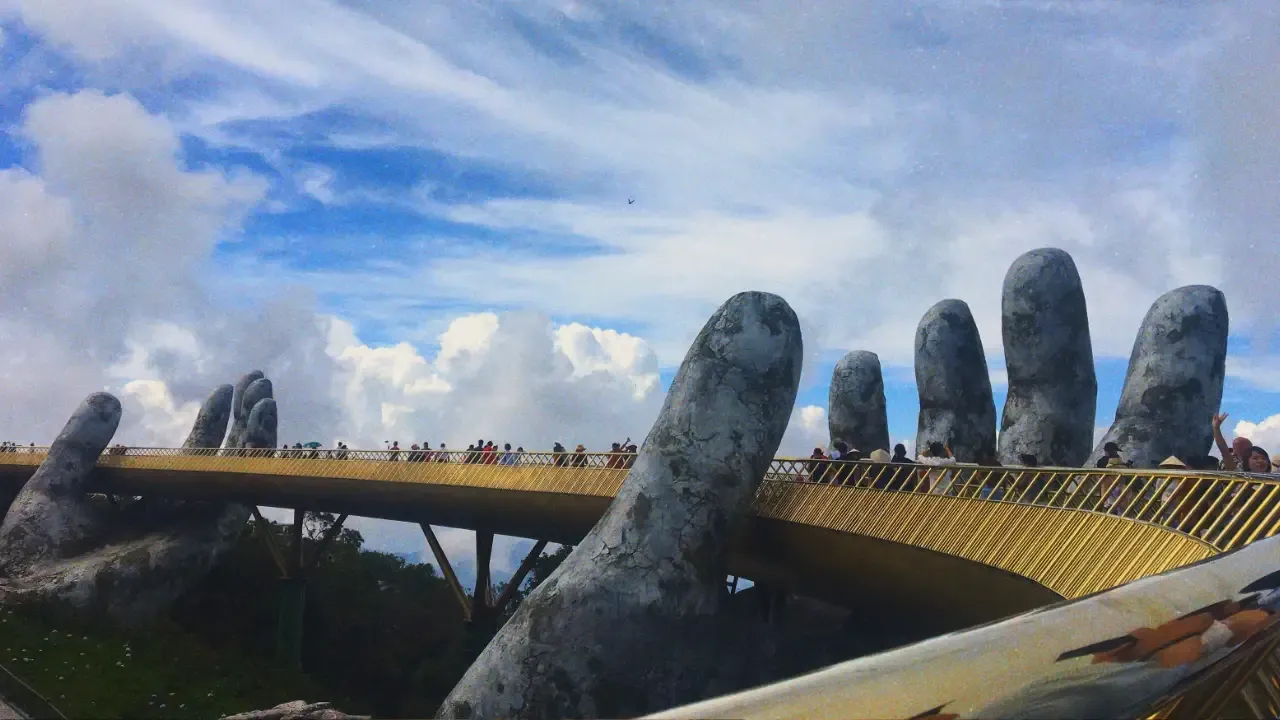
The famous bridge held up by giant stone hands sits inside Ba Na Hills, which is less a mountain retreat and more a strange fever dream of French village facades, indoor arcades, fake castles and tour groups moving in synchronized clumps behind flag-waving guides. The bridge itself is actually pretty good. Early in the morning, before the cable cars start unloading crowds by the thousand, the curved walkway hangs quietly above thick forest and low clouds rolling across the hills. The hands look slightly weathered and unfinished in person, which saves them from becoming complete Instagram bait. Then the speakers turn on, the selfie sticks come out, and the illusion disappears fast.
Getting there from Da Nang takes more effort than people expect. The road climbs out of the city toward the mountains west of town, and unless you rent a motorbike or hire a driver, you're usually stuck with hotel shuttles running on rigid schedules. The cable car ride is the real attraction anyway. It drifts over dense jungle and steep ravines for what feels like an absurd amount of time while the city shrinks into haze behind you. Once you arrive at the top, you are committed. Ba Na Hills operates like a contained world where every path funnels you past souvenir shops, staged photo spots and aggressively cheerful music playing through hidden speakers.
People who hate theme parks usually hate Ba Na Hills within an hour. Fair enough. Large sections feel artificial in the worst way, especially the fake European square where visitors pose beside painted walls pretending to be somewhere colder and more expensive. But the mountain itself still wins occasionally. Fog moves through without warning, swallowing entire buildings in seconds, and the temperature drop from Da Nang's coastal heat can feel genuinely pleasant after weeks in central Vietnam. If you treat the place as a weird spectacle rather than a cultural experience, it works much better. Go early, see the bridge, ride the cable car, then leave before the crowds and karaoke-level noise wear you down.
Where to Stay in Da Nang
- City life, local culture, riverfront
Hai Chau (City Center)
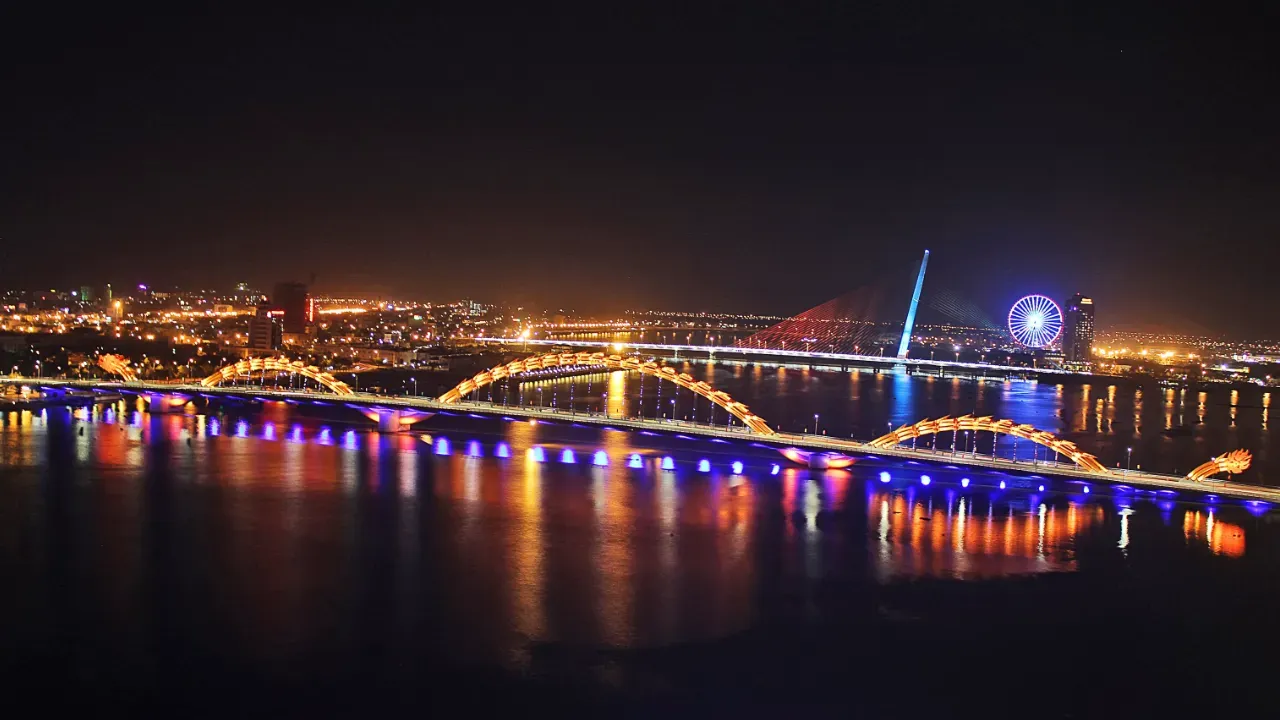
Hai Chau is the true heart of Da Nang, offering a more local and urban experience. It's bisected by the Han River and is home to landmarks like the Dragon Bridge, Han Market, and numerous local restaurants and coffee shops. Accommodation here is often cheaper than the beachside, and you are closer to transportation hubs for day trips.
Good for: Culture seekers, foodies, budget-conscious travelers, those who prefer an energetic city environment.
Skip if: You prioritize immediate beach access and a relaxed, resort atmosphere.
- Beach, expat hub, nightlife
My An / An Thuong
This area sits directly behind My Khe Beach and is a popular spot for both tourists and expats. You will find a concentration of international restaurants, cafes, and a buzzing nightlife here. The streets, particularly the 'An Thuong' numbered roads, are walkable and full of activity, though some parts can be noisy with construction. It offers a relaxed pace compared to the city center.
Good for: First-time visitors, beach lovers, digital nomads, those who enjoy a lively atmosphere with Western amenities.
Skip if: You prefer a quieter, more local experience, or want to be closer to historical sights.
- Luxury resorts, quieter beach
Ngu Hanh Son (South of My An)
South of the main My An area, the Ngu Hanh Son district continues along the coastline towards Hoi An, featuring a stretch of five-star luxury resorts. Many of these resorts have private beach areas, offering a more secluded and upscale beach experience. While quieter, it's still close enough to walk to the more lively My An area.
Good for: Families, couples seeking luxury and tranquility, those who prefer private beach access.
Skip if: You want a busy nightlife, a wide variety of independent restaurants, or a budget stay.
- Beach strip, resort stays
My Khe Beach
My Khe Beach itself is a long, wide stretch of clean sand with gentle waves, backed by a line of hotels and beach clubs. This is where most tourists stay, drawn by the easy beach access and resort-style accommodation. It offers sweeping ocean views and is ideal for relaxed beach days.
Good for: Beach-focused travelers, families, those seeking resort amenities and sea views.
Skip if: You want a more local experience, or prefer to be in the heart of the city's markets and cultural sites.
- Nature, luxury resorts, scenic views
Son Tra Peninsula
This forested mountain peninsula juts into the sea, offering a quieter, more natural escape with limited development. It's home to the Lady Buddha statue and is known for its scenic views and potential for spotting red-shanked douc langurs. Accommodation here tends to be luxurious resorts, providing seclusion and tranquility.
Good for: Luxury travelers, nature enthusiasts, those seeking peace and quiet with panoramic views.
Skip if: You want easy walkability to restaurants and nightlife, or a budget-friendly stay.
Frequently Asked Questions
Planning & moving around
-
Which neighborhood should I stay in Da Nang?
My An is a popular choice for digital nomads and expats, offering a relaxed coastal lifestyle near My Khe Beach with a good nightlife scene. If you prefer a more urban vibe, Hai Chau District is central with many bars and clubs. For nature lovers seeking quiet, consider Hoa Hai or Son Tra Peninsula.
-
How many days do you need in Da Nang?
Three to five days is a good starting point to experience Da Nang's main attractions like My Khe Beach, Marble Mountains, and the Dragon Bridge. If you plan on day trips to Hoi An, Ba Na Hills, or Hue, allocate more time, perhaps a week or more.
-
What are the best day trips from Da Nang?
Hoi An Ancient Town is a popular and easy day trip, about 30-40 minutes away. Ba Na Hills, home to the Golden Bridge, is another top choice. Other excellent options include Son Tra Peninsula (Monkey Mountain), Hai Van Pass, and the Imperial City of Hue.
-
Do you need a license to rent a scooter in Da Nang?
Yes, legally you need a valid Vietnamese driving license or an international driving permit to rent and drive a scooter in Vietnam. Many rental shops may not ask for it, but driving without one means your travel insurance will not cover you in case of an accident.
-
What is the best way to get around Da Nang?
Grab is the most convenient ride-hailing app for taxis and motorbikes, offering transparent pricing and cashless payments. Traditional taxi companies like Mai Linh and Vinasun are also reliable. For exploring independently, renting a scooter is common, but be aware of traffic and licensing requirements.
-
What apps should I download for Da Nang?
Grab is essential for transportation. Google Maps is reliable for navigation. Google Translate helps with language barriers. Klook is useful for booking tours and tickets.
Safety & medical
-
Is Da Nang safe at night?
Da Nang is generally considered safe at night, with a friendly and welcoming local population. However, like any city, it's wise to be aware of your surroundings, especially in crowded areas or when returning late.
-
Do I need travel insurance for Vietnam?
While not legally required for entry, travel insurance is highly recommended for Vietnam. Many foreign health insurance plans are not accepted, and hospitals may hold passports if patients cannot pay. Look for plans with at least $100,000 for medical expenses and $250,000 for evacuation.
Laws & local norms
-
What are the drug laws in Da Nang?
Vietnam has extremely strict drug laws, including severe penalties for possession, trafficking, and even minor drug offenses. These laws apply to foreigners, and punishments can include lengthy prison sentences or even the death penalty. Do not engage with drugs in any form.
-
Can you vape in Da Nang?
Vaping laws in Vietnam are somewhat ambiguous, but it is generally tolerated in many areas. However, it is always best to be discreet and avoid vaping in enclosed public spaces or where smoking is prohibited.
Money & costs
-
Is it better to use cash or card in Da Nang?
While credit cards are accepted at larger hotels and restaurants, cash is king for street food, local markets, and smaller establishments. Always carry small denominations of Vietnamese Dong (VND).
-
Do you tip in Da Nang?
Tipping is not traditional in Vietnam but is becoming more common, especially in tourist-focused services like tour guides and spas. It is less common in local restaurants. A small tip for good service is always appreciated.
-
Are there common scams in Da Nang to watch out for?
Be wary of inflated taxi fares, especially from unofficial taxis. Use Grab or reputable companies like Mai Linh or Vinasun with metered fares. Also, ensure prices are clear before purchasing items at markets to avoid overcharging.
Culture & etiquette
-
What is the dress code for visiting pagodas and temples in Da Nang?
When visiting religious sites like Linh Ung Pagoda, dress modestly. This means covering your shoulders and knees. Avoid short skirts, sleeveless tops, sheer fabrics, and overly tight outfits. Remove hats and sunglasses before entering.
-
What are some important cultural etiquette tips for Da Nang?
Show respect to elders, use both hands when giving or receiving items, and remove your shoes before entering homes or some temples. Maintain a relaxed, positive attitude, avoid loud arguments, and smile often. Public displays of affection are generally not common.
-
Is it okay to take photos of people in Da Nang?
Always ask for permission before taking photos of people, especially locals. While many are friendly, it is a sign of respect to seek their consent first.
Food & drink
-
Where do locals eat in Da Nang?
Locals frequent street food stalls and smaller, often unassuming restaurants. For Mì Quảng, try Nu ĐỒ. For a variety of dishes, Bếp Cuốn Đà Nẵng or Nhà hàng Madame Lân are good options. My An Market is also a popular spot for local food.
-
What local dishes should I try in Da Nang?
You must try Mì Quảng (turmeric noodles with pork, shrimp, and herbs), Bánh Xèo (crispy Vietnamese pancakes), Bún Chả Cá (fish cake noodle soup), and Bánh Tráng Cuốn Thịt Heo (pork belly rolled in rice paper). Gỏi cá nam ô (raw fish salad) is a unique local specialty.
-
Is Da Nang good for vegetarians or vegans?
Yes, Da Nang has a growing number of vegetarian and vegan-friendly options. Loving Vegan is a standout for plant-based dishes, offering hearty and satisfying meals. Many local restaurants can also adapt dishes upon request.
Families & kids
-
Is Da Nang good for families with kids?
Da Nang is family-friendly, offering beaches, parks, and attractions like Ba Na Hills with its Fantasy Park. Many resorts cater to families, and local food can be adapted for less adventurous palates.
-
Is Da Nang stroller-friendly?
While some areas, particularly around tourist attractions and newer developments, have sidewalks, many older parts of the city and markets can be challenging with a stroller due to uneven sidewalks and heavy scooter traffic. A baby carrier might be more practical in some situations.
Staying longer
-
Is Da Nang a good place for digital nomads?
Da Nang is a popular and affordable destination for digital nomads, offering a high quality of life. It has good internet, plenty of cafes for working, and a growing number of coworking spaces like Aspace and Enouvo. My An is a favored neighborhood for nomads.
After dark
-
What is the nightlife like in Da Nang?
Da Nang's nightlife is a mix of modern venues and cultural experiences. Hai Chau District and the An Thuong area have numerous bars and clubs. My Khe Beach offers beachside venues, and Bach Dang Street has rooftop bars with river views. The Dragon Bridge fire show on weekends is worth catching.
-
What are the best areas for bars and clubs in Da Nang?
Hai Chau District city center, particularly Bach Dang Street, is known for its bars, pubs, and clubs with Han River views. The An Thuong area and My Khe Beach also have a concentration of beach bars, Western pubs, and lively spots.
-
What changes in Da Nang after dark?
The city comes alive with illuminated bridges, night markets like Son Tra and Helio, and a busy food scene. The Han River promenade becomes a popular spot for strolls, and many cafes and bars offer live music.