
Da Nang safety score
Petty theft, especially bag snatching from scooters, is common. Traffic is chaotic; scooter accidents are frequent. Avoid political demonstrations.
How safe is Da Nang, really?
The biggest risks in Da Nang aren't crime. They're everyday travel problems, and almost all of them are avoidable once you know what to look for. Here's how they stack up, roughly in order of how likely each is to affect you:
- Traffic and motorbike accidents. By a wide margin the number one risk to visitors, as everywhere in Vietnam. Dense traffic, loose lane discipline and inexperienced riders are a bad mix.
- Rip currents at the beaches. My Khe and the beaches round to Son Tra get powerful currents, strongest in the afternoons and through storm season. Swim outside the flags and it's the most serious risk on this list.
- Stomach bugs. Traveler's diarrhea from unfamiliar food, water or ice affects a good share of visitors. Unpleasant rather than dangerous for most, but it can flatten a day or two.
- Tourist scams and overcharging. Airport taxi and fake-Grab hustles, motorbike-damage shakedowns, padded bills and money switching. Annoying and costly, rarely dangerous.
- Storm-season flooding. October and November bring typhoons and heavy rain that can flood low-lying streets and shut beaches and day trips for a day or two.
- Petty theft. Phone and bag snatching from passing motorbikes, and pickpocketing in crowded bars and markets. Uncommon by regional standards, but keep valuables close.
- Dengue and, rarely, rabies. Daytime mosquitoes carry dengue year-round; rabies exists in Vietnam but is only a risk if an animal bites or scratches you.
The sections below take each of these in turn, so you'll have every one covered before you land.
Crime in Da Nang
Da Nang is one of the safest cities in Vietnam, and violent crime against tourists is rare. Traveler surveys consistently rank it high for feeling safe day and night. The crime you actually need to plan for is opportunistic theft, and even that is less common here than in bigger Southeast Asian tourist hubs. Remove the easy openings and you remove almost all of the risk.
- Watch for motorbike snatch-and-grab. The main street theft in Vietnam: a passing rider grabs a phone or bag. Don't walk along the road texting with your phone out, and wear bags across your body on the side away from traffic.
- Keep your phone off the roadside. Snatchers work the curb. Hold your phone on the side away from the road, and stop and step back from the traffic if you need to use it.
- Mind pickpockets in the crowds. Bars, night markets and packed events, like the weekend Dragon Bridge show, are where wallets and phones go missing. Keep valuables in a front pocket or a zipped bag.
- Use your hotel safe. Leave your passport and spare cash locked up, and don't leave valuables on show in a room or a parked car.
- Don't leave things on the beach. Bags left while you swim at My Khe are easy targets. Take turns watching them, or leave anything valuable back at your accommodation.
Common Scams
Most scams in Da Nang are about parting tourists from a bit of extra money rather than any physical danger. Knowing the handful of common ones makes almost all of them easy to sidestep.
-
Fake Grab Drivers
HIGH RISKTrigger:A driver approaches you without knowing your name or booking details, or the license plate does not match the app.
Unlicensed drivers at Da Nang International Airport (DAD) or around tourist areas pretend to be your pre-booked Grab driver. They will try to get you into their overpriced car, sometimes claiming your actual driver sent them, and then charge significantly more than the app's price or add fake fees. This is a common occurrence at the airport.
How to avoid: Always verify the license plate number, driver's name, and vehicle model in the Grab app before getting into any car. Ignore unsolicited offers.
-
Rigged Taxi Meters and Flat Rates
HIGH RISKTrigger:A driver refuses the meter and quotes a flat price, or the meter climbs unusually quickly.
Some taxi drivers, particularly those not from reputable companies like Mai Linh (green cars) or Vinasun (white cars with red and green stripes), use rigged meters that run excessively fast. Others refuse to use the meter and demand a high flat rate, especially around transport hubs and tourist attractions.
How to avoid: Only use Mai Linh or Vinasun taxis, ensure the meter is on, or book through the Grab app.
-
Motorbike Rental Scams
HIGH RISKTrigger:The rental shop insists on holding your original passport, or you notice minor damage not documented before renting.
Rental shops in Da Nang may try to keep your passport as a deposit, then claim pre-existing damage upon return and demand exorbitant repair fees. Some even 'steal' the rented bike back from you, forcing you to pay for a new one.
How to avoid: Never hand over your passport; use a cash deposit instead. Take detailed photos and videos of the motorbike's condition before leaving the shop.
-
Money Switching
MEDIUM RISKTrigger:A vendor or driver quickly handles your large bill and then claims you gave them the wrong amount.
Dishonest vendors or drivers may quickly swap a large denomination note you hand them (e.g., a 500,000 VND blue note) for a smaller one of similar color (e.g., a 20,000 VND blue note), then accuse you of underpaying.
How to avoid: Pay with smaller bills whenever possible. Break large notes at your hotel or a reputable store before street transactions.
-
ATM Skimming and Dynamic Currency Conversion
MEDIUM RISKTrigger:The ATM asks if you want to be charged in your home currency, or you notice unusual attachments on the card slot.
Some ATMs, especially standalone ones in poorly lit areas, may have skimming devices. Additionally, ATMs often offer to charge you in your home currency (Dynamic Currency Conversion), which results in a significantly worse exchange rate (17-14% markup) than your bank would provide.
How to avoid: Always choose to be charged in VND. Use ATMs inside bank branches, reputable hotels, or shopping centers, and inspect the machine for tampering.
Mistakes to Avoid
-
Drinking tap water
SERIOUS CONSEQUENCETap water in Da Nang is not safe to drink directly due to inconsistent treatment standards and potential contamination in aging distribution pipes. This applies even in major hotels. Drinking it can lead to common waterborne illnesses like traveler's diarrhea.
Fix: Always drink sealed bottled water, boiled water, or filtered water. Use bottled water for brushing your teeth.
-
Riding a motorbike without a valid license
SERIOUS CONSEQUENCERiding a motorbike over 50cc without an International Driving Permit (IDP) that is valid in Vietnam is illegal. If caught, you face significant fines, potential vehicle impoundment, and increased hassle. Police in Da Nang are actively cracking down on traffic violations by foreigners.
Fix: Ensure you have a valid motorbike license from your home country and an IDP (1968 Convention) recognized in Vietnam, or rent a 50cc or under scooter.
-
Overstaying your visa
SERIOUS CONSEQUENCEOverstaying your visa in Vietnam, even for a short period, is illegal and incurs escalating fines, potential detention, deportation, and entry bans for up to three years. Many travelers mistakenly believe they can just pay a small fine at the airport.
Fix: Verify your visa stamp immediately upon arrival, set multiple reminders for your exit date, and apply for extensions 7-10 days before expiry through official channels.
-
Disregarding temple dress codes
Visiting Buddhist pagodas and temples like Lady Buddha (Linh Ung Pagoda) in Son Tra Peninsula requires modest attire. Wearing sleeveless tops, crop tops, short shorts, mini skirts, or transparent/tight clothing is considered disrespectful and may result in denied entry to worshipping areas.
Fix: Wear clothing that covers your shoulders, chest, and knees. Carry a sarong or scarf for quick cover-ups if needed.
-
Exchanging money at the airport
MINOR CONSEQUENCECurrency exchange booths at Da Nang International Airport offer some of the worst rates in the country. You will lose a significant percentage of your money due to convenience markups.
Fix: Exchange only a small amount for immediate needs (taxi, water) at the airport, then exchange the rest at reputable gold shops in the city or withdraw VND from major bank ATMs like Vietcombank or Techcombank.
Traffic and motorbike safety: the real danger
If you take one thing from this guide, take this: the roads are the most dangerous part of Da Nang, not crime. Vietnam has one of the higher road-death rates in the region, and motorbike crashes send a steady stream of tourists to the clinics. Traffic is dense, lane markings are more suggestion than rule, and a lot of riders are on two wheels for the first time. That combination is what hurts people.
Insurance won't cover you without the right license. Most travel policies reject motorbike-crash claims unless you hold a valid motorcycle license and an International Driving Permit, which Vietnam also legally requires with a motorcycle category. A hospital transfer can run into tens of thousands of dollars, so check your policy before you rent.
- Always wear a helmet. Every ride, however short. It's the law in Vietnam and police fine riders without one. Refuse rental helmets with cracked shells or broken straps, and do the strap up.
- Don't learn to ride here. Da Nang's traffic is the worst possible classroom. If you've never ridden, use Grab bikes and cars instead, which are cheap and everywhere.
- Photograph the bike before you ride off. Every scratch, panel and the fuel gauge, so a rental shop can't blame you for old damage on return. Never leave your passport as a deposit.
- Never ride after drinking. Vietnam enforces a strict zero-alcohol limit for riders, and late-night rides home after a few drinks are how many serious crashes happen. Take a Grab car instead.
- Cross the road slowly and steadily. Traffic flows around pedestrians rather than stopping. Step off at a steady pace, don't stop suddenly or run, and let the scooters read you and flow past.
Beach safety and rip currents at My Khe
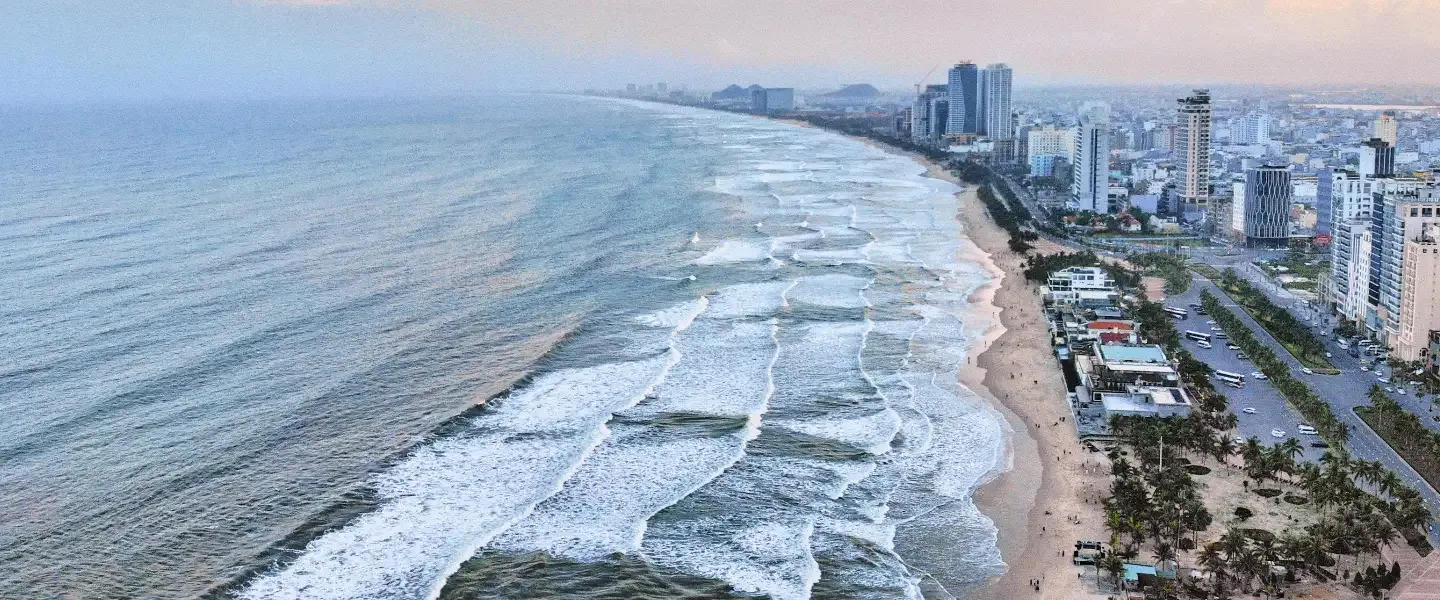
Da Nang's beaches are a highlight and a genuine hazard. My Khe and the beaches round to Son Tra look calm but carry powerful rip currents that can pull even a strong swimmer out fast, especially in the afternoons and through the autumn storm season. Most trouble involves people swimming outside the flagged zone, or when no lifeguard is on.
Swim between the flags, when the lifeguards are on. Da Nang's main beaches are patrolled through the day, roughly 5am to 6:30pm in season. A red flag means the water is dangerous, so stay out. No flags and no lifeguard means treat the water as unpatrolled.
- Stick to lifeguard hours. Patrols run through the day but stop in the early evening. Swimming after dark, when you can't see the water and no one's watching, is when drownings happen.
- Never swim alone or after drinks. Most drownings involve someone in the water by themselves, at dusk, or having been drinking.
- Don't turn your back on the sea. Bigger sets catch people off guard at the shoreline, so keep an eye on the water, especially with kids.
- Know how to escape a rip. If a current pulls you out, don't fight it. Stay calm, float, and swim parallel to the beach until you're clear of it, then head back in.
- Expect rougher water in storm season. From roughly September to December the surf and currents run much stronger and waves can reach two to three meters. Check conditions and heed the flags and local advice.
- Jellyfish turn up in the warmer months. Stings are occasional rather than a constant, and rarely serious. Rinse with seawater or vinegar (not fresh water), and see a pharmacy if the reaction is bad.
Typhoons, flooding and storm season
There's little earthquake risk in Da Nang and no volcanoes, but the city sits in the path of the autumn typhoon season. From roughly September to November it can see heavy rain, strong winds and the occasional tropical storm, and low-lying streets flood after the worst downpours. Most trips catch none of it, but if you travel in autumn, build a flexible day or two into the plan.
- The wettest, stormiest months are October and November. Rainfall peaks and typhoons off the East Sea are most likely then, so watch the dates if you're set on beach weather.
- Watch the forecast, not just the sky. Storms are well forecast a few days out. Follow a local weather service and your accommodation's advice, and don't head out on a boat trip or over the Hai Van Pass with a typhoon inbound.
- Never ride a scooter through a flooded street. Open drains and potholes vanish under the water and the current is stronger than it looks. Floods usually drain within hours, so wait it out rather than push through, and don't wade in on foot either.
- Beaches close in the worst of it. Big storm surf shuts swimming at My Khe. If you can choose, the calmer, drier months (February to August) are the safe bet for beach days.
Stomach bugs, tap water and food safety
The most common thing to lay a visitor low in Da Nang is an upset stomach: cramps, nausea and diarrhea from food, water or ice your gut isn't used to. It's rarely serious and most cases clear within a day or two, but it's worth heading off, especially given how good the street food here is.
Don't drink the tap water. It isn't safe to drink and it's the most common cause of a travel tummy. Use sealed bottled water, and if your stomach is sensitive, use it for brushing your teeth too.
- Be sensible with ice and raw produce. Ice at established cafés and restaurants is usually made from filtered water and fine. Be more cautious at tiny stalls, and with salads or fruit that may have been rinsed in tap water.
- Eat where it's busy. High turnover means fresher food. A packed street-food spot is often a safer bet than a quiet tourist restaurant with food sitting out. Da Nang's specialties (mì Quảng, bánh xèo, seafood) are part of the trip, so eat well, just eat smart.
- Pack a kit. Rehydration salts, something for diarrhea on travel days, and something for nausea. The salts matter most: dehydration is what actually makes it miserable.
- Know when to see a doctor. If you have a high fever, blood in your stool, or it lasts beyond a couple of days, get seen. Da Nang has good international-standard clinics used to treating it.
Mosquitoes and dengue
Dengue is the main mosquito-borne illness in Da Nang, circulating year-round and peaking in and after the wet season. It's spread by mosquitoes that bite in daylight, so there's no quick cure and the sensible move is not getting bitten in the first place.
- Wear repellent through the day. The dengue mosquito bites in daylight, unlike the malaria one, so put DEET or picaridin on exposed skin and top it up, and cover up around dawn and dusk when they're most active.
- Malaria isn't a concern in the city. Da Nang and the coast aren't malaria areas, so tablets aren't needed for a normal city-and-beach trip. Ask a travel clinic if you're heading deep into the rural highlands.
- See a doctor for a sudden high fever. High fever, severe headache and body aches a few days in are worth getting checked. This is general information, not medical advice.
Dogs and rabies in Da Nang
Rabies is one of the few genuinely life-threatening health risks in Vietnam, but also one of the easiest to deal with if you act fast. It's carried mainly by dogs, and while Da Nang is a modern city rather than a place overrun with strays, free-roaming dogs are around. Rabies is almost always fatal once symptoms appear, so any bite or scratch has to be treated straight away.
Treat any dog bite or scratch as a rabies risk. Wash the wound with soap and running water for a full 15 minutes, then get to a clinic for post-exposure rabies shots as soon as possible. Don't wait to see how it heals.
- Give street dogs space. Most are harmless, but don't pet, corner or startle them, especially around food or puppies. On a bike, ease off near loose dogs rather than gunning past.
- Rabies shots are available, but plan for them. Post-exposure treatment is at Da Nang's hospitals and clinics, but you may need several doses over a couple of weeks. Travel insurance that covers it is well worth having.
- Consider a pre-exposure vaccine for long or rural trips. If you're staying a while or heading into the countryside, ask a travel clinic about the rabies vaccine before you go. It doesn't remove the need for treatment after a bite, but it makes it simpler.
Alcohol and methanol
Vietnam's beer, the cheap bia hơi on every corner, is fine, and so is anything sealed and branded. The rare but serious risk is methanol in cheap, counterfeit or home-distilled spirits, a toxic alcohol that can cause blindness, organ failure and death. It has poisoned tourists across the region, including a widely reported cluster in nearby Laos in 2024.
Avoiding it is straightforward, because the danger sits almost entirely with the cheapest, unbranded drinks. Stick to factory-sealed bottles from proper bars and shops, and be wary of suspiciously cheap buckets, free pours and unlabeled local "rice wine". You cannot taste or smell methanol once it is in a drink, so the sealed bottle is the protection, not your palate. And know that methanol's effects can lag by hours, so if a bad headache, blurred vision or confusion set in after drinking something dubious, treat it as an emergency and get to a hospital, because caught early it's treatable.
Drugs and the law
Vietnam enforces strict drug laws, and it's not a place to take any chances. Penalties are quantity-based and escalate fast, from years in prison for small amounts up to life for larger quantities. Don't assume anything you can buy easily elsewhere in the region carries over: don't buy, carry or accept illegal drugs under any circumstances, and be alert that anyone offering them may be setting you up.
- Don't accept drugs from strangers. Anyone offering may be setting you up, and the penalties are life-changing. It isn't worth the risk under any circumstances.
- Cannabis is illegal, whatever you've heard. It's treated as seriously as any other drug in Vietnam, with real prison terms. Don't assume Thailand's rules apply here; they don't.
- Watch the drink-driving limit. Vietnam runs a near-zero blood-alcohol limit for anyone driving or riding, strictly enforced with on-the-spot fines. One beer can put you over it, so don't drive after drinking at all.
Is Da Nang safe at night?
Yes, and notably so. Da Nang is one of the more relaxed cities in the region after dark, and the beach, the riverfront and the Dragon Bridge stay busy and social into the evening. The after-dark risks are ordinary nightlife ones rather than violent crime.
- Get home with Grab. Booking a car or bike in-app beats haggling with a late-night xe ôm or a metered taxi taking the long way. The route is tracked in the app, which adds a layer of safety.
- Mind your drink. As in any nightlife, don't leave drinks unattended and be wary of overly generous free pours, especially around the bars by the beach and the bridge.
- Keep valuables close in the crowds. Night markets and the weekend Dragon Bridge fire-and-water show draw big crowds where pickpockets work. A front pocket or zipped bag is enough.
- Don't ride home drunk. This is where a lot of the serious crashes happen, and Vietnam's zero-alcohol limit for riders is strict. Take a Grab car instead.
Is Da Nang safe for solo and female travelers?
Yes. Da Nang is one of the easier and safer places in Vietnam to travel solo, with a laid-back feel, a growing digital-nomad scene and plenty of other travelers around. Most solo female travelers report feeling comfortable here, day and night. Persistent sales patter and the odd stare are far more common than any threatening behavior, though the usual precautions around nightlife and quiet areas still apply.
- Book rides rather than flag them. An app ride skips the unlit streets and the late-night price haggling, and someone knows where you are.
- Cover up at the pagodas. The beach and city are relaxed, but shoulders and knees covered at the Marble Mountains temples and other religious sites is the norm, and it draws less attention too.
- Be firm with touts and drivers. A confident "no thank you" and walking on works. Unsolicited "help" at the airport or transport hubs often comes with an expected tip or a catch.
- Share your plans. Heading off on a day trip or a motorbike ride, tell someone your route and roughly when you'll be back.
Is Da Nang safe for families with kids?
Very much so. Da Nang is one of the more family-friendly spots in Vietnam: a long sandy beach, wide clean promenades, easy resorts and genuine Vietnamese warmth toward children. The things to manage are practical, not sinister.
- Keep kids off motorbikes. You'll see whole families on one bike, but in Da Nang's traffic it's the biggest risk to your children. Use Grab cars or taxis with seatbelts, and arrange a child seat in advance if you need one, as most don't include them.
- Watch the water. Unfenced pools and My Khe's rip currents are what to watch. Supervise closely, swim between the flags, and keep little ones in the shallows.
- Sun, heat and tummy bugs. Kids dehydrate faster, so stay on top of water, sunscreen and shade, and be extra strict about clean drinking water and food hygiene.
- Mind the traffic on foot. Crossing roads takes a knack here. Hold hands, cross steadily as a group, and use the pace of the locals as your guide.
Which parts of Da Nang are safest?
There's no genuinely "dangerous" district to avoid in Da Nang. The difference between areas is more about convenience and vibe than safety: the beach strip and the city center are where most visitors stay, and both are calm. Here's the quick read.
How safety changes by season in Da Nang
Da Nang has a dry half and a wet half of the year, and each nudges the risks. Neither is dangerous, but it's worth knowing what shifts.
- Dry season (roughly February to August). The calm, sunny stretch and the best time for the beach, but the midsummer heat is no joke: May to August regularly pushes into the high 30s°C. Drink more water than you think you need, skip the midday walks, and stay on top of sunscreen. Seas are generally calmer, though rip currents never fully switch off.
- Wet and storm season (roughly September to January). Heavier rain, rougher surf and the autumn typhoon window (peaking October to November) bring flooding in low-lying streets, slippery roads that make riding riskier, and the occasional shut beach or canceled boat trip. More standing water also means more mosquitoes, so more dengue risk.
Emergency numbers and getting help
Save these before you go. Vietnam's emergency lines operate in Vietnamese, so for anything non-critical it's often faster to have your hotel or a local contact call for you. For tourists, Da Nang has good international-standard care at Family Medical Practice Da Nang (English-speaking), Vinmec and Hoan My, with the public Da Nang Hospital for emergencies. Keep your insurer's emergency line and policy number in your phone too.
- Police113
- Fire114
- Ambulance115
Numbers change and English-speaking operators aren't guaranteed, so having your accommodation or a local contact call on your behalf is often faster. For advisories issued at country level, see the full Vietnam advisories.
Traveling soon?
Where to be careful, what things should cost, and what to skip. Once a week.
Frequently Asked Questions
-
Is Da Nang safe for tourists?
Yes, very. Da Nang is consistently rated one of the safest cities in Vietnam, with low crime and a relaxed feel day and night. The real risks are ordinary ones: the traffic, rip currents at My Khe, storm-season flooding in autumn, stomach bugs and the odd overcharging scam. Handle those and you handle almost everything that can go wrong.
-
Is Da Nang dangerous?
Not in the way the word usually implies. Terrorism risk is very low and there's little earthquake threat, though autumn typhoons can be severe. Violent street crime against tourists is rare. The thing most likely to hurt you is the traffic, by a wide margin, so treat the roads with respect, wear a helmet, and don't ride after drinking.
-
Is Da Nang safe right now?
Under normal conditions, yes. The one genuinely seasonal risk is the autumn typhoon window (roughly September to November), when a storm can bring heavy rain and flooding for a day or two. If you're traveling in those months, check the forecast and your government's travel advisory for Vietnam before you go.
-
Is Da Nang safer than Bali?
They're broadly comparable, and both are safe for tourists. Da Nang has less nightlife-related hassle and even lower crime, while both share the same biggest risk: motorbike accidents. One difference: Bali has rabies and active volcanoes to think about, whereas Da Nang's extra factor is the autumn typhoon season.
-
Are taxis safe in Da Nang?
Yes. The Grab app is the easiest and safest way around, with the price fixed up front and the trip tracked. Reputable metered taxi firms like Mai Linh and Vinasun are fine too. The main thing to avoid is an unbooked taxi or xe ôm quoting a vague price, especially at the airport; book through Grab and you skip the haggling.
-
Do I need vaccinations for Da Nang?
Da Nang is low risk for malaria, so tablets aren't needed for a normal city-and-beach trip, but dengue (from daytime mosquitoes) circulates year-round, so use repellent. Check your routine vaccinations are up to date and ask a travel clinic about hepatitis A and typhoid, which are commonly recommended, and about rabies for longer or rural stays. This is general information, not medical advice, so confirm with a doctor before you travel.