
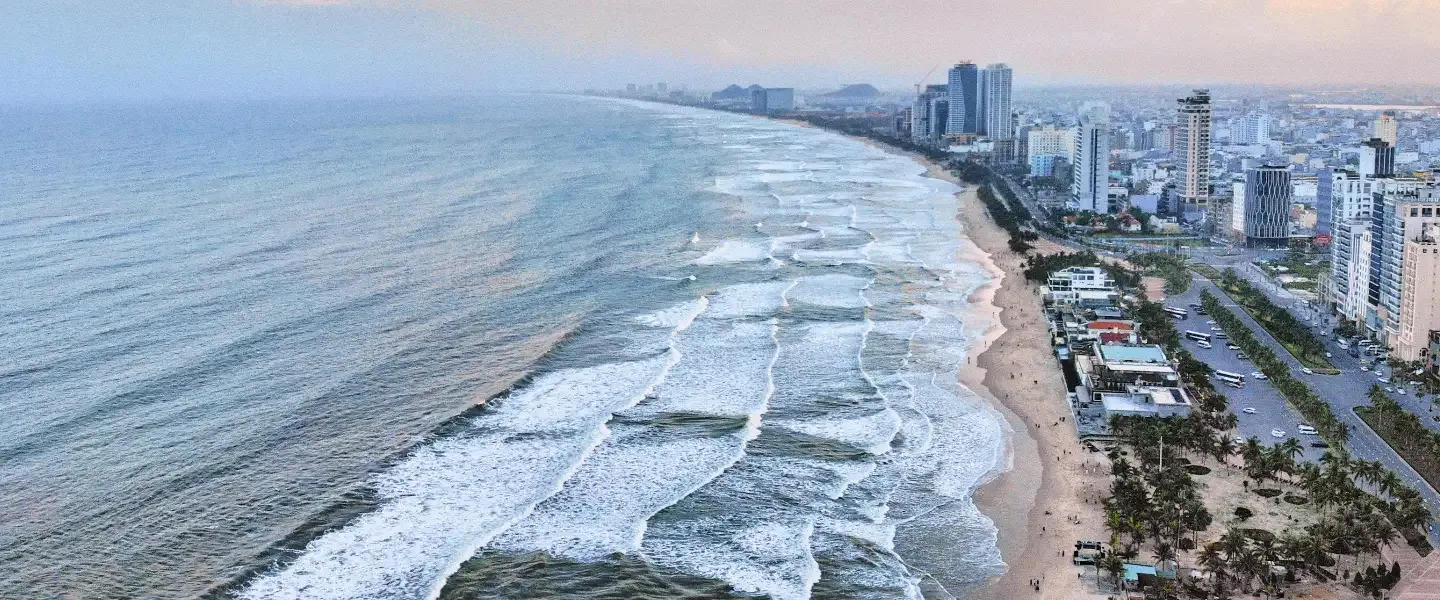
January
The coolest month, with grey skies more often than not. The sea is cooler and often rougher than in the dry months.
Da Nang gets most of its rain from September to December. Here is what the rest of the year looks like.
The best time to visit Da Nang is February to May. March and April are the best two: dry, at about five rainy days a month, warm at 29 to 31°C (84 to 88°F), and not yet as hot as summer.
June to August is dry too, but hot, with highs around 34°C (93°F). It is also the peak period for domestic summer travel, so My Khe beach and the hotels along it are at their busiest.
September to November is the window to avoid. It is the wettest and most storm-prone part of the year. November alone gets rain on about 22 days, and heavy October and November rain can close roads and flood the old town in Hoi An.
December and January are the tail of the wet season. Cooler at 25°C (77°F) and still wet, at 12 to 19 rainy days. Fine for a city trip, poor for the beach.
Not the best time to visitTyphoon seasonFlooding risk
Rain showers become more frequent and typhoon season starts affecting flights, boat trips, and coastal conditions around Da Nang.
SCORE BY MONTH
Most of the rain falls between September and December. The rest of the year is dry.
The coolest month, with grey skies more often than not. The sea is cooler and often rougher than in the dry months.
The wet season is ending and the sun comes back, though the water is still cool. Comfortable for walking around.
One of the best months: dry, warm, and the sea is warming up.
As dry as March and warmer. The beach season starts properly, still short of the summer heat and the summer crowds.
Hot and still mostly dry, and the sea is warm.
Hot and dry. Vietnamese school holidays start, and domestic visitors take over the beach.
The driest month of the year, and one of the hottest. Book ahead.
Still hot and mostly dry. One of the last good beach months before the wetter season begins.
Rain jumps to 14 days and tropical storms become a real risk. Rates come down.
Wet, with tropical storms and flooding both possible. Hoi An, half an hour south, can flood in the heavier rain.
The wettest month of the year, with tropical storms still possible.
Wet and cool. Typhoon risk is much lower, but the rain continues.
Airfare here differs by season, and not always in step with the weather. These are the cheapest fares held on Da Nang's busiest nonstop routes, each measured against its own typical month.
Measured on Hanoi, Ho Chi Minh City, Seoul to Da Nang: two domestic routes, the busiest international one, and the long-haul routes that carry the most traffic. Each route is compared against its own typical month, so a long flight and a short one count equally and what is left is the season. Cheapest fares only, and airfare only, not the cost of the trip.
The north of Vietnam is cool and dry in winter, and the south is dry from November to April. On the central coast, where Da Nang is, the rain comes in autumn instead.
Dry season, February to August. Seven months with rain on five to eight days each. It gets steadily hotter, from 26°C (79°F) in February to 34°C (93°F) from June to August.
Wet season, September to January. Rain on 12 to 22 days a month, worst in October and November.
The rainy season is September to January, heaviest in October and November. November gets rain on about 22 days, which is most days.
This is not the afternoon-shower pattern of southern Vietnam. Heavy rain here can last for days, and flooding is the main problem. Roads can close, the Hai Van pass can shut in severe weather, and the old town in Hoi An floods in the heavier October and November rain.
The upside is that it is the cheapest part of the year and most of the city stays open. If you are here for the food, the Marble Mountains and the museums, a wet week can still work.
Typhoon season on the central coast is roughly September to November. Da Nang is one of the more exposed cities in Vietnam, and the storms matter more than the rainfall totals alone suggest.
Most trips in that window are not hit by one. A big storm can disrupt a trip for several days: flights can be canceled, boat trips stop and beaches close. Leave an extra day in your schedule and take insurance that covers weather disruption.
The Vietnam guide covers how the season moves down the coast.
October and November. They are the two wettest months, storm risk is at its highest, and flooding is common enough to plan around. November is the wettest month of the year.
December and January are better but still wet, and at 25°C (77°F) too cool for the beach. Fine for a city break, less suitable for a beach holiday.
If the beach is the point of the trip, go between March and August.
Everything within an hour of Da Nang shares the same wet season.
Planning a trip?
Sign up for our guide.
March or April. Both are dry, at around five rainy days, and warm without being hot. March is cooler at 29°C (84°F) and April warmer at 31°C (88°F), with the sea warm enough to swim in by then.
September to January, with October and November the wettest. November gets rain on about 22 days. February to August is dry, at five to eight rainy days a month.
Roughly September to November. Most trips in that window are fine, but storms on the central coast regularly cancel flights and close roads for a day or two. Leave an extra day in your schedule if you travel then.
For the beach, yes. June to August is dry and the sea is warm. The catch is 34°C (93°F) days and the Vietnamese school holidays, which bring heavy domestic demand.
October to December, the wettest months, when hotel rates fall a long way. Da Nang is inexpensive year round, so the price difference is modest.