
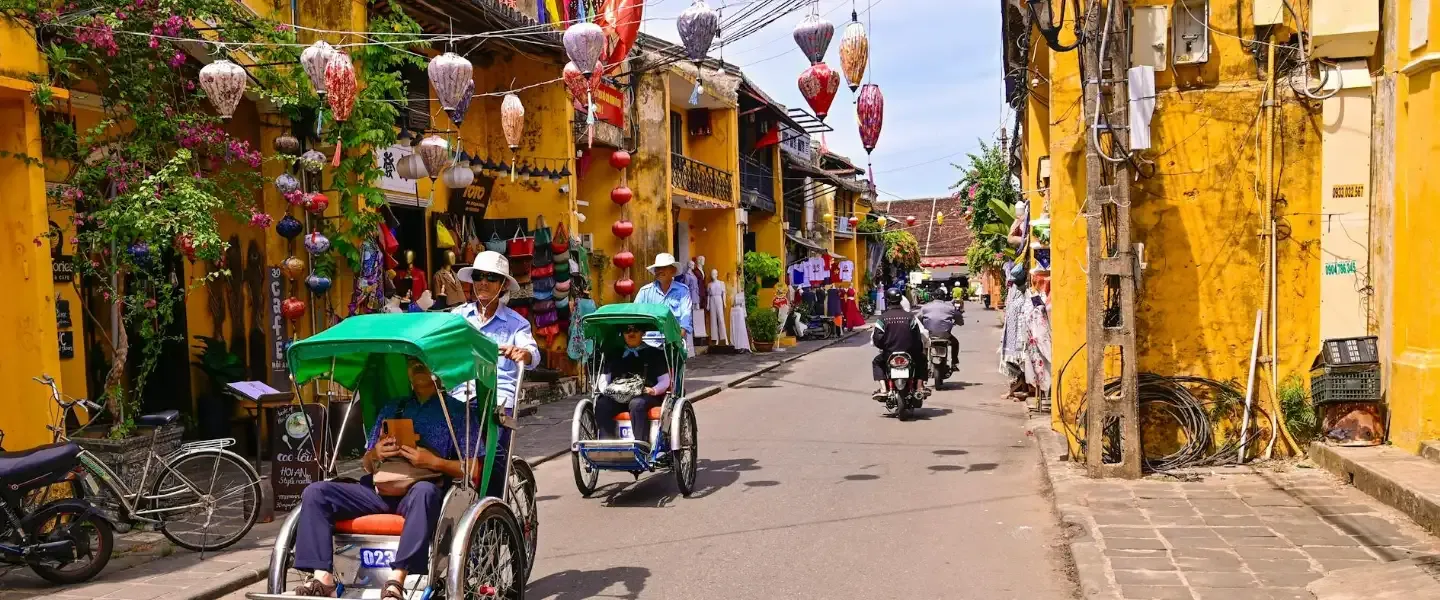
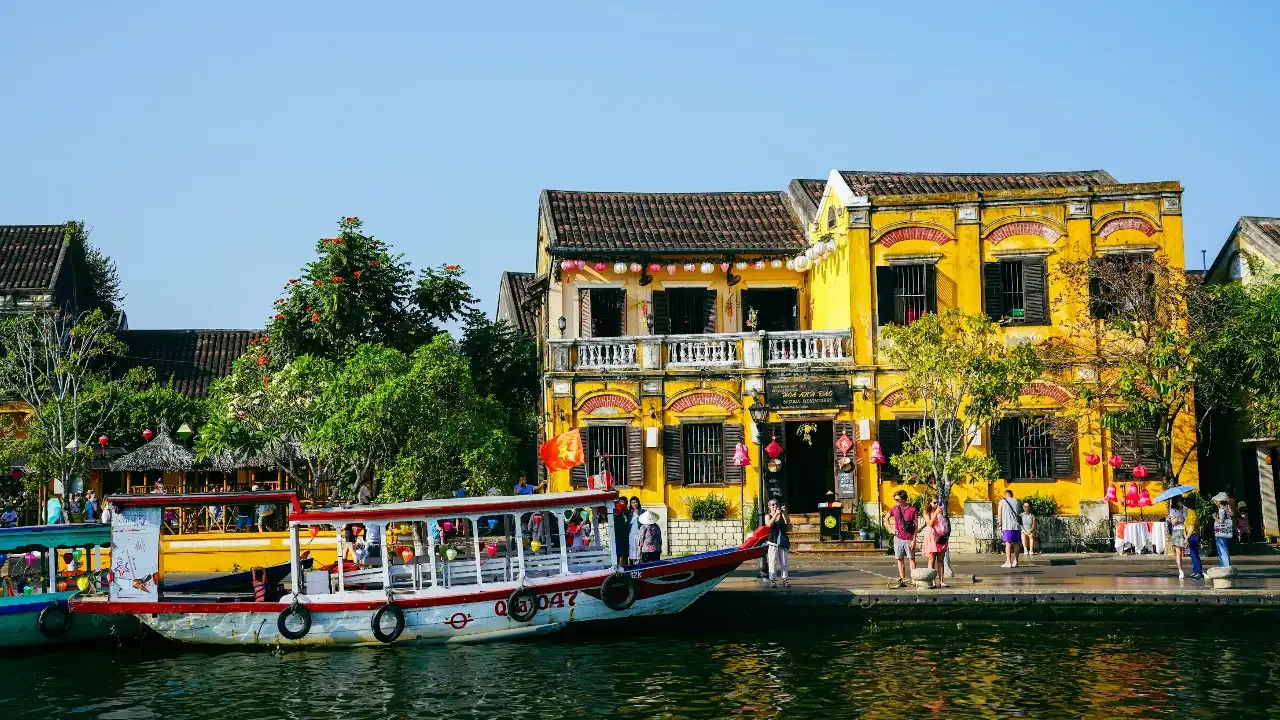
Hoi An Right Now
Severe flooding expected in the Ancient Town due to heavy rainfall and potential typhoons. The Thu Bon River frequently overflows, putting heritage streets under knee-deep or even waist-deep water.
Hoi An Lantern Festival
Interest in travel to Hoi An remained about the same as a year ago, suggesting demand is holding steady.
Best time to visit Hoi An
Not the best time to visitNortheast monsoon rainsRiver floodingTropical storm season
Heavy rain becomes common, flooding occasionally affects parts of the old town and beach days are unreliable.
Score by month
February to April is the sweet spot, with dry weather, lower humidity, and comfortable conditions for wandering the Old Town, cycling between rice fields and the beach, and eating outdoors. May to August stays mostly dry but gets increasingly hot and draws bigger crowds. October through December is the period to avoid, when heavy rain and flooding can disrupt travel, while the Christmas and New Year stretch packs the town with visitors and pushes accommodation demand higher.
Day-to-day in Hoi An
Walkability
50/100
Walking in Hoi An's Ancient Town means dodging motorbikes and navigating narrow, often blocked paths. Outside the core, sidewalks disappear, forcing you onto busy roads with fast-moving traffic.
Sidewalks are often narrow, uneven, and frequently obstructed by motorbikes and vendors, especially in the Ancient Town.
Most tourist amenities, restaurants, and shops are concentrated within a walkable radius of the Ancient Town and nearby hotels.
Motorbike traffic is dense and drivers show little regard for pedestrians, making street crossings perilous.
Climate works against walking for much of the year. Plan around weather windows.
-
Monthly cost
$752 / month
VERY AFFORDABLESolo mid-range stay including rent, daily eating out, groceries, and routine costs.
-
Active Outdoors
Cycling is woven into daily life here, with flat roads linking the old town, rice fields, villages and An Bang Beach. Many longer-stay visitors use a bicycle as their main way of getting around.
-
Coworking
$79 / month
VERY AFFORDABLEHub Hoi An is the town's main dedicated coworking space and attracts most of the remote-work community. Many people alternate between coworking and cafes such as Dingo Deli, especially around Cam Chau and the rice-field area.
-
Local gym
$12 / month
VERY AFFORDABLEHoi An has enough gyms for a routine, but the selection is limited compared with Da Nang. HealthFit and SuperFit are among the better-known options, with most facilities aimed at locals rather than fitness tourists.
Need to Know
- Population
- 98,599 GSO · 2019 Census
- Currency
- Vietnamese dong (VND)
- Language
- Vietnamese; English widely spoken in hotels, restaurants and tourist businesses
- Tap water
- Not safe
- Time zone
- ICT (UTC+7)
- Power plug
- Type A / C, 220V
- Dialing code
- +84
- Driving side
- Right
- Tipping
- Not expected; small tips are common for good service in tourist areas.
- Internet
- Fast and reliable in most cafes, hotels and coworking spaces, with strong 4G and 5G coverage.
- Emergency
- 113 police, 114 fire, 115 ambulance
When not to go
-
Avoid the autumn flood window
Oct – Nov · peaks late OctDo not visit the historic center during the peak of the autumn monsoon season when heavy rains and typhoon swells predictably flood the town. The Thu Bon River consistently breaches its banks, submerging the streets of the Ancient Town under waist-deep water and forcing ground-floor businesses, tailor shops, and restaurants to close entirely. Power outages are common, and boat transit becomes the only way to navigate the historic streets, ruining any chance of standard walking tours or cycling trips. Head further south or out of the country to escape this severe seasonal disruption.
Upcoming Events & Holidays in Hoi An
Upcoming events, next 30 days
On the horizon
Public holidays & observances, next 12 months
Dates are researched and checked, but events move. Always confirm with the official source before you book anything around them.
Getting To Hoi An
-
From Da Nang International (DAD)
About 45 minutes to Hoi An in normal traffic.
This is the main gateway for Hoi An and where almost all international visitors arrive. The airport sits north of the city, and road traffic into Hoi An slows noticeably on weekends and late afternoons. Grab and pre-booked cars are the simplest options.
Direct flights to Hoi An
Hoi An has no airport of its own. You fly into Da Nang (DAD), about 45 minutes to the north.
Serves 28 direct destinations, 21 international and 7 domestic, about 166 flights a day.
International 21- Seoul ICN South KoreaA Air Seoul
 Asiana Airlines
  Jeju Air
  Jin Air
  Korean Air P Parata Air P Perimeter Aviation
  T'Way Air
  VietJetAir
  Vietnam Airlines 12/day
 - Hong Kong HKG Hong KongH Hong Kong Airlines
 Hong Kong Express 6/day
 - Bangkok BKK Thailand
 Emirates Thai Vietjet Air Vietnam Airlines 5/day
 - Singapore SIN Singapore
 Scoot
Scoot  Singapore Airlines VietJetAir 5/day
- Kuala Lumpur KUL Malaysia
 AirAsia
  Malaysia Airlines
  Malindo Air 4/day
 - Taipei TPE Taiwan
 China Airlines
  EVA Air
  Starlux Airlines
  Tigerair Taiwan 4/day
 - Manila MNL Philippines
 Cebu Pacific Air
  Philippine Airlines Philippines AirAsia 4/day
 - Bangkok DMK Thailand Thai AirAsia 3/day
- Busan PUS South Korea
 Air Busan Jin Air VietJetAir 1-2/day
 - Taipa MFM Macau
 Air Macau 1-2/day
 - Tokyo NRT Japan Vietnam Airlines 1-2/day
- Siem Reap SAI Cambodia
 Cambodia Angkor Air ~1/day
 - Phnom Penh KTI Cambodia Cambodia Angkor Air ~1/day
- Kaohsiung City KHH Taiwan Tigerair Taiwan ~1/day
- Osaka KIX Japan Vietnam Airlines ~1/day
- Almaty ALA KazakhstanA Air Astana3/week
- Cheongju CJJ South Korea
 Aero K Airlines 3/week
 - Vientiane VTE LaosL Lao Airlines3/week
- Astana NQZ KazakhstanA Air Astana2/week
- Tashkent TAS UzbekistanC Centrum Air2/week
- Yangon RGN Myanmar
 Myanmar Airways International 2/week
Within Vietnam 7
- Hanoi HAN9 9G Rail V VECA VietJetAir Vietnam Airlines 52/day
- Ho Chi Minh City SGN9 9G Rail V VECA VietJetAir Vietnam Airlines 41/day
- Duong Dong PQC9 9G Rail VietJetAir 6/day
- Haiphong HPH VietJetAir Vietnam Airlines 4/day
- Nha Trang CXR VietJetAir Vietnam Airlines 4/day
- Can Tho VCA VietJetAir Vietnam Airlines 3/day
- Buon Ma Thuot BMV Vietnam Airlines ~1/day
Nonstop routes only. Flights per day are an average, each way. Data: AeroDataBox, updated July 2026.
Visa rules apply at the country level. See the full Vietnam visa guide, with every visa and its official do-it-yourself cost. -
-
From Chu Lai Airport (VCL)
Around 90 minutes south of Hoi An.
Chu Lai handles a limited number of domestic routes and is mainly useful for travelers arriving from elsewhere in Vietnam. Transport choices are thinner than Da Nang and most visitors arrange a car before arrival.
-
Train via Da Nang Station
Useful for travelers arriving from Hanoi or Ho Chi Minh City.
Da Nang Railway Station is the nearest major rail gateway. From the station, continue to Hoi An by Grab, taxi or pre-arranged transfer.
Safety Advice
Scooter accidents are the biggest risk in Hoi An, especially for visitors riding without proper licenses, insurance coverage, or experience in Vietnamese traffic. Violent crime is rare and the town feels safe on foot, but tailor scams, motorbike rental disputes, and occasional overcharging of tourists remain common annoyances.
Common Scams in Hoi An
-
Tailor Fabric Switch
HIGH RISKTrigger:Someone pushes one specific tailor with a bargain suit offer
Some tailor shops show premium fabric samples but cut your garment from cheaper material. The difference often becomes obvious only after collection or once you return home.
How to avoid: Use tailors with long review histories, inspect the actual fabric bolt, and avoid referrals tied to commissions.
-
Motorbike Rental Damages
HIGH RISKTrigger:The rental shop wants your passport as collateral
Some rental operators blame renters for existing damage or mechanical problems and demand repair payments. Holding passports during disputes increases pressure to pay.
How to avoid: Photograph the bike before riding, document existing damage, and leave a cash deposit instead of a passport when possible.
-
Card Terminal Switch
MEDIUM RISKTrigger:The card machine is turned away from you
A small number of tourist-facing businesses process a higher amount than verbally quoted, relying on visitors not checking the screen.
How to avoid: Review the amount before tapping or entering a PIN and keep the terminal in view.
-
Overpriced Lantern Boat Rides
MEDIUM RISKTrigger:Someone approaches offering a special boat deal
Unofficial sellers near the river sometimes deliver much shorter rides than promised or demand extra payment after departure. Complaints are most common around the evening lantern rush.
How to avoid: Use official ticket counters, confirm duration before boarding, and agree on the full price upfront.
-
Taxi Overcharging and Detours
MEDIUM RISKTrigger:The driver refuses the meter or app fare
Some drivers quote inflated flat fares or add unnecessary stops at commission-paying shops between Da Nang and Hoi An.
How to avoid: Use Grab when available or agree on the fare before departure. Decline shopping stops you did not request.
-
Currency Confusion
LOW RISKTrigger:Change is handed over quickly during a busy transaction
Vietnamese banknotes have similar colors and tourists occasionally receive incorrect change, especially in crowded markets and night trading areas.
How to avoid: Separate large notes from smaller ones and count your change before walking away.
Mistakes to Avoid
-
Riding Without Proper License
SERIOUS CONSEQUENCEInsurance claims are often rejected after motorbike accidents if licensing requirements are not met.
Fix: Check your license and permit requirements before renting a scooter.
-
Drinking Tap Water
SERIOUS CONSEQUENCETap water is not considered safe for direct consumption. Stomach illness can derail several days of a short trip.
Fix: Use sealed bottled water or a trusted filtration system, including when brushing your teeth.
-
Skipping a Helmet
SERIOUS CONSEQUENCEMotorbike crashes are one of the biggest risks visitors face in Vietnam. Riding without a helmet also attracts police attention and fines.
Fix: Wear a proper helmet on every ride, even for short distances around town.
-
Ignoring Street Food Hygiene
SERIOUS CONSEQUENCENot every food stall maintains the same standards. Food poisoning can leave you confined to your hotel for days.
Fix: Choose busy vendors with fast turnover and food cooked fresh in front of you.
-
Ignoring Temple Dress Codes
Pagodas and temples around Hoi An are active religious sites. Revealing clothing can result in denied entry and negative attention.
Fix: Cover shoulders and knees and remove shoes where required.
Money & Payments
Carry cash for markets and small eateries, use cards at larger businesses, and always pay in VND to avoid DCC.
-
Cash for Daily Spending
Cash is still the default at market stalls, local eateries and many small shops around the Old Town. Keep VND 20,000, 50,000 and 100,000 notes handy, as VND 500,000 notes are often difficult to break.
-
Cards Work, Fees Appear
Visa and Mastercard are widely accepted at hotels, tailor shops and larger restaurants. Smaller businesses often add a 2-5% card surcharge, especially on lower-value purchases.
-
ATMs Around Old Town
ATMs are easy to find around Tran Hung Dao and Le Loi. Vietcombank is a common choice for foreign cards, though withdrawal limits and local ATM fees vary by machine.
-
Pay in VND Only
When a card terminal or ATM asks whether to charge in your home currency, decline it. Dynamic Currency Conversion usually gives a worse exchange rate than your card network.
-
Tourist QR Limits
VietQR, MoMo and ZaloPay are common with local businesses, but most require a Vietnamese bank account. Foreign visitors should expect cards and cash to remain their primary payment methods.
-
Count Zeroes Carefully
Vietnamese banknotes have many zeroes and several denominations share similar colors. Double-check notes before handing over cash or accepting change.
-
Bring Backup Cards
Card acceptance is good by Vietnamese standards, but occasional bank blocks and ATM outages happen. Carry a second card and some emergency cash.
-
Ancient Town Ticket
Entry to Hoi An Ancient Town's ticketed heritage sites requires a sightseeing ticket. Buy it from official counters rather than from anyone approaching you on the street.
-
International Transfers
To send money to a bank account in Vietnam, for things like rent or day-to-day expenses, services like Wise or Remitly usually offer better rates than traditional banks and faster delivery.
You'll typically need the recipient's full name, account number, and SWIFT/BIC code. Some banks may also require a local address.
Costs in Hoi An
A comfortable mid-range stay in Hoi An typically costs about $35-60 per day, thanks to cheap accommodation, food, coffee and local transport. The main extra expense is custom tailoring, which can quickly exceed the rest of your trip budget, while accommodation prices also jump during major holiday periods and peak dry-season demand.
Save money?
Sign up for our guide on how to save money on your next trip.
SIM Cards & Data
Best option for most travelers: an eSIM you set up before you arrive. You'll be online the moment you land, with no airport line and no tourist pricing.
Travel eSIMs Connect the second you land. Zero hassle. Skip the airport line and paperwork. Activate before you fly and land connected. Find the best eSIM →Prefer a local SIM?
Physical SIMs are easy to buy in Hoi An from Viettel, VinaPhone and MobiFone stores, as well as many phone shops around the Old Town. Da Nang International Airport is the most convenient option if you want data immediately after landing, but prices are not always the cheapest. Passport registration is required by law. Coverage is strong across Hoi An, with Viettel usually providing the most reliable signal if you plan to spend time outside town or along quieter coastal and rural routes.
What Hoi An is Like
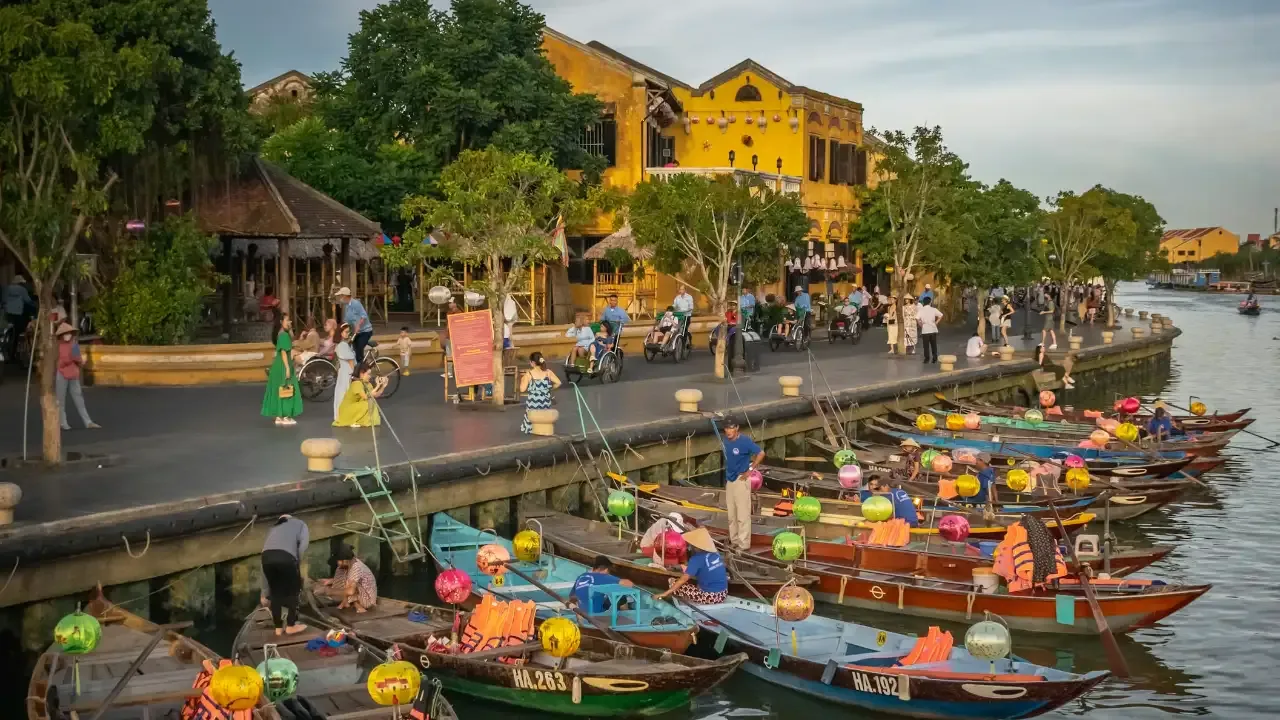
Most people come for the Old Town, and there is a reason those photos keep circulating. The yellow shopfronts, lanterns, wooden merchant houses and riverside streets create one of the most visually distinctive urban cores in Vietnam. The catch is that almost everyone is looking at the same few blocks. By late afternoon the area around the Japanese Covered Bridge and the river becomes a procession of photographers, tour groups and souvenir sellers. Show up at sunrise instead and it feels like a different place. The town earns its reputation before breakfast.
Tailoring is the other major draw, and Hoi An has built an entire economy around it. Some travelers arrive with a suitcase half empty and leave with custom shirts, dresses and suits. The quality ranges from excellent to disappointing, often within the same street. What surprises first-time visitors is how little of the process is actually about craftsmanship and how much is about salesmanship. Every second person seems to know a tailor, recommend a tailor or earn a commission from a tailor. The good shops exist. Finding them takes more effort than the marketing suggests.
Leave the center on a bicycle and the picture changes quickly. Rice fields, small family homes, vegetable farms and narrow lanes still sit only minutes from the crowds. The route toward An Bang Beach is part of daily life for many longer-stay visitors, not because it is spectacular but because it is easy. Mornings often mean coffee, a slow ride through the fields and a few hours by the sea before returning to town. That balance is one reason people stay longer than planned.
Food is where Hoi An often exceeds expectations. Cao lau, white rose dumplings and chicken rice appear on nearly every menu, but the more interesting part is how many local businesses still specialise in one thing and do it repeatedly every day. Some of the best meals come from places that look completely unremarkable until you notice half the town eating there. The tourist restaurants along the river get most of the attention. They are rarely the best option.
Anyone searching for an undiscovered Vietnamese town should look elsewhere. Hoi An is polished, commercial and deeply aware of what visitors want from it. In some ways it resembles a carefully maintained stage set more than a living town center. Yet that description misses something important. People still live here, work here, farm nearby and gather in places that have nothing to do with tourism. If you can accept that contradiction, Hoi An works. If you cannot, a few days in Da Nang or Hanoi may feel more rewarding.
Bicycle Culture
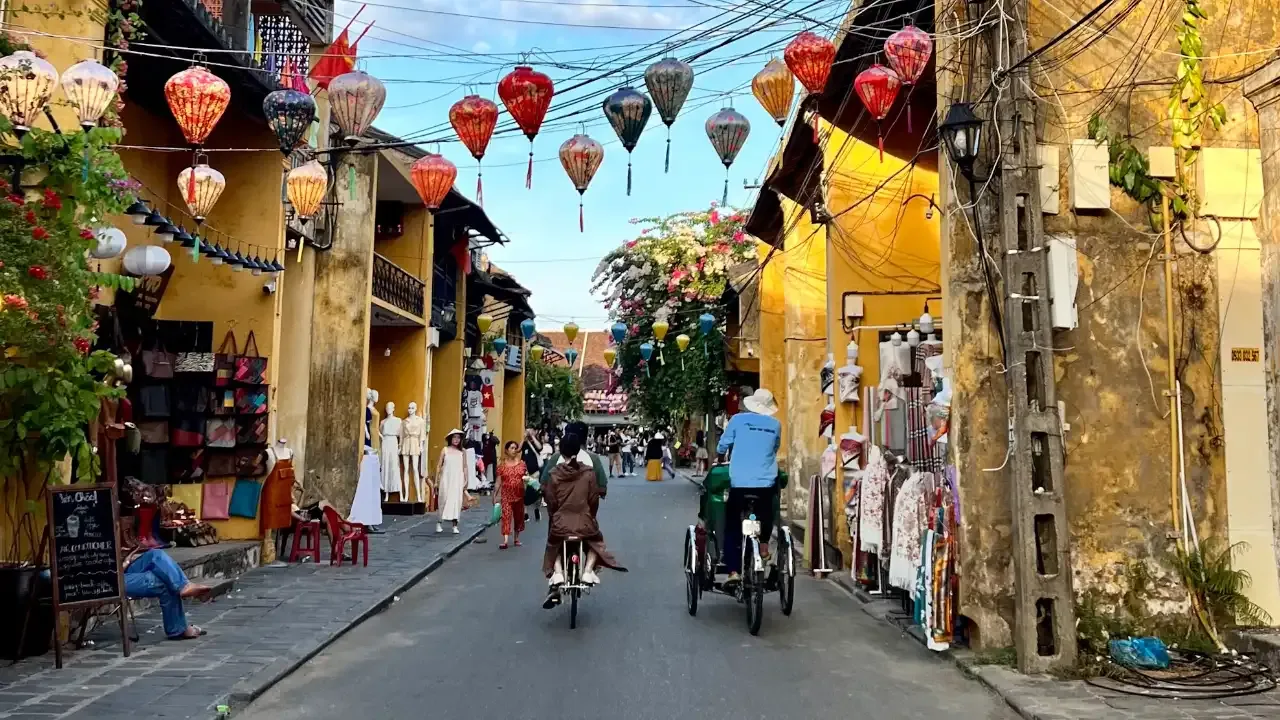
The easiest way to understand Hoi An is to get on a bicycle and stop treating movement as a problem to solve. Within twenty minutes you can leave the souvenir shops behind, roll past water buffalo standing knee deep in flooded fields, cut through Tra Que Vegetable Village, and end up at An Bang Beach without dealing with traffic, parking or negotiations. In most of Southeast Asia a bicycle feels like a compromise. Here it often feels like the better option.
What makes Hoi An different is not that the scenery is extraordinary. It is that the distances make sense. The Old Town, Cam Chau, Cam Thanh, Tra Que and the beach are all close enough that locals, expats and long-stay travelers routinely move between them by bike. The roads are flat, the pace is slower than nearby <a href='/destinations/da-nang/'>Da Nang</a>, and you spend more time looking around than concentrating on not getting hit.
The bicycle also changes who stays here. Hoi An attracts a disproportionate number of remote workers, retirees and slow travelers who build a routine around morning rides, coffee stops and short errands. Spend a week here and you start recognizing the same people cycling to yoga classes, vegetable markets and beach cafes every day. It feels less like tourism and more like a temporary neighborhood.
Not every ride is pleasant. Midday heat can be brutal, some roads toward the beach are busier than they look, and the rice fields that appear untouched in photographs are now lined with cafes and homestays. Yet the bicycle still reveals a version of Hoi An that most day-trippers never encounter. The town makes the most sense at fifteen kilometers per hour.
Where to Stay in Hoi An
- History, walkability, nightlife
Hoi An Ancient Town
Hoi An Ancient Town is where most first-time visitors picture themselves staying. You can walk to the riverside, lantern-lit streets, cafes and restaurants without touching a scooter, but you pay for that convenience with crowds from late afternoon onward. Many buildings are heritage properties converted into boutique hotels, which sounds romantic until you realize some rooms sit directly above busy pedestrian routes. Stay here if being in the middle of things matters more than peace and quiet.
Good for: Walking everywhere, photography, food, short stays.
Skip if: You want quiet mornings and easy beach access.
- Cycling, rice fields, cafes
Cam Chau
Cam Chau sits between the Old Town and the coast, which is why so many longer-stay travelers end up here. Small roads cut through rice fields, cafes are spread out rather than concentrated, and cycling actually feels practical instead of performative. You can reach both the beach and the center quickly while avoiding most of the tourist traffic that defines the Old Town. For many people, this is the sweet spot.
Good for: Longer stays, cycling, remote work, quieter evenings.
Skip if: You want to step outside directly into the Old Town.
- Beach, surfing, cafes
An Bang
An Bang Beach has evolved from a sleepy fishing area into Hoi An's main beach base. Mornings revolve around swimmers, surfers and beachfront coffee rather than sightseeing, while evenings stay active without turning into a party district. The beach itself remains one of the better stretches near town, although development has steadily filled many empty spaces. Expect a beach holiday with easy access to Hoi An rather than a traditional Vietnamese town experience.
Good for: Beach days, surfing, cafes, slower travel.
Skip if: You want to walk everywhere and avoid scooter rides.
- Beach, resorts, relaxation
Cua Dai
Cua Dai appeals to travelers who care more about resort facilities and open space than being near the action. Coastal erosion changed parts of the beachfront, but several larger resorts still occupy the area and provide a noticeably calmer atmosphere than An Bang. Reaching restaurants and attractions usually means cycling, driving or taking a taxi. It feels separate from town in a way the other areas do not.
Good for: Resort stays, beach walks, quieter holidays.
Skip if: You want nightlife, cafes and restaurants on your doorstep.
Frequently Asked Questions
Planning & moving around
-
How many days do you need in Hoi An?
Two to three days covers most people's wishlist. Add another day if you're having clothes tailored, cycling between villages and beaches, or taking day trips to My Son Sanctuary and Da Nang. Keep the pace slow. There is not enough here to fill a packed schedule.
-
What are the best day trips from Hoi An?
My Son Sanctuary is the standout choice if you're interested in Cham history and architecture. Da Nang works well for the Marble Mountains, city restaurants and beach time. The Cham Islands appeal more to snorkelers than to people looking for culture or food.
-
What's the best way to get around Hoi An?
Walking works best in the Ancient Town, while bicycles are ideal for reaching Cam Chau, Tra Que and An Bang Beach. Grab is widely available for longer journeys. Many visitors rent scooters, but the roads become noticeably less relaxing once you leave the quieter back lanes.
-
Is Grab available in Hoi An?
Yes. Grab operates throughout Hoi An and is usually the simplest way to arrange transport to beaches, hotels and nearby attractions. Both car and motorbike options are available, although availability can fluctuate late at night or during bad weather.
-
What's the long-stay and digital nomad scene like in Hoi An?
Hoi An attracts remote workers who want a slower pace than Da Nang. Most long-stay visitors base themselves around Cam Chau, Cam An and An Bang, where cycling is easy and daily life feels less tourist-focused than the Old Town. The coworking scene is small compared with larger hubs, but reliable internet, cafes and short-term rentals are easy to find. People usually choose Hoi An for lifestyle rather than networking.
Safety & medical
-
Is Hoi An safe at night?
Yes. The Old Town stays busy well into the evening and violent crime against visitors is uncommon. The bigger risks are traffic on roads outside the pedestrian center, tourist scams around transport or boat rides, and riding scooters after dark.
-
What should I do if I get sick in Hoi An?
Pharmacies can handle minor issues such as stomach bugs, colds and basic medications. For anything more serious, most travelers head to hospitals and international clinics in Da Nang. Good travel insurance matters because advanced care is concentrated there rather than in Hoi An itself.
Laws & local norms
-
Do you need a license to ride a scooter in Hoi An?
Yes. Vietnam requires the correct license or a qualifying International Driving Permit to ride legally. Many travelers rent scooters anyway, but the bigger issue is that insurance claims are often denied after accidents if licensing requirements are not met.
-
What are the drug laws in Hoi An?
Vietnam enforces strict drug laws and penalties can be severe. Foreign visitors are not treated differently from locals. This is not an area where travelers should assume rules are loosely enforced.
-
Can you vape in Hoi An?
Vietnam has tightened restrictions around vaping and related products. Rules have changed significantly and travelers often arrive with outdated information. Check the latest regulations before departure rather than assuming vaping is treated the same way as in your home country.
-
What should you wear when visiting temples and pagodas?
Cover your shoulders and knees and dress more conservatively than you would for the beach. Remove shoes where required and avoid treating active religious sites as photo sets. The expectation is basic respect rather than strict formality.
-
What is the etiquette for taking photos in Hoi An?
Ask before photographing people, especially vendors, worshippers and anyone inside a religious site. Avoid blocking narrow streets for long photo sessions around the Old Town. The town is heavily photographed, which makes considerate behavior stand out.
Money & costs
-
Is it better to use cash or card in Hoi An?
Carry both. Hotels, many restaurants and larger shops accept cards, but markets, small cafes, local food stalls and many transport providers still prefer cash. You will use cash more often here than in major Vietnamese cities.
Food & drink
-
Where do locals eat in Hoi An?
The best local food is usually found outside the busiest riverside streets. The Central Market area and neighborhood eateries around Cam Chau attract far more residents than the restaurants facing the main tourist routes. Follow busy lunch crowds rather than lantern views.
-
What dishes should you try in Hoi An?
Start with cao lau, the noodle dish most closely associated with the town. White rose dumplings, Hoi An chicken rice and local banh mi are also worth seeking out. The strongest meals often come from specialist shops focused on one signature dish.
Families & kids
-
Is Hoi An stroller-friendly?
Mostly yes. The pedestrian sections of the Old Town are flat and easy to navigate, although crowds after sunset can make movement slow. A stroller works well in town, but a carrier is often easier on beaches, uneven paths and cycling routes.
-
What are good activities for kids in Hoi An?
Lantern-making workshops, beach time at An Bang, gentle cycling routes and basket boat rides are usually popular with younger children. The compact size of the destination also helps. Families often find Hoi An easier to manage than larger Vietnamese cities.
Staying longer
-
What's the best area to stay in Hoi An?
Hoi An Ancient Town suits first-time visitors who want to walk everywhere and stay close to the main sights. Cam Chau works well for longer stays thanks to its rice-field setting and easy cycling access to both town and beach. An Bang is the better choice if beach time matters more than being in the center.
After dark
-
What is there to do in Hoi An after dark?
Most visitors walk the lantern-lit riverside, browse the night market, or take a boat ride on the Thu Bon River. The atmosphere is more about strolling, eating and people-watching than nightlife. If you're looking for bars that stay open late, Da Nang offers more options.
-
When is the Hoi An Lantern Festival?
The festival takes place on the full moon period of each lunar month. Crowds increase significantly and the riverside becomes even busier than usual. It creates a memorable atmosphere, but it is not a secret event and accommodation can fill faster around those dates.