
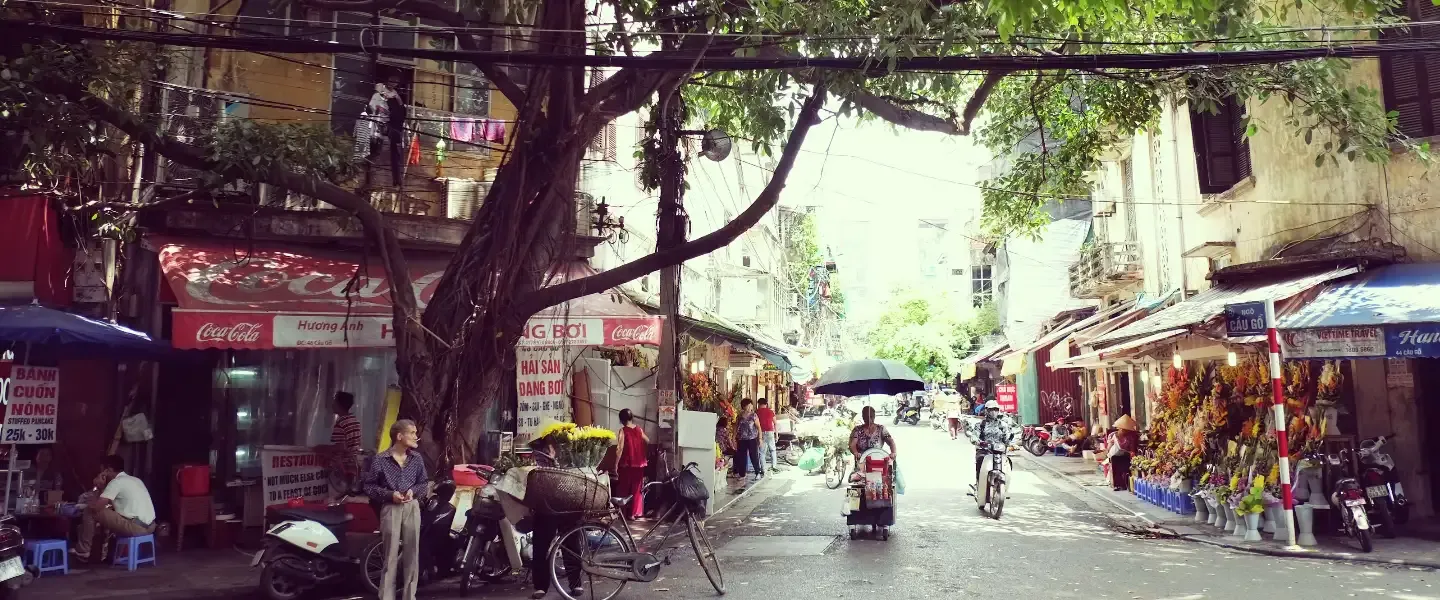
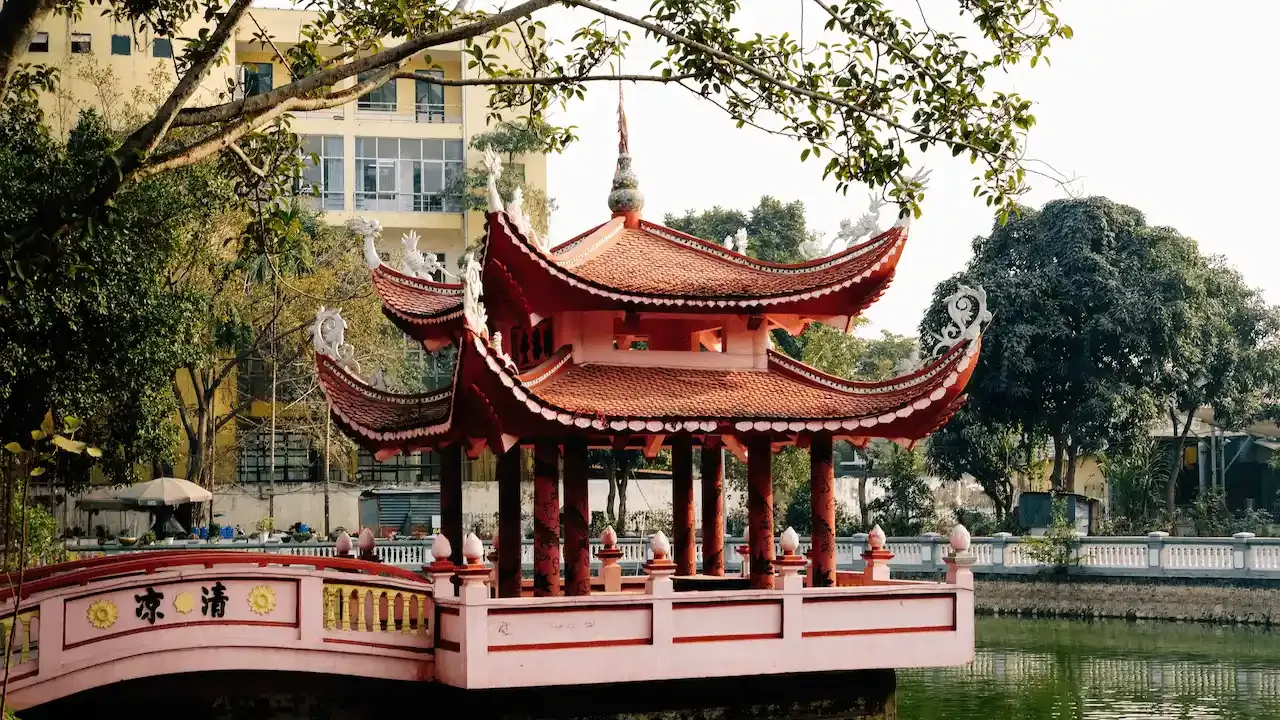
Hanoi Right Now
Air quality is moderate, but the city often experiences elevated pollution levels during certain weather conditions. Sensitive individuals may experience minor symptoms.
Hanoi International Gift Fair (Hanoi Giftshow 2026) · National Exhibition Center for Architecture and Construction Planning
BIGBANG WORLD TOUR 2026 IN HANOI · My Dinh National Stadium, Hanoi
Interest in travel to Hanoi rose 11% from a year ago, suggesting demand is growing.
Best time to visit Hanoi
Great time to visit
October offers some of Hanoi's best weather: mild, dry, and sunny, drawing significant tourist crowds.
Score by month
The best time to visit Hanoi is October to April for cooler, drier weather. Avoid May to September due to intense heat, high humidity, and heavy rains.
Day-to-day in Hanoi
Walkability
47/100
Hanoi is compact enough to explore on foot, but rarely comfortable. Distances are short around Hoan Kiem, the Old Quarter and nearby districts, yet sidewalks disappear under scooters, stalls and parked bikes, and crossings demand nerve.
Pavements in the Old Quarter are narrow, broken, and often taken over by scooters or food stalls.
Hoan Kiem, the French Quarter, and nearby food streets cluster tightly enough for long walks.
Scooters rarely stop fully at crossings, so pedestrians must move steadily through live traffic.
Climate works against walking for much of the year. Plan around weather windows.
-
Monthly cost
$1,151 / month
AFFORDABLESolo mid-range stay including rent, daily eating out, groceries, and routine costs.
-
Food and Markets
Daily life in Hanoi revolves around street food more than big-ticket sights. Old Quarter alleys, Dong Xuan edges and neighborhood stalls run on pho, bun cha, banh mi, egg coffee and late-night plastic stools.
-
Coworking
$107 / month
VERY AFFORDABLECoworking is strongest around Hoan Kiem, Ba Dinh, Tay Ho and business districts like Thai Ha, with names such as Toong, UPGen and Dreamplex. The better spaces have reliable A/C and wifi, but cafe work can be noisy, smoky and power-point dependent.
-
Local gym
$35 / month
VERY AFFORDABLEHanoi has solid gyms, but the better options skew toward commercial chains rather than casual drop-in rooms. Look around Tay Ho, Hoan Kiem and Ba Dinh for California Fitness & Yoga, Elite Fitness, Fit24 and smaller strength studios.
Need to Know
- Population
- 8,685,607 GSO · 2024
- Currency
- Vietnamese dong (VND)
- Language
- Vietnamese; English is common in tourist areas, hotels and younger service staff.
- Tap water
- Not safe
- Time zone
- ICT (UTC+7)
- Power plug
- Type A / C, 220V
- Dialing code
- +84
- Driving side
- Right
- Tipping
- Not expected; round up or leave a small tip for good restaurant or guide service.
- Internet
- Strong 4G in Hanoi and expanding 5G; hotel and cafe Wi-Fi is common but quality varies.
- Emergency
- 113 police, 114 fire, 115 ambulance.
When not to go
-
Avoid Hanoi's winter smog
Nov – MarDo not choose Hanoi in winter if clean air is central to the trip. Still days can trap exhaust, construction dust and regional pollution over the city, with recent winter AQI spikes reaching unhealthy and very unhealthy levels. Go south or to the coast if you want Vietnam without building the whole day around air quality checks.
Upcoming Events & Holidays in Hanoi
Upcoming events, next 30 days
Public holidays & observances, next 12 months
Dates are researched and checked, but events move. Always confirm with the official source before you book anything around them.
Getting To Hanoi
-
From Noi Bai Airport (HAN)
About 30 to 35 km north of Hoan Kiem.
Noi Bai is Hanoi's main air gateway, with Terminal 2 for international flights and Terminal 1 for domestic arrivals. Traffic into Hoan Kiem and the Old Quarter is usually the real variable, especially in rain or office peaks. Use Grab or Be for price control, official taxis for convenience, and Bus 86 if you land within service hours and travel light.
Direct flights to Hanoi
Serves 91 direct destinations, 77 international and 14 domestic, about 374 flights a day.
International 77- Bangkok BKK Thailand
 Ethiopian Airlines
  Thai Airways International V VAG
 V VECA
 VietJetAir
  Vietnam Airlines 11/day
 - Seoul ICN South KoreaA Air Incheon
 Asiana Airlines
  Jeju Air
  Korean Air VietJetAir Vietnam Airlines 11/day
 - Shanghai PVG China
 Air China
  China Eastern Airlines C CSG
  Juneyao Airlines VietJetAir Vietnam Airlines 9/day
 - Taipei TPE Taiwan
 China Airlines
  EVA Air
  Starlux Airlines VietJetAir Vietnam Airlines 8/day
- Shenzhen SZX China
 China Southern Airlines
  Shenzhen Airlines 8/day
 - Guangzhou CAN ChinaA Air Incheon China Southern Airlines Shenzhen Airlines VietJetAir Vietnam Airlines 7/day
- Singapore SIN Singapore
 Scoot
Scoot  Singapore Airlines VietJetAir Vietnam Airlines 7/day
 - Hong Kong HKG Hong KongA Air Incheon A Atlas Air
 Cathay Pacific
  Hong Kong Express K K-Mile Air Vietnam Airlines 6/day
 - Kuala Lumpur KUL Malaysia
 AirAsia
  Malaysia Airlines
  Malindo Air VietJetAir Vietnam Airlines 6/day
 - Tokyo NRT Japan
 ANA
ANA  Japan Airlines VietJetAir Vietnam Airlines 6/day
 - Manila MNL Philippines
 Cebu Pacific Air
  Philippine Airlines Philippines AirAsia Vietnam Airlines 4/day
 - New Delhi DEL India
 Air India
  IndiGo VietJetAir Vietnam Airlines 3/day
 - Kaohsiung City KHH Taiwan VietJetAir Vietnam Airlines 3/day
- Osaka KIX Japan VietJetAir Vietnam Airlines 3/day
- Bangkok DMK Thailand Thai AirAsia 1-2/day
- Doha DOH Qatar
 Qatar Airways 1-2/day
 - Vientiane VTE LaosL Lao Airlines Vietnam Airlines 1-2/day
- Busan PUS South Korea VietJetAir Vietnam Airlines 1-2/day
- Tokoname NGO Japan VietJetAir Vietnam Airlines 1-2/day
- Beijing PEK China Air China Vietnam Airlines 1-2/day
- Abu Dhabi AUH United Arab Emirates
 Etihad Airways 1-2/day
 - Fukuoka FUK Japan VietJetAir Vietnam Airlines 1-2/day
- Jakarta CGK Indonesia VietJetAir Vietnam Airlines 1-2/day
- Taipa MFM Macau
 Air Macau 1-2/day
 - Dubai DXB United Arab Emirates
 Emirates 1-2/day
 - Istanbul IST Türkiye
 Turkish Airlines ~1/day
 - Kolkata CCU India IndiGo ~1/day
- Paris CDG FranceC CMA Vietnam Airlines ~1/day
- Phnom Penh KTI Cambodia
 Cambodia Angkor Air Vietnam Airlines ~1/day
 - Siem Reap SAI Cambodia VietJetAir Vietnam Airlines ~1/day
- Chengdu TFU ChinaC Chengdu Airlines S Sichuan Airlines~1/day
- Frankfurt FRA Germany Vietnam Airlines ~1/day
- Mumbai BOM India VietJetAir Vietnam Airlines ~1/day
- Taichung City RMQ Taiwan VietJetAir ~1/day
- Chongqing CKG ChinaW West Air~1/day
- Kunming KMG China China Eastern Airlines ~1/day
- Xiamen XMN China
 Xiamen Airlines ~1/day
 - Bali DPS Indonesia VietJetAir ~1/day
- Beijing PKX China VietJetAir ~1/day
- Hangzhou HGH China Air China ~1/day
- Chiangmai CNX Thailand Thai AirAsia ~1/day
- Changsha CSX China China Southern Airlines ~1/day
- Ahmedabad AMD India VietJetAir 5/week
- Bangalore BLR India Vietnam Airlines 5/week
- Melbourne MEL Australia Vietnam Airlines 5/week
- Sydney SYD Australia Vietnam Airlines 5/week
- Yangon RGN Myanmar
 Myanmar Airways International 5/week
 - Hiroshima HIJ Japan VietJetAir 4/week
- Hyderabad HYD India Vietnam Airlines 4/week
- Lapu CEB Philippines Vietnam Airlines 4/week
- London LHR United Kingdom Vietnam Airlines 4/week
- Shizuoka FSZ Japan VietJetAir 4/week
- Moscow SVO Russia Vietnam Airlines 4/week
- Munich MUC Germany Vietnam Airlines 4/week
- Fuzhou FOC China Xiamen Airlines 4/week
- Amsterdam AMS Netherlands Vietnam Airlines 3/week
- Milan MXP Italy Vietnam Airlines 3/week
- Ezhou EHU ChinaS SF Airlines3/week
- Ashgabat ASB TurkmenistanT Turkmenistan Airlines2/week
- Jebel Ali DWC United Arab Emirates Emirates 2/week
- Luang Phabang LPQ Laos Vietnam Airlines 2/week
- Penang PEN Malaysia Korean Air 2/week
- Vienna VIE Austria Korean Air 2/week
- Guilin City KWL ChinaG GX Airlines2/week
- Jinan TNA China
 Shandong Airlines 2/week
 - Lijiang LJG ChinaB Bamboo Airways2/week
- Nanning NNG ChinaG GX Airlines2/week
- Qingdao TAO China Shandong Airlines Xiamen Airlines 2/week
- Wuhan WUH China China Eastern Airlines 2/week
- Xianyang XIY China China Eastern Airlines 2/week
- Blagoveschensk BQS Russia VietJetAir 1/week
- Khabarovsk KHV Russia VietJetAir 1/week
- Navoi NVI UzbekistanC CMA1/week
- Tel Aviv Yafo TLV IsraelA Arkia Israeli Airlines1/week
- Guiyang KWE ChinaC Colorful Guizhou Airlines1/week
- Lanzhou LHW ChinaV VECA1/week
- Yichang YIH ChinaA Air Changan1/week
Within Vietnam 14
- Ho Chi Minh City SGN9 9G Rail B Bamboo Airways J Jetstar Pacific
S SPQ V VAG V VECA
VietJetAir Vietnam Airlines 75/day - Da Nang DAD9 9G Rail B Bamboo Airways J Jetstar Pacific
S SPQ V VAG V VECA
VietJetAir Vietnam Airlines 60/day - Nha Trang CXRB Bamboo Airways V VAG V VECA VietJetAir Vietnam Airlines 23/day
- Duong Dong PQC9 9G Rail S SPQ VietJetAir Vietnam Airlines 22/day
- Quy Nohn UIHB Bamboo Airways VietJetAir Vietnam Airlines 13/day
- Huế HUI VietJetAir Vietnam Airlines 9/day
- Can Tho VCA VietJetAir Vietnam Airlines 7/day
- Buon Ma Thuot BMVV VECA VietJetAir Vietnam Airlines 6/day
- Pleiku PXU VietJetAir Vietnam Airlines 5/day
- Tuy Hoa TBB VietJetAir Vietnam Airlines 3/day
- Dong Hoi VDH Vietnam Airlines 1-2/day
- Vinh VII Vietnam Airlines 1-2/day
- Dien Bien Phu DIN Vietnam Airlines 1-2/day
- Dung Quat Bay VCL Vietnam Airlines ~1/day
Nonstop routes only. Flights per day are an average, each way. Data: AeroDataBox, updated July 2026.
Visa rules apply at the country level. See the full Vietnam visa guide, with every visa and its official do-it-yourself cost. -
Safety Advice
Petty theft, especially bag snatching, is common; secure belongings. Traffic is chaotic; scooter accidents are a real risk, so walk defensively. Avoid political demonstrations.
Common Scams in Hanoi
-
Motorbike Damage Claims
HIGH RISKTrigger:A rental shop asks to keep your passport
Some Hanoi rental shops hand over a bike with old scratches, then call the damage new when you return it. If they hold your passport, a small dispute can become a trip-stopping shakedown.
How to avoid: Never leave your passport as collateral. Use a cash deposit, photograph the agreement, and film the whole bike before riding away.
-
Rigged Taxi Meters
MEDIUM RISKTrigger:A driver refuses Grab or the meter jumps fast
Unlicensed taxis around Noi Bai Airport and the Old Quarter can run tampered meters or switch the fare after you are inside. A normal airport ride can turn into a demand near 1,000,000 VND ($40 USD).
How to avoid: Use Grab, Be, airport bus 86, or the official taxi rank. If taking a taxi, use Mai Linh or Taxi Group and photograph the plate before leaving.
-
Fruit Basket Photos
MEDIUM RISKTrigger:A vendor puts baskets on your shoulder for a photo
Old Quarter fruit and doughnut vendors sometimes create a friendly photo moment, then demand a steep fee once the camera is out. The same pattern can turn a few snacks into a noisy argument over hundreds of thousands of dong.
How to avoid: Do not accept props, food or a basket unless you have agreed on the price first. A firm no and walking away is enough.
-
Shoe Shine Hustle
MEDIUM RISKTrigger:Someone points at your shoe and starts touching it
Shoe shiners in the Old Quarter may start cleaning or repairing without permission, then demand an inflated price. The pressure works because the service has already begun.
How to avoid: Do not let anyone touch your shoes in the street. Pull your foot back, say no once, and keep walking.
-
Cyclo Fare Switch
MEDIUM RISKTrigger:A cyclo driver gives a vague low price
Cyclo drivers near Hoan Kiem and tourist landmarks can quote a friendly fare, then claim later it was per person, per minute or not the full ride. The argument usually happens after you are already at the destination.
How to avoid: Agree the total fare before moving and type it on your phone for both sides to see. Skip the ride if the driver avoids a clear number.
Mistakes to Avoid
-
Drinking Tap Water
SERIOUS CONSEQUENCEHanoi tap water is not safe to drink straight from the tap. Stomach illness can wipe out days of the trip.
Fix: Use bottled, boiled or properly filtered water. Brush teeth with bottled water if you have a sensitive stomach.
-
Wrong Visa Details
SERIOUS CONSEQUENCEWrong passport numbers, dates or name order on a Vietnam visa application can lead to denied boarding or denied entry. A tiny typo can become an airport problem.
Fix: Check every field against your passport before submitting. Save the approval document offline and print a backup.
-
Inappropriate Temple Attire
Revealing clothes at pagodas, temples and memorial sites read as disrespectful, especially outside the tourist-heavy core. Staff may ask you to cover up or leave.
Fix: Cover shoulders, chest and knees for religious sites. Carry a light scarf or overshirt if you plan to wander into temples.
-
Illegal Scooter Parking
MINOR CONSEQUENCEParking a rented scooter in a restricted area or blocking a sidewalk can lead to fines, towing or a fight with the rental shop. Hanoi sidewalks are already crowded, and enforcement can be blunt.
Fix: Use marked parking areas or paid attendants near cafes, markets and sights. Ask the rental shop how local parking works before your first ride.
Money & Payments
Carry dong for stalls, use cards in bigger venues, and reject home-currency card conversion.
-
Small Notes Matter
Street food stalls, wet markets, old shops and small cafes still run on cash. Keep 50,000 VND, 100,000 VND and 200,000 VND notes so vendors do not have to break a 500,000 VND bill.
-
Cards Need Checking
Visa and Mastercard work at hotels, larger restaurants, malls and tour desks around Hoan Kiem and Tay Ho. Many smaller places add a 2% to 4% card surcharge, and Amex is much less useful.
-
ATMs Have Limits
Vietcombank, BIDV, Agribank and Techcombank ATMs are easy to find in central Hanoi. Many machines cap withdrawals around 3,000,000 VND ($120 USD), with fees often around 40,000-60,000 VND ($2-3 USD).
-
Pay In VND
Card terminals may offer to charge you in your home currency instead of Vietnamese dong. Reject dynamic currency conversion because the exchange rate is usually worse than your bank's rate.
-
Local Wallets Are Limited
MoMo, ZaloPay and VietQR are common for locals, but most visitors cannot set them up without Vietnamese banking access. Do not rely on QR payments for street food, taxis or small shops.
-
No Separate Tourist Tax
Vietnam does not usually ask leisure travelers to pay a separate city tourist tax or departure tax in cash. Flight and hotel prices normally include mandatory taxes, though hotels may still show VAT or service charges on the bill.
-
International Transfers
To send money to a bank account in Vietnam, for things like rent or day-to-day expenses, services like Wise or Remitly usually offer better rates than traditional banks and faster delivery.
You'll typically need the recipient's full name, account number, and SWIFT/BIC code. Some banks may also require a local address.
Costs in Hanoi
A comfortable mid-range visit to Hanoi costs roughly $50-100 USD per day. This covers decent accommodation, local food, transport, and a few attractions.
Save money?
Sign up for our guide on how to save money on your next trip.
SIM Cards & Data
Best option for most travelers: an eSIM you set up before you arrive. You'll be online the moment you land, with no airport line and no tourist pricing.
Travel eSIMs Connect the second you land. Zero hassle. Skip the airport line and paperwork. Activate before you fly and land connected. Find the best eSIM →Prefer a local SIM?
You can easily buy a physical SIM card upon arrival at Hanoi's Noi Bai International Airport (HAN) from official carrier kiosks like Viettel, Vinaphone, or Mobifone, though prices are slightly higher than in the city. You'll need your passport for mandatory registration, and staff at the airport can help with activation. While 5G is expanding in central Hanoi, expect reliable 4G coverage across the city, with Viettel generally offering the widest signal, especially if you plan to venture into more rural areas outside the capital.
What Hanoi is Like
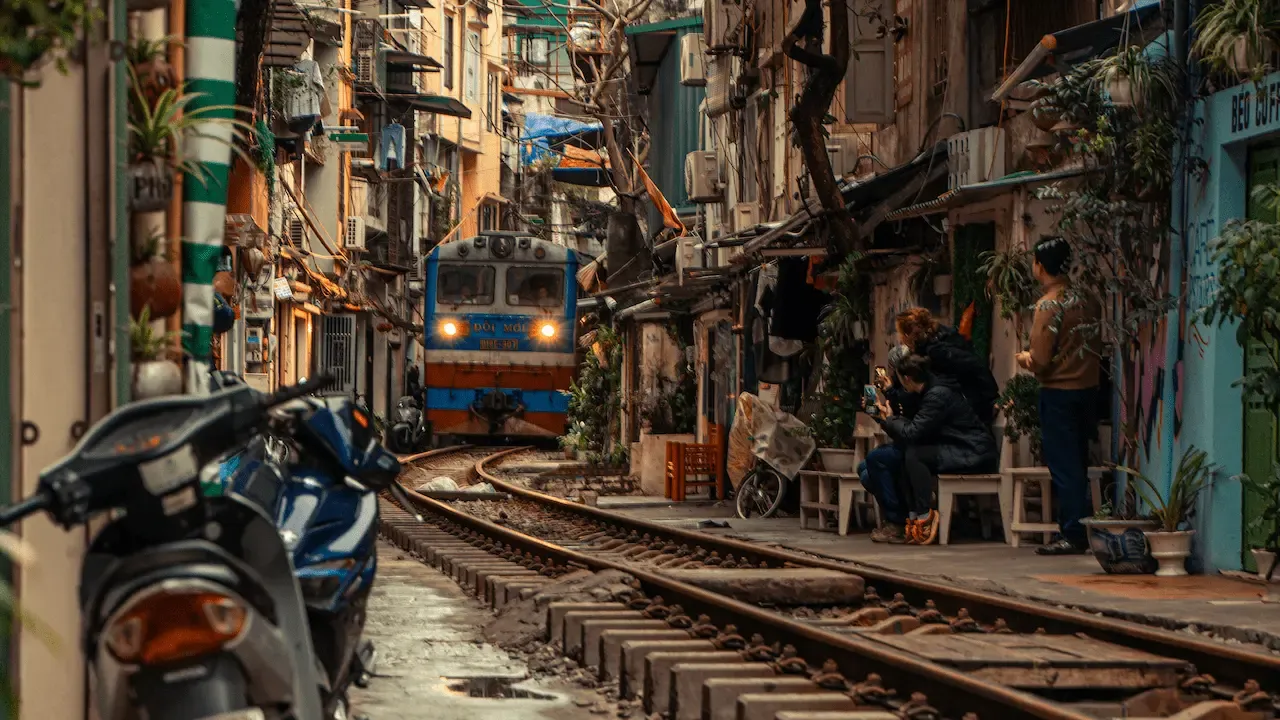
Hanoi does not ease you in. It throws you onto a curb in the Old Quarter with scooters sliding past your knees, soup steam coming off a metal cart, someone unloading crates into the only bit of sidewalk, and a cafe stool that looks too small until you sit on it. The first hour can feel like a practical joke staged by traffic engineers and noodle vendors. Then the pattern starts to show. People cross with steady nerve, vendors work around impossible corners, and whole meals happen in spaces that should barely fit a chair.
Food is the reason many people forgive the city before they understand it. Breakfast can be pho at a tiled shop where nobody explains the system, lunch can be bun cha cooked over charcoal in an alley, and late afternoon can disappear into egg coffee thick enough to count as a small mistake. The famous dishes are not museum pieces here. They are weekday routines, eaten fast, argued over, and sometimes served by people with no interest in your romantic idea of street food. That is part of the point.
The Old Quarter gets most of the attention because it is loud, photogenic and easy to sell, but it is not the whole city. Ba Dinh feels more official and slower around its government buildings, Dong Da is heavier with students, small shops and local food streets, while Tay Ho stretches out by the lake with gyms, cafes, apartments and a foreign-resident rhythm. Hoan Kiem is the obvious first base, but staying there too long can flatten Hanoi into traffic, beer stools and souvenir loops. Move around a little.
This is not a soft landing city for travelers who need clean sidewalks, quiet sleep, easy stroller routes, or a neat line between street and restaurant. The best parts of Hanoi often come with plastic chairs, rough bathrooms, smoke from grills, abrupt service, and the feeling that every simple errand has picked a fight with you. None of that makes the city bad. It just makes comfort a poor measuring stick. If you need smooth, Hanoi will feel hostile.
What Hanoi does better than comfort is momentum. Hoan Kiem fills before breakfast with walkers circling the lake, markets open while shutters are still coming up, and by night the same lanes have turned into kitchens, repair shops, drinking corners and shortcuts for scooters that should not fit. The city can be tiring, but it rarely feels empty or staged once you step outside the most polished visitor routes. It is not trying to be easy. That is why it works.
Lake Morning

Hoan Kiem is at its best before the city starts selling itself. Come early and the lake is not a postcard, it is a public gym with better trees: older women doing slow arm circles, men slapping shuttlecocks across patched sidewalk, runners moving in serious little loops, and coffee sellers setting up before the tour groups find their shoes. The Turtle Tower still sits out there doing its symbolic work, but the real point is the edge of the water. This is where Hanoi looks least interested in visitors.
The mistake is treating Hoan Kiem as a midday sightseeing stop between the Old Quarter and a cafe. By then the light is flatter, the sidewalk is busier, and the lake starts to feel like a traffic island with benches. Early morning gives you the choreography without the performance: couples walking in silence, tai chi groups counting under their breath, loudspeakers crackling somewhere behind the trees, and scooters already pressing at the roads outside the loop. You see how the city warms up before it hardens.
This is not a reason to set an alarm for romance. It is a reason to understand the capital on its own schedule. Walk one slow lap, watch who uses the space, then leave before the cameras and cyclo pitches take over. Hoan Kiem does not need a long visit, and it will not put on a show for you. Come at the hour when the city is still doing something for itself.
Where to Stay in Hanoi
- Markets, students, local rhythm
Dong Da
Dong Da is dense, practical Hanoi, with universities, markets, small restaurants, busy roads, and fewer reasons for tour groups to linger. Chợ Láng and the surrounding food streets give you more daily-life texture than polished visitor appeal. It can feel inconvenient for first-timers because the main sights are not clustered around your doorstep. Stay here if you already know why you want a less obvious base.
Good for: Repeat visitors, local markets, student energy, longer stays.
Skip if: You want a polished first-time base close to major sights.
- West Lake, expat life, long stays
Tay Ho (West Lake)
Tay Ho is the softer long-stay version of Hanoi, stretched around West Lake with apartments, cafes, gyms, international restaurants, and foreign-resident routines. It gives you more space and air than the Old Quarter, though the lake roads can still be traffic-heavy and awkward on foot. The trade-off is distance from the main historic core, so casual sightseeing becomes a ride instead of a stroll. Stay here when daily routine matters more than landmark access.
Good for: Long stays, digital nomads, gyms, lake cafes, quieter nights.
Skip if: You want to walk out your door into Hanoi's main sights.
- History, museums, quieter streets
Ba Dinh
Ba Dinh is Hanoi's official face, with government buildings, memorial sites, museums, and tree-lined roads spread wider than the Old Quarter. The Ho Chi Minh complex, Presidential Palace area, and Temple of Literature pull daytime visitors, but nights are noticeably quieter. It feels more residential once you step away from the landmarks, which helps if central Hanoi has started to grate. Stay here for space and history, not nightlife.
Good for: Museums, political history, calmer nights, longer city walks.
Skip if: You want late bars, dense food lanes, and constant street action.
- Food, old streets, nightlife
Old Quarter
Old Quarter is the obvious first Hanoi base, a tight web of trading streets, guesthouses, cafes, and food stalls packed around motorbike traffic. The old guild-street logic still shows in pockets, with metalware, herbs, paper goods, and snacks clustering by block even when tourism has softened the edges. It is noisy from early breakfast until late beer-stool hours, and some lanes feel more staged than local. Stay here for impact, not rest.
Good for: First-timers, street food, short stays, late-night wandering.
Skip if: You want quiet nights, wide sidewalks, or easy traffic crossings.
- Local food, shopping, students
Hai Ba Trung
Hai Ba Trung is a working city base south of Hoan Kiem, with universities, malls, old markets, apartment blocks, and plenty of everyday food. It is not as postcard-ready as the Old Quarter, which is exactly the appeal for travelers staying longer than a weekend. You trade easy landmark access for cheaper-feeling routines and fewer tour groups around breakfast. Stay here if you want Hanoi without the visitor filter.
Good for: Longer stays, local meals, shopping, students, repeat visitors.
Skip if: You want historic landmarks and tourist services within a short walk.
- Lake walks, central, weekends
Hoan Kiem Lake Area
Hoan Kiem Lake Area puts you between the Old Quarter and the French Quarter, with the lake acting as both landmark and daily meeting ground. Early mornings are the reward, when walkers, badminton players, and exercise groups take over before the visitor traffic arrives. Weekend pedestrian closures can be fun, but they also bring crowds, noise, and slow movement around the lakefront. Stay here for location, not solitude.
Good for: Central walking, first visits, lake mornings, easy sightseeing routes.
Skip if: You dislike tourist crowds gathering right outside your base.
- Heritage, hotels, calmer streets
French Quarter
French Quarter is Hanoi with more breathing room, set around boulevards, embassies, old villas, opera-house blocks, and polished hotels. It feels calmer than the Old Quarter, but it is not a village escape, and traffic still presses at the edges. The food and drinking scene skews more expensive and less improvised, with fewer plastic-stool surprises. Stay here if you want central Hanoi with fewer elbows.
Good for: Smart hotels, heritage walks, quieter central stays, older travelers.
Skip if: You want cheap street-level chaos outside your door.
Frequently Asked Questions
Planning & moving around
-
How many days do you need in Hanoi?
Three days is the sweet spot for most visitors. That gives you enough time for the Old Quarter, museums, cafes, street food, and evenings around Hoan Kiem Lake without rushing. Add extra days if you plan to use Hanoi as a base for trips to Ha Long Bay or Ninh Binh.
-
What's the most common mistake first-time visitors make in Hanoi?
Trying to squeeze Hanoi into a single day before rushing elsewhere. The city can look chaotic at first, but many of its best experiences come from lingering in cafes, exploring different neighborhoods, and eating well rather than racing between attractions.
-
What's the best way to get around Hanoi?
Grab is the easiest option for most visitors because prices are fixed and disputes are rare. Walking works well around Hoan Kiem Lake and the Old Quarter, although crossing roads takes some confidence. Distances are short in central Hanoi, but the city is not especially pedestrian-friendly.
-
What are the best day trips from Hanoi?
Ninh Binh is usually the strongest day trip thanks to its limestone scenery, temples, and countryside. Ha Long Bay is famous but often works better as an overnight trip than a rushed day tour. Bat Trang Ceramic Village is an easy half-day option close to the city.
-
Is Hanoi a good city for digital nomads?
Yes, especially if you enjoy cafe culture and low living costs. Tay Ho is the main expat and nomad hub, while Hoan Kiem offers a more central base. The biggest downsides are traffic, noise, and periods of poor air quality.
-
When can you see the train on Hanoi Train Street?
Train schedules change and access rules are enforced inconsistently, so do not rely on times shared on social media. Most visitors now enter through cafes that monitor train movements and notify customers when a train is approaching. Expect periodic closures or restrictions depending on local enforcement.
Safety & medical
-
Is Hanoi safe to walk around at night?
Yes. Violent crime against visitors is uncommon, and central areas such as the Old Quarter, Hoan Kiem Lake, and the French Quarter stay busy into the evening. Traffic, bag snatching, and distracted scooter riders are usually bigger risks than personal safety.
-
Can you drink the tap water in Hanoi?
No. Most residents boil, filter, or buy drinking water rather than drinking straight from the tap. Ice in established restaurants and cafes is usually fine, and bottled water is cheap enough that there is little reason to take the risk.
-
What are the most common health issues for visitors in Hanoi?
Stomach problems are more common than serious illnesses. Busy food stalls with high turnover are usually a safer bet than quiet ones serving the same dishes all day. Mosquitoes can be annoying during the hotter and wetter months, so carrying repellent is sensible.
Laws & local norms
-
Is vaping legal in Hanoi?
Travelers should be very cautious. Vietnam has introduced strict restrictions on e-cigarettes and vaping products, and many older travel guides are now outdated. Check the latest rules before traveling, as products that were widely available a few years ago may no longer be legal to import, sell, or use.
-
Do you need a license to rent a scooter in Hanoi?
No license is required to rent a scooter, but legally riding one requires a license recognized in Vietnam. Many tourists overlook this and only discover after an accident that their travel insurance will not cover them. Rental shops rarely check carefully, but insurers often do.
-
What are the drug laws in Hanoi?
Drug laws are extremely strict, including for visitors. Possession alone can carry serious legal consequences, and penalties escalate quickly for larger quantities or trafficking offenses. Do not assume enforcement is relaxed because you are in a tourist area.
-
What should I wear when visiting temples and pagodas in Hanoi?
Cover your shoulders and knees and avoid beachwear. Dress codes are not always enforced strictly, but modest clothing is considered respectful. Slip-on shoes are useful because some religious sites require footwear to be removed.
-
What's the etiquette for taking photos of locals in Hanoi?
Ask before photographing people directly, especially older residents, market vendors, or worshippers. Street scenes are usually fine, but turning someone's daily routine into a photo session without permission is rarely appreciated. Some vendors may expect payment if they agree to pose.
Culture & etiquette
-
What does almost every tourist get wrong about Hanoi?
Many visitors assume Hanoi is mainly about museums and major sights. In reality, daily life, coffee culture, local food, and wandering side streets are often more memorable than the headline attractions.
-
How much English is spoken in Hanoi?
English is common in hotels, tourist businesses, cafes, and among many younger residents. Outside those settings, communication can become more limited. Translation apps are usually enough to bridge the gap.
-
Is Hanoi LGBTQ+ friendly?
Hanoi is one of the more accepting cities in the country, particularly among younger people. Same-sex relationships are legal, and most LGBTQ+ travelers report few problems. Public displays of affection of any kind tend to be more restrained than in many Western countries.
-
Are Hanoi's museums worth visiting?
A few are. The Vietnam Museum of Ethnology is widely considered the standout, while the Hoa Lo Prison Museum and the Vietnamese Women's Museum are also worthwhile. If you only have a couple of days, many visitors find the city's food, cafes, and street life more memorable than trying to visit every museum.
Food & drink
-
What are the must-try dishes in Hanoi?
Bun cha is the dish most closely associated with Hanoi. Pho bo, cha ca, banh mi, and egg coffee are also worth seeking out.
-
Where do locals eat in Hanoi?
Many of the best meals come from specialist shops serving only one or two dishes rather than huge menus. Look beyond the busiest tourist streets and follow local lunch and dinner crowds. Plastic stools and basic decor are often signs that the food matters more than the presentation.
-
Are there good vegetarian options in Hanoi?
Yes, especially around Tay Ho and the central districts. Dedicated vegetarian restaurants are easy to find, and Buddhist eateries often serve entirely meat-free menus. Knowing the phrase 'quan chay' makes finding vegetarian food much easier.
Families & kids
-
What are some good family-friendly activities in Hanoi?
The Water Puppet Theatre, Hoan Kiem Lake, and the Temple of Literature are reliable choices. Older children often enjoy cyclo rides and exploring the narrow streets of the Old Quarter. Expect plenty of noise, traffic, and stimulation compared with quieter destinations.
-
Is Hanoi stroller-friendly?
Not particularly. Sidewalks are often blocked by scooters, street vendors, and uneven paving, especially in the Old Quarter. For many families, a baby carrier is easier than a stroller.
Staying longer
-
What's the best area to stay in Hanoi for a first visit?
Most first-time visitors should stay in the Old Quarter or around Hoan Kiem Lake. You'll be close to major sights, food streets, cafes, and nightlife on foot. The French Quarter is quieter and more polished, while Tay Ho makes more sense for longer stays than short sightseeing trips.
After dark
-
What are the main nightlife areas in Hanoi?
Ta Hien Street in the Old Quarter is the center of cheap beer, backpacker bars, and crowded street seating. Tay Ho attracts a more international crowd with cocktail bars, live music, and later nights. The scene is social and bar-focused rather than club-heavy compared with places like Bangkok.
-
Does Hanoi have a red-light district?
Not in the way that places like Bangkok do. Some bars, karaoke venues, and adult entertainment businesses operate in parts of the city, but Hanoi does not have a famous, clearly defined red-light district that most tourists visit. Travelers looking for nightlife usually end up around Ta Hien Street or Tay Ho instead.