
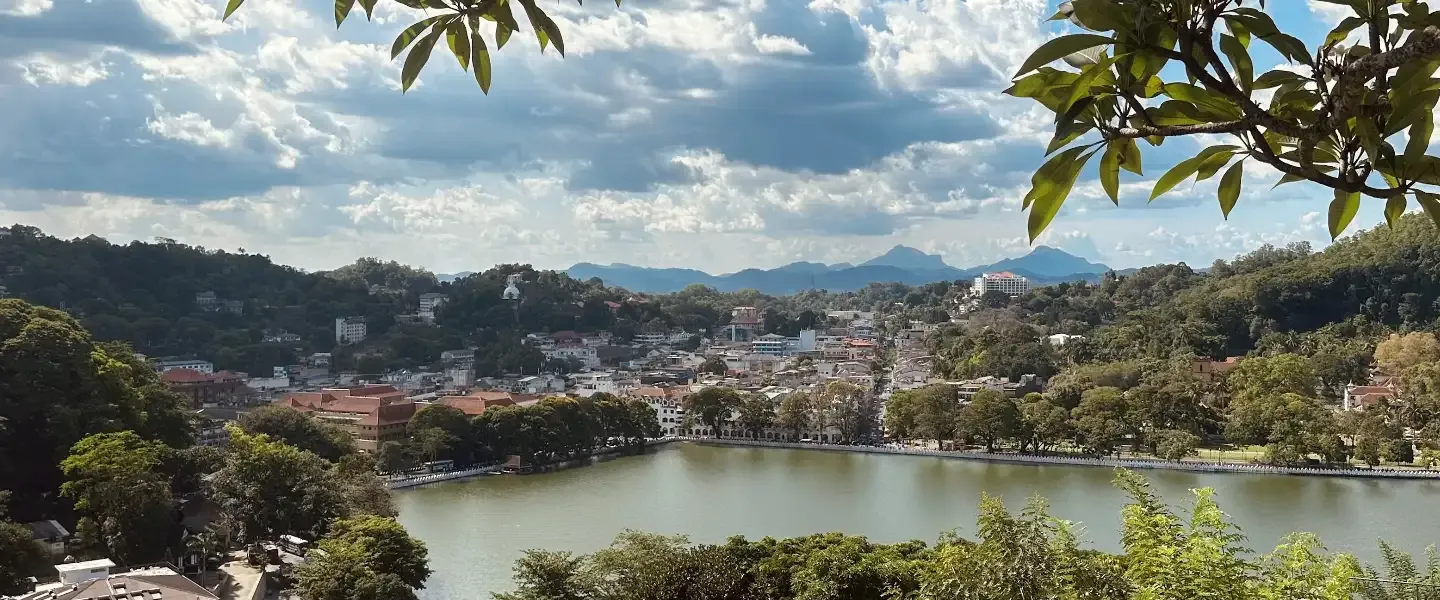
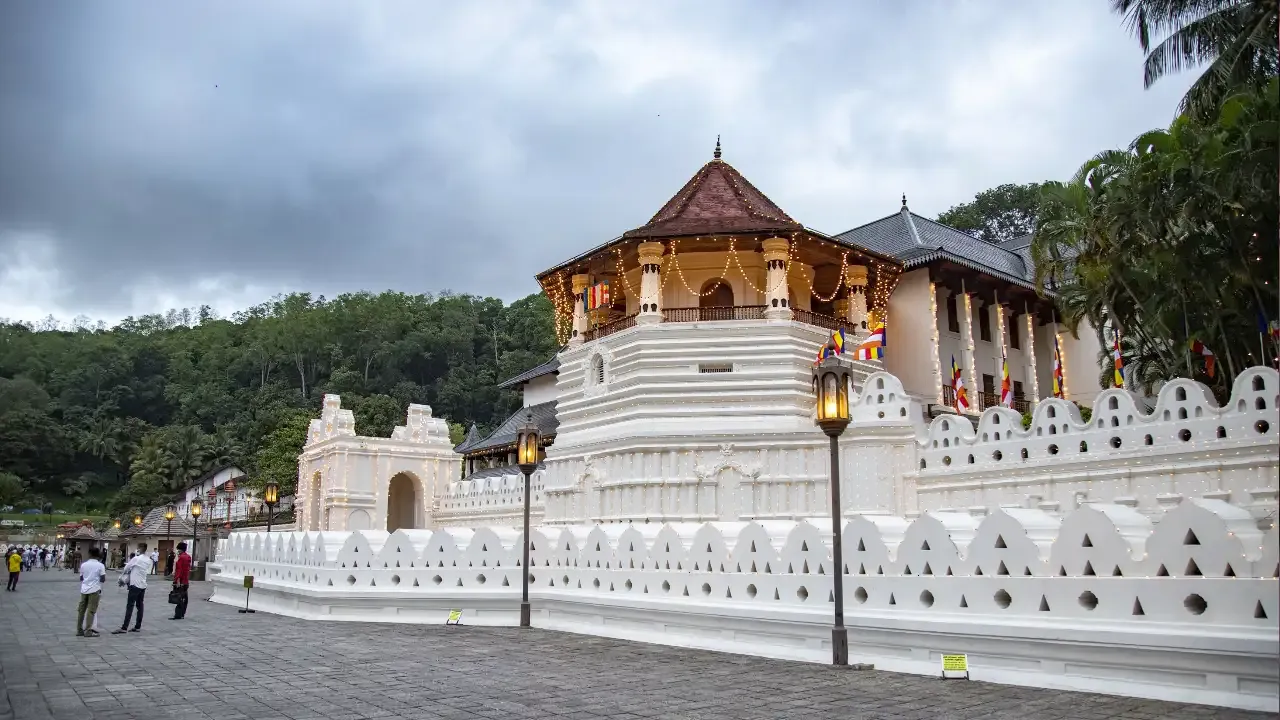
Kandy Right Now
Flash floods have affected parts of Kandy District due to heavy rainfall, displacing some families.
Binara Full Moon Poya Day
World Congress on Snakes 2026 · The Grand Kandyan, Kandy
Best time to visit Kandy
Good time to visit
Showers most weeks, and fewer visitors once the Perahera is over.
SCORE BY MONTH
January to March is the driest time and the easiest for walking between the temple, the lake and Peradeniya. October and November bring the heaviest rain, and landslides can close hill roads around the district. The Esala Perahera fills the city in July or August, when rooms get expensive and the center is crowded every night.
Visitor data: RoamFX seasonal estimate
Day-to-day in Kandy
Walkability
47/100
Walking in Kandy's center means narrow sidewalks, vendors and parked motorbikes in the way, and a one-way traffic loop to cross. The temple, lake and market are close together, but short walks are rarely pleasant.
Sidewalks are narrow, broken in places, and blocked by vendors and parked motorbikes.
The temple, lake, market and most guesthouses are within a 15-minute walk of each other. Peradeniya and the hill areas are not.
Buses and motorbikes fill the one-way loop, and crossing it takes patience.
Climate works against walking for much of the year. Plan around weather windows.
-
Monthly cost
$779 / month
VERY AFFORDABLESolo mid-range stay including rent, daily eating out, groceries, and routine costs.
-
HIKING
Loolecondera, about 90 minutes' drive south of Kandy, is the estate where James Taylor planted Ceylon's first commercial tea, and closer in the Ceylon Tea Museum at Hantane is a good first look at how tea is made.
-
Coworking
$76 / month
VERY AFFORDABLEOffice One on Katugastota Road, north of the lake, is the one dedicated coworking space with published monthly desks. Otherwise people work from cafes with Wi-Fi.
-
Local gym
$9 / month
VERY AFFORDABLEBasic gyms in Kandy, including the municipal gym, cost about LKR 2,000 to 4,000 a month. Hotel gyms are usually for guests only.
Need to Know
- Currency
- Sri Lankan Rupee (LKR)
- Language
- Sinhala and Tamil; English is widely spoken in hotels, guesthouses and shops around the lake.
- Tap water
- Not safe
- Time zone
- GMT+5:30 (SLST)
- Power plug
- Type D / G / M, 230V
- Dialing code
- +94
- Driving side
- Left
- Tipping
- Not expected at small local eateries. Restaurants usually add a 10% service charge, and a little extra is welcome if the service was good.
- Internet
- Mobile coverage is generally good in central Kandy, but signal can vary in hilly or rural areas.
- Emergency
- 119 (Police), 110 (Fire and rescue), 1990 (Suwa Seriya ambulance), 1912 (Tourist Police)
When not to go
-
Avoid Kandy during the Esala Perahera
Jul to Aug · lunar calendarThe Esala Perahera fills Kandy for about ten nights of processions, with the biggest crowds on the last few. Roads around the lake close from the afternoon, rooms cost several times the usual rate, and the Temple of the Tooth is packed from morning to night. Unless the procession is the reason you are coming, visit in another month.
Go here instead:
- Ella Hill-country walks and tea estates without the festival crowds.
Upcoming Events & Holidays in Kandy
Upcoming events, next 30 days
On the horizon
Public holidays & observances, next 12 months
Dates are researched and checked, but events move. Always confirm with the official source before you book anything around them.
Getting To Kandy
-
From Bandaranaike International (CMB)
Taxi or bus while the rail line from Colombo is closed
The Central Expressway does not reach Kandy yet, so the drive from the airport finishes on ordinary hill roads. The official airport taxi counter in arrivals quotes a fixed rate to Kandy. By bus, ride the 187 into Colombo and pick up an air-conditioned intercity bus on route 1, or an expressway bus on EX03/EX04/602 that uses the Central Expressway as far as Kurunegala.
Safety Advice
Traffic and pushy touts and gem sellers around the lake are the everyday problems, and pickpockets work the crowds at the Temple of the Tooth. Heavy rain can bring landslides on the hill roads out of town.
Common Scams in Kandy
-
Gemstone scam
HIGH RISKTrigger:An overly friendly local strikes up a conversation and quickly suggests a visit to a gem shop or factory.
Someone approaches you near a temple or the lake, often saying they are a student or a chef on their day off, and invites you to a 'gem museum' or 'government-approved' shop. The sales pitch is hard, and some of the stones are misrepresented or heavily overpriced.
How to avoid: Politely decline any invitations to gem shops or factories, no matter how convincing the story.
-
Pooja blessing scam
HIGH RISKTrigger:Someone walks you through an offering, then ties a string on your wrist.
A man in plain clothes takes you through a pooja (an offering ceremony), sometimes handing you over to a monk in a back room, then names a price for the blessing and the bracelet. It clusters at the devales, the shrines to Hindu gods that sit beside the Buddhist temples, and the Kataragama Devale a few minutes from the Temple of the Tooth is the one travelers report most.
How to avoid: Do not follow anyone into a side room and take nothing from a stranger at a shrine. Donations at the Temple of the Tooth go in the boxes by the shrine.
-
Resold hill-country train tickets
MEDIUM RISKTrigger:Someone offers you a sold-out seat on the Ella train, cash only.
Reserved seats on the upcountry trains go fast, and touts buy blocks of them online to resell to foreigners at several times face value. Police have arrested resellers in Kandy holding stacks of pre-bought tickets and notebooks of past sales.
How to avoid: Book on the Sri Lanka Railways e-ticketing site or at a station counter. Do not pay a stranger for a screenshot or a transferred booking.
-
Fake guide at the temple
MEDIUM RISKTrigger:A man outside the gate says the temple is closed or the pooja is over.
He offers to show you another temple or walk you around instead, and it ends either with a demand for far more than you agreed or at a shop that pays him a commission. The Temple of the Tooth posts its own pooja times and sells tickets at the counter.
How to avoid: Walk to the ticket counter and check the times yourself. Turn down anyone who approaches you outside the gate.
-
Fake spice garden tour
MEDIUM RISKTrigger:Your driver or a tout suggests an unscheduled stop at a 'spice garden' or 'Ayurvedic center'.
Drivers and touts offer a free or cheap stop at a spice garden or Ayurvedic center on the way to Sigiriya or Dambulla. The visit turns into a sales pitch for oils and herbal remedies at high prices, and the driver earns a commission on what you buy.
How to avoid: Insist on going directly to your planned destination. Do not agree to unscheduled stops at 'gardens' or 'factories'.
-
Overpriced tuk-tuk tours
MEDIUM RISKTrigger:A tuk-tuk driver offers a fixed-price 'tour' of Kandy's sights.
Tuk-tuk drivers offer a 'city tour' for a flat fee that sounds reasonable. They take you to commission-paying shops (gem, wood carving, tea) instead of the sights you want to see, wasting your time and pressuring you to buy. The tour itself is often rushed or incomplete.
How to avoid: Book rides on PickMe or agree the fare before you get in. If you want a city tour, arrange it through your guesthouse.
Mistakes to Avoid
-
Drinking tap water
SERIOUS CONSEQUENCEThe tap water in Kandy is not safe to drink untreated, and upset stomachs from water or ice are one of the most common reasons visitors lose a day.
Fix: Drink only bottled water or water that has been boiled and filtered. Use bottled water for brushing your teeth.
-
Ignoring street food hygiene
SERIOUS CONSEQUENCEMost street food is cooked fresh and fine, but stalls with food left uncovered in the heat are where stomach trouble usually starts.
Fix: Eat where the food is cooked to order and the stall is busy with locals.
-
Feeding the Udawattakele monkeys
SERIOUS CONSEQUENCEThe toque macaques on the forest paths behind the Temple of the Tooth are used to people and will go for an open bag or a rustling plastic one. A bite or a scratch means starting a course of rabies shots.
Fix: Keep food and plastic bags out of sight and do not hand anything over. If one breaks the skin, wash it under running water for several minutes and get to a hospital the same day.
-
Disrespecting religious sites
Wearing shorts, short skirts or sleeveless tops at temples is considered disrespectful. You may be turned away or asked to cover up, which can mean buying a sarong at the entrance.
Fix: Always wear clothing that covers your shoulders and knees when visiting temples. Carry a sarong or scarf for extra coverage.
-
Turning your back on Buddha
It is considered extremely rude to turn your back on a Buddha statue or image, even when taking a photo. This includes selfies where your back is to the statue. You will offend locals and temple staff.
Fix: Face Buddha statues when you take photos, and step away before turning around.
Money & Payments
Carry cash for tuk-tuks, street food and small shops. Cards work at larger hotels, supermarkets and some restaurants.
-
Cash for tuk-tuks and small places
Tuk-tuks, street food, the central market and small shops take cash only. Keep 100 and 500 rupee notes, since drivers often cannot break a 5,000.
-
Cards at bigger places, watch for surcharges
Visa and Mastercard work at larger hotels, supermarkets and some city restaurants, and Amex is taken in fewer places. Some merchants add a card fee, which the Central Bank does not allow: ask before you pay, and if it is added anyway, keep the receipt and report it to your card issuer.
-
ATMs around the center
Bank of Ceylon, Commercial Bank, HNB and Sampath Bank all have ATMs in the center, many of them on Dalada Veediya. Fees and limits for foreign cards vary by bank, so check the screen before you confirm, and use machines inside or next to a branch.
-
Always Pay in Local Currency (LKR)
When paying with a card or withdrawing cash, always choose to be charged in Sri Lankan Rupees (LKR). Opting to pay in your home currency triggers Dynamic Currency Conversion (DCC), where the merchant's bank sets an unfavorable exchange rate.
-
LANKAQR and Digital Payments
LANKAQR is the national QR code, and wallets connected to Alipay+ can scan it to pay at shops that display it. Most local payment apps need a Sri Lankan bank account or phone number.
-
International Transfers
To send money to a bank account in Sri Lanka, for things like rent or day-to-day expenses, services like Wise or Remitly usually offer better rates than traditional banks and faster delivery.
You'll typically need the recipient's full name, account number, and SWIFT/BIC code. Some banks may also require a local address.
Costs in Kandy
A comfortable mid-range day is about $50 to $90. The catch is the Esala Perahera in July or August, when room rates jump several times over, and foreigners pay a far higher entry fee at the Temple of the Tooth.
Save money?
Sign up for our guide on how to save money on your next trip.
SIM Cards & Data
Best option for most travelers: an eSIM you set up before you arrive. You'll be online the moment you land, with no airport line and no tourist pricing.
Travel eSIMs Connect the second you land. Zero hassle. Skip the airport line and paperwork. Activate before you fly and land connected. Find the best eSIM →Prefer a local SIM?
Dialog and SLT-Mobitel have shops in central Kandy that sell tourist SIMs, though the airport counters on arrival have the widest choice of plans. 4G works well in the center, and signal drops on mountain roads and in the valleys. You need your passport to register.
What Kandy is Like
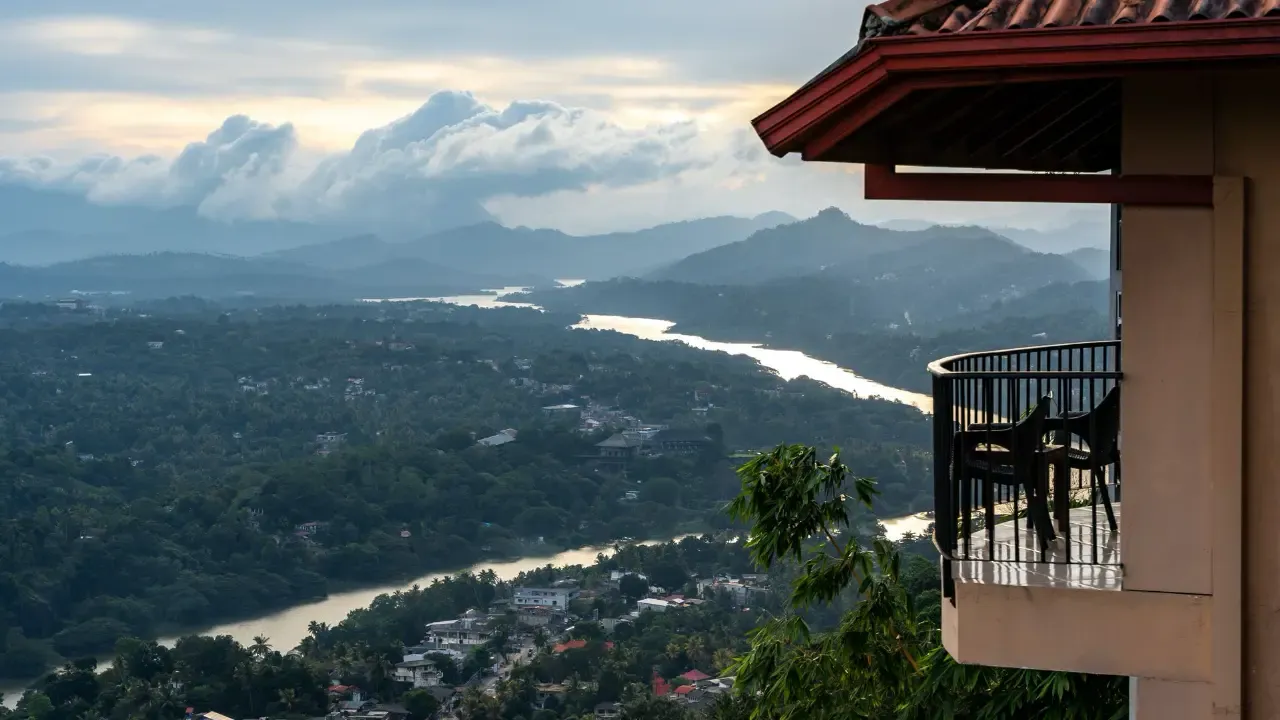
Kandy sits lower than most people expect, around 500 meters up, so it is warm and sticky, and anyone hoping for sweater weather has to keep climbing into the tea country. What the hills do give it is forest on every ridge. Udawattakele, the old royal forest reserve right behind the Temple of the Tooth, is a ten-minute walk from the busiest junction in town, and a few minutes inside the gate the traffic noise is gone, replaced by giant bamboo, fig trees and monkeys working the paths.
The Temple of the Tooth holds what Buddhists believe is a tooth of the Buddha, and the puja (offering ceremony) runs three times a day to a crash of drums at the entrance to the shrine room. The relic stays inside a gold casket that you glimpse for a few seconds through a doorway, over the heads of pilgrims pressing forward with flowers. Staff keep the line moving, so the moment is short. The drumming before the doors open is the part that stays with you.
For about ten nights in July or August the Esala Perahera takes over the streets around the lake. Perahera means procession, and the sound reaches you first: whip-crackers snapping the road clear, then files of drummers, then the dancers, then elephants under strings of lights. It is the temple's own festival, so the dates follow the moon and nothing shifts for anyone's flight. Shops on the lake road sell seats on their steps and balconies, and the good ones are gone weeks ahead.
The Royal Botanic Gardens at Peradeniya, a short bus ride west on the bank of the Mahaweli River, are the best reason to stay a second night. A giant Javan fig spreads across one of the lawns, and colonies of fruit bats hang in the tall trees near the water. South of town in Hantane, the Ceylon Tea Museum fills an old tea factory, and it makes sense as a first look at how the leaf is processed before you head up into the estates around Ella.
Where to Stay in Kandy
- Botanic gardens, river
Peradeniya
Peradeniya, about 6 km west, is built around the Royal Botanic Gardens and the university, in a loop of the Mahaweli River. Guesthouses here have bigger gardens and less traffic noise, but you take a bus or tuk-tuk into Kandy for the temple and restaurants.
Good for: The botanic gardens and a quieter base
Skip if: You want to walk to Kandy's main cultural sights
- Hillside, walks
Heerassagala
Heerassagala is a residential hill area just southwest of town with views over the valleys and a few guesthouses, close to the Ceylon Tea Museum and the Hanthana trails.
Good for: Hikers and anyone who wants a view
Skip if: You need immediate access to Kandy's main tourist sites
- Tea slopes, views
Hanthana
Hanthana is the ridge south of town, with tea slopes, the Ceylon Tea Museum and hotels looking out over Kandy, 15 to 20 minutes by car from the center. Most places are boutique hotels or eco-lodges, and you need a tuk-tuk for everything.
Good for: Couples and anyone who wants a view
Skip if: You prefer to be in the middle of city activity
- Markets, transport
Kandy City Centre
The center is the grid of shops, banks and eateries between the lake and the railway station, with the central market and the Goods Shed bus stand. It is the cheapest and most convenient base for buses and trains, and the noisiest.
Good for: Budget travelers and early buses or trains
Skip if: You dislike noise and heavy traffic
- Central, walkable
Kandy Lake Front
The streets around Kandy Lake hold most of the hotels and guesthouses, from hostels on the ridge above the water to older hotels on the shore, and the Temple of the Tooth is a short walk away. Rooms with a lake view cost more, and traffic on the lake road is heavy most of the day.
Good for: First-time visitors wanting easy access to attractions
Skip if: You want quiet evenings
- Riverside, residential
Lewella
Lewella is a riverside suburb northeast of the center on the Mahaweli, crossed by the Lewella suspension bridge, with a small supermarket and a few guesthouses. It feels like a residential neighborhood, and you need a tuk-tuk into town.
Good for: A cheaper, quieter base by the river
Skip if: You prefer a wide selection of tourist-oriented restaurants and shops
- Residential, hillside
Ampitiya
Ampitiya is a hillside suburb about 5 km southeast of the center, among tea and rubber smallholdings, with the Divurum Bodhi Viharaya temple and a handful of guesthouses. It is quiet, and a tuk-tuk ride from restaurants.
Good for: Slow travelers, writers, and those seeking a peaceful base
Skip if: You want a wide variety of dining and shopping options
Frequently Asked Questions
Planning & moving around
-
What are the best neighborhoods to stay in Kandy?
Stay near Kandy Lake or in the center for easy walks to the Temple of the Tooth. For views and quiet, the hotels on the Hanthana ridge south of town, like Theva Residency, look out over the valley, but you need a tuk-tuk to get anywhere.
-
How many days should I spend in Kandy?
One night covers the Temple of the Tooth, the lake and an evening puja. A second day gives you the Royal Botanic Gardens at Peradeniya without rushing.
-
Can you take the train from Kandy to Ella?
Not at the moment. Cyclone Ditwah broke the main line in late 2025 and the stretch through Kandy is still under repair, so the hill-country train starts further up at Nanu Oya. Go by road from Kandy to Nanu Oya, about four hours by car or bus, then pick up the Nanu Oya to Ella leg, which reopened in July 2026. Sri Lanka Railways has said Kandy services should resume, so check before you plan around it.
-
What are good day trips from Kandy?
Sigiriya and the Dambulla cave temple are the classic long day trip, about two and a half hours each way by car and usually done together. Closer in, the botanic gardens at Peradeniya and the Ceylon Tea Museum at Hantane are each under half an hour away.
-
Do you need a special license to rent a scooter in Kandy?
Yes. A home license alone is not enough. You need a temporary Sri Lankan driving permit from the Department of Motor Traffic, or an International Driving Permit endorsed by the Automobile Association of Ceylon, and it has to cover motorcycles. Without it, a crash is unlikely to be covered by your travel insurance.
-
Are there ride-sharing apps or taxi apps in Kandy?
PickMe works in Kandy for tuk-tuks and cars and shows the fare before you book. Street tuk-tuks are everywhere too, but agree the price first.
Safety & medical
-
Is it safe to walk around Kandy at night?
The lake road and the center are fine in the early evening. Later, and on the unlit roads up to the hill guesthouses, book a PickMe tuk-tuk rather than walking.
-
What are common illnesses or health concerns for tourists in Kandy?
Upset stomachs from food or water are the most common problem, so drink bottled or filtered water. Dengue is a risk all year, so use repellent, especially at dusk.
-
Do I need travel insurance for Kandy?
Yes. Get a policy that covers medical treatment and evacuation, since serious cases go to Colombo, and check it covers scooter riding if you plan to rent one.
-
Where do you go for medical care in Kandy?
Asiri Hospital Kandy is the private option, with a 24-hour emergency unit and an international patient desk that handles interpreting and insurance paperwork. National Hospital Kandy is the big state teaching hospital and where ambulances take serious cases. Pharmacies in the center are well stocked, and a private specialist appointment costs a fraction of what you would pay at home.
Laws & local norms
-
What are the drug laws in Kandy?
Sri Lanka treats drug offenses harshly and makes no allowance for tourists. Even a small amount can mean weeks on remand while a government analyst weighs it, and larger quantities carry a death sentence, though nobody has been executed here since the 1970s. Cannabis has a legal place in licensed ayurvedic medicine, which does not make it legal to buy or smoke.
-
Is vaping legal in Kandy?
Treat vapes as banned. Sri Lanka prohibits importing and selling e-cigarettes, so customs can confiscate one from your bag, and you cannot legally buy refills. Leave it at home.
Culture & etiquette
-
What is the dress code for visiting temples in Kandy?
Shoulders and knees covered, and shoes off before you go in. Short sleeves are fine, sleeveless is not, and men need long pants rather than shorts. Sarongs are for hire at the entrance to the Temple of the Tooth if you turn up in the wrong thing, and socks are allowed once your shoes are in the rack.
-
What is the photo etiquette at religious sites?
Photography rules differ from temple to temple, and some shrine rooms don't allow it. Never pose with your back to a Buddha statue.
Food & drink
-
Where do locals eat in Kandy?
At lunch, the rice and curry canteens around the central market and the Goods Shed bus stand fill with office workers, and South Indian vegetarian places near the Temple of the Tooth serve dosa (a thin, crisp rice and lentil pancake) all day.
-
What are some must-try dishes in Kandy?
Kottu, chopped roti fried on a hotplate with egg and vegetables, is the one you hear before you see it. Rice and curry at lunch arrives as a spread of small dishes, and up here that usually includes polos, young jackfruit cooked until it goes stringy like meat. Hoppers, the bowl-shaped rice pancakes, are a breakfast and late-evening thing rather than a lunch one.
-
Is Kandy good for vegetarians and vegans?
Very good. Most rice and curry spreads are mostly vegetables, and South Indian places like Balaji Dosai near the temple are fully vegetarian. Ask about Maldive fish (dried tuna flakes), which gets added to some curries and sambols.
Families & kids
-
Is Kandy suitable for families with young children?
Yes, as long as you plan short outings rather than long days out. The Royal Botanic Gardens at Peradeniya are the easy win, with lawns and room to run, and hotels on the Hanthana ridge have pools and quiet at the end of the day. The drumming at the evening pooja is loud enough to startle a toddler.
-
Are strollers practical in Kandy?
Bring a carrier. Sidewalks in the center are narrow, broken and blocked by parked motorbikes, and the temple means steps and a shoe rack. Push a stroller anywhere except the botanic gardens and you will spend the day lifting it.
After dark
-
What is the nightlife like in Kandy?
Quiet. Hotel bars and a few lounges like Slightly Chilled stay open in the evening, and Le Garage at Amaya Hills, out of town, is the closest thing to a nightclub.
-
What are some good after-dark activities in Kandy?
The evening puja at the Temple of the Tooth is the thing to see, with drummers at the shrine entrance. Before that, walk the lake at dusk, or catch one of the Kandyan dance shows that run near the lake most evenings.