
Sri Lanka Right Now
Air quality is often poor in urban areas due to vehicle emissions, waste burning, and transboundary pollution.
Binara Full Moon Poya Day
Where to go in Sri Lanka
Colombo is where you land, Kandy and Ella are up in the cool tea country, and Galle and Trincomalee hold the beaches on different coasts. The island is small, but the two monsoons reach those coasts at different times of year, so the cards below show live weather, crowds and costs for each place to help you pick the side that is dry right now.
-
 Good1
Good1Colombo
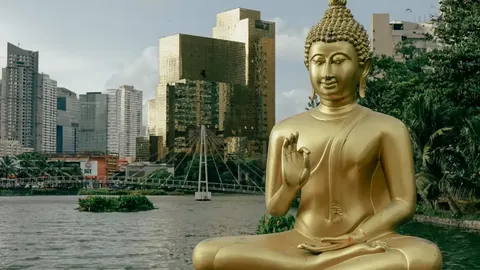
Kottu griddles on Galle Road, market lanes sorted by trade in Pettah, and a seafront green full of kites at sunset.
- Daytime high
- 29°C 84°F
- Rain days this month
- 15 rain days
- Crowds
- Moderate
-
 Mixed2
Galle
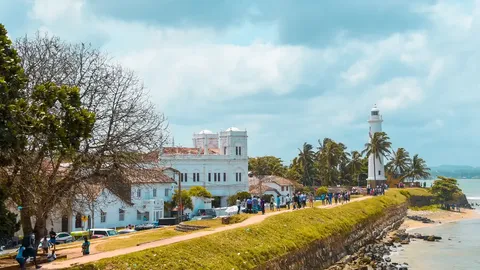
Dutch ramparts at sunset, families still living in the old houses, and a swimming bay fifteen minutes down the coast.
- Daytime high
- 29°C 84°F
- Rain days this month
- 17 rain days
- Crowds
- Quiet
-
 Good3
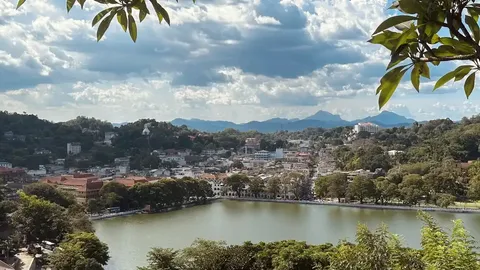
Good3Kandy
A lakeside town around the Temple of the Tooth, about 500 meters up and warmer than the tea country above it.
- Daytime high
- 28°C 82°F
- Rain days this month
- 14 rain days
- Crowds
- Moderate
-
 Great4
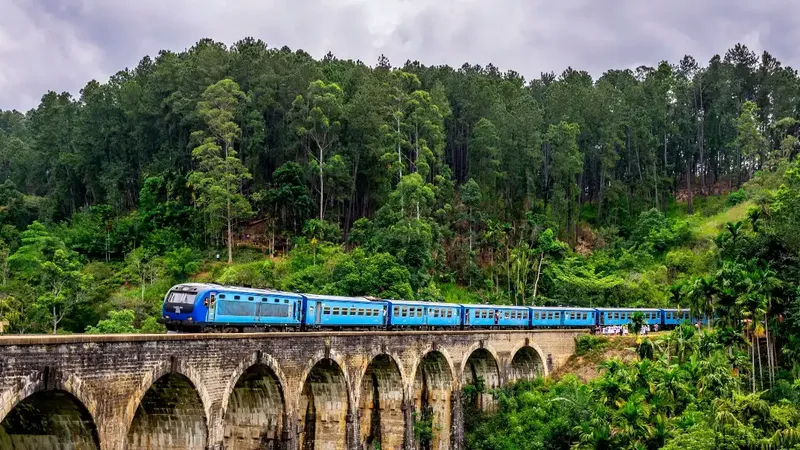
Ella
A small tea-country town with short hikes, the Nine Arch Bridge, and the plains dropping away below Ella Gap.
- Daytime high
- 28°C 82°F
- Rain days this month
- 9 rain days
- Crowds
- Moderate
-
 Good5
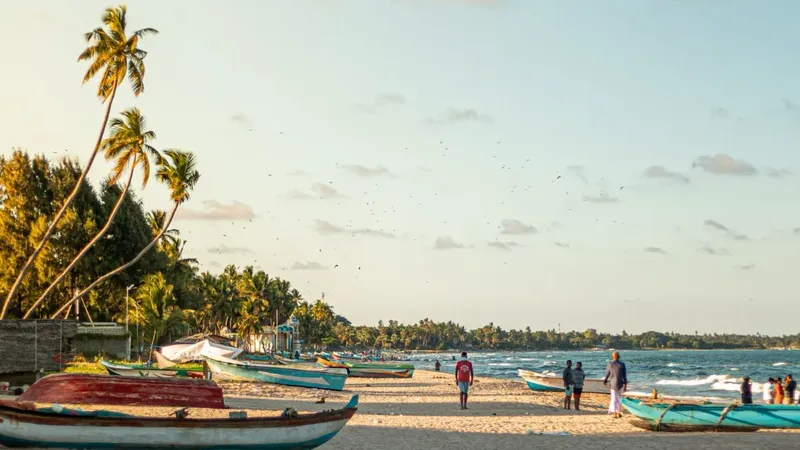
Good5Trincomalee
A deep-harbor navy town, calm reef water off Nilaveli, and a clifftop kovil above the bay.
- Daytime high
- 35°C 95°F
- Rain days this month
- 6 rain days
- Crowds
- Busy
When to go to Sri Lanka
Need to Know
- Currency
- Sri Lankan Rupee (LKR)
- Language
- Sinhala and Tamil are official; English is widely spoken in tourist areas and cities.
- Tap water
- Not safe
- Time zone
- GMT+5:30 (SLST)
- Power plug
- Type D / G / M, 230V
- Dialing code
- +94
- Driving side
- Left
- Tipping
- Not expected at small local eateries. Tourist and mid-range restaurants usually add a 10% service charge, and a little extra is welcome if the service was good.
- Internet
- Mobile 4G coverage is good in urban and tourist areas, with 5G in some cities; Wi-Fi is available in hotels and some restaurants.
- Emergency
- 119 (Police), 110 (Fire and rescue), 1990 (Suwa Seriya ambulance)
When not to go
-
Skip the south coast in the southwest monsoon
May to Nov · wettest in OctGalle, Unawatuna, Mirissa and Hikkaduwa are wet from May through November, with the southwest monsoon followed by a second rainy spell in October and November. The swell makes most south-coast beaches unsafe for swimming, the whale-watching boats stop running, and many beach guesthouses close until the season turns. Put the south coast in December to April, or move the beach days to the east coast, which is dry through the middle of the year.
Go here instead:
- Trincomalee East-coast beaches are dry and calm while the south is rough.
- Bali Bali's dry season lines up with Sri Lanka's southwest monsoon.
-
Don't book the east coast for Christmas
Oct to Jan · wettest Nov to DecThe northeast monsoon puts its heaviest rain on Trincomalee, Pasikudah and Arugam Bay in November and December. Trincomalee gets more rain days in those two months than in its four driest months put together, the sea turns rough, and Arugam Bay's surf season is long over, with many guesthouses there shut. Go to the east coast between April and September instead.
Go here instead:
- Galle The south coast's dry season starts just as the east gets wet.
-
Avoid arriving during Sinhala and Tamil New Year
Mid-Apr · shifts yearlySinhala and Tamil New Year is the biggest family holiday of the year, and much of the country goes home for it. Small restaurants, shops and family-run guesthouses close for several days, trains and buses out of Colombo are packed beforehand, and drivers are hard to hire. If your dates can move, start the trip a week later.
Upcoming Holidays
Public holidays & observances, next 12 months
Sri Lanka Visa & Entry
Getting To Sri Lanka
-
From Bandaranaike International (CMB)
About 35 km north of Colombo, under an hour on the expressway
Almost every international flight lands at Bandaranaike in Katunayake, which is closer to Negombo than to Colombo. The official airport taxi counter is in the arrivals lobby, and a PickMe or Uber pickup outside is usually cheaper. If you are heading straight to the south coast, the airport bus to Makumbura connects with the Southern Expressway buses, so you skip central Colombo.
-
From Jaffna International (JAF)
About 75 min flight from Chennai
Jaffna's small airport at Palaly, north of Jaffna town, handles a few international flights, mainly IndiGo from Chennai. It only makes sense if you are coming from South India and starting in the north. There is no useful public transport from the terminal, so arrange a taxi or hotel pickup.
Safety Advice
Sri Lanka is a safe country for visitors, and violent crime against tourists is rare. The risks that actually affect a trip are the roads, which are busy and fast, rip currents on the coast that is in its monsoon, scams in the tourist towns, and harassment of women on public transport. No major government advises against the usual tourist routes.
Travel Advisories
Natural disasters
- Monsoon rains cause flooding and landslides, disrupting transport.
- Tropical cyclones can occur; monitor weather alerts.
Health & vaccinations
Be aware of rabies risk from feral dogs.
Unrest & security
- Terrorist attacks are possible, including in tourist areas.
- Avoid demonstrations and large political gatherings; they can turn violent.
- Carry your passport at all times; a copy may not suffice.
- Disrespecting religion or Buddha images is a serious offense.
- Nude or topless sunbathing is prohibited.
Transport & infrastructure
- Roads can be poorly maintained and driving is erratic; expect accidents.
- Motorbike riding is particularly dangerous.
- Public buses are often driven unsafely.
- Agree tuk-tuk prices beforehand or ensure the meter works.
- Do not hang out of train windows; theft can occur.
Other notes
- Opportunistic theft, like bag snatching from mopeds, is common.
- Keep valuables secure to prevent hotel room theft.
- Be wary of bank card fraud; use ATMs inside banks.
- Do not leave drinks unattended or accept drinks from strangers.
- Alcohol is often stronger than you expect; know your limits.
- Same-sex sexual activity is illegal, though prosecutions are rare.
Always check your own government's official travel advice before traveling.
Money & Payments
Sri Lanka still runs heavily on cash, and small fees add up: an ATM fee on each withdrawal, a card surcharge that the Central Bank has banned, and a restaurant bill that grows by more than a quarter once service charge and VAT are added.
-
Cards in town, cash everywhere else
Visa and Mastercard work at hotels, supermarkets and tourist restaurants. Tuk-tuks, street food, small guesthouses and the countryside run on rupees, so keep Rs 100 and 500 notes on you.
-
Pick the ATM, refuse the conversion
People's Bank and Bank of Ceylon are the machines travelers report as free for foreign cards, while HNB, Sampath and Seylan charge a few hundred rupees. At any machine, choose to be charged in rupees.
Costs in Sri Lanka
A comfortable mid-range day is about $70 to $110, and a car and driver adds a lot on top. Foreigners pay steep entry at Sigiriya and the ancient cities, safaris add up fast, and south-coast rooms jump from December to March.
Groceries and fuel
Spend money in Sri Lanka


Free travel cards available
Send money to Sri Lanka
Compare Providers









Save money?
Sign up for our guide on how to save money on your next trip.
SIM Cards & Data
Best option for most travelers: an eSIM you set up before you arrive. You'll be online the moment you land, with no airport line and no tourist pricing.
Travel eSIMs Connect the second you land. Zero hassle. Skip the airport line and paperwork. Activate before you fly and land connected. Find the best eSIM →Prefer a local SIM?
Mobile data is good along the routes most visitors travel: 4G covers Colombo, the coasts, Kandy and the main towns, and 5G is live but mostly limited to Colombo and the larger towns. Maps, PickMe and video calls work between towns, but signal drops in the deeper hill-country valleys, the Knuckles Range, inside the national parks and on remote rural stretches. Tourist SIMs are sold at counters in the Bandaranaike arrivals hall, and you register one with your passport.
-
Dialog
Biggest network, best rural reach
Dialog is the largest carrier and the safest pick if your route leaves the cities, since it holds signal further into the hill country and the east than the others. It absorbed Airtel Lanka, so there is one fewer network to choose from, and its airport stores are right after customs.
Tourist Plan 20GB, 30 days: LKR 1,399 (~USD 4)
-
SLT-Mobitel
Fastest speeds, close second on reach
SLT-Mobitel is the state-owned carrier and posts the fastest average download speeds in the country, with coverage close to Dialog's on the main tourist routes and thinner away from them. It sells tourist SIMs and eSIMs at Bandaranaike, Mattala and Jaffna airports.
Tourist Plan 30GB, 30 days: LKR 1,540 (~USD 5)
-
Hutch
Cheapest data, weakest outside cities
Hutch is the budget network, fine in Colombo and the busier beach towns. Coverage and speeds fall behind the other two in the hills and rural areas, so it works better as a cheap second SIM than as your only connection on a trip around the island.
SIM Peraliya 14.7GB, 45 days: LKR 649 (~USD 2)
What Sri Lanka is Like
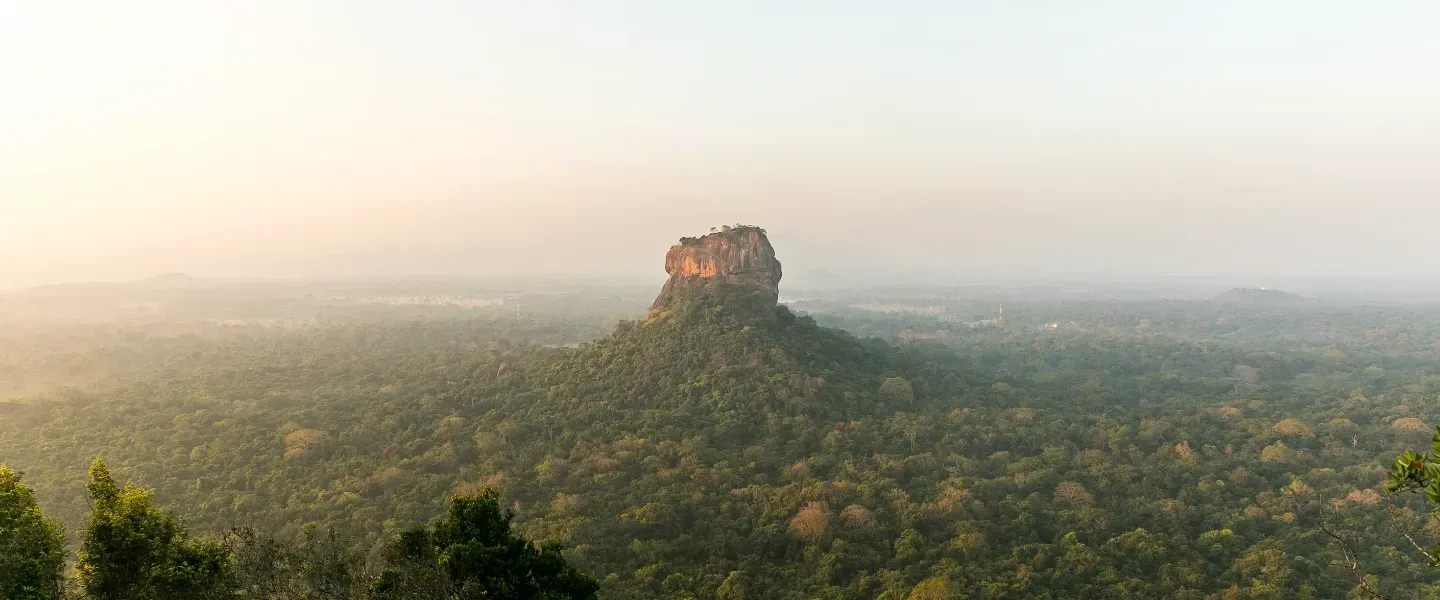
You can climb Sigiriya before breakfast, eat rice and curry with your hands at lunch, and be looking at tea estates in Ella by the next afternoon. The island is only about the size of West Virginia, but the roads are slow, so every transfer takes longer than the map suggests. A first trip usually follows some version of the same loop: the ancient sites around Sigiriya, Kandy and the hill country, a safari at Yala or Udawalawe, then the south coast around Galle and Mirissa. Plenty of visitors do the whole thing with a hired car and driver, which is normal here.
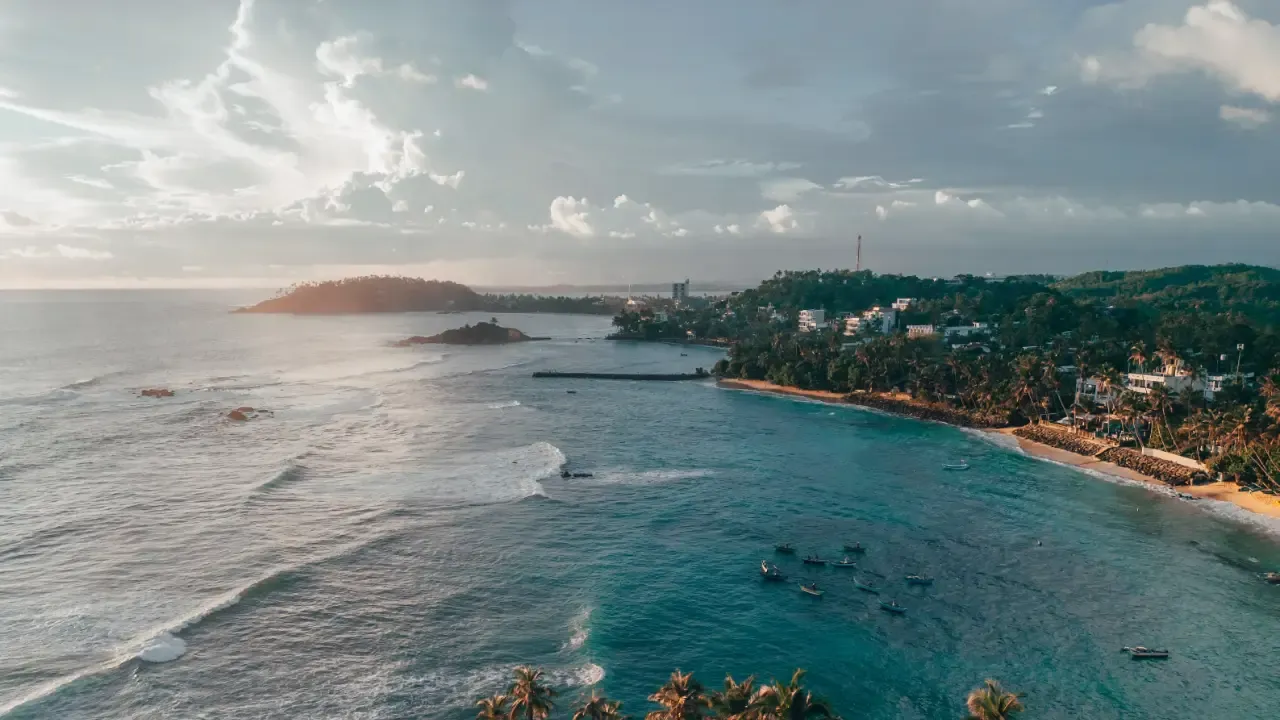
Which beach you get depends on the month. From about May to September the southwest monsoon brings rain to the south and west coasts while the east coast is at its best. October and November are wet almost everywhere, and from December the rain moves to the east while the south and west dry out. Around Weligama, beginners wait on soft boards for a wave while surf instructors shout directions from the shallows. Farther along, Mirissa has the whale boats, and Hiriketiya is a small surf town in a horseshoe bay with enough cafes to fill the time between sessions. The south is more built up and easier to fit into a first loop. Arugam Bay, on the east coast, is built around its surf season and gets far quieter outside it.
Inland, the beach version of Sri Lanka disappears fast. In Ella, tuk-tuks grind up steep roads between tea estates and trains cross the Nine Arch Bridge above the valley, and higher up in Nuwara Eliya the nights are cold enough for a sweater. Kandy is busier and more chaotic, with traffic circling the lake and pilgrims, many dressed in white, heading to the Temple of the Tooth, which holds a relic of the Buddha. Around Sigiriya the heat comes back, and the land flattens into dry scrub, paddy fields and old reservoirs.
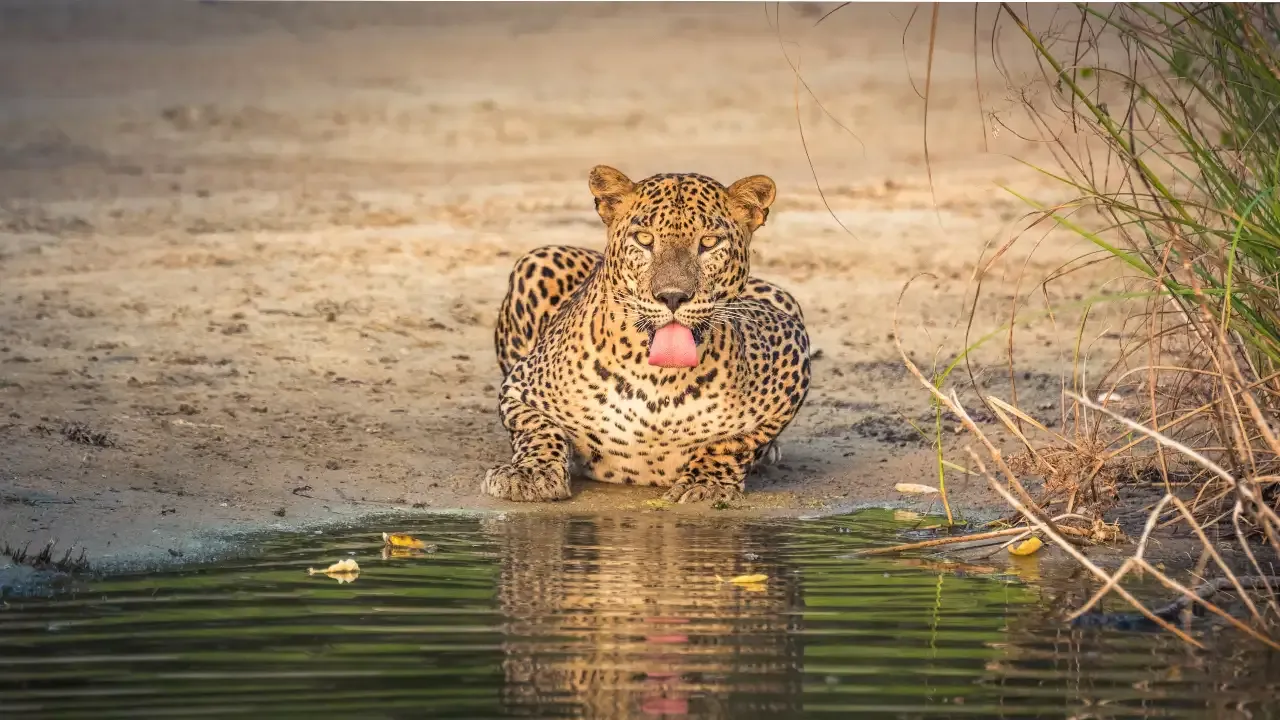
Yala is known for leopards and Udawalawe for elephants, and both mean riding out in a jeep before sunrise while the driver scans the scrub for movement. A leopard is never guaranteed, and some mornings the park is very quiet. Other mornings a herd of elephants crosses the track, or a crocodile lies motionless beside a lagoon, and everyone in the jeep starts whispering.
The food is the best part of a lot of days. A plate of rice with dhal, pol sambol (grated coconut with chili and lime) and a proper curry, from a small place with plastic chairs and a ceiling fan, often beats anything in the tourist restaurants, which serve milder versions of the same dishes. If the local place is busy, eat there. The trade-off is everything around the meal. Buses are packed, drivers overtake in gaps that look too narrow for one vehicle, and very little runs exactly on schedule.
Most Sri Lankans are Sinhalese and Buddhist, and in the south and the hills you pass white dagobas (dome-shaped shrines) on hilltops and Buddha statues at road junctions. Jaffna, in the far north, is Tamil and mostly Hindu, with painted kovils (Hindu temples) and its own cooking, best known for Jaffna crab curry. The east coast around Trincomalee has large Tamil and Muslim communities. Galle Fort feels like a separate place altogether, with colonial buildings, cafes and boutiques inside the old Dutch walls, until you walk out through the gate and the traffic is right there.
Liveability
Food is cheap and good, and English goes a long way in tourist areas. The friction is slow roads, crowded buses, broken or missing sidewalks, and internet that is fine for maps but patchy for video calls outside the main towns, with hospitals basic outside Colombo.
Sustainability
Plastic and burning trash are what you notice, from roadside litter and rubbish fires to plastic washed up on beaches after the monsoon. Air is cleaner outside the Colombo and Kandy traffic, tap water is not safe to drink, and the southwest floods in heavy monsoon rain.
Frequently Asked Questions
Planning & moving around
-
How long should I plan for a trip to Sri Lanka?
Two to three weeks covers the Cultural Triangle, Kandy, the hill country and the south coast without spending every day in a car. With less time, pick one or two regions instead of trying to see the whole island. Add a week if you want safaris, long hikes or beach days at the end.
-
What apps should I download for getting around Sri Lanka?
PickMe is the ride-hailing app to have for tuk-tuks and cars, and it covers more towns than Uber. Book reserved train seats through Sri Lanka Railways' official booking site as early as you can, especially on the hill-country line to Ella. Download offline Google Maps for the hill country, where signal drops.
-
Do you need a special license to drive or ride a scooter in Sri Lanka?
Yes. A home license alone is not enough. You need either a temporary Sri Lankan driving permit from the Department of Motor Traffic, or an International Driving Permit endorsed by the Automobile Association of Ceylon. Rental shops often skip the check, but insurance will not cover you without the right paperwork.
Safety & medical
-
Is Sri Lanka safe for travelers?
Yes, for most visitors. Road accidents are the biggest risk, followed by rip currents on south-coast beaches during the southwest monsoon. Protests happen in Colombo from time to time and are best avoided, and the US asks travelers to exercise increased caution because of the risk of terrorism.
-
What scams should I watch for in Sri Lanka?
The common ones are tuk-tuk drivers who skip the meter or quote a per-person price, and the friendly stranger who says a temple festival or elephant parade is on today and walks you to a gem or spice shop. Book rides on PickMe to fix the fare, and say no to shop visits you did not ask for.
-
What should I do if I get sick in Sri Lanka?
Pharmacies are everywhere and handle minor problems. For anything serious, go to a private hospital: Colombo has Asiri, Lanka Hospitals and Nawaloka, and Kandy and Galle have private hospitals too. Get travel insurance that covers medical evacuation.
Culture & etiquette
-
What are the rules for dress at religious sites?
At temples, kovils (Hindu temples) and mosques, cover your shoulders and knees, and take off your shoes and hat before going in. Wearing white is common but not required. Never pose for a photo with your back to a Buddha statue, and do not wear clothing or have tattoos that show the Buddha.
-
What is the general etiquette for interacting with locals?
Greet people with Ayubowan (the Sinhala greeting, a wish for long life) and your palms together. In the Tamil north and east, say Vanakkam instead. Use your right hand to give, take and eat, keep public affection low-key, and ask before photographing people, especially monks.
Food & drink
-
What are some must-try Sri Lankan dishes?
Rice and curry is the everyday lunch: rice with several vegetable curries, dhal and a sambol. Hoppers (bowl-shaped rice pancakes, often with an egg) are a breakfast and dinner staple, and kottu roti (chopped flatbread fried with vegetables and meat) is the late-night street food. On the south coast, order ambul thiyal (a dry, sour fish curry).
-
Where do locals eat in Sri Lanka?
At small, family-run eateries that are confusingly called hotels, which serve rice and curry at lunch for a few hundred rupees. Roadside short-eats counters (pastries, patties and rolls you pay for by the piece) cover snacks. Tourist restaurants in Galle Fort or Ella's main street cost several times more for similar food.
-
Is Sri Lanka good for vegetarians?
Very good. Most rice and curry spreads are mostly vegetables, dhal and sambols, and every town has places that serve meat-free meals. Ask for no fish flakes (umbalakada), which get added to some vegetable dishes and sambols.
Families & kids
-
Is Sri Lanka a good place to visit with toddlers?
Yes, if you slow down. Pick the coast that is in season and stay two or three nights per stop, because long drives in the heat are the hard part, and plan outings for the morning before the lowlands get hot. Do not assume a taxi or hired car will have a child seat: bring your own or get the driver to confirm one in writing. Diapers are sold in supermarkets in the bigger towns, but bring any specialist formula. Pack a carrier rather than a stroller for temple steps and uneven paths, and use repellent every day, since dengue is a risk all year. Pasikudah's shallow, sheltered bay on the east coast is one of the best beaches for small children from May to September.
-
Are there good pediatric hospitals in Sri Lanka?
Lady Ridgeway Hospital in Colombo is the national children's hospital and the country's main referral center for pediatric care. The private hospital groups in Colombo, such as Lanka Hospitals and Asiri, also have pediatric departments. Outside Colombo, care is more basic, so families traveling far from the city should carry good insurance.
Staying longer
-
Is Sri Lanka a good place for digital nomads?
It works well for a month or two. Most remote workers base themselves in Colombo, Galle or the south-coast surf towns, where cafes and a few coworking spaces have reliable internet. The 30-day ETA can be extended at the immigration office, and power and data are dependable in the main towns.
After dark
-
What dating apps work in Sri Lanka?
Tinder and Bumble are the most used, mainly in Colombo and the tourist towns. Activity drops off quickly outside the cities. Be discreet in public, since Sri Lanka is conservative about public affection.
-
What is the nightlife like in Sri Lanka?
Quiet by regional standards. Colombo has rooftop bars and a handful of clubs, and the south-coast surf towns have beach bars, but most places close by midnight. Check the calendar for Poya days (the monthly full-moon holiday), when alcohol sales stop.