
Kota Kinabalu Right Now
Air quality is good, but transboundary haze from Kalimantan fires can still cause unhealthy levels.
Borneo International Pickleball Open 2026 · The Good Club, Kota Kinabalu
Timpohon Run 2026 · Kinabalu Park, Kundasang
Interest in travel to Kota Kinabalu fell 7% from a year ago, suggesting demand is cooling off.
Best time to visit Kota Kinabalu
Not the best time to visitNortheast monsoon rains
October is among the wettest months as the northeast monsoon builds; heavy afternoon storms and rougher seas can disrupt island trips.
Score by month
Kota Kinabalu runs on a different calendar from peninsular Malaysia. October to December is the wettest, windiest stretch, when rough seas cut island trips and diving short. February to April is the driest and calmest, and the best window for climbing Mount Kinabalu. It stays busy almost year-round, with July and August fullest, so book mountain permits early whenever you come.
Day-to-day in Kota Kinabalu
Walkability
43/100
Walking in Kota Kinabalu's core tourist zones means contending with uneven, often blocked paths and constant motorbike incursions. While essential services are within reach, crossing roads and staying on the sidewalk requires significant attention.
Sidewalks are often narrow, discontinuous, and frequently obstructed by parked vehicles and street vendors.
Basic amenities like shops and eateries are accessible within a 15-minute walk in the central tourist areas.
Motorbikes frequently use sidewalks, and drivers show little regard for pedestrians at crossings.
Climate works against walking for much of the year. Plan around weather windows.
-
Monthly cost
$896 / month
AFFORDABLESolo mid-range stay including rent, daily eating out, groceries, and routine costs.
-
Dive
Diving is year-round in Tunku Abdul Rahman Marine Park, a short boat ride from shore. Expect abundant reef fish, turtles, and good conditions for new divers.
-
Coworking
$179 / month
AFFORDABLECoworking spaces are available, especially in the Central Business District and Lintas area. Options range from dedicated desks to daily access plans.
-
Local gym
$37 / month
VERY AFFORDABLEGym prices are above average for modern, air-conditioned facilities like X-Factor Fitness near Imago Mall. Cheaper, old-school 'iron' gyms like Harun Gym are in the city center.
Need to Know
- Currency
- Malaysian Ringgit (MYR)
- Language
- Malay (official), English is widely spoken in tourist areas.
- Tap water
- Not safe
- Time zone
- GMT+8 (MYT)
- Power plug
- Type G, 240V
- Dialing code
- +60
- Driving side
- Left
- Tipping
- Tipping is not customary, but a small amount (RM5-10) is appreciated for good service in hotels or on private tours. Many restaurants add a 10% service charge.
- Internet
- 4G is strong in the city with 5G expanding; cafe and hotel WiFi is reliable, public WiFi less so.
- Emergency
- 999 (all services), 112 (mobile)
When not to go
-
Skip the monsoon for the islands and the climb
Oct – Jan · northeast monsoonUnlike peninsular Malaysia's west coast, Kota Kinabalu gets its heavy rain from the northeast monsoon, roughly October to January. Expect frequent storms, gray skies, and rough seas that cancel island-hopping boats and dive trips at short notice, plus cloud that hides Mount Kinabalu's summit. The mountain trail stays open but is colder and wetter up top. If your trip is built around the sea or the climb, aim for the February-to-April dry window instead, when the water calms and the peak clears.
-
Book ahead for the school-holiday peaks
Jun – Aug & Dec · holiday crowdsKK fills up over the mid-year school holidays from June to August and again at year-end, when Malaysian and regional families head for the islands and the mountain. Flights, Mount Kinabalu permits, and the better island-resort rooms can sell out weeks ahead, and the boat jetties build long lines. The weather from June to August is usually decent, so it's a fair time to come; you just can't wing it. Book the climb and any island resort well in advance, or shift to the quieter shoulder weeks in May or September.
Upcoming Events & Holidays in Kota Kinabalu
Upcoming events, next 30 days
On the horizon
Public holidays & observances, next 12 months
Dates are researched and checked, but events move. Always confirm with the official source before you book anything around them.
Getting To Kota Kinabalu
-
Kota Kinabalu International Airport (BKI)
8 km southwest of the city center, served by Grab, airport taxi, and bus.
Kota Kinabalu International Airport (BKI) is the main gateway to Sabah. It is a compact airport, and getting to the city center is straightforward. Grab is widely available and generally the most convenient option. Airport taxis operate on a fixed-fare coupon system, which you purchase inside the terminal. Public buses are the cheapest option, though they have limited stops and operating hours.
Direct flights to Kota Kinabalu
Serves 29 direct destinations, 16 international and 13 domestic, about 102 flights a day.
International 16- Shanghai PVG China
 AirAsia S Shanghai Airlines
  Spring Airlines 6/day
 - Hong Kong HKG Hong Kong AirAsia
 Hong Kong Express K KXP
 R Raya Airways W WCM
4/day - Guangzhou CAN China AirAsia
 China Southern Airlines 3/day
 - Seoul ICN South Korea AirAsia
 Jeju Air
  Jin Air 3/day
- Singapore SIN Singapore
 Scoot 1-2/day
 - Bandar Seri Begawan BWN BruneiR Royal Brunei Airlines1-2/day
- Beijing PKX China AirAsia ~1/day
- Hangzhou HGH China AirAsia ~1/day
- Shenzhen SZX China AirAsia ~1/day
- Taipei TPE Taiwan AirAsia ~1/day
- Taipa MFM MacauK KXP~1/day
- Chongqing CKG ChinaC Chongqing Airlines4/week
- Fuzhou FOC China
 Xiamen Airlines 4/week
 - Manila MNL Philippines Philippines AirAsia 4/week
- Busan PUS South Korea
 Air Busan 3/week
 - Jakarta CGK Indonesia Indonesia AirAsia 3/week
Within Malaysia 13
- Kuala Lumpur KUL AirAsia F Firefly K KXP
 Malaysia Airlines
  Malindo Air R Raya Airways W WCM 26/day
 - Tawau TWU AirAsia Malindo Air 11/day
- Lahad Datu LDUB BNE M MASwings9/day
- Sandakan SDK AirAsia 6/day
- Labuan LBUB BNE Malaysia Airlines M MASwings 6/day
- Kuching KCH AirAsia 5/day
- Miri MYY AirAsia 1-2/day
- Mulu MZVB BNE M MASwings1-2/day
- Senai JHB AirAsia 1-2/day
- Penang PEN AirAsia 1-2/day
- Subang SZB Malindo Air ~1/day
- Limbang LMNM MASwings5/week
- Lawas LWYM MASwings3/week
Nonstop routes only. Flights per day are an average, each way. Data: AeroDataBox, updated August 2026.
Visa rules apply at the country level. See the full Malaysia visa guide, with every visa and its official do-it-yourself cost. -
-
Jesselton Point Ferry Terminal (South Jetty)
Main ferry terminal for Tunku Abdul Rahman Marine Park islands and Labuan, located behind Jesselton Quay.
The Jesselton Point Ferry Terminal has relocated to the South Jetty, behind Jesselton Quay, as of March 1, 2026. A free tram service runs between the entrance and the jetty. This terminal is your departure point for island hopping to places like Manukan, Sapi, Mamutik, and Gaya Islands, with boat rides taking 15 to 20 minutes. Ferries to Labuan also depart from Jesselton Point, taking about 3 hours.
Safety Advice
In the city, traffic is the main everyday risk, followed by motorbike bag-snatching in the markets and along the roadsides, and petty scams around tour touts and taxis. The one thing worth checking before you book: the far east coast of Sabah, around Semporna, Sandakan, and the islands out to Sipadan, carries a standing kidnap-for-ransom advisory from several governments. Kota Kinabalu and the west coast are not part of that warning. Natural hazards are real but manageable: monsoon storms and rough seas from October to January, strong currents around the islands, and Sabah's genuine but infrequent earthquake risk.
Seismically active region
Earthquakes
Kota Kinabalu sits in a seismically active region. Most days you'll never notice it, but strong earthquakes do occur from time to time. It's worth knowing your accommodation's emergency exits and following local instructions if an earthquake occurs.
See the 5 strongest nearby earthquakes
- M7.12026 · 100 km · Kota Belud
- M62015 · 52 km · Ranau
- M5.52023 · 57 km · Kota Kinabalu
- M5.22018 · 58 km · Ranau
- M4.92020 · 111 km · Kudat
Source: U.S. Geological Survey · Updated August 2026
Common Scams in Kota Kinabalu
-
Unlicensed Tour Operators
HIGH RISKTrigger:A street vendor or hotel lobby tout offers a heavily discounted tour package, often cash-only and 'today-only'.
Touts operate near Jesselton Point, the Waterfront Esplanade, and hotel lobbies, selling discounted island hops, Mount Kinabalu packages, or rafting trips. These are often fake or run by unlicensed operators with unsafe equipment, leaving you out of pocket or with a substandard experience.
How to avoid: Book only with licensed tour companies that provide clear registration and license information. Verify their details online or with the Sabah Tourism Board.
-
ATM Card Syndicates
HIGH RISKTrigger:An ATM appears tampered with, or you are approached by someone offering to buy your ATM card.
Organized crime syndicates operate in Kota Kinabalu, using ATM cards for fraudulent activities. This involves purchasing cards from individuals or using skimming devices to steal information.
How to avoid: Use ATMs located inside secure bank premises. Never sell or hand over your ATM card to anyone.
-
Motorbike Bag Snatching
HIGH RISKTrigger:You are walking with your bag or phone exposed, especially near the road or in a busy market.
Motorbike thieves target pedestrians, snatching phones, jewelry, and bags. This is a common crime pattern, particularly along roadsides and in crowded markets like the Filipino Market and Gaya Street Sunday Market.
How to avoid: Wear cross-body bags tight to your chest and keep phones in front pockets. Walk on the inside edge of the sidewalk, especially after dark.
-
Taxi Overcharging
MEDIUM RISKTrigger:A driver refuses the meter, claims it is broken, or quotes a flat price significantly higher than expected.
Taxi drivers in Kota Kinabalu frequently refuse to use the meter, quoting inflated flat fares or taking longer routes to increase the cost. This is common for rides from the airport and in tourist areas.
How to avoid: Use the Grab ride-hailing app for transparent pricing and to avoid negotiation. If you must use a taxi, insist on the meter or find another cab.
-
Durian and Market Overpricing
MEDIUM RISKTrigger:A vendor is vague about the price per kilogram or attempts to distract you after cutting a durian. Market vendors are reluctant to state clear prices.
Roadside durian stalls may misrepresent durian varieties like Musang King, selling common durians at premium prices or swapping your fruit after cutting. Night markets, especially Gaya Street and scenic spot markets, often charge tourists double or triple for souvenirs, snacks, and seafood.
How to avoid: Confirm the exact price per kilogram for durian upfront and watch them cut it. At markets, bargain firmly and ask for clear prices before any purchase.
Mistakes to Avoid
-
Drinking tap water
SERIOUS CONSEQUENCETap water in Kota Kinabalu is not reliably safe to drink, despite treatment at the plant. Contamination can occur from old pipes or storage tanks. Traveler's diarrhea from contaminated water or food is a common complaint.
Fix: Drink only bottled or properly filtered water. Inspect seals on bottled water before purchasing.
-
Disrespecting Sacred Sites
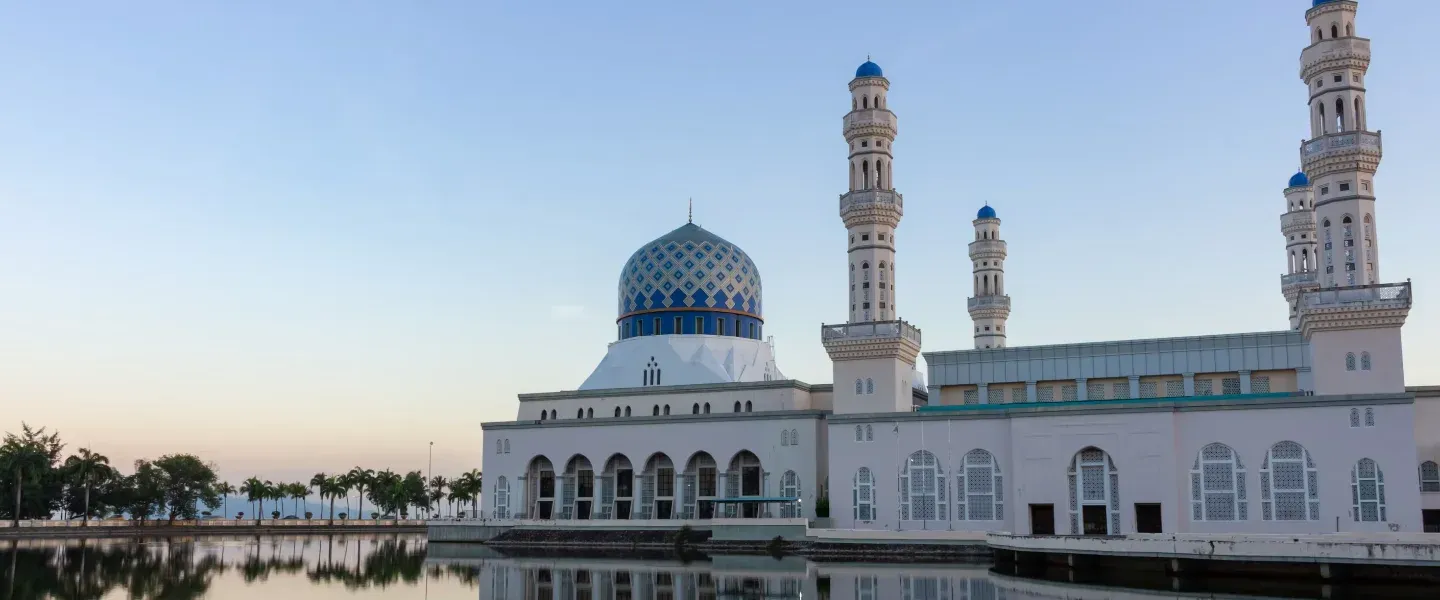
SERIOUS CONSEQUENCEPublic indecency or inappropriate behavior at sacred sites, such as Mount Kinabalu or mosques, is a serious offense. Tourists have been arrested, fined, and deported for actions like nudity at Mount Kinabalu or dancing inappropriately at the City Mosque.
Fix: Always observe local customs and signage at religious sites and natural landmarks. When in doubt, err on the side of conservative behavior and dress.
-
Ignoring Drug Laws
SERIOUS CONSEQUENCEMalaysia has extremely strict drug laws, including the Dangerous Drugs Act 1952. Drug trafficking carries severe penalties, including the death penalty or life imprisonment with whipping. Even carrying certain prescription medications without proper clearance can lead to drug trafficking charges.
Fix: Do not engage with or carry any illegal drugs. Research and obtain proper documentation for any prescription medications you bring into the country.
-
Inappropriate Dress
Dressing immodestly in public, particularly in religious sites or rural areas, is considered disrespectful. While tourist areas are more relaxed, walking around the city center in beachwear like bikinis is not acceptable and can cause offense.
Fix: Dress modestly in public, covering shoulders and knees. Carry a scarf for visiting mosques or temples, where women may need to cover their hair.
-
Public Displays of Affection
Public displays of affection (PDA) are generally frowned upon in Malaysia, a moderately conservative Muslim region. While holding hands is acceptable, passionate kissing or inappropriate touching in public can lead to police intervention and fines under the Minor Offenses Act.
Fix: Keep romantic moments private and avoid overt physical affection in public spaces.
Money & Payments
Kota Kinabalu is largely cashless in major areas, but cash is essential for markets, street food, and smaller vendors. Always carry a mix of Malaysian Ringgit notes.
-
Cash for hawkers and markets
While cards are widely accepted in malls and hotels, cash is still essential for local markets, street food stalls, and smaller shops. Carry RM10, RM20, and RM50 notes for everyday transactions, as RM100 notes can be difficult to break at smaller establishments.
-
Cards Accepted, Surcharges Common
Visa, Mastercard, Diners Club, and American Express are widely accepted in major hotels, shopping centers, and modern restaurants. However, many retail outlets, especially smaller ones, may impose a 2-3% surcharge or a minimum spend of RM20-RM50 for card payments, despite this practice being prohibited by Bank Negara Malaysia. Contactless payments are increasingly available, but surcharges can still apply.
-
ATMs are Plentiful, Check Your Bank
ATMs are readily available in Kota Kinabalu, found in city centers, shopping malls, and airports. Maybank has the largest network and is easily recognizable by its yellow and black branding. Most ATMs accept Visa Plus and Mastercard Cirrus/Maestro cards. Withdrawal limits typically range from RM1,500 to RM3,000 per transaction, with some allowing up to RM4,000. While Malaysian banks generally do not charge foreign cardholders ATM fees, your home bank may. For safety, use ATMs inside bank branches or malls and be aware of your surroundings.
-
Always Pay in Local Currency (MYR)
When using your card at an ATM or point-of-sale, always choose to be charged in Malaysian Ringgit (MYR), the local currency. Opting for your home currency triggers Dynamic Currency Conversion (DCC), which often results in unfavorable exchange rates and additional fees imposed by the local bank or merchant.
-
Mobile Payments Gaining Traction
E-wallets are becoming more popular in Kota Kinabalu, with Touch 'n Go eWallet being a prominent option. Foreign tourists from ASEAN countries can use the Touch 'n Go eWallet by topping up with their debit or credit cards, and it supports DuitNow QR payments at many merchants. Sabah Pay is another local e-wallet used for government services and some businesses.
-
Tourist Tax and Departure Tax
Foreign tourists staying at registered accommodations in Sabah are subject to a Tourism Tax of RM10 per room per night. This is typically paid directly to your hotel. Additionally, an international departure tax is imposed on airline travelers, ranging from approximately RM11 to RM73, depending on the destination and airport terminal, and is usually included in your airfare.
-
International Transfers
To send money to a bank account in Malaysia, for things like rent or day-to-day expenses, services like Wise or Remitly usually offer better rates than traditional banks and faster delivery.
You'll typically need the recipient's full name, account number, and SWIFT/BIC code. Some banks may also require a local address.
Costs in Kota Kinabalu
Kota Kinabalu is affordable to stay and eat in, but the reason you're here costs extra. Food and rooms are cheap, with hawker seafood and mid-range hotels easy on the budget, so a base day sits around $60 to $90. The add-ons are what add up: island-hopping boat and park fees, dive trips, and a Mount Kinabalu climb, which runs into the hundreds once the permit, guide, and compulsory lodge are counted. Budget for the activities, not the city.
Save money?
Sign up for our guide on how to save money on your next trip.
SIM Cards & Data
Best option for most travelers: an eSIM you set up before you arrive. You'll be online the moment you land, with no airport line and no tourist pricing.
Travel eSIMs Connect the second you land. Zero hassle. Skip the airport line and paperwork. Activate before you fly and land connected. Find the best eSIM →Prefer a local SIM?
You can easily buy a physical SIM card upon arrival at Kota Kinabalu International Airport (BKI) from kiosks in the arrivals hall, though selection and pricing are better at official carrier shops in malls like Suria Sabah or Imago. Be aware that while city coverage is strong, signal thins out quickly once you leave urban areas, especially when island hopping or heading towards Mount Kinabalu. You will need your passport for mandatory SIM registration.
What Kota Kinabalu is Like
Kota Kinabalu, KK for short, is the capital of Sabah on the island of Borneo, a two-and-a-half-hour flight east of Kuala Lumpur across the South China Sea. It's a working port city rather than a pretty one, strung along a seafront of markets, malls, and hotels, with jungle-green hills rising behind and Mount Kinabalu, Malaysia's highest peak, on the horizon on a clear day. Most people don't come for the city itself; they come for what it opens onto.
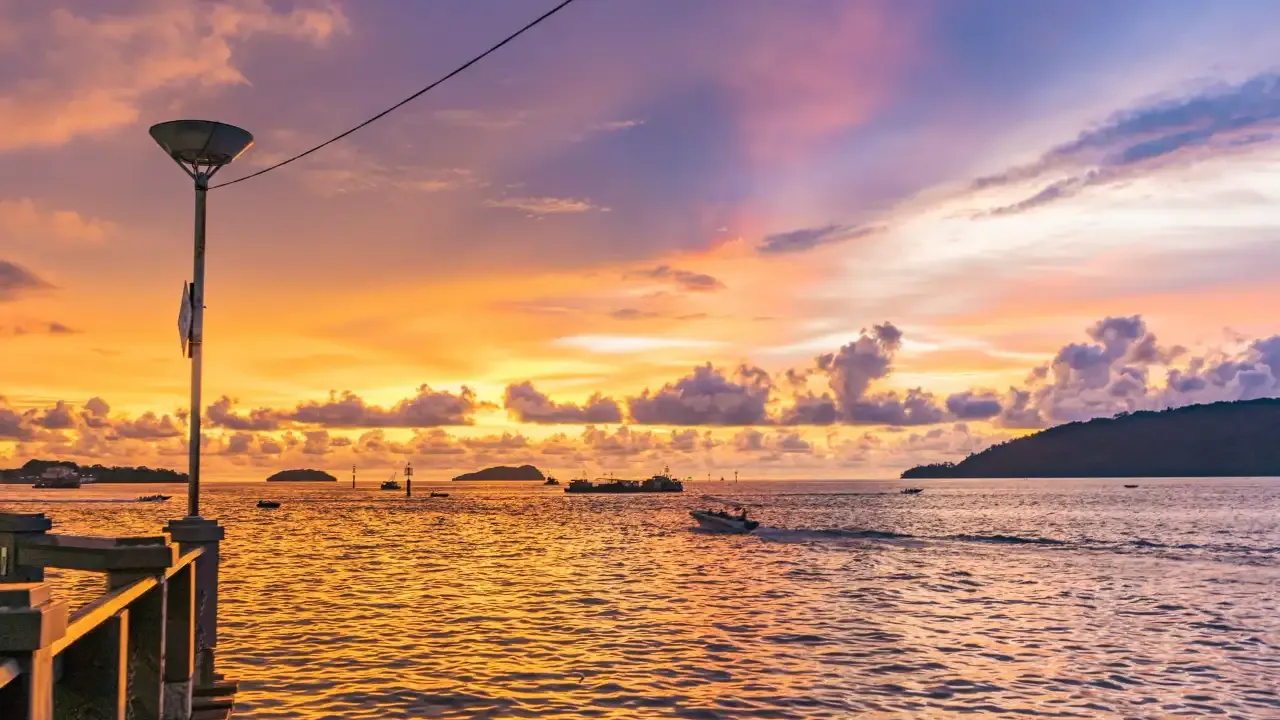
The big draw sits just offshore. A fifteen-minute boat ride from Jesselton Point reaches the islands of Tunku Abdul Rahman Marine Park, Manukan, Sapi, Gaya, and Mamutik, for snorkeling and easy beaches. The diving gets serious further out. Back in town, the waterfront night market grills the day's catch to order, and the Sunday market on Gaya Street closes the road for food and handicrafts. The sunsets over the water, from Tanjung Aru or the esplanade, are the one thing the city does beautifully.
Inland is the other reason to fly in. Mount Kinabalu, at just over 4,000 meters, is a two-day guided climb up granite to a summit sunrise, and it books out weeks ahead. Beyond it, Sabah holds proper Borneo wildlife: orangutans at Sepilok, proboscis monkeys and pygmy elephants along the Kinabatangan River, and rainforest reserves. KK is the airport and the launch pad for all of it, so many travelers use it as a night on either end of a longer Sabah trip.
As a place to hang around in, KK is more workaday than pretty. Traffic clogs the small downtown, the sidewalks are patchy, and there's construction and grime between the good bits. Two or three nights in the city is plenty. If you want a walkable heritage town or a polished beach resort, this isn't it; the closest of those is out on the islands or at a resort strip, not downtown. Come for the sea, the mountain, and the wildlife, and treat the city as the door you go through.
Mount Kinabalu
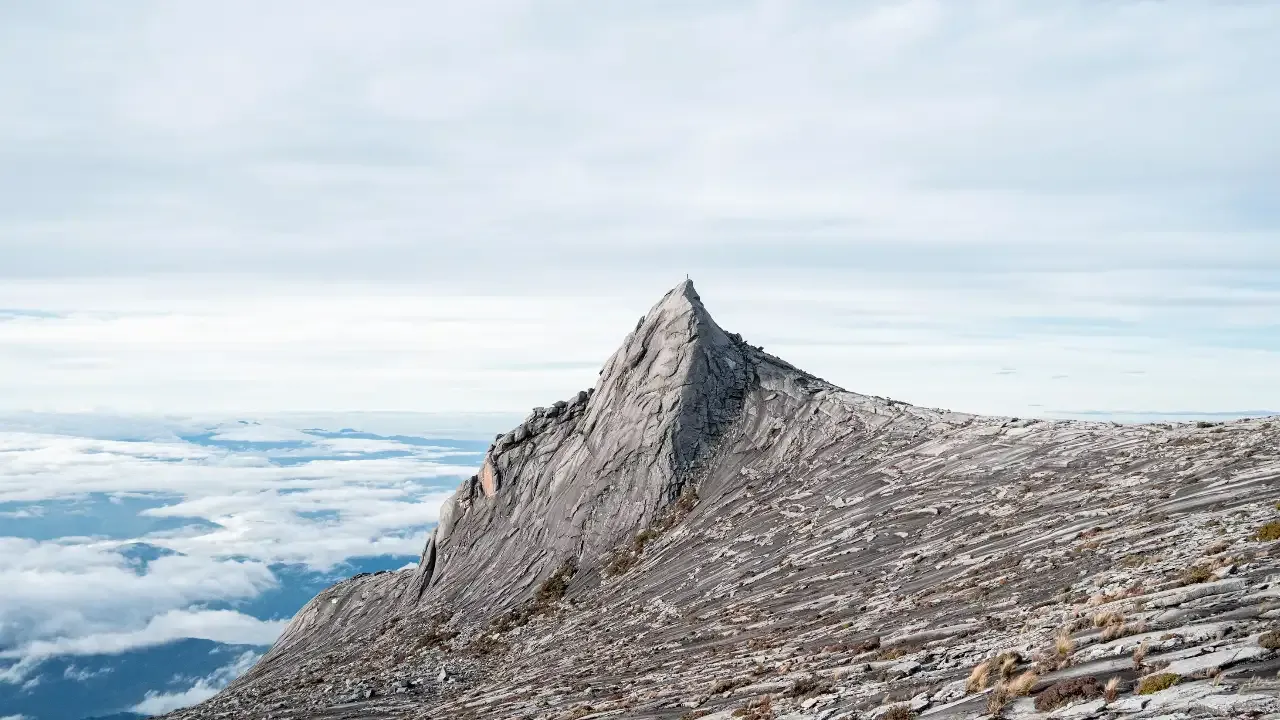
Mount Kinabalu is the reason a lot of people fly to Sabah. At 4,095 meters it's the highest peak between the Himalayas and New Guinea, a granite dome that pushes up out of the rainforest about two hours from the city. You don't need to be a mountaineer, since it's a hard walk rather than a technical climb. But it's a serious two-day effort, and the altitude and the pre-dawn summit push in the cold trip up people who underestimate it.
The system is tightly controlled, and you can't just turn up. Every climber goes with a licensed guide, sleeps at Laban Rata, the lodge partway up, and needs a permit, and daily climber numbers are capped. That means booking well ahead, often a month or more in peak season, usually through a package that bundles the permit, guide, lodge, and meals. It isn't cheap by Malaysian standards; the mountain is the one big-ticket line in most KK trips.
You start in rainforest, climb through stunted cloud forest, and finish scrambling over bare rock to Low's Peak for sunrise above the clouds. Weather decides everything. February to April is usually the clearest window, though it isn't a hard dry season, and the monsoon months at the end of the year are wetter and colder up top. A magnitude-6.0 earthquake in 2015 killed climbers and guides in rockfalls on the mountain and forced some trails to be rerouted, a reminder that this is a real mountain in a seismically active corner of the country, not a theme-park hike.
Where to Stay in Kota Kinabalu
- Island escape, nature resorts
Gaya Island
Located within Tunku Abdul Rahman Marine Park, Gaya Island offers a true island escape with luxury resorts set among rainforests and along sandy beaches. It is a short boat ride from Jesselton Point. Activities focus on nature, marine life, and relaxation.
Good for: Nature lovers, honeymooners, and those seeking a secluded luxury retreat
Skip if: You want city amenities, budget accommodation, or easy access to mainland attractions
- Sunset, relaxed beach vibe
Tanjung Aru Beach
Just 6 km from the city center, Tanjung Aru Beach is famous for its sunsets and relaxed atmosphere. The area has food stalls, restaurants, and a park, making it popular with families and backpackers. It is also close to the airport.
Good for: Sunset lovers, families, and those wanting a beach escape close to the city
Skip if: You want lively nightlife or quiet, empty beaches
- Luxury resorts, golf, marina
Sutera Harbour
This area is home to luxurious hotels and resorts, a golf course, and a marina with yachts. It offers a more upscale and tranquil experience compared to the city center. While it is close to the airport, it is a short drive from the main downtown attractions.
Good for: Luxury travelers, golfers, and those seeking a resort experience
Skip if: You are on a budget or prefer to be in the middle of local activity
- Local markets, budget friendly
Sinsuran
Located within the city center, Sinsuran is a busy commercial area known for its lively markets, local shops, and food stalls, including the popular Filipino Market and Handicraft Market. It offers a more authentic, less polished experience than other central areas. You will find many budget-friendly guesthouses here.
Good for: Budget travelers and those seeking an authentic local experience
Skip if: You prefer upscale dining and polished surroundings
- Central, lively, diverse
KK Waterfront City Centre
This is the beating heart of Kota Kinabalu, hugging a long waterfront esplanade. You will find a mix of hotels from budget to luxury, with plenty of restaurants, bars, and clubs. It is a busy area with both locals and tourists, especially active in the evenings.
Good for: First-time visitors who want easy access to everything
Skip if: You prefer quiet nights and less crowded spaces
- Historic, markets, food
Gaya Street
Running parallel to the waterfront, Gaya Street is Kota Kinabalu's oldest commercial street, lined with colonial-era shophouses. It is known for its Sunday market, which closes the street to traffic and fills it with food, handicrafts, and live music. During the week, it is a pleasant street with cafes and restaurants.
Good for: Culture seekers and foodies who enjoy street markets
Skip if: You dislike crowds or prefer modern shopping malls
- New development, waterfront views
Jesselton Quay
This is a newer, mixed-development area on the waterfront, featuring a shopping and entertainment center, hotels, and offices. Many accommodations here offer sea views and modern amenities, including infinity pools. It is also very close to Jesselton Point Ferry Terminal for island hopping.
Good for: Travelers who appreciate modern facilities and easy island access
Skip if: You prefer a more traditional or less developed atmosphere
- Emerging, industrial, bay views
Sepanggar
Sepanggar is a developing sub-district north of the city center, known for its container terminal and naval base. It has a mix of residential and commercial projects, with some newer hotels emerging. Sepanggar Bay offers serene beaches and views, and Sepanggar Island is a short boat ride away for snorkeling and hiking.
Good for: Travelers seeking newer developments, quieter bay areas, or proximity to Universiti Malaysia Sabah
Skip if: You want to be in the traditional tourist core or prefer established dining and entertainment options
Frequently Asked Questions
Planning & moving around
-
How many days do you need in Kota Kinabalu?
Most travelers find 3 to 5 days sufficient to experience the city's highlights and take a couple of day trips. If you plan to climb Mount Kinabalu, you'll need to add at least two extra days for the trek itself. For families, a few days in the city with an overnight at a resort like Nexus Resort and Spa Karambunai can work well.
-
What's the best neighborhood to stay in Kota Kinabalu?
For families, Tanjung Aru is a great choice. It's a quieter, residential beachside suburb southwest of the city center, offering breathing room from the bustle. The Shangri-La Tanjung Aru Resort is located here and is considered a top family resort. If you want to be in the thick of things, the city center around Gaya Street and the Waterfront Esplanade puts you close to markets, dining, and nightlife.
-
What are the best day trips from Kota Kinabalu?
Island hopping in Tunku Abdul Rahman Marine Park is a popular choice, with boats departing from Jesselton Point to islands like Manukan and Sapi for snorkeling and beaches. For wildlife, consider a Proboscis Monkey and Firefly River Cruise on the Bongawan River. You can also visit the Mari Mari Cultural Village for an interactive look at Sabah's indigenous cultures.
-
What's the best way to get around Kota Kinabalu?
Ride-hailing apps like Grab are the easiest and most convenient option for tourists, offering readily available and affordable rides. For longer distances or day trips, renting a car gives you more flexibility. The city center is walkable, but the heat can be intense, so factor that into your plans.
-
Do you need a license to rent a scooter in Kota Kinabalu?
Yes, you need a valid international driving permit to legally rent and ride a scooter or motorbike in Malaysia. Police checks are infrequent but fines for riding without the correct license can be substantial. It's always best to be properly licensed and insured.
Safety & medical
-
Is Kota Kinabalu safe at night?
Walking in the city center at night is generally safe, especially around Gaya Street and the Waterfront Esplanade. However, it's wise to avoid poorly lit alleys or quiet back roads after 11 PM. Petty theft, particularly bag-snatching by motorcyclists, can occur, so keep your belongings secure and walk on the inside edge of the sidewalk.
-
What are common illnesses or health risks in Kota Kinabalu?
Tap water is not safe to drink, so stick to bottled water. Dengue fever is present, so use insect repellent, especially at dawn and dusk. Malaria is also a risk in some areas, so consult your doctor about antimalarial medication before your trip. Be aware of altitude sickness if you plan to climb Mount Kinabalu.
-
Do I need travel insurance for Kota Kinabalu?
Yes, travel insurance is always recommended for any international trip. It covers unexpected medical emergencies, trip cancellations, and theft. While Kota Kinabalu is generally safe, having insurance provides peace of mind for any unforeseen circumstances.
Laws & local norms
-
What are the drug laws in Malaysia?
Malaysia has extremely strict drug laws. Possession of even small amounts can lead to severe penalties, including lengthy prison sentences, corporal punishment (caning), and even the death penalty. Do not engage in any drug-related activities.
-
Is vaping allowed in Kota Kinabalu?
Malaysia's Act 852 (in force since 2024) bans smoking and vaping in many public places, including restaurants, government premises, and public transport, with fines up to RM5,000. A May 2026 court ruling left the sale of nicotine vapes legally unsettled while the government appeals, so the rules are in flux. Wherever you vape, check for no-smoking signage and keep it out of enclosed public spaces.
-
What are the laws regarding LGBTQ+ travelers in Kota Kinabalu?
Homosexual acts are illegal in Malaysia, and societal attitudes can be conservative. While allowances are often made for foreigners in cities, it's advisable for LGBTQ+ travelers to exercise discretion in public and avoid overt displays of affection.
Money & costs
-
Is it better to use cash or card in Kota Kinabalu?
While major hotels and malls accept cards, cash is essential for local markets, smaller food stalls, and some taxis. It's a good idea to carry at least RM300-500 in cash, especially if you plan to visit rural areas. ATMs are available in the city but can be limited outside of it.
-
What's the tipping etiquette in Kota Kinabalu?
Tipping is not customary or expected in Malaysia, and most locals do not tip. Many restaurants include a 10% service charge on the bill, so no additional tip is needed. If you receive exceptional service, a small tip is appreciated but not mandatory.
Culture & etiquette
-
What's the dress code for visiting mosques or religious sites?
When visiting mosques, women need to wear headscarves and cover their arms and legs to the wrists and ankles. Men should wear long pants and shirts. Most mosques provide cloaks and headscarves for visitors. Remember to remove your shoes before entering prayer halls.
-
What are some general cultural etiquette tips for Kota Kinabalu?
Dress modestly, especially in Muslim-majority areas and rural communities. Remove your shoes before entering homes, mosques, and some traditional spaces. Use your right hand for eating, giving, and handshakes, as the left hand is considered unclean in Muslim communities.
Food & drink
-
Where do locals eat in Kota Kinabalu?
For authentic local flavors, head to the Night Market at Jalan Tun Fuad Stephens for grilled seafood and street food. Gaya Street is also known for its diverse culinary scene, including the popular Yee Fung Laksa. For a more local experience, try Seng Hing Kopitiam for their *huang jiu tuaran mee*.
-
What are some must-try dishes in Kota Kinabalu?
You absolutely have to try Sabah Laksa, especially from Yee Fung. Seafood is a big deal here, so look for fresh grilled fish, prawns, and crab. Don't miss *nasi lemak*, *satay*, and *bak kut teh*.
-
Are there good vegetarian options in Kota Kinabalu?
Yes, Kota Kinabalu has a growing number of vegetarian-friendly restaurants. Gaya Vegetarian on Jalan Gaya is a popular spot for authentic Malaysian vegetarian dishes. Other good choices include Living Seed Vegetarian Restaurant in Suria Sabah Mall and Sri Latha Curry House for South Indian cuisine.
Families & kids
-
Is Kota Kinabalu good for families with kids?
Kota Kinabalu is very family-friendly, with a slower pace than larger cities. Kids will enjoy island hopping in Tunku Abdul Rahman Marine Park, visiting the Mari Mari Cultural Village, and exploring the Sabah Museum. Tanjung Aru Beach is also a great spot for families.
-
Is Kota Kinabalu stroller friendly?
The city center has footpaths, making it somewhat stroller friendly, but the heat can be a factor. For getting around with kids, ride-hailing apps like Grab are convenient and recommended. Many attractions like shopping malls and some museums are accessible with strollers.
After dark
-
What's the nightlife like in Kota Kinabalu?
KK has a compact but lively nightlife scene centered around the Waterfront Esplanade and the Jalan Gaya area. You'll find a mix of rooftop bars, live music venues, and local *kopitiam* spots open late. Warisan Square is popular with a younger crowd, offering cheaper drinks and a more casual atmosphere.
-
Where are the best places to go out at night in Kota Kinabalu?
The Waterfront Esplanade is the main strip with restaurants, bars, and clubs overlooking the sea. Warisan Square and the blocks behind it are popular for a younger crowd and more affordable drinks. For a more local experience, check out the Api Api Night Food Market on Jalan Gaya on Friday and Saturday evenings.
-
What's the dating scene like in Kota Kinabalu?
The dating culture in Kota Kinabalu is relatively conservative, with many locals preferring to meet through friends or family. However, dating apps are becoming more common. The nightlife scene, particularly around the Waterfront and in bars like Upperstar or Blue Note Bar, can be places to meet singles.