
Kuala Lumpur Right Now
Air quality unhealthy due to persistent haze from Indonesian wildfires, making Kuala Lumpur one of the world's most polluted cities.
MAMAMOO 2026 WORLD TOUR [4WARD] · Unifi Arena
Urbanscapes · Medan Pasar and various locations
Interest in travel to Kuala Lumpur rose 8% from a year ago, suggesting demand is growing.
Best time to visit Kuala Lumpur
Not the best time to visitInter-monsoon rainsFlash flooding
The second wet peak sets in, with heavy evening rain and flash-flood risk in low-lying areas. Keep plans flexible.
Score by month
There's no dry season here; it's hot and humid all year with afternoon thunderstorms. The wettest stretches come around April and again from October into November, when downpours snarl the traffic. June and July are the relatively drier, easier months. Crowds spike over Chinese New Year and the year-end school holidays.
Day-to-day in Kuala Lumpur
Walkability
43/100
Walking in Kuala Lumpur's central areas means dodging street vendors and motorbikes on inconsistent sidewalks. While some districts are walkable for essentials, longer distances necessitate ride-hailing or public transit.
Sidewalks are often narrow, discontinuous, and frequently obstructed by vendors and parked motorbikes.
Major tourist hubs like Bukit Bintang offer services within a 15-minute walk, but venturing further requires transport.
Motorbikes weave through traffic and onto sidewalks, making pedestrian crossings a risky undertaking.
Heat and humidity make midday walks uncomfortable for most of the year. Mornings and evenings are workable.
-
Monthly cost
$1,013 / month
AFFORDABLESolo mid-range stay including rent, daily eating out, groceries, and routine costs.
-
Street food
Kuala Lumpur is a street food paradise with Malay, Chinese, and Indian influences. Jalan Alor and Petaling Street are essential night markets.
-
Coworking
$87 / month
VERY AFFORDABLEThe coworking scene is growing, with many local startups. KL Sentral and Kuala Lumpur City Centre have the densest clusters of spaces. You'll find over 15 options across the city.
-
Local gym
$36 / month
VERY AFFORDABLEGym memberships are above average. Commercial chains like Celebrity Fitness are common, alongside serious bodybuilding and strength training gyms. Mont Kiara and KL CBD have good options.
Need to Know
- Currency
- Malaysian Ringgit (MYR)
- Language
- Malay (official), English is widely spoken in Kuala Lumpur and tourist areas.
- Tap water
- Not safe
- Time zone
- GMT+8 (MYT)
- Power plug
- Type G, 240V
- Dialing code
- +60
- Driving side
- Left
- Tipping
- Not expected; a 10% service charge is often already on the bill.
- Internet
- Mobile internet is fast and reliable in Kuala Lumpur, with excellent coverage from major providers.
- Emergency
- 999 (all services), 112 (mobile emergency)
When not to go
-
Time it around the holiday shutdowns
Chinese New Year (Jan or Feb) and Hari Raya (shifts yearly)Twice a year KL half-closes. Over Chinese New Year, many Chinese-run hawker stalls and shops shut for several days, and over Hari Raya Aidilfitri the Malay city empties as people head to their home villages. Streets go quiet and the traffic vanishes, but half the food you came for is shut and getting out of the city becomes a scramble. If eating is the point of your trip, avoid the few days right after each holiday starts.
-
Watch the air in haze season
Aug – Oct · varies by yearIn bad years, smoke from land-clearing fires in the region drifts over the Klang Valley and hazes out the skyline for days at a time. Air quality can climb into unhealthy numbers, which matters if you have a respiratory condition or planned a lot of rooftop and outdoor time. It doesn't happen every year and it's hard to forecast, so check the AQI before booking a late-summer trip built around city views.
Upcoming Events & Holidays in Kuala Lumpur
Upcoming events, next 30 days
On the horizon
Public holidays & observances, next 12 months
Dates are researched and checked, but events move. Always confirm with the official source before you book anything around them.
Getting To Kuala Lumpur
-
Kuala Lumpur International Airport (KUL)
Malaysia's primary international gateway, 45 km south of the city center.
KUL has two main terminals, KLIA (Terminal 1) for full-service airlines and KLIA2 for low-cost carriers. A free shuttle bus or the KLIA Transit train connects the terminals. The fastest way to the city is the KLIA Ekspres train to KL Sentral, which takes 28-33 minutes. Taxis and ride-sharing apps like Grab are also available, with Grab fares starting around RM65 (about $14 USD) to the city center, though surge pricing can increase this.
Direct flights to Kuala Lumpur
Serves 128 direct destinations, 113 international and 15 domestic, about 572 flights a day.
International 113- Singapore SIN Singapore
 AirAsia
  Ethiopian Airlines
  Malaysia Airlines
  Malindo Air R Raya Airways
  Scoot
Scoot  Singapore Airlines 42/day
 - Jakarta CGK Indonesia AirAsia Batik Air
 Citilink
  Garuda Indonesia Indonesia AirAsia
  KLM Malaysia Airlines Malindo Air
  TransNusa 30/day
 - Bali DPS Indonesia AirAsia Malaysia Airlines Malindo Air 15/day
- Guangzhou CAN China9 9 Air Co AirAsia
 China Southern Airlines Malaysia Airlines Malindo Air
  Spring Airlines 13/day
- Bangkok DMK Thailand AirAsia Malindo Air 12/day
- Shanghai PVG China AirAsia X
 Juneyao Airlines Malaysia Airlines Malindo Air S Shanghai Airlines Spring Airlines 12/day
 - Ho Chi Minh City SGN Vietnam AirAsia
 Korean Air K KXP Malaysia Airlines
  VietJetAir
  Vietnam Airlines 11/day
 - Shenzhen SZX China AirAsia China Southern Airlines K K-Mile Air Malaysia Airlines
 Shenzhen Airlines 10/day
 - Bangkok BKK Thailand Malaysia Airlines
 Thai Airways International 9/day
 - Hong Kong HKG Hong Kong AirAsia
 Cathay Pacific Malaysia Airlines Malindo Air 9/day
 - Manila MNL Philippines AirAsia
 Cebu Pacific Air Malaysia Airlines
  Philippine Airlines 9/day
 - Surabaya SUB Indonesia Batik Air Indonesia AirAsia Malaysia Airlines 8/day
- Phuket HKT Thailand AirAsia Malaysia Airlines Malindo Air 8/day
- Dhaka DAC Bangladesh AirAsia B Biman Bangladesh Airlines Malaysia Airlines Malindo Air U US-Bangla Airlines 8/day
- Phnom Penh KTI CambodiaC Cambodia Airways K KTC M Mahogany Air Malaysia Airlines 8/day
- Chengdu TFU China
 Air China AirAsia X Malaysia Airlines Malindo Air S Sichuan Airlines 6/day
 - Colombo CMB Sri Lanka AirAsia F FitsAir Malaysia Airlines Malindo Air S SriLankan Airlines 6/day
- Sydney SYD Australia AirAsia X Malaysia Airlines Malindo Air
 Turkish Airlines 6/day
 - Taipei TPE Taiwan AirAsia X
 China Airlines
  EVA Air Malaysia Airlines Malindo Air
  Starlux Airlines 6/day
 - Hanoi HAN Vietnam AirAsia K KXP Malaysia Airlines Malindo Air VietJetAir Vietnam Airlines 6/day
- Chennai MAA India AirAsia
 IndiGo Malaysia Airlines 5/day
 - Pekanbaru PKU Indonesia AirAsia
 Lion Air Malaysia Airlines Malindo Air
  Super Air Jet 5/day
 - Tokyo NRT Japan
 ANA J Japan Airlines Co. Ltd. Malaysia Airlines Malindo Air 5/day
 - Perth PER Australia AirAsia Malaysia Airlines Malindo Air 5/day
- Da Nang DAD Vietnam AirAsia Malaysia Airlines Malindo Air 5/day
- Doha DOH Qatar Malaysia Airlines
 Qatar Airways 5/day
 - Kunming KMG China AirAsia
 China Eastern Airlines Malindo Air 5/day
 - Jeddah JED Saudi Arabia AirAsia X Malaysia Airlines Malindo Air
 Saudi Arabian Airlines 4/day
 - Melbourne MEL Australia AirAsia X Malaysia Airlines 4/day
- New Delhi DEL India
 Air India AirAsia X Malaysia Airlines Malindo Air 4/day
 - Seoul ICN South Korea AirAsia X Korean Air Malaysia Airlines Malindo Air 4/day
- Bangalore BLR India AirAsia IndiGo Malaysia Airlines Malindo Air 4/day
- Malé MLE Maldives AirAsia Malaysia Airlines Malindo Air 4/day
- Padang PDG Indonesia AirAsia Lion Air Malindo Air 4/day
- Xiamen XMN China Malindo Air
 Xiamen Airlines 4/day
 - London LHR United KingdomB British Airways Malaysia Airlines 4/day
- Dubai DXB United Arab Emirates
 Emirates 3/day
 - Kathmandu KTM NepalH Himalaya Airlines Malaysia Airlines Malindo Air
N Nepal Airlines
3/day - Nanjing NKG China China Eastern Airlines Xiamen Airlines 3/day
- Istanbul IST Türkiye Turkish Airlines 3/day
- Duong Dong PQC Vietnam9 9G Rail AirAsia 3/day
- Hangzhou HGH China AirAsia X China Eastern Airlines Xiamen Airlines 3/day
- Osaka KIX Japan AirAsia X Malaysia Airlines Malindo Air 3/day
- Kochi COK India AirAsia Malaysia Airlines Malindo Air 3/day
- Mumbai BOM India Malaysia Airlines Malindo Air 3/day
- Banda Aceh BTJ Indonesia AirAsia Super Air Jet 1-2/day
- Bandar Seri Begawan BWN Brunei AirAsia R Royal Brunei Airlines 1-2/day
- Beijing PKX China China Eastern Airlines Malaysia Airlines 1-2/day
- Yangon RGN MyanmarK KXP
 Myanmar Airways International 1-2/day
 - Abu Dhabi AUH United Arab Emirates
 Etihad Airways 1-2/day
 - Changsha CSX China AirAsia X Malaysia Airlines Malindo Air 1-2/day
- Muscat MCT OmanO Oman Air1-2/day
- Tiruchirappally TRZ India AirAsia Malindo Air 1-2/day
- Yogyakarta YIA Indonesia AirAsia Malaysia Airlines 1-2/day
- Batam BTH Indonesia AirAsia Malindo Air 1-2/day
- Chongqing CKG China AirAsia X
 Hainan Airlines S Sichuan Airlines 1-2/day
 - Hyderabad HYD India AirAsia Malaysia Airlines 1-2/day
- Lombok LOP Indonesia AirAsia Lion Air Malindo Air 1-2/day
- Kolkata CCU India AirAsia Malaysia Airlines 1-2/day
- Krabi KBV Thailand AirAsia F Firefly 1-2/day
- Palembang PLM Indonesia AirAsia 1-2/day
- Wuhan WUH China AirAsia China Eastern Airlines 1-2/day
- Fuzhou FOC ChinaS Shanghai Airlines Xiamen Airlines 1-2/day
- Taipa MFM Macau
 Air Macau AirAsia 1-2/day
 - Makassar UPG Indonesia AirAsia Malaysia Airlines 1-2/day
- Auckland AKL New Zealand Malaysia Airlines 1-2/day
- Chiangmai CNX Thailand AirAsia Malaysia Airlines 1-2/day
- Haikou HAK ChinaF Firefly Hainan Airlines 1-2/day
- Medina MED Saudi Arabia Malaysia Airlines Saudi Arabian Airlines 1-2/day
- Sihanukville KOS Cambodia AirAsia K KTC M Mahogany Air 1-2/day
- Trivandrum TRV India AirAsia Malaysia Airlines 1-2/day
- Lapu CEB PhilippinesF Firefly Philippines AirAsia ~1/day
- Qingdao TAO ChinaQ Qingdao Airlines~1/day
- Adelaide ADL Australia Malaysia Airlines ~1/day
- Beijing PEK China Air China ~1/day
- Hat Yai HDY Thailand Thai AirAsia ~1/day
- Kaohsiung City KHH Taiwan AirAsia ~1/day
- Labuan Bajo LBJ Indonesia AirAsia ~1/day
- Lahore LHE Pakistan Malindo Air ~1/day
- Paris CDG France Malaysia Airlines ~1/day
- Pontianak PNK Indonesia AirAsia ~1/day
- Riyadh RUH Saudi ArabiaR Riyadh Air Saudi Arabian Airlines ~1/day
- Semarang SRG Indonesia AirAsia ~1/day
- Sharjah SHJ United Arab EmiratesA Air Arabia~1/day
- Tokyo HND Japan AirAsia X ~1/day
- Amsterdam AMS Netherlands KLM ~1/day
- Brisbane BNE Australia Malaysia Airlines ~1/day
- Jinan TNA China
 Shandong Airlines ~1/day
 - Almaty ALA Kazakhstan AirAsia X ~1/day
- Dili DIL Timor-LesteA Aero Dilli Malindo Air ~1/day
- Balikpapan BPN Indonesia AirAsia Malaysia Airlines ~1/day
- Siem Reap SAI CambodiaM Mahogany Air~1/day
- Amritsar ATQ India Malaysia Airlines 5/week
- Istanbul SAW Türkiye AirAsia X 5/week
- Nanning NNG China AirAsia S Sichuan Airlines 5/week
- Tashkent TAS Uzbekistan Malindo Air U Uzbekistan Airways 5/week
- Ahmedabad AMD India Malaysia Airlines 4/week
- Banjarmasin BDJ Indonesia AirAsia 4/week
- Nha Trang CXR Vietnam AirAsia 4/week
- Port Louis MRU MauritiusA Air Mauritius4/week
- Wuxi WUX China Juneyao Airlines 4/week
- Xianyang XIY China AirAsia X 4/week
- Zhengzhou CGO China Malindo Air R Raya Airways 4/week
- Algiers ALG AlgeriaA Air Algerie3/week
- Guilin City KWL China AirAsia 3/week
- Karachi KHI Pakistan Malindo Air 3/week
- Nanchang KHN ChinaJ Jiangxi Airlines3/week
- Qionghai BAR China Hainan Airlines 3/week
- Quanzhou JJN China Xiamen Airlines 3/week
- Vientiane VTE Laos AirAsia 3/week
- Ashgabat ASB TurkmenistanT Turkmenistan Airlines2/week
- Baghdad BGW IraqI I A W1/week
- Tehran IKA IranI Iran Airtour1/week
Within Malaysia 15
- Kuching KCH AirAsia Malaysia Airlines Malindo Air
M MASwings
24/day - Kota Kinabalu BKI AirAsia K KXP Malaysia Airlines Malindo Air W WCM 24/day
- Penang PEN AirAsia F Firefly Malaysia Airlines Malindo Air 21/day
- Langkawi LGK AirAsia Malaysia Airlines Malindo Air
R Rayani Air
17/day - Kota Baharu KBR AirAsia F Firefly Malaysia Airlines Malindo Air 12/day
- Senai JHB AirAsia F Firefly Malaysia Airlines Malindo Air 11/day
- Tawau TWU AirAsia Malaysia Airlines Malindo Air 8/day
- Kuala Terengganu TGG AirAsia F Firefly Malaysia Airlines 7/day
- Miri MYY AirAsia Malaysia Airlines 7/day
- Sibu SBW AirAsia Malaysia Airlines Malindo Air 6/day
- Sandakan SDK AirAsia Malaysia Airlines 5/day
- Alor Satar AOR AirAsia Malaysia Airlines 5/day
- Bintulu BTU AirAsia Malaysia Airlines Malindo Air 4/day
- Labuan LBU AirAsia Malaysia Airlines 3/day
- Kuantan KUA Malaysia Airlines 1-2/day
Nonstop routes only. Flights per day are an average, each way. Data: AeroDataBox, updated August 2026.
Visa rules apply at the country level. See the full Malaysia visa guide, with every visa and its official do-it-yourself cost. -
-
Sultan Abdul Aziz Shah Airport (SZB)
Also known as Subang Airport, handles turboprop and some international flights.
SZB was Kuala Lumpur's main airport before KUL opened. It is closer to the city center than KUL. It primarily serves domestic routes, but also has international flights to destinations like Singapore and Jakarta.
Safety Advice
Traffic is the real hazard, not crime. Snatch theft by motorbike happens around Bukit Bintang and Chow Kit, so keep bags on the inside of the sidewalk. Unmetered taxis overcharge, so use Grab.
Common Scams in Kuala Lumpur
-
Taxi Overcharging
HIGH RISKTrigger:A driver refuses the meter or offers a fixed price that seems too high.
Unmetered taxis are common around tourist areas like KLCC and Bukit Bintang. Drivers quote inflated flat rates, often 3 to 5 times the actual cost, or take longer routes to run up the meter. Some unofficial taxis at KLIA also charge exorbitant prices for airport transfers.
How to avoid: Use the Grab app for ride-hailing, or insist on the meter and threaten to report the driver to APAD (Land Public Transport Agency) if they refuse.
-
ATM Skimming
MEDIUM RISKTrigger:The ATM card slot or keypad feels loose or looks unusual.
Scammers install card-skimming devices on ATMs, particularly in less secure or remote locations, to steal card information. This can lead to unauthorized withdrawals from your account.
How to avoid: Only use ATMs inside reputable banks or well-lit, secure locations with a visible security guard.
-
Fake Tour Operators and Tickets
MEDIUM RISKTrigger:Someone approaches you on the street offering a special deal on tours or tickets.
Individuals posing as official tourism staff may provide false information or sell overpriced, counterfeit tickets for tours and attractions. This happens in popular tourist zones.
How to avoid: Buy tickets only from official counters at attractions or from well-known, reputable tour agencies.
-
Sad Story Beggars
LOW RISKTrigger:A friendly local engages you in conversation and then shares a personal crisis, eventually asking for money.
Strangers approach tourists with elaborate sad stories about financial hardship, then ask for money. This is a common tactic used by organized begging rings, sometimes involving children selling small items.
How to avoid: Politely decline and disengage. Do not give money to child beggars.
-
Overpriced Food at Eateries
LOW RISKTrigger:A restaurant menu does not list prices for certain dishes, or the prices seem vague.
Some local eateries, especially in tourist-heavy areas like Chinatown, do not display prices, leading to inflated bills for unsuspecting tourists. Portions can be small for the price charged.
How to avoid: Always ask for the price of each item before ordering, especially in local eateries without clear menus.
Mistakes to Avoid
-
Public Displays of Affection
SERIOUS CONSEQUENCEPublic displays of intimacy, such as passionate kissing or inappropriate touching, are discouraged in Kuala Lumpur due to cultural values on modesty. This can be considered offensive and may lead to police intervention or fines.
Fix: Keep romantic gestures private and avoid excessive physical affection in public spaces.
-
Overstaying Your Visa
SERIOUS CONSEQUENCEMalaysian authorities strictly enforce visa regulations. Overstaying your visa, even by a short period, can result in arrest, heavy fines, and deportation.
Fix: Keep track of your visa expiry date and ensure you depart before it or apply for an extension if eligible.
-
Inappropriate Dress at Religious Sites
Malaysia is a Muslim-majority country, and modesty is important, especially at mosques and temples. Wearing revealing clothing like short shorts, tank tops, or mini skirts is considered disrespectful.
Fix: Cover your shoulders and knees. Many religious sites provide robes or sarongs at the entrance; use them.
-
Ignoring Public Transport Etiquette
Locals expect specific behaviors on public transport. Blocking doorways, hogging poles, putting bags on seats, or being loud are all frowned upon. Eating and drinking are also forbidden.
Fix: Let passengers exit before boarding, move to the center of the carriage, keep bags on the floor, and speak quietly. Do not eat or drink on board.
-
Using the Left Hand for Transactions
In Malay and Indian cultures, the left hand is traditionally considered unclean. Using it to give or receive items, shake hands, or eat can be seen as disrespectful.
Fix: Always use your right hand when exchanging money, passing objects, or eating, especially with locals.
Money & Payments
Kuala Lumpur is largely cashless in urban areas, with cards and mobile payments widely accepted, but cash remains essential for street food, markets, and smaller local businesses.
-
Cash for hawkers and markets
While cards and e-wallets are common in malls and modern establishments, cash is necessary for hawker stalls, night markets, local taxis not using Grab, and smaller, independent shops. Carry smaller denominations like RM1, RM5, RM10, and RM20 notes for these purchases, as RM50 and RM100 can be awkward for small transactions.
-
Cards Accepted, Surcharges Prohibited
Visa and Mastercard are widely accepted in Kuala Lumpur, especially in hotels, larger restaurants, and retail stores. Contactless payments like Apple Pay and Google Pay also work in most modern establishments. Merchants are legally not allowed to impose surcharges for card payments, nor can they set a minimum purchase amount.
-
Reliable ATMs, Withdrawal Limits
ATMs are plentiful in urban areas, shopping malls, and near bank branches. Maybank has the largest network, and CIMB, Public Bank, RHB Bank, and Hong Leong Bank ATMs are also reliable. Most Malaysian banks do not charge a direct ATM withdrawal fee for foreign cards, though your home bank may charge foreign transaction fees. Typical withdrawal limits are RM1500 to RM3000 per transaction, and often per day.
-
Avoid Dynamic Currency Conversion (DCC)
When using your card at an ATM or point-of-sale terminal, always choose to be charged in Malaysian Ringgit (MYR), not your home currency. Opting for your home currency triggers Dynamic Currency Conversion (DCC), where the foreign bank or merchant sets an unfavorable exchange rate with a markup, costing you more.
-
Local Mobile Payments for Visitors
Touch 'n Go eWallet is Malaysia's most popular digital wallet and can be used by international visitors from selected countries after registering with a passport and local SIM. GrabPay is another widely used option, especially convenient if you already use the Grab app for rides, as you can link an international credit card directly. Alipay+ partner wallets and Weixin Pay can also be used by scanning DuitNow QR codes at over 2.5 million merchants.
-
Tourism Tax on Accommodation
Foreign tourists are charged a flat Tourism Tax (TTx) of RM10 per room per night at all registered accommodations. This tax is collected either by your hotel upon check-in or check-out, or by online booking platforms if prepaid. Malaysian nationals and permanent residents are exempt.
-
International Transfers
To send money to a bank account in Malaysia, for things like rent or day-to-day expenses, services like Wise or Remitly usually offer better rates than traditional banks and faster delivery.
You'll typically need the recipient's full name, account number, and SWIFT/BIC code. Some banks may also require a local address.
Costs in Kuala Lumpur
A mid-range visitor spends about $50 to $90 a day. Hawker food and Grab keep the daily grind cheap. Where it climbs is a central hotel in Bukit Bintang or KLCC and a night out, since alcohol here is heavily taxed.
Save money?
Sign up for our guide on how to save money on your next trip.
SIM Cards & Data
Best option for most travelers: an eSIM you set up before you arrive. You'll be online the moment you land, with no airport line and no tourist pricing.
Travel eSIMs Connect the second you land. Zero hassle. Skip the airport line and paperwork. Activate before you fly and land connected. Find the best eSIM →Prefer a local SIM?
You can easily buy a physical SIM card upon arrival at Kuala Lumpur International Airport (KLIA and KLIA2) from official carrier kiosks, which are open 24 hours and have the same prices as in the city. You will need your original passport and a local hotel address for registration, and some airport kiosks only accept cash.
What Kuala Lumpur is Like
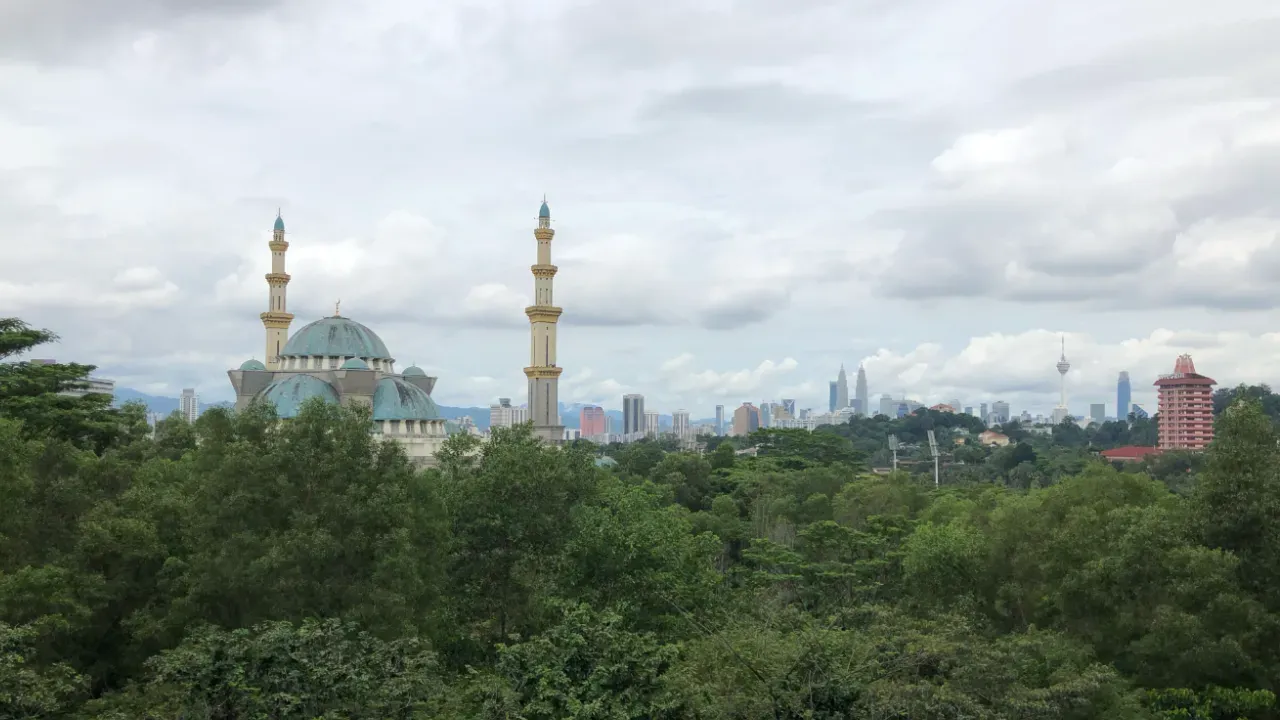
Kuala Lumpur is three cultures stacked into one hot, vertical city. The Malay heart is Kampung Baru, a low-rise village of wooden houses and grilled-fish stalls right beneath the Petronas Towers. A few blocks away, Chinatown runs on Cantonese kopitiams and the night market on Petaling Street. South of the center, Brickfields is Little India, loud with temple bells and banana-leaf lunches. You cross between them in a few MRT stops, and the food changes completely each time.
The food is why you stay longer than you planned. Jalan Alor fires up its grills at dusk and runs late. Many mamak stalls, the Indian-Muslim joints serving roti canai and teh tarik, stay open into the small hours, so a 2am supper is a normal thing here. Kampung Baru is one of the best places in the city for a Malay spread, and Pudu hides old Chinese hawker stalls, the one-dish kind with a decades-long following. Skip the hotel breakfast and eat where the line is.
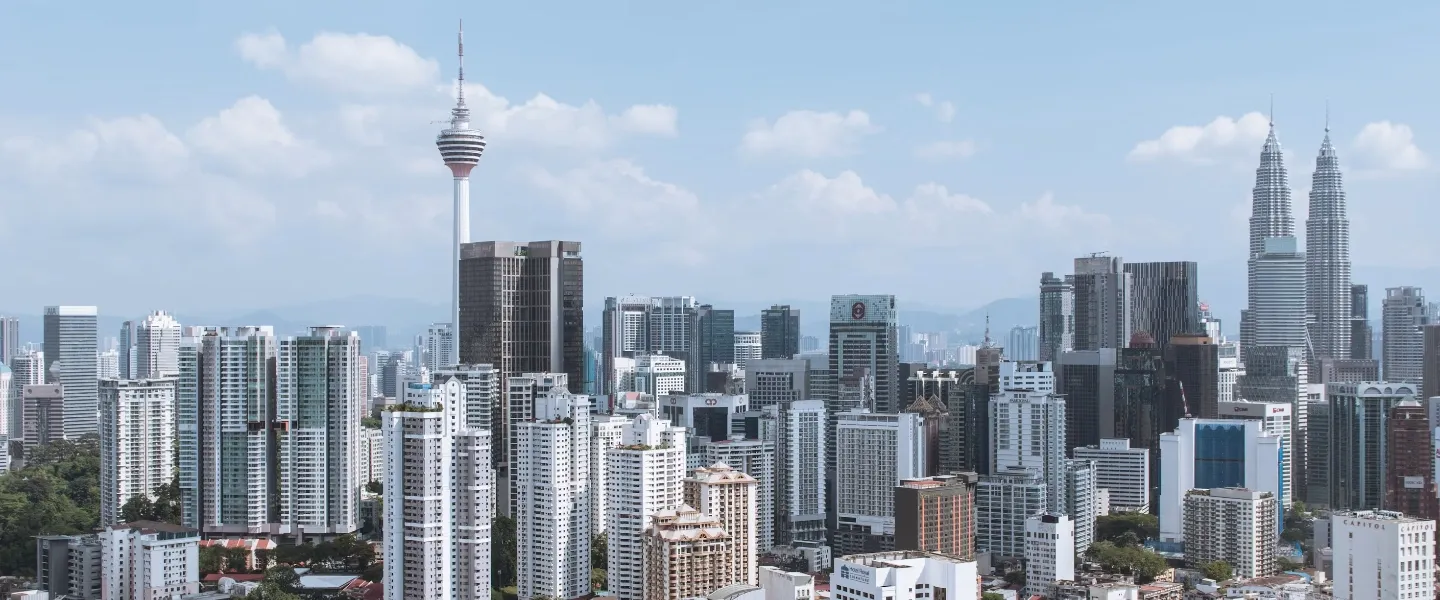
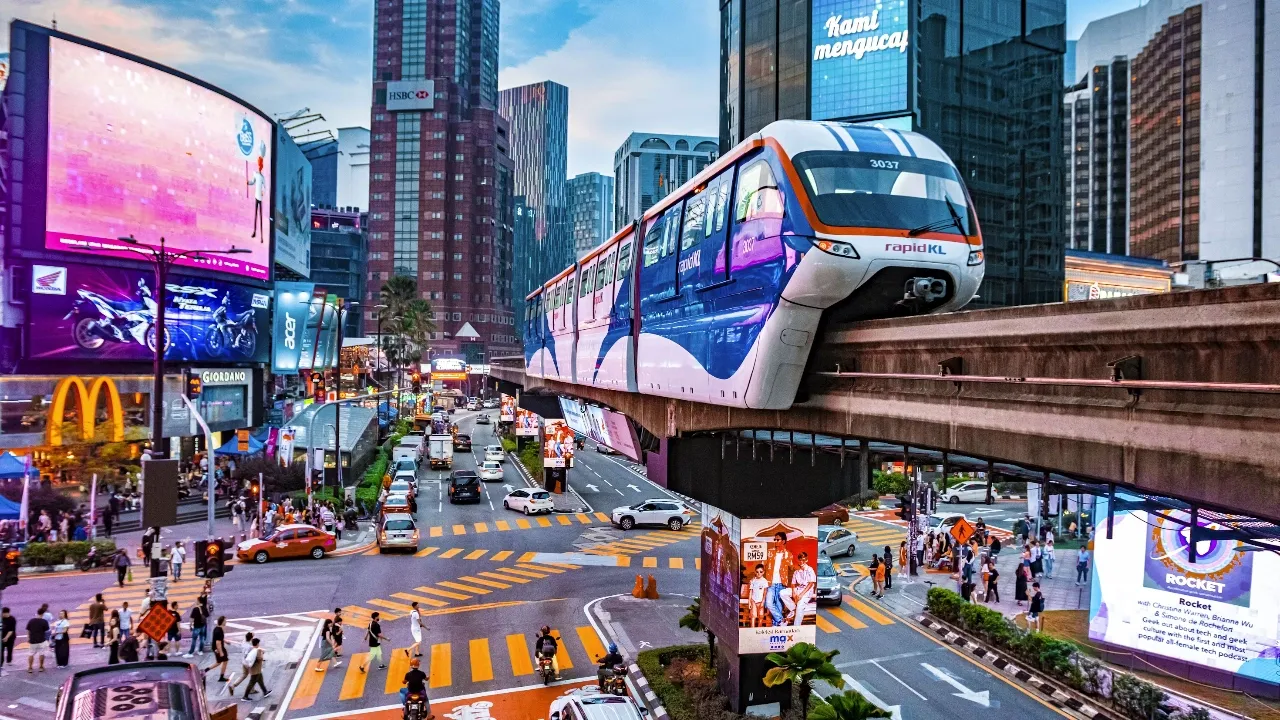
It is a city built vertically and for cars, then patched with trains. The skyline keeps climbing, from the Twin Towers to Merdeka 118. Daily life happens inside air-conditioned malls linked by covered walkways, with pockets of old KL still tucked between the towers where developers haven't reached. The rail network, MRT plus LRT plus monorail, actually gets you around, which makes KL far easier than its traffic suggests. Just don't expect to walk far outside without breaking a sweat.
KL is not a pretty city, and it doesn't try to charm you. The traffic is grim, the sidewalks are an afterthought, and the heat is relentless. It is Muslim-majority and more conservative than Bangkok, so the nightlife is real but lower-key. A lot of travelers give it two or three days: eat hard, ride the trains, take the day trip up to Batu Caves, then move on to an island like Langkawi or Borneo.
Thaipusam
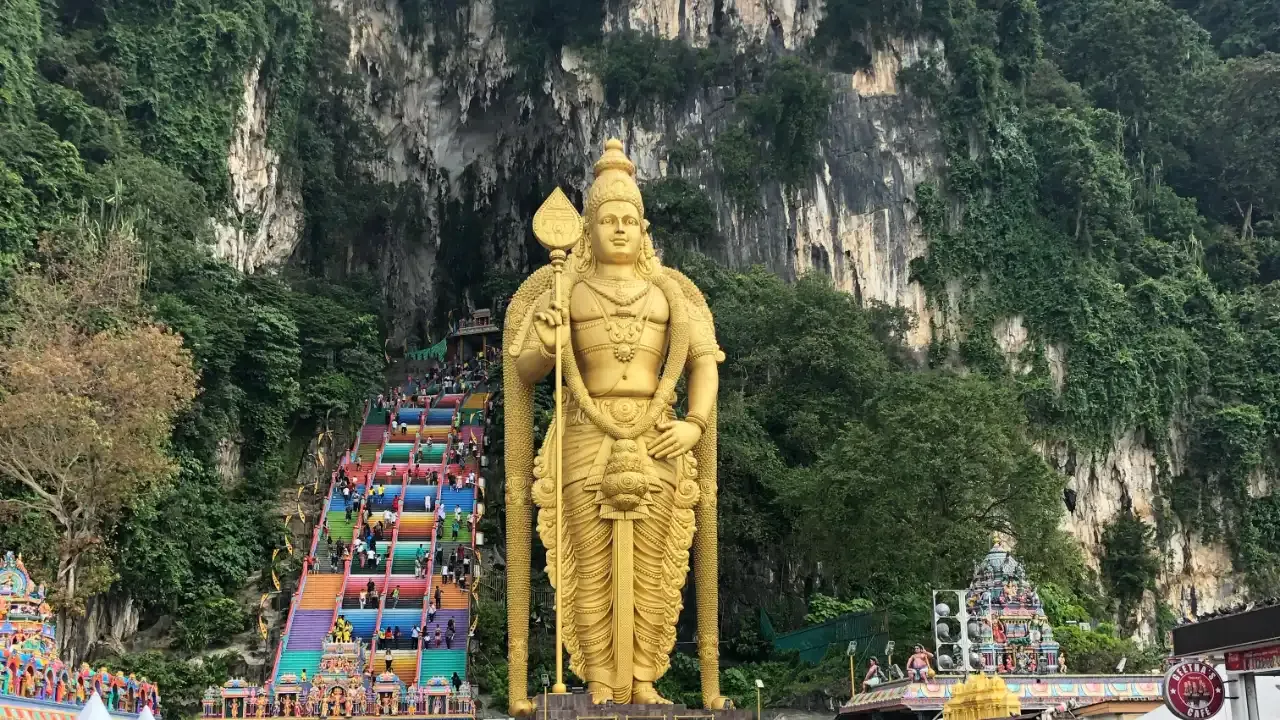
Batu Caves is KL's signature day trip, a set of limestone caves 13km north of the city with a giant gold statue of Murugan at the foot of 272 rainbow-painted steps. Most days it is a quick, sweaty climb past aggressive macaques to a cave temple at the top, worth a morning and a train ride on the KTM Komuter line. Come during Thaipusam and it becomes something else entirely.
Thaipusam is one of the biggest Hindu festivals outside India, and Batu Caves is its center in Malaysia. Over about two days around the January or February full moon, more than a million pilgrims walk here, many carrying kavadi, ornate frames anchored to the body with hooks and skewers driven through the skin as acts of devotion. Others shave their heads or carry pots of milk up the steps. It is intense, crowded, and not staged for tourists; you are a guest at someone else's rite.
If you want to see it, go very early, dress modestly with shoulders and knees covered, and be ready for heat and heaving crowds on the steps. If you would rather skip the crush, avoid Batu Caves that week entirely, since the site is jammed and the trains are packed. The exact dates shift with the lunar calendar, so check the year before you plan around it. Penang runs its own enormous Thaipusam the same week, if you'd rather see it there.
Where to Stay in Kuala Lumpur
- Upscale expat, family-friendly
Mont Kiara
Mont Kiara is an affluent, self-sufficient residential suburb popular with expats, known for its high-rise condominiums and international community. It offers a convenient, international lifestyle with a strong café and Japanese food scene, as well as numerous wellness centers. The area is cleaner and quieter than central KL, with a focus on lifestyle and amenities like boutique malls and fitness studios.
Good for: Families and long-term expats seeking a comfortable, international living environment
Skip if: You are on a budget or want to be close to major tourist attractions
- Expat hub, cafes, nightlife
Bangsar
Bangsar is an affluent, established neighborhood popular with expats and young professionals, blending residential charm with urban energy. It features trendy cafes, upscale dining, lively nightlife concentrated around Jalan Telawi, and boutique retail. The area is more walkable than many parts of KL, especially around Bangsar Baru and Telawi, with shaded sidewalks and a community feel.
Good for: Expats, digital nomads, and those seeking a lively neighborhood with good food and drink options
Skip if: You prioritize proximity to major tourist landmarks or a quiet, suburban atmosphere
- Heritage, budget, street food
Chinatown
Chinatown, centered around Petaling Street, is one of Kuala Lumpur's oldest and most character-filled neighborhoods. It is known for its busy night market, historic temples, and affordable street food. This area offers a more budget-friendly stay with many backpacker accommodations and local eateries. It provides a strong sense of history and culture, distinct from the city's modern districts.
Good for: Budget travelers and those seeking cultural immersion
Skip if: You dislike crowds or prefer modern comforts
- Authentic markets, emerging arts
Chow Kit
Chow Kit offers an unfiltered view of local Kuala Lumpur life, centered around its legendary wet market and crowded shophouses. It has a mix of Malay, Indonesian, and Bangladeshi communities, with an energy that starts early and rarely quiets. The area is undergoing urban renewal, with new boutique hotels and a growing creative scene emerging alongside its traditional roots.
Good for: Travelers seeking an authentic, non-touristy experience and local food
Skip if: You prefer polished, quiet streets or extensive tourist infrastructure
- Shopping, dining, nightlife
Bukit Bintang
Bukit Bintang is the energetic core of Kuala Lumpur, a dense district busy with activity day and night. It is packed with high-end malls like Pavilion KL, street food havens such as Jalan Alor, and the lively bars of Changkat Bukit Bintang. Expect crowds, bright lights, and a constant hum of urban life. It is well-connected by MRT and monorail, making it easy to navigate.
Good for: First-time visitors wanting constant action and amenities
Skip if: You prefer peace and quiet over urban intensity
- Landmark views, luxury stays
KLCC (Kuala Lumpur City Centre)
KLCC is Kuala Lumpur's modern financial and business district, dominated by skyscrapers and luxury hotels. It is home to the Petronas Twin Towers, Suria KLCC Mall, and KLCC Park. The area offers a polished, urban experience with wide sidewalks and air-conditioned skywalks connecting many attractions. While it has a high-class feel, there are also Airbnbs with excellent views.
Good for: Couples or business travelers seeking skyline views and upscale amenities
Skip if: You want a local, less tourist-centric experience
- Local food, historic grit
Pudu
Pudu is a historic district blending old-school kopitiams, busy wet markets, and traditional Chinese temples, all wrapped in a gritty, authentic atmosphere. It is known for its hyper-local food culture, particularly the Pudu Wai Sek Kai street food area, and a strong sense of everyday community. The neighborhood feels worlds away from KL's glass towers, offering an unfiltered slice of the city.
Good for: Foodies and those wanting to experience old Kuala Lumpur beyond the main tourist areas
Skip if: You are sensitive to noise or prefer modern, sanitized environments
Frequently Asked Questions
Planning & moving around
-
How many days do you need to see Kuala Lumpur?
Three to five days is the sweet spot. That covers the Petronas Towers, Batu Caves, Chinatown, and the main food streets, with room for a day trip. You can hit the highlights in two days if you are passing through, but the eating is better at a slower pace.
-
What are the best neighborhoods to stay in Kuala Lumpur?
For first-time visitors, Bukit Bintang is central and lively, with malls like Pavilion and Lot 10 and the Jalan Alor food street. KLCC puts you next to the Petronas Towers and KLCC Park, with plenty of high-end hotels. Chinatown is the pick for budget beds and a stronger sense of old KL. Bangsar suits a quieter, more local stay with good food and bars.
-
What are good day trips from Kuala Lumpur?
Batu Caves is the easy one, a cave temple 13km north reachable by KTM Komuter train in about half an hour. Melaka is a UNESCO-listed old trading port about two hours south by bus, worth an overnight if you can. Genting Highlands, an hour up the mountain by cable car, offers cooler air, casinos, and a theme park.
-
Is public transport or Grab better for getting around KL?
Use both. The MRT, LRT, and monorail are cheap, fast, and cover most of the places a visitor wants, so lean on them for anything near a station. Grab is worth it for door-to-door trips, late nights, luggage, or when the heat and broken sidewalks make the walk from the station miserable. Traffic makes Grab slow at rush hour.
-
What travel apps should I download for Kuala Lumpur?
Grab covers ride-hailing and food delivery and is the one you'll use most. Google Maps handles navigation and the train routes well. Touch 'n Go eWallet is handy for cashless payments and transit gates once you register. WhatsApp is how most people, including drivers and guesthouses, communicate.
Safety & medical
-
Is Kuala Lumpur safe at night?
Yes, in the sense that violent crime against visitors is rare, and busy areas like Bukit Bintang and KLCC are fine after dark. The real risk is snatch theft, where a rider on a motorbike grabs a bag or phone, so keep your bag on the side away from the road and don't walk staring at your phone. Quiet, poorly lit streets are best skipped late at night.
-
Do I need travel insurance for Malaysia?
It is not required for entry, but worth having. Private hospital care in KL is good and cheaper than in the West, but a serious problem or an evacuation from elsewhere in the country adds up fast. A policy covering medical treatment and emergency evacuation is the sensible baseline.
Laws & local norms
-
What are the drug laws in Malaysia?
Malaysia has some of the strictest drug laws in the world, and trafficking can still carry the death penalty. Even small amounts can mean long prison sentences and caning. Foreigners have been jailed and executed for drug offenses here, so there is no room to be casual about it.
-
Can you vape in Kuala Lumpur?
Vaping is heavily regulated and getting stricter. Act 852 bans it in a long list of public places, with fines up to RM5,000, and a 2026 court ruling has left the legal status of nicotine vape sales unsettled while the government appeals. Keep any device away from no-smoking areas, and don't count on buying liquid or hardware easily.
-
What is the dress code for visiting mosques and temples in KL?
Cover your shoulders and knees at mosques and temples. At mosques, women are usually expected to cover their hair, and the main ones like Masjid Negara hand out robes and headscarves at the entrance. Take your shoes off before going in. Everyday dress around the city is relaxed.
-
What are some general cultural etiquette tips for Kuala Lumpur?
Use your right hand for giving, receiving, and eating, since the left is traditionally considered unclean. Keep public affection low-key; hand-holding is fine, more than that is frowned on. Take your shoes off before entering homes, mosques, and temples. Around Malay Muslims, don't offer pork or alcohol.
Money & costs
-
Is Kuala Lumpur cash or card friendly?
Both work. Malls, hotels, and larger restaurants take cards and contactless, and e-wallets are everywhere, but street stalls, hawker centers, and small shops still want cash. Carry a mix, with small notes for hawkers. Maybank, CIMB, and Public Bank ATMs are common in malls and near bank branches, and most don't charge a fee on foreign cards.
-
Is tipping customary in Kuala Lumpur?
Tipping isn't expected. Many mid-range and upscale restaurants and hotels already add a 10 percent service charge, shown as ++ on the bill, so there's no need to add more. Rounding up a fare or leaving a little for good service is a nice gesture, never an obligation.
Food & drink
-
Where do locals eat in Kuala Lumpur?
For Malay food, Kampung Baru does grilled fish and nasi campur in an old village setting under the towers. Pudu Wai Sek Kai is the spot for Chinese Malaysian street food. Brickfields, the city's Little India, is where to go for South Indian and banana-leaf meals. Mamak stalls all over the city cover roti canai at any hour.
-
What are some must-try dishes in Kuala Lumpur?
Start with nasi lemak, the national dish, coconut rice with sambal, anchovies, peanuts, and egg. Satay, grilled skewers with peanut sauce, is another staple. Don't miss roti canai, a flaky flatbread with curry, and chili pan mee, a dry spicy noodle dish that KL does especially well.
Families & kids
-
Is Kuala Lumpur stroller friendly?
It's a mixed bag. Malls are excellent for strollers, with lifts, wide aisles, and family rooms, and that's where a lot of KL life happens anyway. Outside, though, sidewalks are narrow, broken, or missing, and crossings are hard, so a baby carrier is often easier for getting between places. The newer MRT stations are more accessible than the older lines.
After dark
-
What are the main nightlife areas in Kuala Lumpur?
Changkat Bukit Bintang is the densest strip of bars and clubs and the easiest place to start. The TREC complex near Jalan Tun Razak is a purpose-built entertainment hub. For a view, the rooftop bars around KLCC and Bukit Bintang look out over the towers. Bangsar draws a more local, relaxed crowd.