
Langkawi Right Now
Ferry service reductions to Langkawi are causing longer waiting times and fewer daily sailings, impacting tourism and local livelihoods.
Langkawi International Fest 2026 (LIF26) · Langkawi Sports Complex, Kuah
Langkawi Geopark Enduro Challenge · Langkawi
Interest in travel to Langkawi fell 10% from a year ago, suggesting demand is cooling off.
Best time to visit Langkawi
Not the best time to visitInter-monsoon rains
Still very wet with rough seas and the quietest crowds of the year. Cheap, but a lot of the water activities are off the table.
Score by month
December to March is the dry season, and January and February are the driest and calmest of it. That is also when the island is fullest. August to October is the wet stretch, when rough seas cancel island-hopping and some of the smaller operators close. November is wetter than most people expect.
Day-to-day in Langkawi
Walkability
33/100
Walking in Langkawi's main tourist hubs means dodging motorbikes on broken, discontinuous sidewalks. Reaching anything beyond your resort or a cluster of shops usually requires a taxi or rental car.
Sidewalks are often narrow, discontinuous, and frequently obstructed by parked scooters and market stalls.
Essential services like shops and restaurants are spread out, requiring transport between most points of interest.
Motorbikes dominate roads, often using sidewalks, and drivers show little regard for pedestrians at crossings.
Climate works against walking for much of the year. Plan around weather windows.
-
Monthly cost
$868 / month
AFFORDABLESolo mid-range stay including rent, daily eating out, groceries, and routine costs.
-
Golf
Three golf courses are here, including The Els Club Teluk Datai, often ranked among Malaysia's best. Expect rainforest backdrops and ocean views.
-
Coworking
$138 / month
AFFORDABLELimited coworking options exist. Jetpack Langkawi near Pantai Cenang is the main spot, with a few smaller local offices in Kuah. Not a huge scene.
-
Local gym
$35 / month
VERY AFFORDABLEGym prices are around average. Most good options are commercial chains or hotel gyms, clustered in Kuah and Pantai Cenang. Cenang Muaythai Gym offers fighter-focused training.
Need to Know
- Currency
- Malaysian Ringgit (MYR)
- Language
- Malay (Bahasa Malaysia) is the official language, but English is widely understood in tourist areas.
- Tap water
- Not safe
- Time zone
- GMT+8 (MYT)
- Power plug
- Type G, 240V
- Dialing code
- +60
- Driving side
- Left
- Tipping
- Tipping is not customary; a 10% service charge is often added to bills in hotels and upscale restaurants.
- Internet
- Mobile coverage is generally strong in main tourist areas like Pantai Cenang and Kuah Town, with free WiFi common in cafes and hotels.
- Emergency
- 999 (all services), 112 (mobile only)
When not to go
-
Skip the wet season for the boats
Sep-Oct · wettest, roughest seasLangkawi's wettest, roughest stretch is around September and October, at the tail of the southwest monsoon. Heavy rain and choppy seas cancel island-hopping and mangrove tours, ferries get bumpy or suspended, and some smaller Cenang businesses shut for the low season. Strong currents also make parts of the coast unsafe to swim. Come between November and April for calm seas and reliable boats.
-
Dodge the peak-season crush
Dec-Jan peak, plus Mar / Aug / year-end school holidaysLangkawi fills up hard over the December and January dry-season peak, and again during the March, August, and year-end Malaysian school holidays. Cenang beach gets packed, cable-car lines stretch for hours, island-hopping boats book out, and room rates jump. The weather is genuinely at its best then, which is exactly why it's so busy. For the same dry weather with more room, aim for November or February, or the shoulder around June.
Upcoming Events & Holidays in Langkawi
Upcoming events, next 30 days
On the horizon
Public holidays & observances, next 12 months
Dates are researched and checked, but events move. Always confirm with the official source before you book anything around them.
Getting To Langkawi
-
Langkawi International Airport (LGK)
The island's only airport, 15 km from Kuah Town and 10 km from Pantai Cenang.
Langkawi International Airport (LGK) is the main gateway to the island, handling both domestic and international flights. There is no public bus or train service from the airport. Taxis operate on a fixed-fare coupon system; purchase your coupon at the counter in the arrivals hall. A taxi to Kuah Town costs around RM25 (about $5.50) and takes 15-25 minutes. A taxi to Pantai Cenang is about RM18 (about $4) and takes 10-15 minutes. Ride-hailing services like Grab are also available and can sometimes be cheaper.
Direct flights to Langkawi
Serves 6 direct destinations, 2 international and 4 domestic, about 26 flights a day.
International 2- Singapore SIN Singapore
 AirAsia
  Scoot 1-2/day
 - Tashkent TAS Uzbekistan
 Malindo Air 2/week
Within Malaysia 4
- Kuala Lumpur KUL AirAsia
 Malaysia Airlines Malindo Air 17/day
 - Penang PEN AirAsia F Firefly 3/day
- Subang SZBF Firefly1-2/day
- Senai JHB AirAsia 4/week
Nonstop routes only. Flights per day are an average, each way. Data: AeroDataBox, updated August 2026.
Visa rules apply at the country level. See the full Malaysia visa guide, with every visa and its official do-it-yourself cost. -
-
Kuala Perlis Jetty
Mainland ferry terminal, shortest sea crossing to Langkawi.
Ferries from Kuala Perlis Jetty arrive at Kuah Jetty in Langkawi. The journey is the shortest sea crossing to the island. Langkawi Ferry Line operates passenger ferries, and Wantas RoRo offers car ferry services if you plan to bring a vehicle.
-
Kuala Kedah Jetty
Mainland ferry terminal, convenient for those traveling from Alor Setar.
Ferries from Kuala Kedah Jetty also arrive at Kuah Jetty in Langkawi. This route is convenient if you are traveling from Alor Setar, as the jetty is about a 20-minute drive from the city. Langkawi Ferry Line operates this route.
-
Satun (Tammalang Pier), Thailand
International ferry route from Thailand to Langkawi.
Ferries from Tammalang Pier in Satun, Thailand, arrive at Kuah Jetty in Langkawi. This is an international route, so you will go through passport control upon arrival.
Safety Advice
The real risk is the roads, not crime: tourists come off rented scooters on the hill roads and after beach-bar drinks. Petty theft is uncommon but happens at the night market and on the beaches. Watch the sea too, with strong currents in the monsoon months.
Common Scams in Langkawi
-
Unmetered Taxis and Overcharging
HIGH RISKTrigger:A driver quotes a flat price well above the normal fare.
Langkawi taxis are unmetered and run on fixed fares, but drivers sometimes quote tourists well above the standard rate, or take a longer route to pad the fare. This is common at tourist hotspots and the airport.
How to avoid: Use the Grab app for upfront pricing, or agree the fare before you get in and check it against the fixed airport-coupon rates. Report overcharging to APAD, the Land Public Transport Agency.
-
Fake Online Travel Agencies
HIGH RISKTrigger:An online deal for a Langkawi package seems too good to be true, or the agency asks you to download a third-party app for booking.
Scammers create fake online travel agencies, often advertised on social media, offering heavily discounted vacation packages to Langkawi. Victims pay a deposit or full amount, then the agency disappears or the promised services are not delivered.
How to avoid: Verify the legitimacy of any travel agency through the Ministry of Tourism, Arts and Culture (MOTAC) website. Book directly with reputable hotels or well-known tour operators.
-
ATM Skimming
MEDIUM RISKTrigger:The ATM card slot or keypad looks unusual or has loose parts.
Card-skimming devices are sometimes fitted to ATMs to steal card data and PINs. Fraudsters then use this information to withdraw funds from your account. This can happen at less secure ATM locations.
How to avoid: Only use ATMs located inside banks or well-lit, secure premises. Check the card slot and keypad for any attached devices before use.
-
Maha Tower Ticket Scam
LOW RISKTrigger:A staff member tries to rush you or directs you away from an area you know your ticket covers.
At Maha Tower, some visitors report being ushered out of areas their ticket covers, like the higher levels or skydeck, sooner than expected. It may be crowd control rather than a deliberate scam, but it helps to know exactly what you paid for.
How to avoid: Confirm exactly what your ticket includes and the time limits for each section before you go up. Be firm and insist on accessing all areas you paid for.
Mistakes to Avoid
-
Drinking Tap Water
SERIOUS CONSEQUENCEWhile tap water in some urban areas of Malaysia is treated, its quality can vary due to old plumbing or storage tanks. Drinking it can lead to stomach upset or other health issues for travelers.
Fix: Always drink bottled or filtered water, and be cautious about ice in drinks at restaurants.
-
Driving Without Proper License
SERIOUS CONSEQUENCEWhile some rental companies may be lax, legally you need both your national driver's license and an International Driving Permit (IDP) to drive in Malaysia. This applies to both cars and motorcycles. Driving without the correct documentation can lead to fines or other legal issues.
Fix: Obtain an International Driving Permit (IDP) before your trip and carry both it and your home country's license at all times when driving. Ensure your IDP is stamped for motorcycles if you plan to ride one.
-
Feeding Wild Monkeys
SERIOUS CONSEQUENCEMonkeys, especially macaques, are common in Langkawi near beaches and forested areas. Feeding them can make them aggressive, leading to bites or them snatching food and belongings.
Fix: Do not feed or approach wild monkeys. Keep food out of sight and secure your belongings.
-
Bringing Restricted Medications
SERIOUS CONSEQUENCEMalaysia has a zero-tolerance policy for illegal narcotics, and this extends to certain prescription medications that are legal elsewhere, such as stimulant-based ADHD medications. Carrying these without proper documentation and prior Ministry of Health approval can lead to severe charges, including drug trafficking.
Fix: If you need to bring controlled medications, carry a valid doctor's prescription, a formal letter explaining your medical need, and obtain official clearance from the Ministry of Health Malaysia before travel. Keep medications in their original, labeled pharmacy bottles.
-
Disregarding Modest Dress Codes
Langkawi is more relaxed than mainland Malaysia, especially on beaches. However, it is a predominantly Muslim region. Wearing overly revealing clothing in rural villages, towns, or religious sites can be seen as disrespectful.
Fix: Pack a shawl or sarong to cover shoulders and knees when visiting mosques, temples, or more traditional areas. Beachwear is fine at resorts and on the sand.
Money & Payments
Carry Malaysian Ringgit cash for small vendors and local markets, but rely on cards for hotels, larger restaurants, and duty-free shops, as Langkawi is a hybrid payment environment.
-
Cash for markets and small buys
While cards are accepted in many places, smaller shops, roadside stalls, and certain attractions on Langkawi still prefer cash. Keep RM10 and RM20 notes handy for markets, hawker stalls, and beach vendors.
-
Cards Accepted, Surcharges Common
Visa and Mastercard are widely accepted at hotels, major restaurants, cafes, and duty-free shops. Some smaller businesses may have a minimum spend requirement for card use, typically RM30-RM50, or may impose a 2-3% surcharge, despite this being prohibited by Bank Negara Malaysia.
-
Reliable ATMs, Withdrawal Limits
ATMs are easy to find in tourist areas like Pantai Cenang and Kuah Town, as well as in shopping centers. Maybank, CIMB, and Public Bank ATMs are generally reliable and do not charge direct transaction fees for foreign cards, though your home bank will likely charge a foreign transaction fee. Withdrawal limits are typically RM1,500-RM2,000 per transaction and around RM3,000 per day.
-
Always Pay in Local Currency
When using your card at an ATM or point of sale, always choose to be charged in Malaysian Ringgit (MYR). Opting to pay in your home currency triggers Dynamic Currency Conversion (DCC), which often results in unfavorable exchange rates and additional fees.
-
Mobile Payments for Visitors
DuitNow QR is Malaysia's national QR payment standard. Tourists can use supported international payment apps like AlipayCN, Alipay+ partner wallets, and Weixin Pay by scanning DuitNow QR codes at over 2.5 million merchants. Touch 'n Go eWallet is also increasingly accepted, and eligible tourists can register with an international number.
-
Tourism Tax on Accommodation
A national Tourism Tax of RM10 per room per night is charged to all non-Malaysian visitors at registered accommodations. This tax is collected by hotels upon check-out and is consistently enforced across all booking channels.
-
International Transfers
To send money to a bank account in Malaysia, for things like rent or day-to-day expenses, services like Wise or Remitly usually offer better rates than traditional banks and faster delivery.
You'll typically need the recipient's full name, account number, and SWIFT/BIC code. Some banks may also require a local address.
Costs in Langkawi
A mid-range day runs about $60 to $90, covering a room, meals, a scooter, and a boat trip or two. Food and the duty-free beer are cheap; what adds up is the island-hopping and mangrove tours, and peak-season room rates from December to February.
Save money?
Sign up for our guide on how to save money on your next trip.
SIM Cards & Data
Best option for most travelers: an eSIM you set up before you arrive. You'll be online the moment you land, with no airport line and no tourist pricing.
Travel eSIMs Connect the second you land. Zero hassle. Skip the airport line and paperwork. Activate before you fly and land connected. Find the best eSIM →Prefer a local SIM?
You can easily buy a physical SIM card upon arrival at Langkawi International Airport (LGK) from kiosks in the arrivals hall, with staff ready to help tourists. While major towns like Kuah and Pantai Cenang have solid 4G and 5G, expect spotty coverage in the interior, around the cable car at Mount Mat Cincang, in parts of the Kilim mangroves, and on quieter north coast beaches. Remember to bring your original passport for registration, as it is mandatory in Malaysia.
What Langkawi is Like
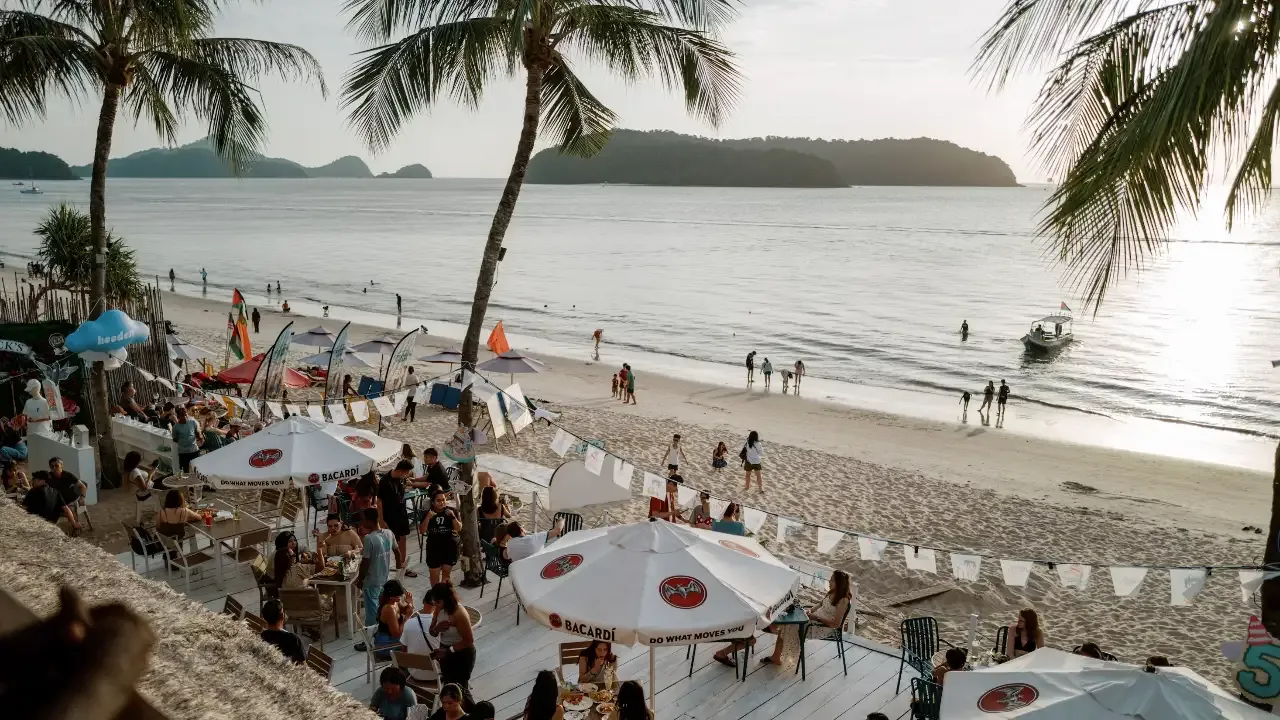
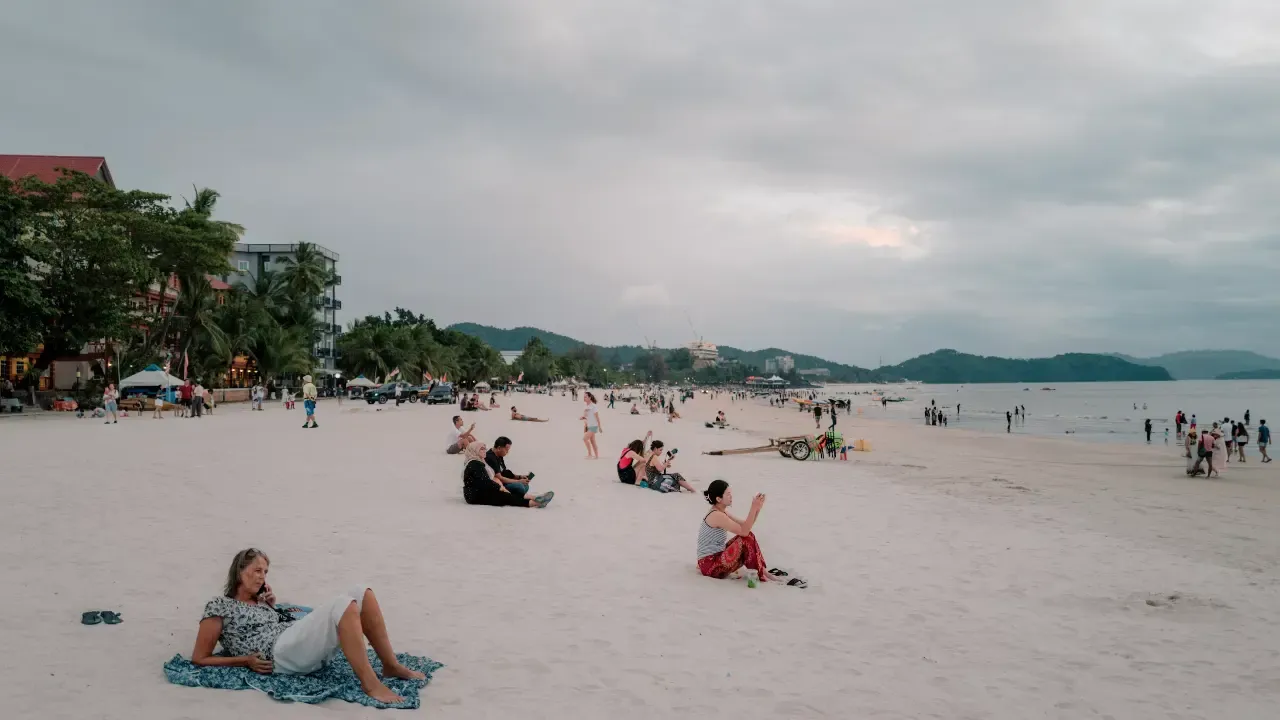
Langkawi is a duty-free archipelago of ninety-nine islands off Malaysia's northwest coast, a ferry from Penang or a short flight from Kuala Lumpur. Most people base at Pantai Cenang, a two-kilometer beach strip of guesthouses, seafood grills, and duty-free shops, or at quieter Pantai Tengah next door. Kuah, the main town and ferry port, is where the duty-free chocolate and liquor shops cluster. The beaches here are genuinely good, which sets Langkawi apart from much of the mainland west coast.
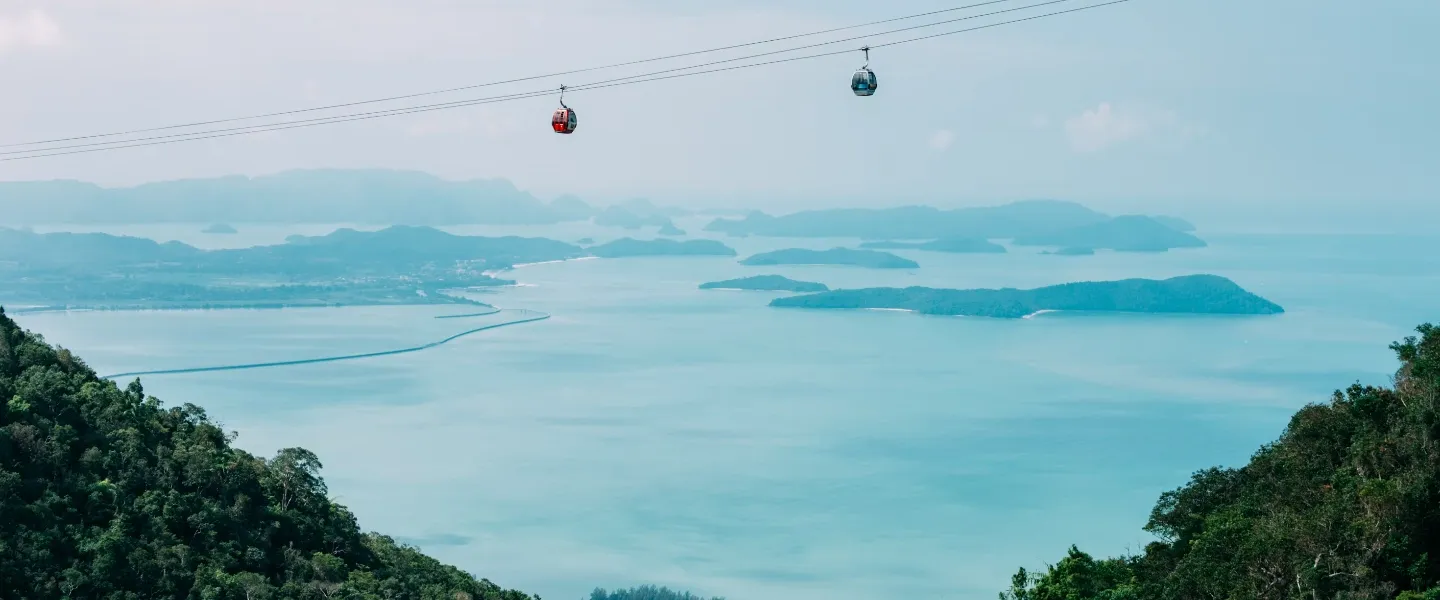
The island is a UNESCO Global Geopark, and the nature is the real reason to come. The SkyCab cable car climbs Gunung Machinchang to a curved pedestrian sky bridge with long views over the Andaman Sea. Boat tours head into the Kilim Karst mangroves for white-bellied eagles, macaques, and limestone caves. Datai Bay on the northwest tip hides old-growth rainforest and the island's most exclusive resorts, and Pulau Payar offshore has the snorkeling.
Day to day, Langkawi is a relaxed beach trip with cheap beer. The duty-free status means a can costs about what a bottle of water does elsewhere, so sunset drinks on Cenang barely dent the budget. Island-hopping boat trips, jet skis, and parasailing fill the daytime, and the Cenang strip handles seafood and cocktails after dark. It's touristy and a little tacky in places, but easy to enjoy.
You can't get around without wheels. Public transport barely exists and taxis run on pricey fixed coupons, so most people rent a scooter or a car, and the island is spread out. Cenang is crowded and built-up, this isn't a secluded escape anymore, and the wet months around September and October cancel the boats. Langkawi suits travelers who want beaches, easy nature, and an easy introduction to Malaysia. If you came for deep culture or an empty beach, look elsewhere.
Duty-free
Langkawi is a duty-free island and has been since the eighties. No tax on alcohol, chocolate, cigarettes, or cosmetics, which is why a can of beer costs a couple of ringgit and chocolate sells by the kilo in the Kuah shops. In a Muslim-majority country where alcohol is otherwise taxed hard, cheap booze on the beach is a real novelty, and it sets the mood for the whole trip here.
The savings are real but narrower than the marketing suggests. Alcohol and chocolate are the clear wins, with a bottle of wine or spirits going for a fraction of the mainland price, and perfume can be worth a look. Electronics, though, are usually no cheaper than buying online or at a city airport, so don't fly in planning to pick up a laptop. Stick to what's actually taxed heavily everywhere else.
There are rules if you want to carry duty-free goods off the island. You generally need to have stayed at least forty-eight hours, and personal allowances cap how much liquor you can take when you leave. For most visitors it doesn't matter: grab a few bars of chocolate for gifts, enjoy the cheap sunset beers while you're here, and don't build the trip around the shopping. The mangroves and the beaches are the point.
Where to Stay in Langkawi
- Ultra-luxury, rainforest immersion
Datai Bay
Datai Bay is Langkawi's most exclusive resort zone, accessed via a winding road through primary rainforest on the island's northwest tip. The bay features a quiet private beach and is home to ultra-luxury resorts like The Datai Langkawi. Expect lush jungle, abundant wildlife, and a focus on nature and wellness.
Good for: Honeymooners and those seeking a high-end, secluded rainforest and beach experience
Skip if: You are on a budget or prefer a more active, commercial environment
- Lively beach, nightlife
Pantai Cenang
This is Langkawi's most popular and developed beach area, a two-kilometer stretch of white sand with a constant hum of activity. The main road, Jalan Pantai Cenang, is packed with restaurants, duty-free shops, beach bars, and watersports operators. Expect a lively, barefoot energy that continues into the night, especially on weekends.
Good for: First-time visitors wanting a classic beach trip with amenities
Skip if: You want quiet evenings and secluded beaches
- Relaxed beach, upscale resorts
Pantai Tengah
Just south of Pantai Cenang, Pantai Tengah offers a calmer, more refined atmosphere. It has a mix of upscale resorts and relaxed dining, with a long stretch of soft sand and calm waters. The area feels less chaotic than Cenang, with low-rise buildings set among palm and casuarina trees.
Good for: Families and couples seeking a quieter beach experience with easy access to Cenang's action
Skip if: You are looking for budget accommodation or a party scene
- Secluded luxury, natural beauty
Tanjung Rhu
Located on the northern tip of the island, Tanjung Rhu is known for its quiet, secluded beaches and dramatic limestone formations. It's home to some of Langkawi's most exclusive resorts, offering soft white sands and clear, calm waters ideal for swimming. The area is also a jumping-off point for mangrove tours.
Good for: Couples and luxury travelers seeking tranquility and natural scenery
Skip if: You want a wide range of dining options and easy access to nightlife
- Duty-free shopping, local life
Kuah Town
Kuah is Langkawi's main town and port, a workaday hub with a relaxed atmosphere. The waterfront promenade, home to Eagle Square, catches a sea breeze. The main commercial street is lined with duty-free shops selling chocolates, alcohol, and cosmetics at lower prices than mainland Malaysia.
Good for: Budget travelers, ferry arrivals, and those interested in duty-free shopping
Skip if: You prioritize beaches and nightlife directly outside your door
Frequently Asked Questions
Planning & moving around
-
How many days should I spend in Langkawi?
A week in Langkawi provides enough time to explore the main attractions at a relaxed pace, especially if you are traveling with children. This allows for activities like the Langkawi Cable Car, Sky Bridge, island hopping tours, and visiting wildlife parks without feeling rushed.
-
Which part of Langkawi is best for tourists?
Pantai Cenang is the most popular area, offering a lively atmosphere with plenty of restaurants, beach bars, and duty-free shops all within walking distance. If you prefer a quieter vibe but still want easy access to the action, Pantai Tengah is a good alternative, located just a kilometer south.
-
What are the best day trips from Langkawi?
Island hopping tours are a popular choice, taking you to some of the surrounding 99 islands. You can also take a Kilim Mangrove Boat Tour to see the Geoforest Park, which often includes eagle watching, crocodile cave, and bat cave. For a land-based tour, consider visiting Eagle Square, Tanjung Rhu Beach, and the Langkawi Skybridge.
-
What is the public transportation like in Langkawi?
Public transportation options are limited on Langkawi. Taxis are available, and ride-hailing apps like Grab are widely used and recommended for getting around, especially at night. Renting a car or scooter is a common way for tourists to explore the island independently.
-
Do you need a license to rent a scooter in Langkawi?
Yes, you generally need a valid motorcycle license to rent a scooter in Malaysia. While some rental places might not strictly enforce this, driving without the proper license can lead to legal issues and will void your travel insurance in case of an accident. It's always best to be properly licensed.
Safety & medical
-
Is Langkawi safe at night?
Langkawi is generally a safe destination, and most areas, including Pantai Cenang, feel secure in the evenings. However, it's always wise to be mindful of your belongings in crowded places like night markets and to avoid walking alone on isolated beaches or dark pathways late at night.
-
What should I do if I get sick in Langkawi?
Clinics and pharmacies are easily accessible in main tourist areas like Pantai Cenang and Kuah Town. Langkawi Hospital offers 24/7 emergency services, and private clinics are available for non-urgent matters, often providing faster service. Bring basic medications from home, as some local labels may only be in Bahasa Malaysia.
-
Do I need travel insurance for Langkawi?
While Malaysia does not mandate travel insurance for entry, it is highly recommended. Policies should cover medical expenses, especially since private hospital treatment can be costly, and also include coverage for emergency evacuation, trip cancellation, and lost belongings. Look for policies that cover dengue treatment, and if you plan on adventurous activities like diving or jungle trekking, ensure those are included.
Laws & local norms
-
What are the drug laws in Langkawi?
Malaysia has extremely strict drug laws, including for Langkawi. Penalties for drug offenses are severe, ranging from lengthy prison sentences to the death penalty, even for possession of small amounts. Do not engage with illegal drugs.
-
Are there any laws about vaping in Langkawi?
Vaping is heavily regulated and getting stricter. Act 852 bans it in a long list of public places, with fines up to RM5,000, and a 2026 court ruling has left the legal status of nicotine vape sales unsettled while the government appeals. Keep any device away from no-smoking areas, and don't count on buying liquid or hardware easily.
-
What are the laws regarding LGBTQ+ travelers in Langkawi?
Malaysia has laws criminalizing same-sex sexual activity for both men and women, with penalties including imprisonment and caning. While Langkawi is a tourist destination and generally more liberal than mainland Malaysia, public displays of affection should be avoided. There are no laws protecting the LGBTQ+ community against discrimination.
Money & costs
-
Are there any common scams tourists should be aware of in Langkawi?
While violent crime is rare, petty theft like pickpocketing can occur in crowded areas such as night markets or ferry terminals. Be cautious of credit card fraud and ensure you have enough cash before leaving urban areas. Monkeys can also be aggressive if they see you with food.
-
Should I use cash or card in Langkawi?
It's best to carry a combination of cash and cards. While many hotels, major restaurants, duty-free shops, and larger supermarkets accept card payments, smaller shops, roadside stalls, and some attractions still prefer cash. Keep smaller denominations like RM10 and RM20 notes handy.
-
Is tipping customary in Langkawi?
Tipping is not traditionally expected in Malaysia, but it is appreciated as a gesture of thanks. If you choose to tip, RM2 or RM5 is considered a kind amount in most situations, and cash is the best method. Some restaurants may include a service fee, so check your bill.
Culture & etiquette
-
What is the dress code for tourists in Langkawi?
Langkawi is relatively relaxed, especially in beach areas, and wearing bikinis is generally fine on beaches and at hotel pools. However, modesty is expected in rural villages and when visiting religious sites like mosques, where you should cover your shoulders and knees. Carry a shawl or sarong for flexibility.
-
What is the etiquette for visiting mosques in Langkawi?
When visiting a mosque, you should dress modestly, covering your shoulders, arms, and knees. Women may be asked to cover their hair, and robes and headscarves are often provided free of charge at the entrance. Remember to remove your shoes before entering.
-
Is it okay to take photos of locals in Langkawi?
It is generally polite to ask for permission before taking photos of individuals, especially in more traditional or rural settings. Most locals are friendly and accommodating, but a quick gesture or verbal request shows respect.
Food & drink
-
Where do locals eat in Langkawi?
For authentic local food, explore the night markets, such as the Temoyong Night Market in Pantai Cenang, which operates on Thursday evenings. Here you'll find various stalls selling traditional Malay dishes like *pisang goreng* (fried bananas), *keropok lekor* (fish crackers), *nasi lemak*, and *nasi ayam* (chicken rice).
-
What local dishes should I try in Langkawi?
Be sure to try *Nasi Lemak*, Malaysia's national dish, which can often be adapted for vegetarians. *Laksa* is another popular noodle soup that can be found in various forms. Look for *Nasi Campur*, a buffet-style meal with rice and a selection of dishes.
-
Are there good vegetarian or vegan options in Langkawi?
Yes, Langkawi has several vegetarian and vegan-friendly restaurants. Xin An in Kuah Town is a pure vegetarian restaurant offering Malay, Chinese, and fast food. The Fat Frog specializes in both Asian and Western vegetarian dishes. For fully vegan options, check out Pegaga Vegan Experience and Melior Cafe.
Families & kids
-
Is Langkawi good for families with kids?
Langkawi is an excellent family-friendly destination with many activities for children. Attractions like the Langkawi Cable Car, Underwater World Langkawi, and the Wildlife Park and Bird Paradise are popular with kids. Many resorts also offer kids' clubs, such as the KiKi Klub at Meritus Pelangi Beach Resort.
-
Is Langkawi stroller friendly?
While major tourist attractions and resorts are generally accessible, some areas, particularly older towns or natural sites, might have uneven paths or limited sidewalks, making stroller navigation challenging. Consider a lightweight, foldable stroller or a baby carrier for easier movement.
After dark
-
What is the nightlife like in Langkawi?
Pantai Cenang is the hub of Langkawi's nightlife, with numerous open-air bars and restaurants that become drinking spots after 9 PM. You can find beach bars with beanbags and fire shows, like Yellow Beach Cafe. Pantai Tengah offers a calmer alternative with laidback pubs. For more upscale options, consider D'Reef at The Cliff or Above Seabar at The Danna Langkawi.
-
What changes after dark in Langkawi?
As the sun sets, Pantai Cenang transforms into a lively strip with tourists flocking to the streets, night markets, and beach bars. The atmosphere becomes more relaxed and social, with music and fire shows at some beach venues. While generally safe, it's still wise to use Grab or trusted taxis for transport at night.