January
85/100 Excellent
One of the driest months, with humidity down near 72%. High season, so rates are up.
Temperature
32 / 24°C
Rain days
5
Flights
9% cheaper than a typical month
Crowds
Peak

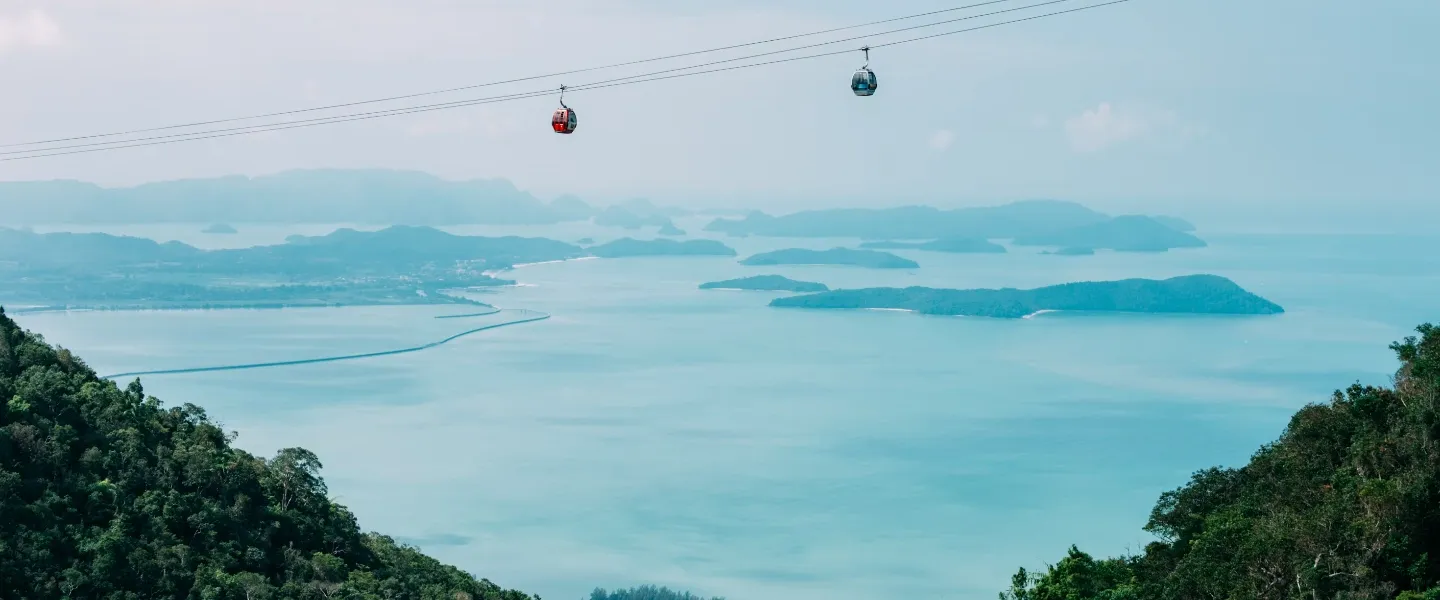
Langkawi is on the west coast, so its best months are the ones when the east coast is wet. Here is what each month is like.
The best time to visit Langkawi is December to March. These are the driest and least humid months of the year. February is the driest of them, with rain on about four days.
The northeast monsoon brings the wet season to Malaysia's east coast from November to March. Langkawi is on the west and stays much drier, so when the Perhentians and Tioman close for it, Langkawi is at its best.
The period with the most rain here is August to October. October has the most rainy days, about 21, and September and October are also the most humid, at close to 90%.
The temperature is the same all year round, so pick your dates on rain and humidity.
Not the best time to visitInter-monsoon rains
Still very wet with rough seas and the quietest crowds of the year. Cheap, but a lot of the water activities are off the table.
Score by month
Rain, humidity and sea conditions are the difference between the months.
One of the driest months, with humidity down near 72%. High season, so rates are up.
The driest month of the year, and the hottest. Low humidity and a calm sea.
Hot and still dry, and the last of the four good months.
The transition. The humidity comes back, but plenty of days are still fine. Quieter and cheaper than February.
Wet, with humidity at 86%. Showers are usually short and heavy rather than all day.
A slightly drier month in the middle of the wet season. A reasonable choice if your dates are fixed.
Similar to June. Sea conditions are mixed and some island trips get moved or canceled.
The start of the wettest period, and humid with it. Rain is heavy and usually arrives in the afternoon.
One of the two worst months, and humid with it. Boat trips are unreliable and the water is murky.
The wettest month of the year, and the cheapest time to stay.
Still wet, but improving. Rates start climbing towards the December peak.
The dry season returns and the sea settles. Christmas and New Year are the most expensive week of the year.
Ticket prices differ by season and are not always in line with the weather. These are the cheapest and most expensive months on Langkawi's busiest nonstop routes.
Measured on Kuala Lumpur, Penang, Singapore to Langkawi: two domestic routes, the busiest international one, and the long-haul routes that carry the most traffic. Each route is compared against its own typical month, so a long flight and a short one count equally and what is left is the season. Cheapest fares only, and airfare only, not the cost of the trip.
Highs are 29 to 34°C (84 to 93°F) in every month and lows around 24°C (75°F). What changes is how often it rains and how humid it feels.
Dry season, December to March. Rain on four to ten days a month, humidity in the low 70s, and a calmer sea. February and March are the hottest months of the year.
Wet season, April to November. Rain on 12 to 21 days a month, and humidity that climbs to near 90% by October.
Malaysia has two monsoons, but Langkawi is only affected by one of them. The northeast monsoon, from November to March, hits the east coast and the South China Sea islands. Langkawi is on the west, sheltered by the peninsula, which is why its best weather falls in those same months.
What Langkawi gets instead is the southwest monsoon, from late May to September, plus the wetter inter-monsoon periods around it. Rain often comes in heavy showers, with clear periods between them.
You notice the difference most on the water. Island-hopping trips to Pulau Payar and the Kilim mangroves operate in the wet months too, but conditions are less reliable, snorkeling visibility is poorer, and trips get canceled when the sea is rough.
September and October. They have the most rainy days of the year, humidity is close to 90%, and the sea is rough and murky often enough to spoil the island trips most people come for.
Christmas and New Year is the worst value: excellent weather at the highest prices of the year. January is nearly as dry and much cheaper.
Air pollution is usually low on Langkawi all year. Haze from fires elsewhere in the region can still drift over in a bad year, and it can cut visibility from the cable car.
For weather, not much. Two things do change.
Pantai Cenang is the busy strip: most of the cheap and mid-range hotels, the bars and the water sports. It faces west, so it gets the sunsets.
The north, around Datai Bay and Tanjung Rhu, is quieter and greener, and where the expensive resorts are. It is more sheltered and the water is usually calmer than at Cenang.
Wet days. The cable car and the SkyBridge can close in high wind or lightning. The mangrove tours and the indoor attractions are less affected. Langkawi is duty free, so alcohol is cheaper than on the mainland.
Planning a trip?
Sign up for our guide.
February. It is the driest month of the year, humidity falls to around 69%, and the sea is calm. January is nearly as good and cheaper than the Christmas peak.
Not by the one people usually mean. The northeast monsoon that closes the east-coast islands from November to March leaves Langkawi alone, because it is on the west coast behind the peninsula. Langkawi has the most rain from August to October instead.
Roughly April to November, with August, September and October the wettest. October gets rain on about 21 days. December to March is the dry season.
September and October, the two months with the most rain. Rates are lowest and you can book late. May and June are cheaper than the dry season and less wet than September and October.
Yes, if you are not coming mainly for the sea. Rain usually comes in heavy showers, and the mangroves, the waterfalls and the cable car still work. Snorkeling and island hopping are what suffer.