
Penang Right Now
Road closures are in effect on Jalan Sultan Azlan Shah and Jalan Magazine for LRT construction.
Ultimate Trails of Penang 2026 · Lapangan Memanah Youth Park, Penang
An Evening with Shamini Shradha · Mankatha Live House Penang, George Town
Interest in travel to Penang fell 5% from a year ago, suggesting demand is cooling off.
Best time to visit Penang
Not the best time to visitInter-monsoon rains
Among the wettest months, with heavy rain and real flooding in bad years. Great for long hawker lunches, less so for sightseeing.
Score by month
Penang's best weather runs December to March, when the dry northeast monsoon leaves the west coast sunny; that also brings peak crowds and Chinese New Year. June and July are a second drier window. The wettest, floodiest stretch is September to November. It stays hot and humid all year, with rain in short heavy bursts.
Day-to-day in Penang
Walkability
45/100
Walking in Georgetown means dodging scooters and vendors on broken, intermittent sidewalks. While food is plentiful, crossing roads requires serious nerve.
Sidewalks are often narrow, discontinuous, and frequently obstructed by parked scooters and street vendors.
Georgetown's core is walkable for food and sights, but services like gyms are less consistently available nearby.
Motorbikes weave erratically, drivers show little regard for pedestrians, and crossing streets feels like a gamble.
Heat and humidity make midday walks uncomfortable for most of the year. Mornings and evenings are workable.
-
Monthly cost
$847 / month
AFFORDABLESolo mid-range stay including rent, daily eating out, groceries, and routine costs.
-
Street food
George Town is a street food capital with daily hawker stalls and night markets. Expect incredible flavors and endless options.
-
Coworking
$73 / month
VERY AFFORDABLEPenang has a strong coworking scene, especially in George Town and Bayan Lepas. You'll find over a dozen dedicated spaces, with hot desks dominating the market.
-
Local gym
$32 / month
VERY AFFORDABLEGym memberships are around average for the local cost of living. Commercial chains like Celebrity Fitness are common, often found in malls. Hotel gyms are also an option.
Need to Know
- Currency
- Malaysian Ringgit (MYR)
- Language
- Malay is official, but English is widely spoken in tourist areas and by many locals.
- Tap water
- Not safe
- Time zone
- GMT+8 (MYT)
- Power plug
- Type G, 240V
- Dialing code
- +60
- Driving side
- Left
- Tipping
- Tipping is not customary; a 10% service charge is often included in restaurant and hotel bills.
- Internet
- Mobile 4G coverage is strong in urban and tourist areas, with 5G expanding; hotel Wi-Fi quality varies.
- Emergency
- 999 (all services), 112 (mobile emergency)
When not to go
-
Skip the wettest months if you can
Sep – Nov · peaks Oct – NovPenang's heaviest rain comes in the second inter-monsoon, roughly September through November, when afternoon storms flood low-lying George Town streets fast and the hills above town carry a real landslide risk after long downpours. In bad late-summer years, haze from regional fires can foul the air on top. Sightseeing turns soggy, and a bad storm can strand you indoors for an afternoon. Come in the drier stretch from December to March, or around June and July, instead.
-
Mind the Chinese New Year closures
Chinese New Year (Jan or Feb) · shifts yearlyPenang is Malaysia's most Chinese city, so Chinese New Year is a big, lively time to be here, with temple crowds and open houses. The catch is the food: many hawker stalls and family-run shops close for several days as owners take the holiday off, and the ones that stay open are mobbed. If your trip is built around eating your way through George Town, avoid the first few days of the holiday, when half your shortlist is shuttered.
Upcoming Events & Holidays in Penang
Upcoming events, next 30 days
On the horizon
Public holidays & observances, next 12 months
Dates are researched and checked, but events move. Always confirm with the official source before you book anything around them.
Getting To Penang
-
Penang International Airport (PEN)
16 km south of George Town, served by Rapid Penang buses and ride-hail services.
Penang International Airport has one terminal for all flights. The drive to George Town is typically 20-40 minutes, but allow for longer during peak evening rush hours (5-7 PM). Official airport taxis operate on a fixed-fare coupon system; purchase your coupon inside the arrival hall before exiting to avoid touts. Grab cars are also readily available and often cheaper.
Direct flights to Penang
Serves 27 direct destinations, 20 international and 7 domestic, about 100 flights a day.
International 20- Singapore SIN Singapore
 AirAsia
  Malindo Air
  Scoot
Scoot  Singapore Airlines 17/day
 - Jakarta CGK Indonesia AirAsia Batik Air Indonesia AirAsia
 TransNusa 4/day
 - Hong Kong HKG Hong Kong
 Cathay Pacific
  Hong Kong Express 4/day
 - Guangzhou CAN China
 China Southern Airlines 3/day
- Bangkok DMK Thailand Thai AirAsia 1-2/day
- Shanghai PVG China
 Juneyao Airlines S Shanghai Airlines 1-2/day
 - Banda Aceh BTJ IndonesiaF Firefly~1/day
- Bangkok BKK Thailand
 Thai Airways International ~1/day
 - Chengdu TFU ChinaS Sichuan Airlines~1/day
- Guiyang KWE China Malindo Air ~1/day
- Ho Chi Minh City SGN Vietnam AirAsia ~1/day
- Kunming KMG China Malindo Air ~1/day
- Phuket HKT Thailand AirAsia F Firefly ~1/day
- Shenzhen SZX China
 Shenzhen Airlines ~1/day
 - Taipei TPE Taiwan
 China Airlines ~1/day
 - Xiamen XMN China
 Xiamen Airlines ~1/day
 - Surabaya SUB Indonesia Indonesia AirAsia ~1/day
- Chennai MAA India
 IndiGo 4/week
 - Qingdao TAO ChinaQ Qingdao Airlines3/week
- Yangon RGN Myanmar
 Myanmar Airways International 3/week
Within Malaysia 7
- Kuala Lumpur KUL AirAsia F Firefly
 Malaysia Airlines Malindo Air TransNusa 26/day
 - Subang SZBF Firefly Malindo Air 11/day
- Langkawi LGK AirAsia F Firefly 5/day
- Senai JHB AirAsia 5/day
- Kuching KCH AirAsia 3/day
- Kota Kinabalu BKI AirAsia 3/day
- Kota Baharu KBRF Firefly~1/day
Nonstop routes only. Flights per day are an average, each way. Data: AeroDataBox, updated August 2026.
Visa rules apply at the country level. See the full Malaysia visa guide, with every visa and its official do-it-yourself cost. -
-
Raja Tun Uda Ferry Terminal, George Town
Main pedestrian ferry terminal in George Town, connecting to Butterworth on the mainland.
This terminal is centrally located in George Town, within walking distance of many heritage sites. Ferries run frequently to Butterworth, taking about 15-20 minutes. The ferry service is pedestrian and cyclist-only; no private vehicles are permitted.
Safety Advice
Traffic and scooters are the real hazard, not crime. Snatch theft by motorbike happens on George Town's narrow streets, so wear your bag across your body on the side away from the road. Watch for trishaw overcharging and unmetered taxis, and use Grab.
Common Scams in Penang
-
ATM Skimming and Card Traps
HIGH RISKTrigger:An ATM slot feels loose, has an attached device, or your card gets stuck.
Criminals install card-skimming devices or card traps on ATMs, especially in less secure locations or crowded marketplaces like Cecil Street. These devices steal your card information or physically trap your card, allowing scammers to retrieve it later and make unauthorized withdrawals.
How to avoid: Use ATMs inside reputable banks or well-lit areas with security cameras. Check the card slot for any unusual attachments before inserting your card.
-
Scooter Rental Passport Hostage
HIGH RISKTrigger:A rental shop insists on holding your original passport as a deposit for a scooter.
Some scooter rental shops, particularly those without proper licensing, demand your original passport as a deposit. If damage occurs, real or fabricated, they hold your passport until you pay exorbitant repair fees, leaving you stranded.
How to avoid: Never leave your original passport. Reputable rental companies accept a cash deposit or a photocopy of your passport.
-
Taxi Refusal or Meter Tampering
MEDIUM RISKTrigger:A driver refuses the meter or quotes a flat price, or takes a circuitous route.
Some taxi drivers, particularly in tourist heavy areas like George Town, will refuse to use the meter or claim it is broken, then quote an inflated flat fare. Others may take unnecessarily long routes to drive up the metered price. This is a common issue across Malaysian cities.
How to avoid: Use ride-hailing apps like Grab for transparent pricing, or insist on the meter and track your route on GPS.
-
Overpriced Food at Eateries
MEDIUM RISKTrigger:A restaurant menu lacks prices, or you are quoted a price that seems unusually high.
Some local eateries, especially in tourist zones, may not display prices on their menus. After you finish your meal, they present an inflated bill, taking advantage of your unfamiliarity with local costs.
How to avoid: Always ask for the price of each item before ordering, especially in places without clear menus.
-
Fake Monks Soliciting Donations
LOW RISKTrigger:A monk approaches you in a tourist area and asks for money or offers a small gift.
Individuals dressed as monks approach tourists in crowded areas, particularly marketplaces, asking for donations and handing out small items like medallions. These are not genuine monks; they pocket the money themselves.
How to avoid: Politely decline any items offered and walk away. Genuine monks do not solicit donations in this manner.
Mistakes to Avoid
-
Drinking tap water
SERIOUS CONSEQUENCEWhile Penang's tap water is treated and generally considered safe by local standards, it is not recommended for short-term visitors to drink it untreated. The quality can vary due to old pipes and storage tanks, and you may not have the same tolerance as locals, risking stomach issues.
Fix: Drink bottled water, use a water filter bottle, or boil tap water before consumption.
-
Overstaying your visa
SERIOUS CONSEQUENCEOverstaying your permitted duration in Malaysia, even by a single day, is a serious offense. Penalties range from daily fines and detention to deportation and re-entry bans lasting several years.
Fix: Keep track of your visa expiry date and the duration stamped in your passport. Apply for an extension well in advance if you need to stay longer.
-
Smoking in George Town Heritage Site
SERIOUS CONSEQUENCEThe entire George Town UNESCO World Heritage Site is a designated non-smoking area, a ban in force since 2016. Many tourists are unaware of this, but getting caught can result in an on-the-spot compound fine of RM250, or up to RM10,000 and two years imprisonment if taken to court.
Fix: Do not smoke anywhere within the George Town World Heritage Site.
-
Possessing or using illegal drugs
SERIOUS CONSEQUENCEMalaysia has extremely strict drug laws, including for cannabis and CBD products, with severe penalties. Possession of even small amounts can lead to long imprisonment, heavy fines, and caning. Trafficking carries the death penalty or life imprisonment plus whipping.
Fix: Do not possess, use, or attempt to import any illegal drugs or unapproved prescription medications.
-
Disregarding dress codes at religious sites
Penang has many mosques and temples that are active places of worship. Entering with exposed shoulders or knees is considered disrespectful and can lead to refusal of entry or social shunning.
Fix: Always wear modest clothing that covers your shoulders and knees when visiting temples or mosques. Carry a scarf or sarong for impromptu visits.
-
Riding illegal e-scooters
MINOR CONSEQUENCEElectric scooters are prohibited on public roads in Penang, and the city council actively enforces this ban. Renting and riding them can lead to your scooter being seized and potential fines.
Fix: Opt for bicycles from licensed rental operators instead of e-scooters.
Money & Payments
Penang is largely cashless, with cards and e-wallets widely accepted, but you will still need Malaysian Ringgit for street food, local markets, and smaller vendors.
-
Cash for hawkers and markets
While Penang is rapidly moving towards cashless payments, cash is still essential for hawker stalls, street food, and traditional markets. It is also useful for small purchases and some public transport like buses. Carry small denominations like RM1, RM5, RM10, and RM20 notes for convenience.
-
Cards Accepted, Surcharges Common
Visa and Mastercard are widely accepted in hotels, larger restaurants, and shops. Contactless payment is common. However, some smaller businesses may have minimum purchase requirements for card use, and while prohibited by Bank Negara Malaysia, some retailers still impose a surcharge for card payments to offset their transaction fees.
-
ATMs are Plentiful
ATMs are easy to find across Penang. Most Malaysian banks do not charge foreign cardholders for withdrawals, but your home bank likely will. Daily withdrawal limits are typically RM1,500 to RM3,000 per transaction, though some banks allow up to RM4,000. ATMs usually dispense RM10 and RM50 notes.
-
Always Pay in Local Currency
When using your card at an ATM or for a purchase, always choose to be charged in Malaysian Ringgit (MYR), not your home currency. Opting for your home currency triggers Dynamic Currency Conversion (DCC), which results in unfavorable exchange rates and additional fees.
-
Local Digital Payments
The Touch 'n Go eWallet is Malaysia's leading cashless payment system, widely accepted at hawker stalls, malls, and convenience stores. Tourists can register for the Touch 'n Go eWallet app if they have a Malaysian SIM card, allowing for QR payments and card reloads. The physical Touch 'n Go card is also useful for tolls, parking, and public transport, and can be purchased at convenience stores. The 'MY TouristPay' app also allows international travelers to make DuitNow QR payments using their Visa or Mastercard without a Malaysian bank account.
-
Tourist and Heritage Taxes
Foreign passport holders staying at accommodation premises in Malaysia are charged a Tourism Tax (TTx) of RM10 per room per night. This is collected by the accommodation operator. Additionally, the Penang state government imposes a Local Government Fee, also known as a Heritage Tax, of RM2 per room per night.
-
International Transfers
To send money to a bank account in Malaysia, for things like rent or day-to-day expenses, services like Wise or Remitly usually offer better rates than traditional banks and faster delivery.
You'll typically need the recipient's full name, account number, and SWIFT/BIC code. Some banks may also require a local address.
Costs in Penang
A mid-range visitor spends about $50 to $70 a day. Hawker food is some of the cheapest good eating anywhere, and Grab is cheap, so daily costs stay low. Where it climbs is a Batu Ferringhi resort or a George Town heritage hotel in the December-to-March peak.
Save money?
Sign up for our guide on how to save money on your next trip.
SIM Cards & Data
Best option for most travelers: an eSIM you set up before you arrive. You'll be online the moment you land, with no airport line and no tourist pricing.
Travel eSIMs Connect the second you land. Zero hassle. Skip the airport line and paperwork. Activate before you fly and land connected. Find the best eSIM →Prefer a local SIM?
You can easily buy a physical SIM upon arrival in Penang at the airport kiosks (Maxis, CelcomDigi, U Mobile, Tune Talk) or from convenience stores like 7-Eleven throughout the island. Remember to bring your passport for the mandatory registration process. While major areas like George Town and Batu Ferringhi have solid 4G coverage, signal can weaken in hill stations or older buildings.
What Penang is Like
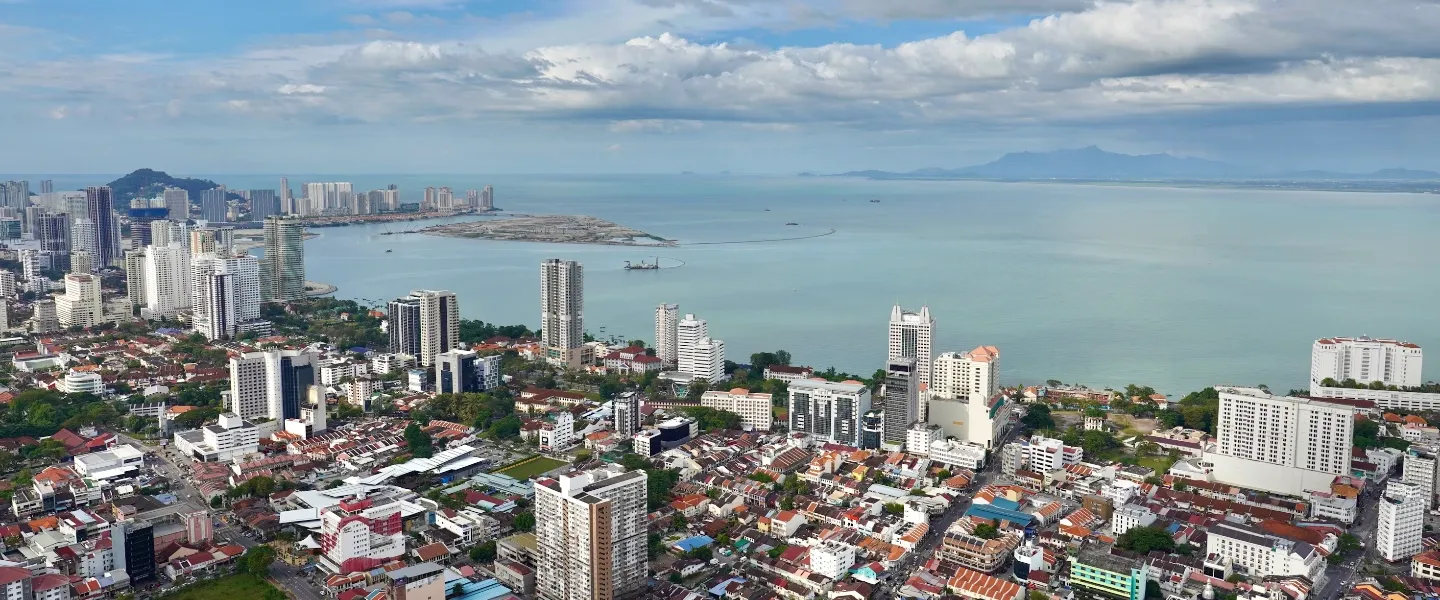
Penang is a small island that has been a trading port for centuries, and George Town, its old core, still looks the part. A street of two-story Chinese shophouses runs up against a Tamil Hindu temple and the Kapitan Keling mosque. A few blocks on, wooden clan jetties still stand where Hokkien families built their homes out over the water, with Little India and the colonial waterfront close by. It is one of the most layered places in the country, and most of it is walkable, if you can take the heat.
The food is why people fly in, and Penangites will argue that theirs is the best in Malaysia. Assam laksa, a sour mackerel noodle soup, is the local signature. Char kuey teow off a hard wok, hokkien mee thick with prawn stock, and cendol to cool down after are all done to a standard that starts arguments. The famous stalls, Air Itam laksa, Lorong Selamat char kuey teow, the New Lane and Gurney Drive hawker centers, each have their loyalists. Eat at the ones with the longest lines.
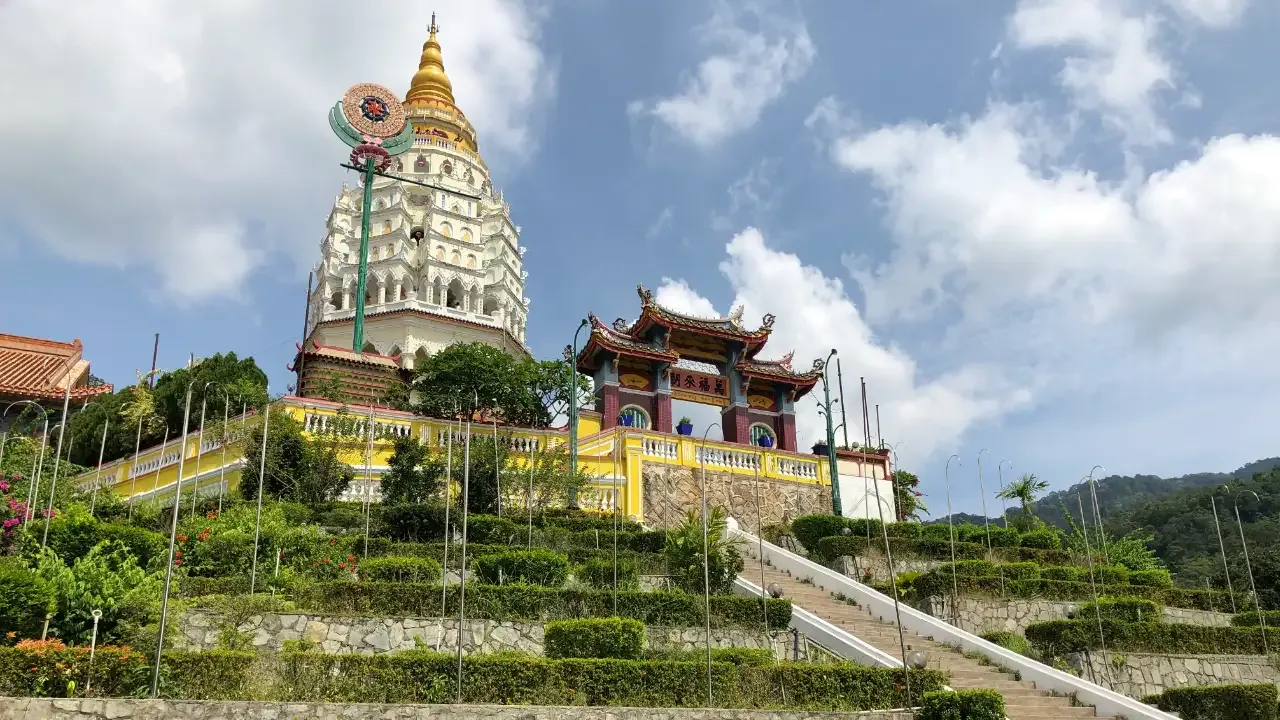
There is more to the island than the old town, though not as much as the brochures suggest. Penang Hill rises behind George Town, reached by a steep funicular, and the Kek Lok Si temple sprawls up a hillside at Air Itam. Penang National Park has quiet beaches you walk or boat to. The beaches at Batu Ferringhi, the main resort strip, are tired and murky, and not the reason to come. The mainland half of the state, around Butterworth and Bayan Lepas, is industry and suburbs.
Penang gets crowded and it can wear you down. George Town's core is jammed with tour groups, there is no urban rail, and the traffic and heat make midday walking a slog. The beaches disappoint anyone expecting an island holiday. What it does better than almost anywhere is eat, in a compact, old, genuinely multicultural setting. Come for the food and the heritage streets, give it a few days, and don't build the trip around sand.
George Town
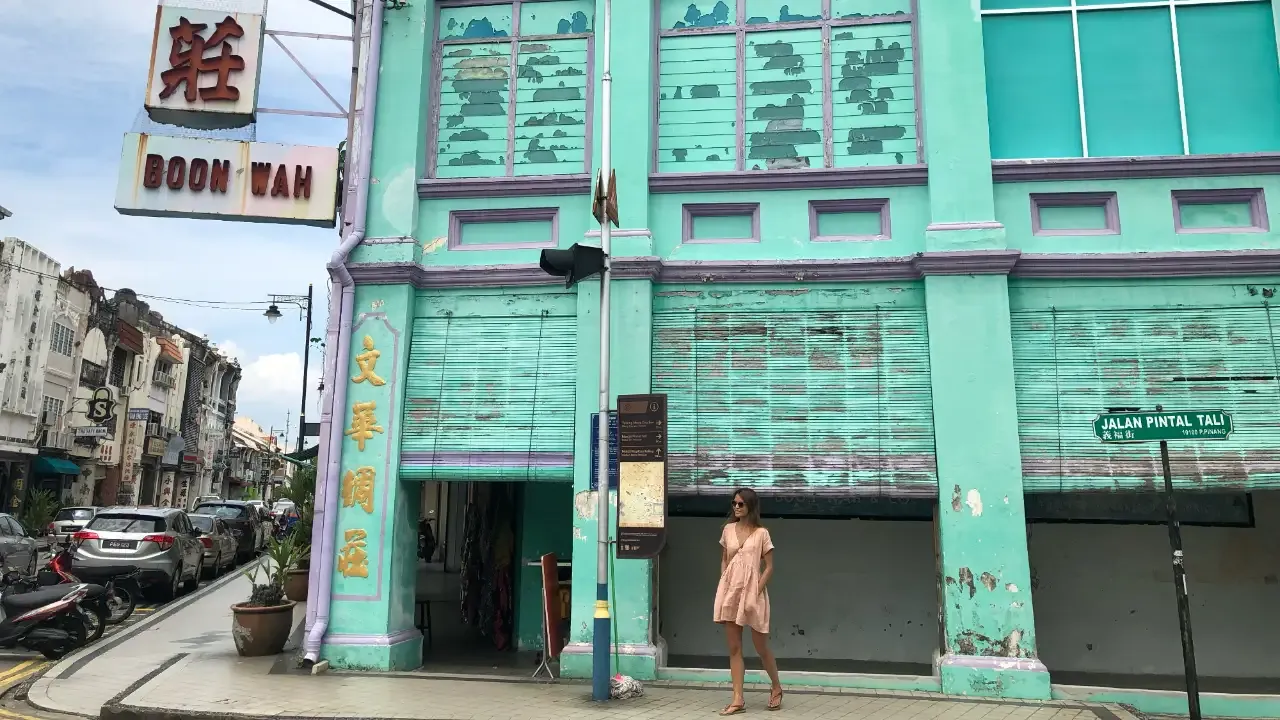
George Town earned its UNESCO listing not for a single monument but for the whole streetscape: one of the largest surviving sets of pre-war shophouses in Southeast Asia, still lived and worked in rather than frozen for tourists. It shares that listing with Malacca down the coast, the two named together as the historic cities of the Straits. The listing runs from Light Street down through the clan-association houses and the five-foot walkways that shade the sidewalks. Walk it slowly and you see a working port town, coffee shops and hardware stores and temples, not a museum.
The clan jetties are the piece that surprises people. Hokkien families from the same clan built wooden villages on stilts out into the harbor, each jetty its own community, and several still stand as homes. Chew Jetty is the busiest and most visited; the quieter ones nearby give a better sense of how people actually live over the water. Nearby, the clan-association houses like Khoo Kongsi are worth stepping into for the carving and the history of how migrant communities organized themselves.
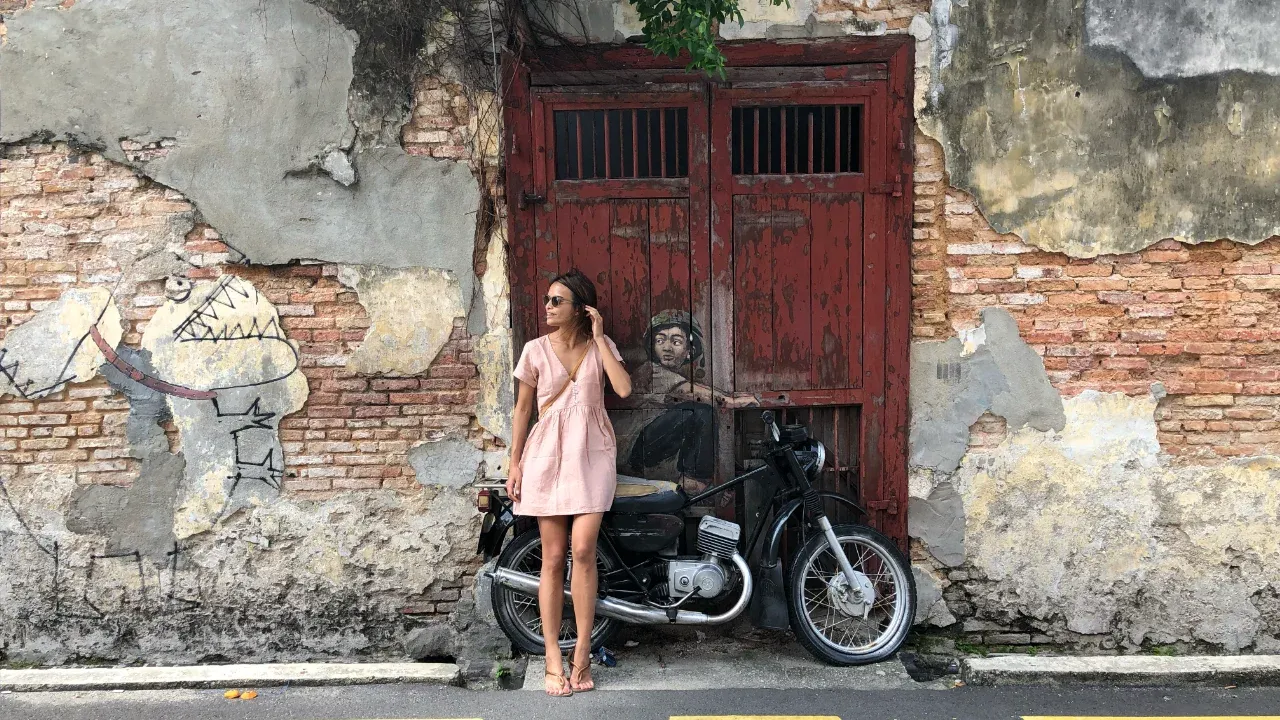
The street art is the thing everyone photographs, and it is better than a photo op suggests. The Lithuanian artist Ernest Zacharevic painted a set of murals, children on a bicycle, a boy on a motorbike, that started the craze, and older wrought-iron caricatures around town tell local stories in a sentence each. Chase them if you like, but the real reward is getting lost between them. One rule to remember: the whole heritage zone is non-smoking, and the fine is real.
Where to Stay in Penang
- Beach resorts, family fun
Batu Ferringhi
Located on the northern coast, Batu Ferringhi is Penang's primary beach resort area, known for its sandy shores and various water sports. Large hotels and resorts line the main road, Jalan Batu Ferringhi, and the area comes alive at night with a popular night market offering souvenirs and street food. The atmosphere is relaxed during the day, shifting to lively in the evening.
Good for: Families and those seeking a resort-style beach holiday with activities
Skip if: You want quiet, clean beaches for swimming due to occasional jellyfish and water quality concerns
- Residential, quieter beach
Tanjung Bungah
Situated between George Town and Batu Ferringhi, Tanjung Bungah was once a fishing village and now offers a quieter, more local experience compared to its busier neighbors. It has a public beach that is generally cleaner and less crowded, ideal for peaceful relaxation. You will find a mix of local eateries and some hotels here, with public transport options available.
Good for: Travelers seeking a peaceful beach experience with local charm, away from major tourist crowds
Skip if: You want extensive nightlife or a wide range of tourist attractions within immediate walking distance
- Local life, temples, food
Pulau Tikus
Pulau Tikus is a residential neighborhood adjacent to Gurney Drive, offering a glimpse into local Penang life. It is known for its traditional market, diverse hawker food, and several prominent temples, including the Dhammikarama Burmese Temple and Wat Chaiyamangkalaram. The area feels less tourist-centric than George Town's core, with a mix of shophouses and modern conveniences. You can find excellent street food like Apom Manis here.
Good for: Visitors interested in local markets, authentic street food, and cultural exploration beyond the main tourist trails
Skip if: You prioritize beach access or a high concentration of nightlife venues
- Upscale dining, seafront promenade
Gurney Drive
Gurney Drive is a popular seafront promenade north of George Town, blending modern sophistication with local culture. It features upscale shopping malls like Gurney Plaza and Gurney Paragon, alongside a famous hawker center that becomes a busy hawker scene at night. The recently opened Gurney Bay offers a modern waterfront park for strolls and views.
Good for: Food lovers, shoppers, and those who enjoy lively evening promenades with sea views
Skip if: You dislike crowds or prefer a more traditional, less developed atmosphere
- Heritage, street food, art
George Town
This UNESCO World Heritage site is the historical and cultural heart of Penang, with colonial-era buildings, street art, and a dense concentration of hawker stalls and cafes. It is walkable and busy, particularly in the evenings around Chulia Street and Love Lane, which are popular for nightlife. Expect narrow streets and a mix of old-world charm with modern businesses.
Good for: Culture enthusiasts and foodies who want to explore on foot
Skip if: You prefer quiet, open spaces or modern amenities
Frequently Asked Questions
Planning & moving around
-
How many days do you need to see Penang?
Plan for at least 3 to 5 days to experience George Town's heritage, enjoy the food scene, and explore some of the island's attractions like Penang Hill or Entopia. A longer stay allows for a day trip or more relaxed exploration.
-
Which neighborhood is best for tourists in Penang?
George Town is the top choice for most visitors. It is a UNESCO World Heritage site with street art, historic shophouses, and a central location for exploring the island. For beach lovers, Batu Ferringhi offers resorts and a night market.
-
What are good day trips from Penang?
Consider a trip to Penang National Park for hiking and beaches, or head up Penang Hill for cooler weather and panoramic views. The Kek Lok Si Temple is also a popular half-day excursion, often combined with Penang Hill since they are close. For a bigger day out, the ETS train runs down to Ipoh in about two hours, for its food and cave temples.
-
What apps should I use for getting around Penang?
Grab is the dominant ride-hailing app in Penang and is widely used for taxis. For public transport, Rapid Penang buses cover most of the island, but there isn't a single comprehensive app for real-time tracking across all routes.
-
Do you need a license to rent a scooter in Penang?
Yes, you legally need both your national motorcycle license (Category A) and a 1949 International Driving Permit (IDP) to rent and ride a scooter in Malaysia. Some rental shops may not check thoroughly, but you risk fines and invalid insurance if stopped by police without the correct documents.
Safety & medical
-
Is it safe to walk around Penang at night?
Penang is generally safe at night, especially in well-lit tourist areas like George Town's heritage streets. Petty theft like snatch-and-grab incidents can occur, so always be aware of your belongings. For late nights, Grab is a safe option for getting back to your accommodation.
-
What are common illnesses for tourists in Penang?
Sunburn and sunstroke are common due to the high UV index. Stay hydrated and use SPF 50 sunscreen. Food poisoning from street food is rare but can happen; choose stalls with high turnover.
-
Do I need travel insurance for Penang?
Yes, travel insurance is always recommended for any international trip. It covers medical emergencies, trip cancellations, and theft, providing peace of mind. Ensure your policy covers scooter accidents if you plan to ride one.
Laws & local norms
-
What are the drug laws in Penang?
Malaysia has extremely strict drug laws. Possession of even small amounts of cannabis can lead to imprisonment and whipping, while trafficking carries severe penalties, including the death penalty. Drug screening can occur on arrival.
-
Can you vape in Penang?
Vaping is heavily regulated and getting stricter. Act 852 bans it in a long list of public places, with fines up to RM5,000, and a 2026 court ruling has left the legal status of nicotine vape sales unsettled while the government appeals. Note that the entire George Town heritage zone is non-smoking, vaping included.
Money & costs
-
Are there common scams in Penang to watch out for?
Be aware of overpriced trishaw rides, where a quoted price might be per person instead of total. Also, be cautious of fake food tours and SIM card swap scams at unofficial booths. Always agree on the total fare for trishaws beforehand.
-
Should I use cash or card in Penang?
While Penang is becoming increasingly cashless, cash is still the primary payment method in many smaller shops, hawker stalls, and wet markets. It's best to carry a mix of both cash (Malaysian Ringgit) and cards. ATMs are widely available.
-
Do you tip in Penang?
Tipping is not traditional in Malaysian culture and is not expected, as service charges are often included in bills. However, leaving a small tip (5-10%) for good service is appreciated.
Culture & etiquette
-
What is the dress code for temples in Penang?
When visiting temples or mosques, dress modestly by covering your shoulders and knees. Some places of worship may require women to cover their heads. Always remove your shoes before entering prayer areas.
-
Is street photography allowed in Penang?
Personal photography is generally permitted in public spaces. However, always ask for permission before taking close-up photos of individuals, especially in religious sites or residential areas like the Clan Jetties. Be mindful of people praying in temples.
Food & drink
-
Where do locals eat in Penang?
For authentic local food, head to hawker centers like Chulia Street Night Hawker Stalls, Gurney Drive Hawker Centre, or Macallum Street Night Market. These spots offer a wide array of dishes at local prices.
-
What Penang dishes should I try?
You must try Assam Laksa, a spicy and sour fish noodle soup, and Char Kway Teow, stir-fried flat rice noodles. Other popular dishes include Hokkien Mee (prawn noodles) and Popiah (fresh spring rolls).
-
Is Penang good for vegetarians?
Penang has good options for vegetarians, particularly in George Town, with its diverse culinary scene. Many Indian and Chinese eateries offer vegetarian dishes, and you can find specific vegetarian restaurants. Always confirm ingredients, as some dishes may contain hidden animal products.
Families & kids
-
Where can I find pediatric care in Penang?
Penang has good hospital access, with private hospitals near Gurney Drive meeting international standards. Pharmacies in major shopping malls carry standard children's medications like Calpol and antihistamines.
-
Is Penang good for families with kids?
Penang is a family-friendly destination with attractions like Entopia (butterfly farm), ESCAPE theme park, and Penang Hill. The island offers a mix of outdoor activities and cultural experiences that engage children.
-
Is Penang stroller friendly?
George Town's heritage zone has uneven and sometimes broken sidewalks, making a full travel pram challenging. A compact umbrella stroller is more practical, or consider leaving the stroller for shorter walks if your child can manage.
After dark
-
What is the nightlife like in Penang?
Penang's nightlife offers a mix of options. George Town has rooftop bars, cocktail lounges, and live music venues, particularly around Upper Penang Road and Chulia Street. Batu Ferringhi has a popular night market and beach bars.