
Malacca Right Now
Air quality is unhealthy in Malacca City, with an API reading of 102. Haze conditions are affecting multiple states across Malaysia.
Dr. Jason Leong: In Laughing Memory · Melaka, Malaysia
Malacca Governor's Birthday
Straits of Malacca Paintball League (SMPL) - Grand Finale · Padang Rugby, Stadium Tun Fatimah
Interest in travel to Malacca fell 6% from a year ago, suggesting demand is cooling off.
Best time to visit Malacca
Not the best time to visitInter-monsoon rains
October is among the wettest months, with near-daily thunderstorms and occasional street flooding in the low-lying core; keep plans flexible.
Score by month
Malacca is driest and easiest to walk during the northeast-monsoon window, roughly January and February, and again in the June-to-July dry spell. The wettest stretches are the inter-monsoons around April to May and October to November, when afternoon thunderstorms are frequent. Crowds matter more than weather here: it's a weekend break for Kuala Lumpur and Singapore, so come midweek for thinner streets in any season.
Day-to-day in Malacca
Walkability
45/100
Walking in Malacca's historic center means dodging scooters that commandeer the sidewalks and navigating around food stalls. While essential amenities are close, the constant threat of traffic makes it a tense experience.
Sidewalks are often narrow, discontinuous, and frequently obstructed by parked scooters and street vendors.
Most tourist essentials like food and shops are clustered within a 15-minute walk in the historic core.
Motorbikes frequently use sidewalks, and drivers show little regard for pedestrians at crossings.
Climate works against walking for much of the year. Plan around weather windows.
-
Monthly cost
$676 / month
VERY AFFORDABLESolo mid-range stay including rent, daily eating out, groceries, and routine costs.
-
Street food
Jonker Walk Night Market is a must-visit for street food on weekends. Find a huge array of local dishes like Nyonya Laksa and Satay Celup.
-
Coworking
$77 / month
VERY AFFORDABLEThe coworking scene is growing, with several options in Melaka City, Ayer Keroh, and Jonker Street. Utopia Workspaces is a large, premium option. Regus also has locations here.
-
Local gym
$49 / month
AFFORDABLEGyms are around average price. Expect mostly old-school, local gyms like Boon Leong Gym, especially near Jonker Street. Anytime Fitness has a 24-hour location in Kota Laksamana.
Need to Know
- Currency
- Malaysian Ringgit (MYR)
- Language
- Malay is the official language, but English is widely spoken in tourist areas and for business.
- Tap water
- Not safe
- Time zone
- GMT+8 (MYT)
- Power plug
- Type G, 240V
- Dialing code
- +60
- Driving side
- Left
- Tipping
- Tipping is not customary, but a small gratuity for exceptional service in hotels or for tour guides is appreciated.
- Internet
- 4G is reliable in the historic center, with 5G in parts of central Malacca.
- Emergency
- 999 (all services), 112 (mobile only)
When not to go
-
Avoid the weekend crush
Fri – Sun · domestic-tourist peakMalacca is the go-to weekend break for Kuala Lumpur and Singapore, so from Friday afternoon the historic core fills up and Jonker Street turns shoulder-to-shoulder after dark. Hotel rates jump, parking near the Stadthuys is a lost cause, and the river-cruise lines stretch long. The catch is that the Jonker night market only runs Friday to Sunday, so dodging the crowds also means missing it. If you can, come midweek for the same streets at half the density, and accept that a few Chinatown cafes take Monday or Tuesday off.
-
Skip the wettest months if you're walking all day
Oct – Nov · inter-monsoon rainMalacca sits on the sheltered west coast, so it dodges the heavy northeast-monsoon rain that soaks the other side of the peninsula from November. Its own wettest stretch is the inter-monsoon around October and November, when afternoon thunderstorms roll in most days and the low-lying old town streets flood briefly in the worst of it. A second wet peak lands around April and May. The rain usually comes in short heavy bursts rather than all day, but it can wash out an evening at the night market. The driest, most reliable months are January and February and the June-to-July stretch.
Upcoming Events & Holidays in Malacca
Upcoming events, next 30 days
Public holidays & observances, next 12 months
Dates are researched and checked, but events move. Always confirm with the official source before you book anything around them.
Getting To Malacca
-
Kuala Lumpur International Airport (KUL)
Malaysia's main international airport, 120 km north of Malacca.
Buses are the most economical and convenient option from KLIA to Malacca. Transnasional and StarMart Express offer direct services from KLIA and KLIA2 to Melaka Sentral. The journey takes about 2.5 to 3 hours. Taxis are also available, taking around 1.5 to 2 hours, but they are significantly more expensive.
-
Singapore Changi Airport (SIN)
Major international hub, 220-250 km south of Malacca.
Direct buses run from various points in Singapore, including Changi Airport, to Malacca. The bus journey typically takes 3 to 4 hours, depending on traffic and immigration clearance. Private car services offer a door-to-door transfer, which is faster but more expensive. Flying directly to Malacca International Airport (MKZ) from Changi is also an option, with a flight time of under an hour.
-
Malacca International Airport (MKZ)
Small regional airport, 13 km from Malacca city center.
Malacca International Airport (MKZ) has limited international flights, primarily connecting to Singapore (SIN) and Pekanbaru (PKU) in Indonesia. Scoot operates direct flights to Singapore. From the airport, a taxi ride to the city center takes about 25 minutes.
Direct flights to Malacca
Serves 1 direct destination, all international, about 1 flight a day.
International 1- Singapore SIN Singapore
 Scoot 4/week
Nonstop routes only. Flights per day are an average, each way. Data: AeroDataBox, updated August 2026.
Visa rules apply at the country level. See the full Malaysia visa guide, with every visa and its official do-it-yourself cost. -
Safety Advice
Traffic is the main risk: scooters run up onto the narrow sidewalks and drivers give pedestrians little room at crossings. Petty theft turns up in the weekend crowds around Jonker Street, so keep bags zipped. Scams are minor, mostly inflated trishaw and taxi fares you can head off by agreeing a price first. There are no serious natural hazards beyond heat and the odd flash flood in heavy rain.
Common Scams in Malacca
-
Trishaw Overcharging
MEDIUM RISKTrigger:A trishaw driver demands a higher price than initially agreed or refuses to state a clear price upfront.
Trishaw riders, particularly around Dutch Square, often quote inflated prices or demand more than the agreed-upon fare at the end of a ride. The official fares set by the Melaka Historic City Council range from RM25 to RM50 depending on the route.
How to avoid: Confirm the exact price and route before getting in. Scan the QR code displayed on the trishaw to report issues to the MBMB.
-
Taxi Refusal to Use Meter
MEDIUM RISKTrigger:A taxi driver quotes a flat price instead of turning on the meter, or claims the meter is 'broken'.
Taxi drivers, especially near tourist hotspots like Jonker Street, frequently refuse to use the meter and insist on a flat, inflated rate. They may claim the meter is broken or that it's a holiday.
How to avoid: Use ride-hailing apps like Grab for transparent pricing and routes. If taking a street taxi, insist on the meter or find another cab.
-
ATM Skimming and Card Traps
MEDIUM RISKTrigger:An ATM appears modified, or a stranger offers unsolicited help while you are using the machine.
Criminals sometimes tamper with ATMs to install card-skimming devices or use 'Lebanese loops' to trap cards, then offer 'help' to steal your PIN. These scams are less common in Malacca specifically but occur nationwide.
How to avoid: Use ATMs located inside reputable banks or secure, well-lit areas with security cameras. Check the card reader for any loose parts before inserting your card.
-
Overpriced Food at Eateries
LOW RISKTrigger:A food stall or restaurant does not display prices for items, or the vendor is vague about costs.
Some local eateries, particularly those without clearly displayed menus or prices, overcharge tourists. You might only discover the inflated cost when the bill arrives.
How to avoid: Always ask for the price of each item before ordering, especially at street stalls and smaller, informal restaurants.
Mistakes to Avoid
-
Drinking Tap Water
SERIOUS CONSEQUENCETap water in Malacca, like most of Malaysia, is not safe for direct consumption. Drinking it can lead to stomach issues and illness.
Fix: Stick to bottled water, or boil tap water for at least one minute before drinking. Avoid ice in drinks from street vendors.
-
Underestimating Street Food Hygiene
SERIOUS CONSEQUENCEWhile Malaysian street food is delicious, hygiene standards vary widely. Food poisoning cases from out-of-home sources, including street stalls, are a concern nationwide.
Fix: Choose busy stalls with high turnover, watch food being cooked fresh, and ensure utensils appear clean.
-
Drinking Alcohol Underage or in Public
SERIOUS CONSEQUENCEThe legal drinking age in Malaysia is 21 for non-Muslims, and enforcement is strict. Public intoxication or drinking in inappropriate public spaces is frowned upon and can lead to social censure or legal issues. Muslims are prohibited from consuming alcohol under Sharia law.
Fix: Always carry ID to prove you are 21 or older if you plan to buy or consume alcohol. Drink discreetly in licensed venues.
-
Ignoring Dress Codes at Religious Sites
Malaysia is a Muslim-majority country, and modesty is expected, especially when visiting mosques, temples, or even some local villages. Failing to cover shoulders and knees can be seen as disrespectful.
Fix: Carry a scarf or sarong to cover up when entering religious sites. Opt for loose-fitting clothing that covers your shoulders and knees.
Money & Payments
Carry Malaysian Ringgit cash for street food and smaller shops, but rely on Visa or Mastercard for most other purchases, especially in malls and hotels.
-
Cash for hawkers and markets
Malaysian Ringgit (MYR) is essential for hawker stalls, wet markets, roadside vendors, and smaller, family-run establishments. Notes come in denominations of RM1, RM5, RM10, RM20, RM50, and RM100. Coins are 5, 10, 20, and 50 sen.
-
Cards Accepted, Surcharges Prohibited
Visa and Mastercard are widely accepted in larger stores, malls, restaurants, and hotels. American Express and Diners Club are less common. While merchants are legally not allowed to impose surcharges for card payments, some smaller places might try, so confirm before paying.
-
Reliable ATMs, No Local Fees
ATMs are plentiful in urban areas and major tourist spots. Maybank has the largest network and is easily recognizable by its yellow and black branding. Most Malaysian banks, including Maybank, Public Bank, CIMB, Hong Leong, and RHB, do not charge a direct fee for foreign card withdrawals.
-
ATM Withdrawal Limits
Typical ATM withdrawal limits range from RM1,500 to RM3,000 per transaction, though some banks like Maybank may allow up to RM4,000. Most ATMs dispense RM10 and RM50 notes. Your home bank may impose its own daily limits.
-
Always Pay in Local Currency
When using your card at an ATM or for a purchase, always choose to be charged in Malaysian Ringgit (MYR), not your home currency. Opting for your home currency triggers Dynamic Currency Conversion (DCC), which results in unfavorable exchange rates and extra fees.
-
Mobile Payments for Tourists
Malaysia's DuitNow QR is widely used, and tourists can scan DuitNow QR codes with apps like Alipay+ partner wallets and Weixin Pay. This allows payments at over 2.5 million merchants, including restaurants, hotels, and market stalls. Apple Pay and Google Pay are also accepted where contactless payments are available.
-
Tourism and Heritage Taxes
Foreign visitors pay a flat Tourism Tax (TTx) of RM10 per room per night at all registered accommodations. Additionally, Melaka imposes a Heritage Fee, which varies by hotel star rating, ranging from RM3 to RM5 per room per night.
-
International Transfers
To send money to a bank account in Malaysia, for things like rent or day-to-day expenses, services like Wise or Remitly usually offer better rates than traditional banks and faster delivery.
You'll typically need the recipient's full name, account number, and SWIFT/BIC code. Some banks may also require a local address.
Costs in Malacca
Malacca is cheap once you're there. Hawker meals run a few ringgit, the old town is walkable so you barely pay for transport, and midrange hotels are inexpensive on weekdays. A comfortable day sits around $60 to $90 including a decent room, though weekend and holiday rates climb sharply. Budget a little extra for the state heritage fee, a few ringgit per room per night on top of the national tourism tax.
Save money?
Sign up for our guide on how to save money on your next trip.
SIM Cards & Data
Best option for most travelers: an eSIM you set up before you arrive. You'll be online the moment you land, with no airport line and no tourist pricing.
Travel eSIMs Connect the second you land. Zero hassle. Skip the airport line and paperwork. Activate before you fly and land connected. Find the best eSIM →Prefer a local SIM?
You can easily buy a local physical SIM in Malacca at carrier shops in malls like Dataran Pahlawan and Mahkota Parade, or from convenience stores, but official shops are best for registration. You'll need your passport for mandatory registration, which takes about 5-10 minutes. While 4G coverage is solid in the historic core, expect speeds to drop in thick-walled shophouses and signal to thin out towards Klebang Beach or the outskirts.
What Malacca is Like
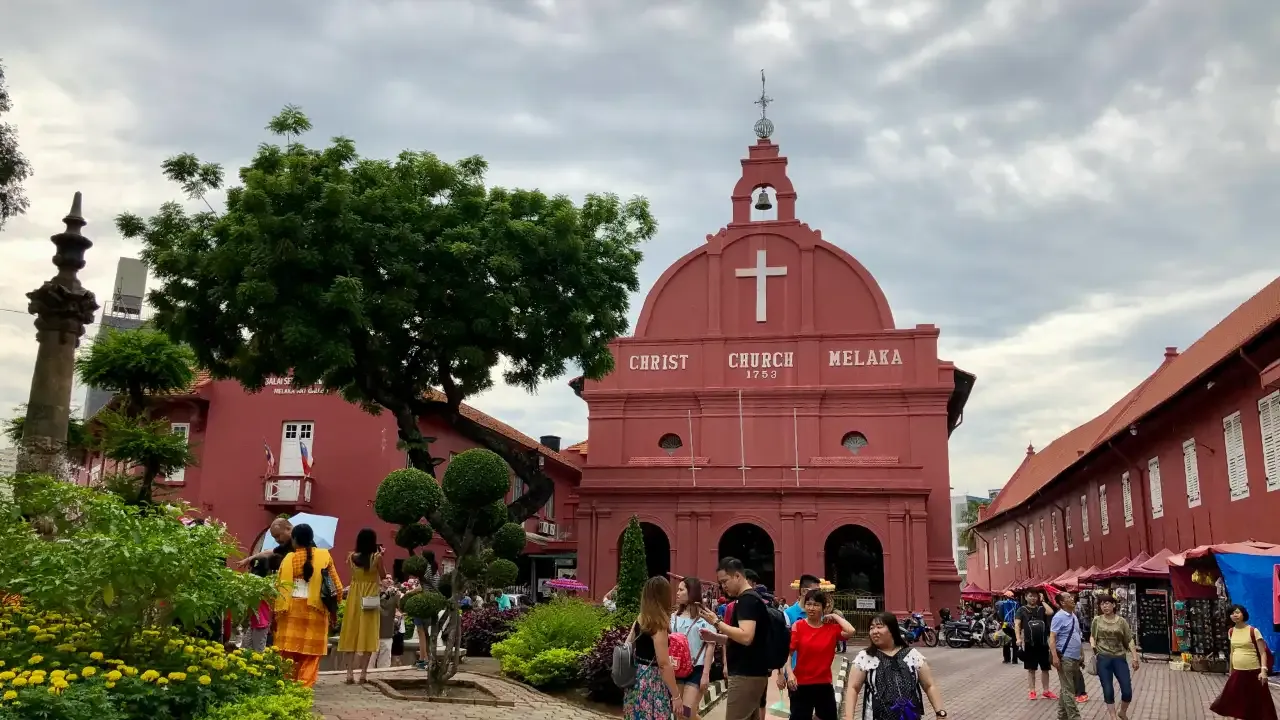
Malacca (Melaka) sits on the west-coast strait about two hours south of Kuala Lumpur by bus. The old center is small and made for walking: the red Dutch square with the Stadthuys and Christ Church, the short climb to the ruins of St Paul's, and Jonker Street running through the old Chinatown on the far side of the river. This was one of the great trading ports of the region, held in turn by the Sultanate, the Portuguese, the Dutch, and the British, and every ruler left something standing. That mongrel history is the whole reason to come.
The food is Peranakan, the cooking that came out of Chinese traders marrying local Malay women over centuries of trade. Nyonya laksa, chicken-rice balls rolled into ping-pong spheres, satay celup where you cook skewers in a communal peanut broth, and cendol shaved ice under palm sugar and coconut milk. Jonker Street and the lanes around it are where you eat, and the weekend night market turns the whole strip into a food crawl. Come hungry and graze, because the individual plates are cheap and you'll want to try a lot of them.
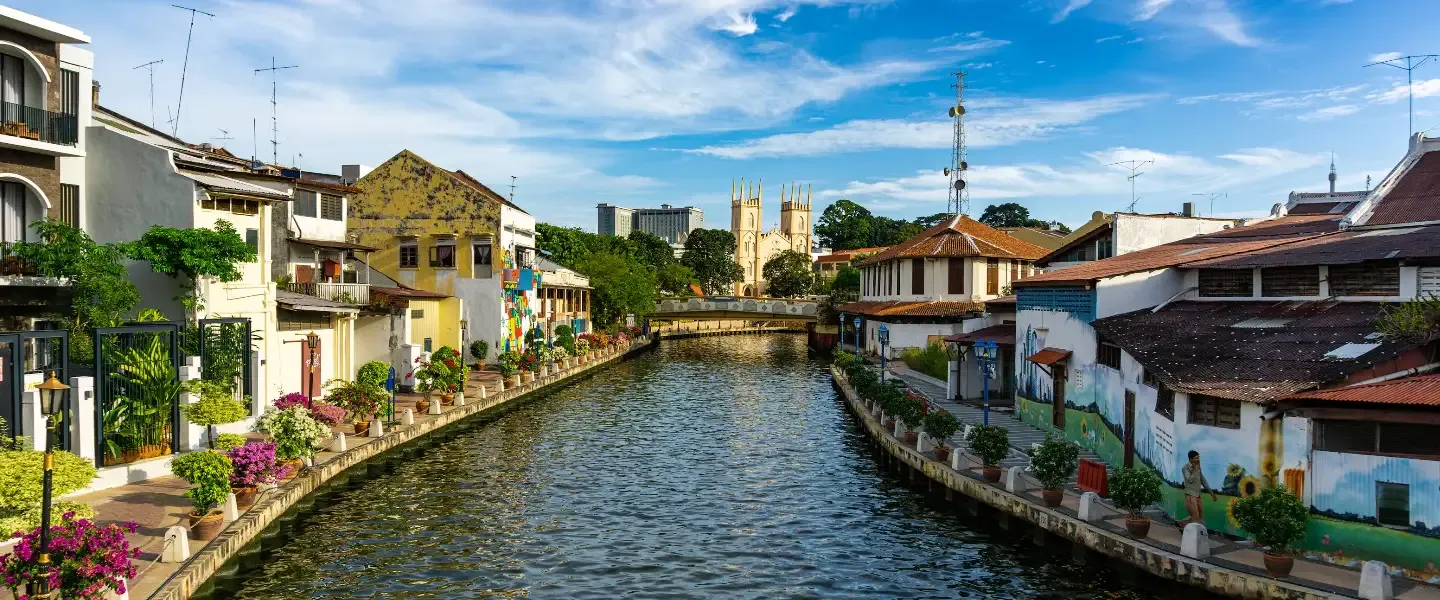
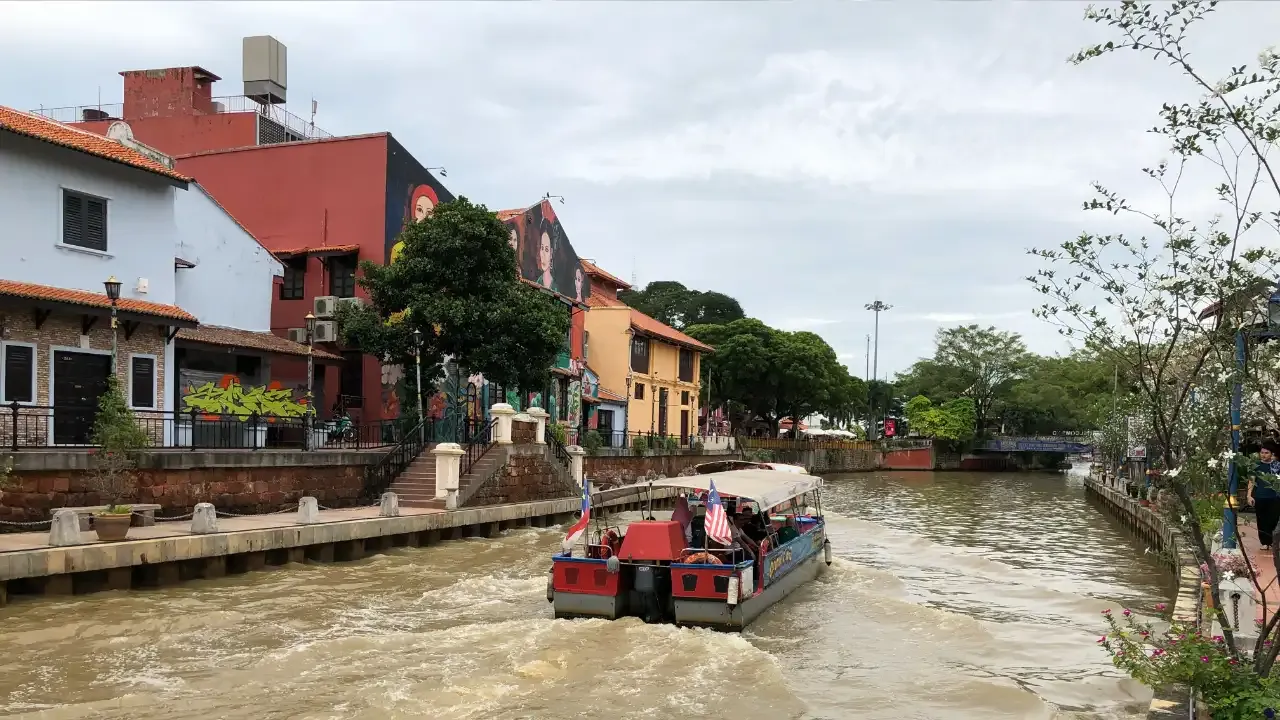
The Malacca River cuts through the middle, and a short cruise or a walk along the restored banks past the murals is worth doing once, best near sunset. Beyond the core the city is ordinary Malaysian sprawl, so most visitors stay two or three nights and keep to the historic quarter on foot. The trishaws piled with neon lights and cartoon speakers are pure kitsch, loud and a little ridiculous, and locals mostly leave them to tourists. Ride one if you want the photo, walk if you want the town.
Malacca is a weekend trip for Malaysians and Singaporeans, which means Saturday and Sunday are packed and the same streets go quiet by Tuesday. If you want an untouched old town or a beach, this isn't it: the coast here is reclaimed land and muddy water, and the heritage core can feel like a stage set on a busy weekend. It suits people who come for history and food and don't mind crowds. Come on a weekday if you can, and skip it entirely if you need quiet or open space.
Baba-Nyonya
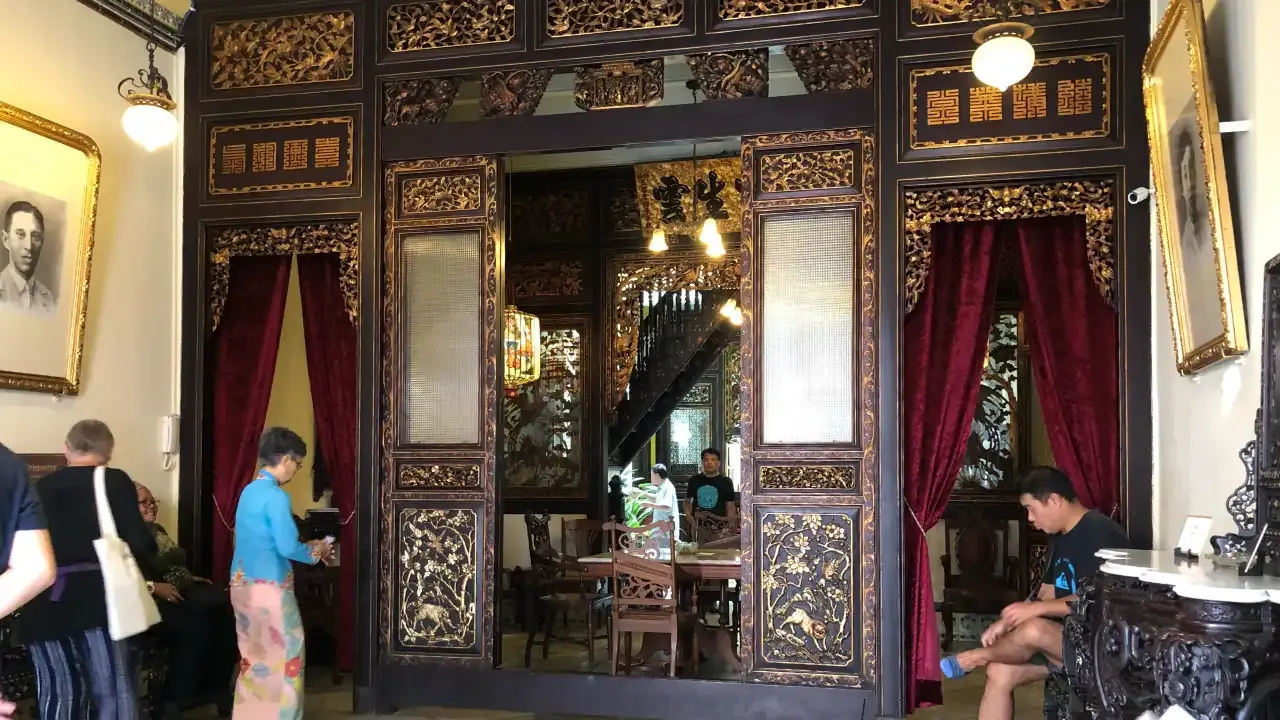
Malacca is the heartland of the Peranakans, also called the Baba-Nyonya: descendants of Chinese traders who settled here from the fifteenth century and married local women. Over generations they built their own culture, part Chinese and part Malay, with its own dress, language, and cooking. The men were Babas, the women Nyonyas. You see it clearest in the shophouses along Heeren Street (Jalan Tun Tan Cheng Lock), narrow at the front and running deep toward the river, with carved doors, ceramic tiles, and airwells that pull light into the middle of the house.
The cooking is the part most travelers meet first. Nyonya food takes Chinese technique and loads it with Malay aromatics: candlenut, galangal, lemongrass, tamarind, belacan shrimp paste. Dishes like ayam pongteh, kari kapitan, and the sour-hot Nyonya laksa taste like nowhere else, because they exist nowhere else. It's home cooking that got written down, and Malacca is where it's still made properly. The Nyonya restaurants around the old town do the classics, and a few will walk you through what you're eating.
To see how the families actually lived, the Baba & Nyonya Heritage Museum on Heeren Street is a restored ancestral home you can walk through, crammed with blackwood furniture, gold-threaded wedding clothes, and family photographs. It's touristy and a little worn, but it's the real house of a real merchant family rather than a reconstruction. Malacca shares its UNESCO listing with George Town in Penang, the two inscribed together as the Historic Cities of the Straits of Malacca, and the Peranakan thread runs through both. If the mix of cultures is what draws you here, this is the clearest window into it.
Where to Stay in Malacca
- Beach access, local food
Klebang
Further west from the city center, Klebang offers a coastal experience with a few beach resorts and local food stalls, particularly known for its coconut shakes. It is a quieter area, requiring transport to reach the main historical sights.
Good for: Beach lovers, budget travelers, those with a car
Skip if: You want to walk to major attractions
- Boutique hotels, local charm
Taman Kota Laksamana
Adjacent to Jonker Street, this neighborhood offers a quieter alternative with a range of boutique hotels and guesthouses. It is still very walkable to the main attractions, with a blend of cultural sites and local eateries.
Good for: Couples, those seeking character and convenience
Skip if: You need extensive nightlife options
- Historic core, nightlife
Jonker Street
This is Malacca's most popular area for visitors, centered around Jonker Street and the Malacca River. It is dense with restored Peranakan shophouses, antique shops, cafes, and temples. Expect crowds, especially during the weekend night market.
Good for: First-time visitors, culture seekers, foodies
Skip if: You want quiet nights or easy parking
- Historical landmarks, museums
Bandar Hilir
Located south of the Malacca River, this area contains many of Malacca's key historical sites, including the Stadthuys, Christ Church, and A Famosa fort. It is a busy district with a mix of hotels and shopping malls.
Good for: History buffs, sightseeing on foot
Skip if: You prefer a less tourist-centric atmosphere
- Budget stays, local transport hub
Peringgit
Located slightly inland, Peringgit is a more residential area with budget-friendly accommodation options. It is close to Melaka Sentral, the main bus terminal, making it convenient for onward travel.
Good for: Budget travelers, those needing easy access to bus terminal
Skip if: You want to be within walking distance of tourist sites
- Modern hotels, shopping
Melaka Raya
This area is south of the historical core and features more modern hotels, shopping centers, and commercial establishments. It offers contemporary amenities like pools and easier parking, though it lacks the heritage feel of the old town.
Good for: Families, business travelers, those prioritizing modern comforts
Skip if: You want to stay among the heritage architecture
- Residential, local living
Ujong Pasir
Primarily a residential area, Ujong Pasir has a more local feel with a mix of homestays and some larger hotels. It is further from the main tourist hub, offering a glimpse into everyday Malaccan life. St John's Fort and Portuguese Settlement are nearby.
Good for: Longer stays, budget-conscious travelers, quiet retreats
Skip if: You prefer being in the heart of the action
Frequently Asked Questions
Planning & moving around
-
How many days should I spend in Malacca?
Three days is the sweet spot for most travelers to absorb the city without feeling rushed or bored. While a day trip is doable, staying overnight lets you experience the city's charm as the crowds thin and the night markets come alive.
-
What's the best neighborhood to stay in Malacca?
Stay in the city center, ideally near Jonker Street or the Taming Sari Tower. This area is packed with cafes, attractions, and within walking distance of shopping centers with good food courts. You might pay a bit more for hotels here, but you save on Grab rides and travel time.
-
Can I do a day trip to Malacca from Kuala Lumpur?
Yes, a day trip from Kuala Lumpur is absolutely doable. The bus journey takes about 2 to 3 hours, with frequent services between cities. You can hit major landmarks like Dutch Square, St. Paul's Hill, and Jonker Street, but you will miss the evening atmosphere.
-
What's the best way to get around Malacca?
Walking is genuinely the best way to experience Malacca's compact city center. Trishaws offer a fun, atmospheric ride for specific longer distances. Grab, Southeast Asia's equivalent of Uber, is also cheap and widely available if you need transport between neighborhoods.
-
Are there any useful apps for getting around Malacca?
Grab is the essential app for ride-hailing, functioning much like Uber. For navigation, Google Maps works well for walking directions. You will find that English is widely spoken, so language barrier apps are less critical.
-
Do you need a license to rent a scooter in Malacca?
Scooter rentals are an option for getting around, though many visitors find Malacca walkable enough without one. While specific licensing requirements for tourists can vary, it's always best to have a valid international driving permit that covers motorcycles.
Safety & medical
-
Is Malacca safe at night?
Malacca is generally safe at night, especially in the main tourist areas like Jonker Street and the riverfront. The energy is friendly and relaxed, not frantic. Most bars and markets wind down by midnight or 1 AM, so it is not a late-night party city.
-
What are common illnesses for tourists in Malacca?
The main concern is heat-related illness due to the tropical climate and high humidity. Stay hydrated, schedule air-conditioned breaks, and wear light clothing. Food poisoning is rare but possible; stick to busy stalls with high turnover.
-
Do I need travel insurance for Malacca?
Yes, travel and medical insurance is highly recommended. It covers unexpected travel mishaps like delayed flights or lost luggage, and more importantly, medical emergencies such as hospital stays or surgery.
Laws & local norms
-
What are the drug laws in Malacca?
Malaysia has extremely strict drug laws, including for Malacca. Penalties for drug offenses are severe and can include lengthy prison sentences, corporal punishment, and even the death penalty. Do not engage with drugs.
-
Are there vaping laws in Malacca?
Malaysia's Act 852 (in force since 2024) bans smoking and vaping in many public places, including restaurants, government premises, and public transport, with fines up to RM5,000. A May 2026 court ruling left the sale of nicotine vapes legally unsettled while the government appeals, so the rules are in flux. Wherever you vape, check for no-smoking signage and keep it out of enclosed public spaces.
-
What's the dress code for visiting religious sites in Malacca?
When visiting mosques or temples, dress modestly. This generally means covering your shoulders and knees. Some places of worship, like the Melaka Straits Mosque, provide appropriate attire for visitors.
Money & costs
-
Are there common tourist scams in Malacca?
Malacca is generally safe, but like any tourist destination, be aware of common scams. This can include inflated prices for trishaw rides or souvenirs. Always agree on a price beforehand, especially for unmetered services.
-
Is it better to use cash or card in Malacca?
Bring cash. While many places accept cards, cash is preferred for street food, market stalls, and smaller shops. Malaysian Ringgit (MYR) is the local currency. ATMs are widely available if you need to withdraw cash.
-
What is the tipping culture in Malacca?
Tipping is not generally expected in Malacca, as a service charge is often included in restaurant bills. However, rounding up a bill or leaving a small amount for exceptional service is always appreciated.
Culture & etiquette
-
What is the general dress code for tourists in Malacca?
Malacca is a hot country, so lightweight, breathable fabrics like cotton and linen are best. While locals are tolerant of how foreigners dress, it is wise to opt for comfortable clothing that does not attract excessive attention. Smart-casual works everywhere, and shorts and sandals are fine for most bars.
-
What's the etiquette for taking photos in Malacca?
Generally, it is fine to take photos of buildings and street scenes. When photographing people, especially locals, it is polite to ask for permission first. Be particularly respectful in religious sites and avoid flash photography during services.
Food & drink
-
Where do locals eat in Malacca?
For authentic local food, head to the hawker stalls around Jalan Taman Kota Laksamana, often called Glutton's Street. This area runs parallel to the heritage core and stays busy past midnight on weekends, offering lower prices and dishes locals grew up with.
-
What are some must-try dishes in Malacca?
You must try Chicken Rice Balls, Satay Celup, and Nyonya Laksa. For dessert, Cendol is a refreshing option. Jonker 88 is famous for its Assam Laksa, and Restoran Nonya Makko is a popular spot for Nyonya cuisine.
-
Are there vegetarian or vegan options in Malacca?
While not as prevalent as in some Western cities, vegetarian and vegan options are available, especially in Indian and some Chinese restaurants. Look for 'vegetarian' or 'vegan' signs, and do not hesitate to ask at hawker stalls if dishes can be prepared without meat or animal products.
Families & kids
-
Is Malacca good for families with kids?
Malacca is excellent for families. The city feels compact and offers a mix of historical sites, museums, and kid-friendly activities like the Melaka River Cruise and the Upside Down House. Locals are very welcoming to children.
-
Is Malacca stroller-friendly?
The old quarter of Malacca is mostly level and surprisingly stroller-friendly. While some sidewalks might disappear, locals are often happy to assist with strollers. The main challenge for toddlers is the heat, so plan for air-conditioned breaks.
After dark
-
What's the nightlife like in Malacca?
Malacca's nightlife is more relaxed than frantic. Jonker Street and its side lanes are the main hubs, especially on Friday and Saturday nights when the night market is on. You will find shophouse bars with open fronts, riverside venues, and a few spots with live acoustic music. Expect things to wind down by midnight or 1 AM on weekdays, and 2 AM on weekends.
-
Where are the best nightlife areas in Malacca?
Jonker Street and its surrounding lanes are the heart of Malacca's nightlife, especially on weekend nights. The riverside stretch from Dutch Square to Kampung Morten also has a mellow bar and cafe row with good views. For a more local feel, consider the Portuguese Settlement.
-
What changes in Malacca after dark?
After dark, Malacca transforms. Colonial shophouses glow with amber light, the river reflects neon signs, and the scent of durian and incense fills the air. Jonker Street becomes a lively pedestrian night market on weekends. The city relaxes, becoming more charming and atmospheric.