
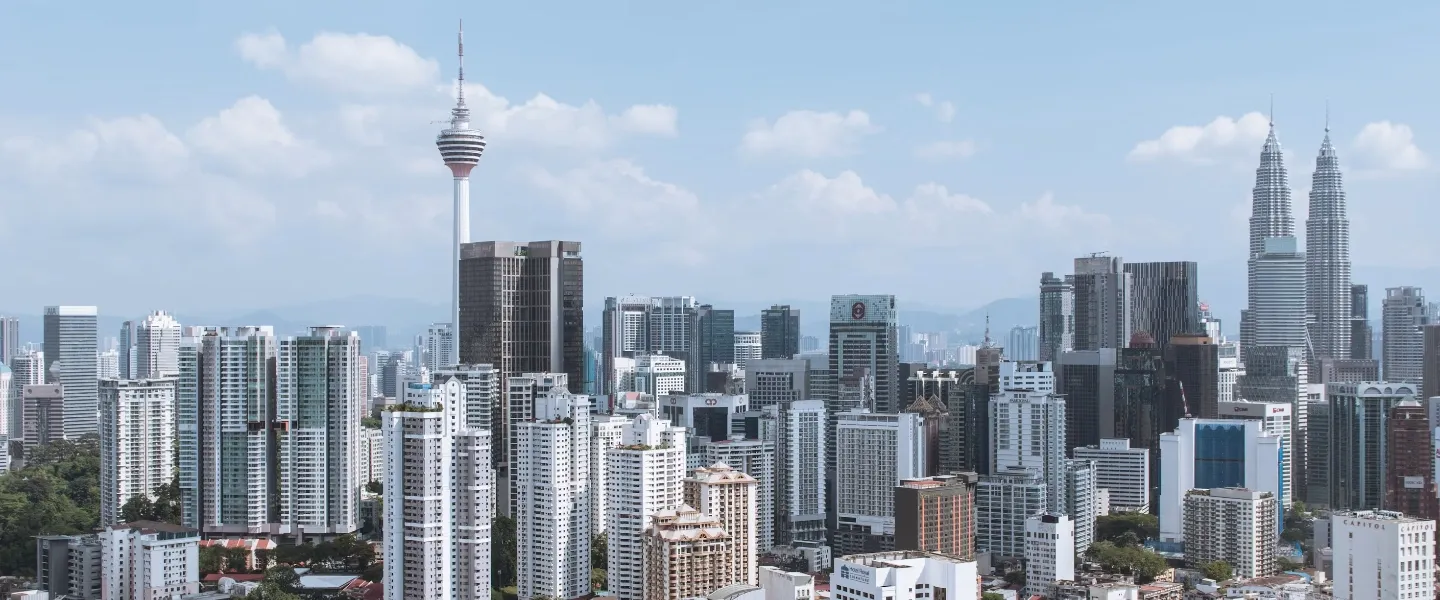
January
59/100- Temperature
- 31 / 24°C (88 / 74°F)
- Rain days
- 11
- Crowds
- Busy
One of the drier months, at about 11 rainy days. Chinese New Year usually falls in late January or February, and the city both empties and gets more expensive around it.
Kuala Lumpur rains all year, so the month matters less here than in most places. Here is what actually changes.
The best time to visit Kuala Lumpur is June and July, followed by January and February. These four months get the least rain. The honest answer, though, is that the difference between the best and worst months is small.
Kuala Lumpur has no dry season. The driest months still get rain on 11 or 12 days, and the wettest get 17 or 18. Highs are 31 to 33°C every month of the year.
The rain is easier than those numbers make it look. It often comes as a heavy thunderstorm in the late afternoon or evening and lasts an hour or two. Mornings are usually drier.
October and November are the wettest months, and heavy storms can cause flash flooding. If you can pick, avoid those two.
Off-season
Hot and mostly dry, but this is when haze can settle over the Klang Valley and gray out the skyline. Check the air quality if you booked rooftop time.
SCORE BY MONTH
The temperature barely changes. Rain, air quality and school holidays are what do.
One of the drier months, at about 11 rainy days. Chinese New Year usually falls in late January or February, and the city both empties and gets more expensive around it.
Dry by Kuala Lumpur standards, at 12 rainy days, and one of the hotter months at 33°C.
Rainier again, at 14 days, and the month with the worst air quality of the year. Hot and sticky.
One of the wetter months, at 16 rainy days, during the first inter-monsoon period. Afternoon storms are close to daily.
Wet and humid, at 13 rainy days.
One of the two driest months, at 11 rainy days, and one of the more comfortable ones. School holidays in Malaysia and Singapore make it busier than the weather alone would.
The other driest month, at 12 rainy days. Air quality is among the worst of the year, and regional haze is possible.
Rainier, at 14 days, with haze still possible.
Wetter again, at 16 rainy days, and haze is still possible. Rates are low.
One of the two wettest months, at 17 rainy days, with the inter-monsoon rains at full strength. Flash flooding is a risk in heavy storms.
The wettest month of the year, at 18 rainy days, and the one to avoid if you have a choice. Air quality is usually better.
Still wet, at 15 days, and the busiest month of the year. Christmas, New Year and the school holidays push rates up.
Kuala Lumpur is three degrees north of the equator, so there is no cool season and no dry season. Highs are 31 to 33°C every month, lows are around 24°C, and humidity sits between 74 and 86%.
Rain is the only real variable, and it moves within a narrow band: January and June get 11 rainy days, November gets 18.
Choose your dates on flight prices and public holidays rather than on the forecast.
There is no single rainy season, but there are two wetter periods. April and May catch the first inter-monsoon rains, and October to December catch the second, which is heavier. November is the wettest month of the year.
Rain usually comes as a heavy afternoon or evening thunderstorm. It can overwhelm the drains, then it stops. Mornings are usually clear, so plan the outdoor part of the day early.
Flash flooding is the exception worth knowing about. From October to December, heavy storms can put water on the roads fast and bring traffic to a standstill. It clears within a few hours.
Kuala Lumpur is easy to handle on a wet afternoon. The malls, museums, train network and covered walkways give you plenty of places to wait out a storm.
Haze is smoke from fires elsewhere in the region, mostly between June and September. It is not an every-year event, and the difference between a clear year and a bad one is large.
March and July have the worst air-quality readings in our data, and November and December the cleanest. Haze is what turns an average month into a bad one.
In a bad haze week the skyline disappears, outdoor plans get shelved and sensitive people are told to stay indoors. Check the current reading before planning a long day outside. The Kuala Lumpur guide shows it live.
October and November on weather, because they are the wettest months and the flash flooding risk is highest. Neither is bad enough to cancel a trip over.
On value, the last two weeks of December, when rates rise with the school holidays.
The one thing genuinely worth planning around is a bad haze week, and nobody can tell you in advance when that will be.
The weather is the same across the city, so mostly no. Three things are worth timing.
Public holidays. Malaysia has a lot of them and several move each year. Hari Raya Aidilfitri, the end of the fasting month, empties the city as people travel home, and many small restaurants close for several days. Chinese New Year does something similar in Chinatown. The Malaysia guide lists the upcoming dates.
Thaipusam at Batu Caves is one of the biggest religious festivals in the city, held in January or February. Large crowds attend, so it is a bad day to go for the caves themselves.
Day trips. The Cameron Highlands and Genting are cooler and much wetter than the city, and the hill roads are worse in the October to December rains.
Planning a trip?
Sign up for our guide.
June or July. They are the driest months, at 11 and 12 rainy days. January and February are close behind. The difference between the best month and the worst is about a week of rain.
Not every day, but most months get rain on 11 to 18 days. It normally comes as a heavy thunderstorm in the late afternoon and lasts an hour or two. Mornings are usually dry.
There are two wetter periods rather than one season: April and May, then October to December. November is the wettest month of the year, with rain on about 18 days.
Usually between June and September, when fires elsewhere in the region send smoke over the peninsula. It varies enormously year to year, and in a bad year the air is poor for days at a time.
September and October, outside the school holidays and in the wetter half of the year. December is the most expensive, and Chinese New Year and Hari Raya push rates up wherever they fall.