
Nara Right Now
Public holidays on September 19-23 create Silver Week, a major domestic travel period with potential for crowded transport and booked accommodation.
Respect for the Aged Day
Autumnal Equinox Day
Kangetsu Sanbutsue (Moon Viewing & Praise of the Buddha Ceremony) · Nara, Japan
20th Ikaruga Gagaku Festival · Nara, Japan
Interest in travel to Nara fell 5% from a year ago, suggesting demand is cooling off.
Best time to visit Nara
Good time to visitTyphoon risk
September brings warm, humid weather with frequent rain, though crowds are lighter. Be aware of the typhoon season risk during your visit. Pack an umbrella and check weather forecasts daily.
SCORE BY MONTH
April, May, October and November are mild and dry, and they are also the busiest months by a wide margin. Come early in the day if you want Todai-ji or the deer park without the coach parties. July and August are hot and humid enough to spoil a day of walking, with typhoon risk into September.
Visitor data: Nara City visitor survey, day trippers included (2023-2024 average)
Counts everyone who visits, not only people who stay the night. About 86% of visitors to Nara come for the day and sleep in Kyoto or Osaka.
Day-to-day in Nara
Walkability
75/100
Nara is highly walkable around the stations, Nara Park, and Naramachi, with the usual friction on narrow old streets and bus-heavy park approaches.
Main park and station routes have sidewalks; older side streets narrow around parked cars.
Kintetsu Nara, Nara Park, Todai-ji, and Naramachi fit into one long walking loop.
Drivers behave well, but buses and narrow lanes crowd the park edges.
A few months are tough on walkers, but the rest of the year is workable for daily outdoor time.
-
Monthly cost
$1,572 / month
EXPENSIVESolo mid-range stay including rent, daily eating out, groceries, and routine costs.
-
ACTIVE OUTDOORS
Daily life here is built around walking: Nara Park before the buses, Mount Wakakusa when you want a climb, and the Yamanobe-no-michi when temples start to blur. It suits slow travelers who like long quiet routes more than nightlife.
-
Coworking
$102 / month
VERY AFFORDABLECoworking is thin but workable if you are based near the stations. YAMATO BASE and BONCHI are the practical names, with decent desks and drop-in options, but do not expect Osaka-level choice or after-work energy.
-
Gym
$49 / month
AFFORDABLENara has usable gyms, not a big fitness scene. Serious lifters will look toward Gold's Gym Kashihara Nara, while the city core is more local fitness clubs and small training rooms than easy tourist drop-ins.
Need to Know
- Population
- 1,269,180 Statistics Bureau · 2025 Census
- Currency
- Japanese yen (JPY)
- Language
- Japanese; basic English around stations, hotels, and major sights.
- Tap water
- Safe to drink
- Time zone
- JST (UTC+9)
- Power plug
- Type A / B, 100V
- Dialing code
- +81
- Driving side
- Left
- Tipping
- Not expected; private guides or high-end ryokan staff may accept a discreet envelope.
- Internet
- Strong 4G and 5G in the city core; hotel and cafe Wi-Fi is usually reliable.
- Emergency
- 110 police, 119 ambulance and fire.
When not to go
-
Avoid Golden Week day trips
29 Apr – 5 MayGolden Week breaks Nara's easy rhythm. Nara Park, Todai-ji, and the approach from Kintetsu Nara fill with domestic day-trippers, so a simple walking loop turns into lines, bus crowds, and deer-cracker chaos. Stay overnight and start early, or move the Nara day outside the holiday week.
Upcoming Events & Holidays in Nara
Upcoming events, next 30 days
On the horizon
Public holidays & observances, next 12 months
Dates are researched and checked, but events move. Always confirm with the official source before you book anything around them.
Getting To Nara
-
From Kansai International (KIX)
About 75 to 105 min to central Nara
The limousine bus is the easiest airport option with luggage, stopping at JR Nara and Kintetsu Nara without a station transfer. JR via Tennoji works if you are using a rail pass, while the Nankai and Kintetsu route via Namba is cheaper but awkward with bags because of the station walk.
Direct flights to Nara
Nara has no airport of its own. You fly into Kansai (KIX) near Osaka, under an hour and a half by train.
Serves 69 direct destinations, 54 international and 15 domestic, about 267 flights a day.
International 54- Seoul ICN South Korea
 Aero K Airlines
  Air Busan A Air Incheon
 A Air Seoul
 Asiana Airlines
  EASTAR JET
  Jeju Air
  Jin Air
  Korean Air P Parata Air
  Peach Aviation
  T'Way Air 43/day
 - Taipei TPE Taiwan
 AirAsia X
  Cathay Pacific
  China Airlines
  EVA Air
  Jetstar Japan Peach Aviation
  Starlux Airlines
  Thai Lion Air
  Thai Vietjet Air
  Tigerair Taiwan 22/day
 - Hong Kong HKG Hong KongA AHK Air Hong Kong Limited Cathay Pacific H HGB
H Homer Air H Hong Kong Airlines
 Hong Kong Express Peach Aviation 21/day
 - Shanghai PVG China
 Air China
  China Eastern Airlines C China Postal Airlines
  Japan Airlines
  Juneyao Airlines Peach Aviation S Shanghai Airlines
  Spring Airlines
  ANA 15/day
- Busan PUS South Korea Air Busan EASTAR JET Jeju Air Jin Air T'Way Air 14/day
- Seoul GMP South Korea Asiana Airlines Jeju Air Korean Air Peach Aviation T'Way Air 12/day
- Kaohsiung City KHH Taiwan AirAsia China Airlines EVA Air Peach Aviation Tigerair Taiwan 7/day
- Bangkok BKK Thailand Japan Airlines Peach Aviation
 Thai Airways International Thai Vietjet Air 5/day
 - Singapore SIN Singapore Peach Aviation
 Scoot
Scoot  Singapore Airlines 5/day
 - Beijing PEK China Air China ANA
 Hainan Airlines 4/day
 - Cheongju CJJ South Korea Aero K Airlines T'Way Air 3/day
- Qingdao TAO ChinaQ Qingdao Airlines S SF Airlines
 Shandong Airlines 3/day
 - Manila MNL Philippines
 Cebu Pacific Air
  Philippine Airlines Jetstar Japan 3/day
 - Hanoi HAN Vietnam VietJetAir
 Vietnam Airlines 3/day
 - Daegu TAE South Korea T'Way Air 1-2/day
- Honolulu HNL United StatesA Alaska Airlines Japan Airlines 1-2/day
- Kuala Lumpur KUL Malaysia AirAsia X
 Malaysia Airlines
  Malindo Air 1-2/day
 - Ho Chi Minh City SGN Vietnam VietJetAir Vietnam Airlines 1-2/day
- Helsinki HEL FinlandF Finnair1-2/day
- Hangzhou HGH China Air China B Beijing Capital Airlines L Loong Air 1-2/day
- Wuxi WUX ChinaS SF Airlines
 Shenzhen Airlines 1-2/day
 - Dubai DXB United Arab Emirates
 Emirates ~1/day
 - Guangzhou CAN China
 China Southern Airlines ~1/day
 - Istanbul IST Türkiye
 Turkish Airlines ~1/day
 - Jeju City CJU South Korea T'Way Air ~1/day
- Jinan TNA China Shandong Airlines ~1/day
- Los Angeles LAX United States Japan Airlines ~1/day
- Nantong NTG ChinaS Sichuan Airlines~1/day
- San Francisco SFO United States
 United Airlines ~1/day
 - Guam GUM Guam United Airlines ~1/day
- Shenzhen SZX China Shenzhen Airlines ~1/day
- Da Nang DAD Vietnam Vietnam Airlines ~1/day
- Doha DOH Qatar
 Qatar Airways ~1/day
 - Lapu CEB Philippines Cebu Pacific Air Philippine Airlines ~1/day
- Munich MUC Germany
 Lufthansa ~1/day
 - Yantai YNT ChinaC China Central Airlines~1/day
- Abu Dhabi AUH United Arab Emirates
 Etihad Airways 5/week
 - Bangkok DMK Thailand Thai AirAsia X 5/week
- Brisbane BNE Australia Jetstar 5/week
- Cairns CNS Australia Jetstar 5/week
- Yiwu YIW ChinaC China Postal Airlines5/week
- Amsterdam AMS Netherlands
 KLM 4/week
 - Dalian DLC China Spring Airlines 4/week
- Ningbo NGB ChinaC China Central Longhao4/week
- Paris CDG FranceA Air France4/week
- Taipa MFM Macau
 Air Macau 4/week
 - Toronto YYZ Canada
 Air Canada 4/week
 - Chiangmai CNX Thailand Thai Vietjet Air 3/week
- Chicago ORD United States China Airlines 3/week
- Jebel Ali DWC United Arab Emirates Emirates 3/week
- Shijiazhuang SJW ChinaC China Postal Airlines3/week
- Sydney SYD Australia Jetstar 3/week
- Ulaan Baatar UBN MongoliaM Miat - Mongolian Airlines2/week
- Tianjin TSN ChinaT Tianjin Airlines1/week
Within Japan 15
- Tokyo HND ANA ANA Wings Japan Airlines
S StarFlyer
18/day - Sapporo CTS ANA Japan Airlines Jetstar Japan Peach Aviation Spring Airlines Japan 14/day
- Naha OKAJ Japan Transocean Air Jetstar Japan Peach Aviation 12/day
- Tokyo NRT Jetstar Japan Peach Aviation E Envoy Air 8/day
- Fukuoka FUK Peach Aviation 4/day
- Ishigaki ISG ANA J Japan Transocean Air Peach Aviation 4/day
- Sendai SDJ Peach Aviation 3/day
- Kagoshima KOJ Peach Aviation 1-2/day
- Miyako City MMYJ Japan Transocean Air~1/day
- Miyazaki KMI Peach Aviation ~1/day
- Nagasaki NGS Peach Aviation ~1/day
- Amami ASJ Peach Aviation ~1/day
- Kushiro KUH Peach Aviation 3/week
- Ōzora MMB Peach Aviation 2/week
- Kobe UKBT TBJ1/week
Nonstop routes only. Flights per day are an average, each way. Data: AeroDataBox, updated July 2026.
Visa rules apply at the country level. See the full Japan visa guide, with every visa and its official do-it-yourself cost. -
-
From Osaka Itami (ITM)
About 80 min by airport bus
Itami is the better domestic airport for Nara if your flight lands there. The limousine bus is the clean choice because the train route needs several changes and saves little once you are carrying luggage.
-
Train from Kyoto
35 to 45 min south of Kyoto
Kintetsu is usually the better tourist route because Kintetsu Nara Station sits closer to Nara Park and Todai-ji. JR is still useful if you are staying by Kyoto Station or using a JR pass, but JR Nara Station leaves you with a longer walk or short bus ride.
-
Train from Osaka
35 to 50 min east of Osaka
From Namba, Kintetsu is the obvious route because it is direct and drops you near the park side of town. From Osaka Station, JR Yamatoji Rapid is easier than crossing town to Namba, especially if your hotel is already on the JR side.
Safety Advice
Nara is considered a very safe destination with a low crime rate, and most visitors feel secure even at night. The primary safety concern is the risk of natural disasters like earthquakes, which are common in Japan.
Seismically active region
Earthquakes
Nara sits in a seismically active region. Most days you'll never notice it, but strong earthquakes do occur from time to time. It's worth knowing your accommodation's emergency exits and following local instructions if an earthquake occurs.
See the 5 strongest nearby earthquakes
- M6.22016 · 197 km · Kurayoshi
- M6.12022 · 169 km · Toba
- M5.92016 · 155 km · Shingō
- M5.82025 · 131 km · Shingū
- M5.82013 · 96 km · Sumoto
Source: U.S. Geological Survey · Updated August 2026
Common Scams in Nara
-
Tourist Menu Overcharge
LOW RISKTrigger:A menu without clear prices is handed over
Some tourist-oriented restaurants near Nara Park may add unexpected service charges or present higher-priced tourist menus than expected. The financial loss is usually limited.
How to avoid: Check prices before ordering and ask for an English or Japanese menu with listed prices. Review recent ratings before sitting down.
-
Paid Photo Upsell
LOW RISKTrigger:Someone offers a quick souvenir photo
A seemingly free or inexpensive photo opportunity can turn into pressure to buy printed photos or souvenirs at inflated prices. This occasionally appears around major sightseeing areas.
How to avoid: Confirm the full price before posing for photos and decline if pricing is unclear.
Mistakes to Avoid
-
Provoking The Deer
SERIOUS CONSEQUENCENara's deer can bite, headbutt, kick, or knock people over when expecting food. Injuries are usually minor but can require medical attention.
Fix: Feed only approved deer crackers and keep your hands empty once the food is gone. Step away if deer become aggressive.
-
Missing Last Train
MINOR CONSEQUENCEVisitors staying in Kyoto or Osaka sometimes underestimate return times after evening sightseeing. Missing the last train can result in expensive alternatives or an unexpected overnight stay.
Fix: Check the final departure time before heading out and save a backup route in a navigation app.
-
Underestimating Summer Heat
SERIOUS CONSEQUENCESummer in Nara can be hot and humid, especially while walking between temples and across Nara Park. Heat exhaustion is a common travel mistake.
Fix: Carry water, take breaks in air-conditioned spaces, and avoid prolonged midday exposure.
-
Ignoring Temple Etiquette
Speaking loudly, entering restricted areas, or behaving casually during religious activities can offend worshippers and staff.
Fix: Follow posted signs, keep noise low, and observe how local visitors behave before entering sacred spaces.
-
Using Wrong Station
MINOR CONSEQUENCENara Station and Kintetsu Nara Station serve different rail networks and are not in the same location. Confusing them can waste time and lead to missed connections.
Fix: Confirm the station name in your route planner before departure and double-check train operators.
Money & Payments
Carry yen for temples and small shops, use cards centrally, and always pay in JPY.
-
Carry yen daily
Nara still needs cash at temple counters, small eateries, older shops, and some taxis away from the stations. Carry JPY 5000 to JPY 10000 (USD 32 to USD 64) in smaller notes and coins for park-side snacks, bus fares, and minor entrance fees.
-
Cards work centrally
Visa and Mastercard work at major hotels, station shops, department stores, and larger restaurants around Kintetsu Nara and JR Nara. Smaller Naramachi shops, shrine stalls, and family-run places still force cash, so check the card logo before ordering.
-
Use konbini ATMs
7-Eleven, Lawson, FamilyMart, and Japan Post Bank ATMs are the safest bet for international cards in Nara. Some Nanto Bank and Mizuho machines are domestic-only or fussy with foreign cards, so do not waste a morning bank-hopping.
-
IC cards help
ICOCA, Suica, PASMO, and other major IC cards work on Nara trains, many buses, vending machines, and convenience stores. Station machines often require cash top-ups, so an IC card does not replace carrying yen.
-
Exchange before Nara
Nara has fewer exchange counters than Osaka or Kyoto, and bank hours are awkward for travelers. Use airport counters only for starter cash, then withdraw at convenience-store ATMs or exchange in Osaka before arriving.
-
Reject home currency
ATMs and card terminals may offer to charge you in your home currency instead of Japanese yen. Decline it every time, because dynamic currency conversion gives you a worse rate for no useful benefit.
-
No Nara tourist tax
Nara does not add its own city accommodation tax. Japan's national departure tax is charged when leaving the country by air or sea: JPY 1000 (USD 6) through 30 Jun 2026, then JPY 3000 (USD 19) from 1 Jul 2026.
-
International Transfers
To send money to a bank account in Japan, for things like rent or day-to-day expenses, services like Wise or Remitly usually offer better rates than traditional banks and faster delivery.
You'll typically need the recipient's full name, account number, and SWIFT/BIC code. Some banks may also require a local address.
Costs in Nara
Nara is known as Japan's most affordable city, offering a budget-friendly experience compared to larger metropolises like Tokyo. You can enjoy its rich history and natural beauty without breaking the bank, as transport, accommodation, and food are all reasonably priced.
Save money?
Sign up for our guide on how to save money on your next trip.
SIM Cards & Data
Best option for most travelers: an eSIM you set up before you arrive. You'll be online the moment you land, with no airport line and no tourist pricing.
Travel eSIMs Connect the second you land. Zero hassle. Skip the airport line and paperwork. Activate before you fly and land connected. Find the best eSIM →Prefer a local SIM?
Nara has strong 4G and 5G coverage for maps, messaging, translation, and video around Nara Park, Todai-ji, Naramachi, JR Nara, and Kintetsu Nara. If your phone takes eSIM, handle that before arrival; for a physical SIM, buy at Kansai International Airport before heading to Nara, or try Nara Tourist Information Center, Lawson Kintetsu Nara Ekimae, and Yamada Denki stores. Short-stay SIMs are usually reseller data SIMs on Docomo, SoftBank, or KDDI networks, so check data allowance, validity, and passport registration before paying.
What Nara is Like
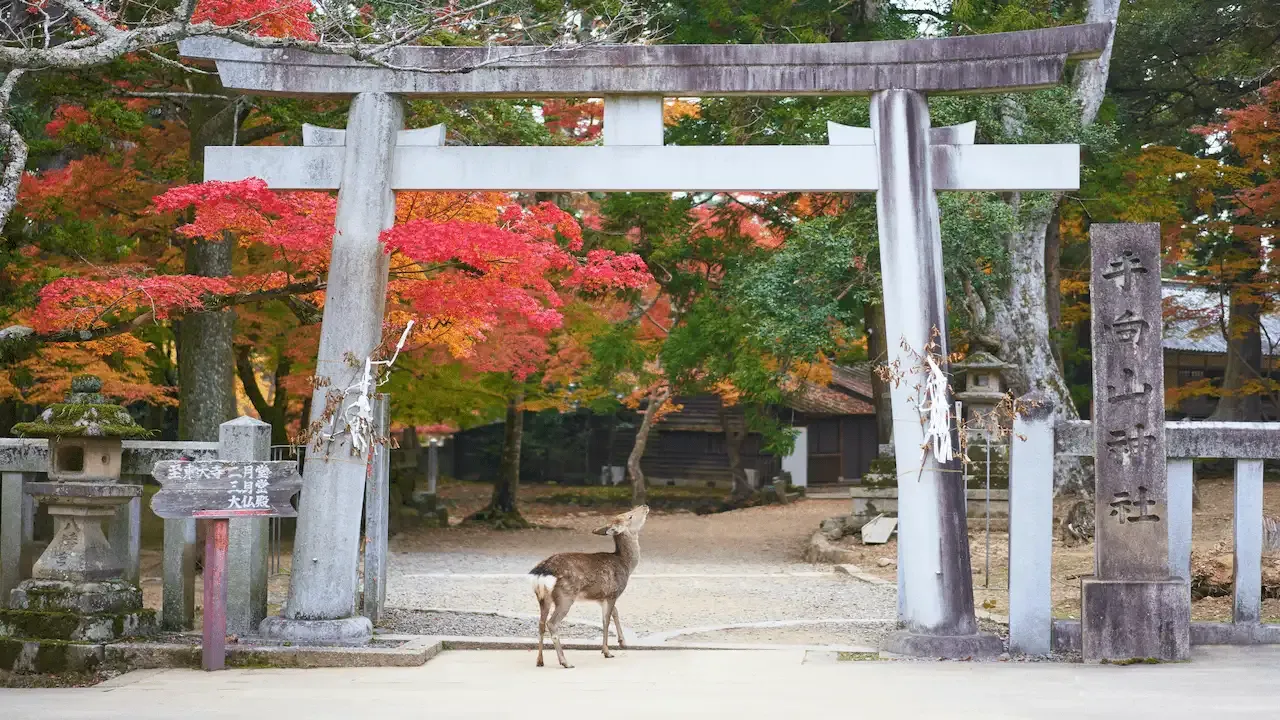
Nara is not just a softer version of Kyoto. The famous circuit around Todai-ji, Kasuga Taisha, and the deer park gets packed by late morning, but the city drops back into itself once the day-trippers start drifting toward the stations. Walk east early, stay out past the bus-group window, and the place changes from checklist Japan to something quieter and more physical: gravel underfoot, cedar shade, temple bells, old timber going dark in the afternoon light. It is still tourism. It just breathes better.
The deer are the headline act, and they are not set dressing. Around Nara Park they bow for crackers, block paths, nose into bags, and switch from cute to pushy in about three seconds if food is visible. You will see them crossing roads like they pay taxes, standing outside shops, or loitering near cracker stalls with the confidence of small-time extortionists. Feed them calmly, hide the packet, and walk away when the crowd thickens. The joke has antlers.
Transport shapes the day more than first-timers expect. Kintetsu Nara Station is the better landing point for most visitors because it puts you close to the park, Higashimukai Shopping Street, and the old temple approach without a long warm-up through traffic lights. JR Nara is fine if your rail pass or hotel points that way, but the walk feels more like a city errand before the old capital begins. For a short visit, that difference matters.
Food here is not a street-snacking carnival, and that is fine. Nara is better for sit-down meals, pickles that taste more serious than they look, kakinoha-zushi wrapped in persimmon leaf, and local beef if you want a heavier dinner. Higashimukai is useful after Kintetsu Nara, but shutters come down early and the mood drains fast. For a later drink or something with more local pulse, look toward Shin-Omiya rather than waiting for the deer park to wake back up.
This is a poor choice for travelers who need every hour filled. Nara is for walking, old wood, shrine paths, small restaurants, and the slight awkwardness of a city that goes quiet before you are ready. Stay overnight if you want the best version, because dawn and late afternoon do more for Nara than another temple added to a rushed day trip. Come for depth, not momentum.
Heijo Is Awkward
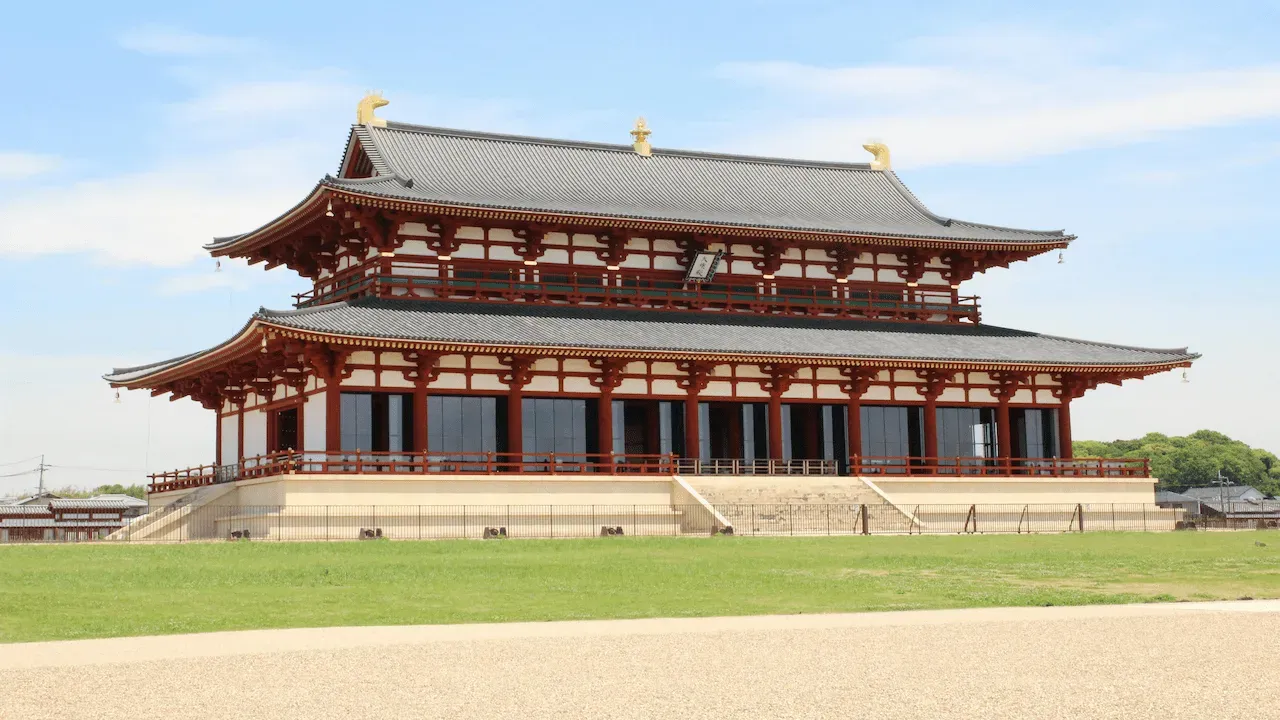
Heijo Palace is the Nara sight that most punishes the wrong expectation. Arrive expecting another compact temple hit and you get wide grass, big sky, reconstructed gates, museum rooms, and long exposed walks between pieces of a vanished capital. The Suzaku Gate looks impressive from a distance, then the scale starts working against casual visitors who came for old timber and incense. This is not a bad stop. It is a site that asks for context before it gives much back.
The point of Heijo is space, not polish. The old palace grounds sit out near Yamato-Saidaiji, away from the deer-park rhythm, and the emptiness is part of the lesson: imperial power here was planned in grids, axes, ceremony, and distance. That reads better if you like maps, archaeology, and reconstructed architecture than if you want a photogenic half-hour. Bring water, shade, and patience. The site is bluntly exposed.
Go if Nara's capital history is the thing pulling you in, or if you have already done Todai-ji and want to understand the city beyond temple traffic. Skip it on a first short visit unless you enjoy large historical landscapes that need interpretation panels to land. Heijo is not filler, but it is also not a crowd-pleaser. That honesty saves the day.
Where to Stay in Nara
- Temples, residential, calm
Nishinokyō
Nishinokyō sits west of the central tourist loop, anchored by Toshodai-ji and Yakushi-ji rather than deer and souvenir lanes. The area feels residential and spread out, which suits travelers who want temple history without the Nara Park crowd. Food and hotel choice are thinner, and you will rely on trains, buses, or taxis for the main sights.
Good for: Less-crowded temples, slower stays, repeat visitors.
Skip if: You want restaurants, stations, and main sights clustered together.
- Izakayas, local nights, food
Shin-Ōmiya
Shin-Ōmiya is the closest thing Nara has to an after-dark base, with izakayas, yakiniku spots, and local bars that outlast the tourist streets. It is not a party district, and pretending otherwise will disappoint you. The appeal is eating and drinking where residents actually go after work, then sleeping away from the deer-park crush. Stay here if evenings matter.
Good for: Izakaya nights, local dining, quieter hotel bases.
Skip if: You want temples and deer within an easy stroll.
- Old streets, ryokan, calm
Naramachi
Naramachi is the old merchant quarter south of the station drag, with machiya houses, narrow lanes, small museums, and ryokan tucked behind plain fronts. It is better after the temple circuit, when the park starts feeling like a loop and you want slower streets. The weakness is evening life: shutters come down early and dinner needs planning. Stay here for mood, not momentum.
Good for: Machiya streets, ryokan stays, slower evening walks.
Skip if: You want late restaurants or a lively bar strip.
- Temples, deer, day trips
Nara Park Area
Nara Park Area puts you closest to Todai-ji, Kasuga Taisha, the museum cluster, and the deer-cracker circus. Mornings can feel almost graceful, then the day-trip crowd arrives and the paths around the main stalls turn into a slow shuffle. Stay here for maximum temple access, not local texture. The deer are part of the deal.
Good for: Early temple walks, deer encounters, short first visits.
Skip if: You dislike crowds, animal attention, or tourist-heavy paths.
- Transit, shopping, food
Kintetsu Nara Station Area
Kintetsu Nara Station Area is the practical base for most first-time visitors, with the park approach, Higashimuki Shopping Street, buses, and trains all close together. It feels commercial rather than old, but that is the point when you are carrying bags or trying to squeeze Nara into a short Kansai route. Food choice is strongest here before the early-evening slowdown. Pick a side street if you want less station noise.
Good for: First visits, train access, easy food and shopping.
Skip if: You want old-town texture outside your door.
- JR access, hotels, transit
JR Nara Station Area
JR Nara Station Area works best for travelers using JR lines, rail passes, or cheaper hotel inventory. The streets are broader and more ordinary than the park side, and the first stretch toward the sights feels like a city errand. It is still useful for onward travel and has enough food around the station. Choose it for logistics, not romance.
Good for: JR train access, simpler hotels, onward travel.
Skip if: You want the quickest walk to Nara Park.
Frequently Asked Questions
Planning & moving around
-
How many days do I need in Nara?
One full day covers Todai-ji, Kasuga Taisha, Nara Park, and a late wander through Naramachi if you start early. Two days makes the city better because you can add Nishinokyo, Heijo Palace, or a slower evening without treating Nara like a checklist. More than two days only makes sense for temple obsessives, walkers, or people using it as a quiet Kansai base.
-
Which famous Nara sights are overrated?
Todai-ji is not overrated, but seeing it at the worst hour makes it feel that way. The Great Buddha Hall gets heavy with tour groups by late morning, and the deer-feeding strip near the park entrance can turn into a slow public performance. Go early, then push toward Nigatsu-do or Kasuga Taisha's forest paths when the main approach clogs.
-
What is a good 24-hour plan for Nara?
Start with Todai-ji before the tour buses settle in, then cut through Nara Park toward Kasuga Taisha while the deer are still less frantic. Use midday for lunch and Naramachi rather than trying to stack every temple in town. Late afternoon belongs to Nigatsu-do or a slow walk back toward the station, then dinner near Shin-Omiya if you need somewhere with a pulse.
-
What are the best day trips from Nara?
Kyoto is the obvious cultural add-on, but it deserves more than a rushed side trip if you have the time. Osaka is easier for food, shopping, and late nights, especially from Kintetsu Nara. For a quieter history day, Nishinokyo and the temple belt west of central Nara are usually more satisfying than adding another big city.
-
Do I need ride-hailing apps in Nara?
Not really. Taxis are easiest around JR Nara, Kintetsu Nara, and major hotel zones, while buses cover the main tourist routes. Uber-style apps can work, but waiting for an app car often makes less sense than using the taxi rank or walking.
-
Is Nara good for digital nomads?
Nara works for quiet remote work, not for a nomad scene. Internet is reliable, rents are lower than the bigger Kansai cities, and the pace is calm, but coworking choice and late-working cafes are thin. Base here if you want silence and day walks, not networking.
-
What is the biggest first-timer mistake in Nara?
The biggest mistake is treating Nara as a rushed add-on between bigger Kansai stops. Arrive late, follow the crowd to Todai-ji, feed the deer at the busiest stalls, and the city feels thinner than it is. Start early or stay overnight if you want the version that actually works.
-
Is Nara better as a day trip or overnight stay?
A day trip works if you only want Todai-ji, Nara Park, and a quick Naramachi walk. Overnight is better if you care about quiet mornings, late-afternoon temple light, and seeing the city after the bus groups leave. The extra night changes the pace more than the checklist.
Safety & medical
-
Are there areas in Nara I should avoid?
Nara has no obvious tourist no-go zone for crime. The main problem areas are not dangerous neighborhoods, but crowded pinch points around Nara Park, Todai-ji, and cracker stalls where bags, children, and deer all compete for space. After dark, avoid isolated park paths and use the station streets or a taxi if your hotel is far out.
-
Is it safe to walk around Nara at night?
Yes, Nara is safe at night by normal traveler standards, especially around Kintetsu Nara, JR Nara, and Shin-Omiya. The catch is that streets empty early, so quiet can feel stranger than unsafe. Stay on lit routes, skip lonely park paths after dark, and do not expect late-night city energy to carry you home.
-
How LGBTQ+ friendly is Nara?
Nara is safe for most LGBTQ+ travelers in the practical street-safety sense, but it is socially quiet rather than visibly queer. Same-sex couples are unlikely to face open hostility, yet public affection can draw looks outside bigger-city settings. Do not expect a scene here; go to Osaka or Tokyo for that.
-
What if I get seriously ill in Nara?
Emergency care in Nara is strong, and 119 connects you to ambulance and fire services. The harder part is language and paperwork, not medical quality, so bring insurance details and any medication names written clearly. For non-emergency care, larger hospitals and clinics are easier than trying to explain symptoms at a tiny neighborhood office.
-
Do I need travel insurance for Nara?
Yes, mainly for medical bills, cancellations, and the rare serious incident that disrupts a wider Japan trip. Nara itself is not a risky destination, but hospital care, missed bookings, and emergency transport are expensive enough to make self-insuring a bad bet. Basic travel insurance is the sensible floor.
-
Can you drink the tap water in Nara?
Yes. Tap water in Nara is safe to drink, and brushing your teeth with it is fine. Restaurants use safe water and ice, so the bigger food issue is dietary translation, not hygiene.
-
Are the deer in Nara dangerous?
They are not predators, but they are still wild animals with antlers, hooves, teeth, and no manners around crackers. Bites, shoves, and scratches happen when visitors tease them, wave food, or let children hold the packet. Feed one cracker at a time, hide the rest, and walk away when several deer crowd in.
Laws & local norms
-
What are the drug laws in Nara?
Japan's drug laws are strict, and Nara is no exception. Cannabis, THC products, and recreational drugs can lead to arrest, detention, and serious legal trouble even when the same product is tolerated at home. Do not travel with gummies, oils, vapes, or prescription-style products unless you have checked the exact Japanese rule first.
-
Can I vape in Nara?
Nicotine vaping is where travelers get tripped up in Japan. Nicotine e-liquid is not sold like a normal consumer product domestically, and public use follows smoking-style restrictions, so do not puff through temple streets or station areas. Bring only legal personal-use quantities, avoid refills with unclear contents, and use designated smoking areas.
-
What etiquette matters most at Nara's temples?
Stay quiet inside halls, do not photograph where signs forbid it, and remove shoes when a raised floor or slippers signal it. Do not block shrine approaches for photos, especially around Kasuga Taisha and Todai-ji. The rule is simple: move like the place is still used, not staged for you.
Money & costs
-
Where can I store luggage in Nara?
Kintetsu Nara and JR Nara both have coin lockers, and they are the cleanest answer for day-trippers. Large lockers fill faster during holiday periods and busy temple days, so arrive early if you have a suitcase rather than a backpack. Some hotels will hold bags for guests, but do not count on random hotels storing luggage for non-guests.
-
Do I need cash in Nara?
Yes, carry some yen even if your hotel and big restaurants take cards. Temple counters, small eateries, older shops, buses, and some taxis still work better with cash. Convenience-store ATMs are the easiest way to withdraw with international cards.
Culture & etiquette
-
Which markets in Nara are worth visiting?
Nara is not a big market city. Higashimuki Shopping Street and Mochiidono Center Gai are permanent covered shopping streets, not pop-up markets with a special weekly rhythm. Go for snacks, souvenirs, and old-school retail, not a sprawling food-market scene.
-
What do tourists get wrong about Nara?
Tourists often assume Nara is only the deer park. The deer are the hook, but the better read is an old capital spread across temple precincts, shrine forest, merchant lanes, and awkward historical sites like Heijo Palace. If you only feed crackers and leave, you saw the mascot, not the city.
-
How much English is spoken in Nara?
Basic English works around major stations, hotels, and big sights like Todai-ji. Smaller restaurants, buses, pharmacies, and neighborhood shops often rely on Japanese, menus, gestures, and translation apps. Learn station names and carry your hotel address in Japanese.
Food & drink
-
Where do locals actually eat in Nara?
Higashimuki is useful because it sits right by Kintetsu Nara, but it leans heavily toward visitors. Shin-Omiya is better for izakayas, yakiniku, and later dinners with a local after-work crowd. Sanjo-dori and the side streets between the stations also work when you want something practical without chasing a famous name.
-
What local foods should I try in Nara?
Try kakinoha-zushi, which is pressed sushi wrapped in persimmon leaf, and narazuke pickles if you like strong fermented flavors. Yamato beef is the heavier local meal option, though it is not something every traveler needs to chase. Nara food is better in sit-down restaurants than as constant street snacking.
-
Is Nara vegan-friendly?
Nara is workable for vegans, but not effortless. The best odds are around Kintetsu Nara, Naramachi, and places that explicitly advertise vegan or vegetarian menus. Outside those pockets, dashi shows up everywhere, so use HappyCow and confirm broth, sauces, and set meals before ordering.
-
Is Nara halal-friendly?
Halal options exist, but the choice is limited compared with Osaka or Tokyo. Look for places that clearly state halal certification or Muslim-friendly menus, especially near major sightseeing routes. Convenience-store snacks need ingredient checking, because meat extracts, gelatin, and alcohol-based seasonings are common.
Families & kids
-
Is Nara a good place to travel with kids?
Yes, if you manage the deer properly and do not overload the day. Nara Park, the big temple gates, and short bus hops make it easier than many dense Japanese cities for families. The main issue is that excited children and food-motivated deer are a bad mix without close supervision.
-
Is Nara manageable with a stroller?
Mostly, but not everywhere. Nara Park and the station approaches are manageable, while older temple paths, gravel, stairs, and shrine approaches can make a full-size stroller annoying. Bring a compact stroller if you can, and use buses when little legs are done.
-
What if a child gets sick in Nara?
For emergencies, call 119 and use a hospital rather than trying to solve it through a small clinic. Pharmacies carry common children's medicines, but brands and dosages may not match what you use at home. Bring any regular medication and a simple written list of allergies or conditions.
-
Where should families stay in Nara?
Families usually do best near Kintetsu Nara Station because food, buses, taxis, and the park are close. Naramachi can work for a quieter ryokan stay, but check stairs, futons, bathrooms, and child policies before booking. Apartments give more space, though they can put you farther from the easiest dinner options.
-
What works for a half-day with kids in Nara?
Keep it simple: Nara Park, the outer Todai-ji grounds, and one snack or lunch stop. Do not try to force Kasuga Taisha, Naramachi, and every museum into the same short window. The deer will already take more time and attention than adults expect.
-
Where do families struggle most in Nara?
Families struggle with walking distances, early restaurant closures, and deer that stop being cute when food appears. Small children can get startled when deer crowd in, especially near cracker stalls. Build in breaks and keep crackers out of a child's hands unless an adult is right beside them.
Staying longer
-
Which neighborhood in Nara should I stay in?
Kintetsu Nara Station is the best base for most travelers because it puts the park, buses, shops, and restaurants close together. Naramachi is quieter and better for ryokan or old-street mood, while Shin-Omiya works if dinner and drinks matter more than deer and temple access. JR Nara is practical for rail users, but less rewarding on the first walk out.
After dark
-
Where can I eat late at night in Nara?
Late food is the weak spot. The main tourist streets start shutting down early, so dinner after the usual window means looking toward Shin-Omiya, station-side chains, ramen shops, or convenience stores. Eat earlier than you would in Osaka unless you enjoy wandering past closed shutters.
-
What changes after dark in Nara?
Nara gets quiet fast. Shops around Nara Park and Higashimuki shut earlier than many visitors expect, and the station streets become practical rather than lively. The upside is a calmer city, but plan dinner before the shutters decide for you.
-
Where do nights go wrong in Nara?
Nights go wrong when travelers expect Kyoto or Osaka energy in a smaller temple city. The problem is not safety, it is dead streets, closed kitchens, and no backup plan after a long walking day. Eat early or stay near Shin-Omiya if you care about evening options.
-
What are the best nightlife areas in Nara?
Shin-Omiya is the most useful area for after-dark food and drinks. It has izakayas, yakiniku spots, and local bars without pretending to be a party district. Around Nara Park, nightlife mostly means quiet streets and early bed.
-
Does Nara have a red-light district?
No, not in any way a typical traveler needs to plan around. Adult nightlife in Nara is discreet and not part of the tourist geography. If that is what you are looking for, larger cities like Osaka or Tokyo have the recognized districts.