
January
91/100- Temperature
- 31 / 23°C (88 / 73°F)
- Rain days
- 3
- Crowds
- Peak
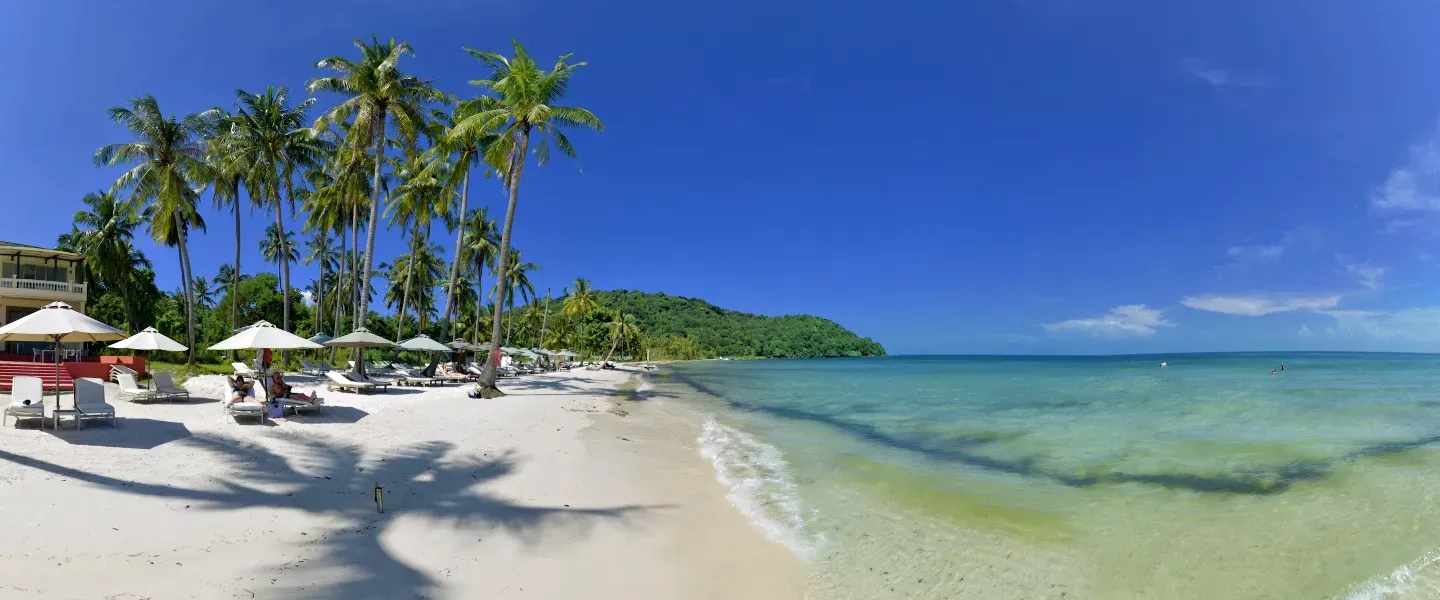
One of the two driest months, with rain on about three days and low humidity for the tropics. Calm water on the west coast. Also one of the busiest and most expensive months.
Phu Quoc has a long dry season and a hard rainy season. Here is what each month is like.
The best time to visit Phu Quoc is December to March. These are the driest months of the year and the sea on the west coast is calm. February usually has the least rain.
The dry season is longer than that. November to April is dry enough for a beach trip, and April is hot and still mostly dry. The rainy season is May to October, and July to September is the worst of it, when it rains on most days.
The rain matters most for the water. The southwest monsoon puts wind and swell on the west coast, where most of the hotels are, and boat trips to the An Thoi islands are often canceled.
Prices follow the weather. December to March is high season and June to September is the cheapest, by a wide margin.
Off-seasonSouthwest Monsoon
Sustained summer winds bring choppy seas and murky water to Long Beach, keeping tourist numbers at their lowest annual levels.
SCORE BY MONTH
Rain and sea conditions are what separate the months.
One of the two driest months, with rain on about three days and low humidity for the tropics. Calm water on the west coast. Also one of the busiest and most expensive months.
The driest month of the year. Clear days, flat sea, good visibility for snorkeling. Book a beach hotel early.
Still dry and still busy, and a little hotter than February. The sea stays calm, and the New Year rush is over.
Hot and mostly dry, with the first real showers late in the month. Highs reach 33°C, the warmest of the year. Quieter than February and March.
The changeover. Rainy days jump from nine to seventeen and the wind turns. Some days are still perfect. Rates start to drop.
Wet, with rain on around two days in three. It usually comes in heavy bursts rather than all day. Boat trips are canceled more often than they run.
One of the three wettest months, with the southwest monsoon at full strength. The upside is low prices.
As wet as July, and humid. Sea conditions on the west coast are poor and island tours are often canceled. Cheap, if you do not need the beach.
The wettest month of the year, with rain on around three days in four. The worst month for weather, and the quietest on the island.
Still wet, but improving. Rain eases through the month and the sea starts to calm. Rates are still low.
The rainy season is ending. Rain falls to around a third of the days, the sea calms, and boat trips start again.
The dry season is underway, and high season with it. Clear days and calm water. Rates climb through the month and peak over Christmas and New Year.
Phu Quoc sits in the Gulf of Thailand, close to the equator, so the temperature barely moves. Highs are 30 to 33°C in every month and lows are 23 to 25°C. Rain and wind are what change.
Dry season, November to April. Long clear spells, humidity in the low 70s, and calm water on the west coast. January, February and March each get rain on fewer than six days.
Rainy season, May to October. The southwest monsoon brings wind, swell and heavy rain. July, August and September each get rain on around 20 days.
Rain falls from May to October, heaviest from July to September. Rain often comes as a heavy downpour in the afternoon, and mornings can be clear, but wet spells last longer here than in southern Vietnam.
The sea is the bigger problem. Waves and murky water make snorkeling and diving poor, and trips to the An Thoi islands in the south are often called off. The cable car usually runs unless the weather is severe, and the night market, the pepper farms and the national park are all fine in the rain.
If you go in the rainy season, book a hotel with a pool and do not make a boat trip the main plan.
December is when the weather changes. Rainy days fall to about six, the sea flattens, and boat tours start again.
It is also when prices climb. Christmas and New Year is the most expensive week of the year, and flights and hotels sell out well in advance. For December weather at a lower price, go in the first two weeks.
July to September, if you came for the beach. Rain falls on most days, the sea on the west coast is rough, and the boat trips that are the main reason to visit the south of the island stop.
Christmas and New Year is the worst value. The weather is excellent, but you pay the highest rates of the year for it.
Tet, the Vietnamese new year, is worth checking against your dates. It falls in late January or February and moves every year. Domestic travel is heavy that week and prices rise with it. The Vietnam guide lists the upcoming dates.
For weather, no. The island is small and one season covers all of it. Two things do change by area.
The west coast holds Duong Dong, Long Beach and most of the hotels. It faces the southwest monsoon, so it takes the wind and the swell from May to October and is calm the rest of the year.
The south, around An Thoi and Sao Beach, is where the boat trips and the cable car start. It is more sheltered than the west, but the tours still stop when the sea is rough.
The north is quieter, greener and mostly national park. It is the part of the island that works best on a wet day.
Planning a trip?
Sign up for our guide.
February. It is usually the driest month and the sea is calm. January and March are close behind, and late November is nearly as good for less money.
May to October, with July, August and September the wettest. Those three months each get rain on around 20 days. November to April is the dry season.
Only if you are relaxed about the water. Hotels are much cheaper and the island is green, but boat trips are often canceled and the sea is rough and murky. Pick a hotel with a pool and treat a beach day as a bonus.
June to September. Hotel rates are at their lowest and you can book late. The downside is the wettest weather of the year.
November to April. Visibility around the An Thoi islands is best in the dry season, and most operators cut back or stop altogether from June to September.