
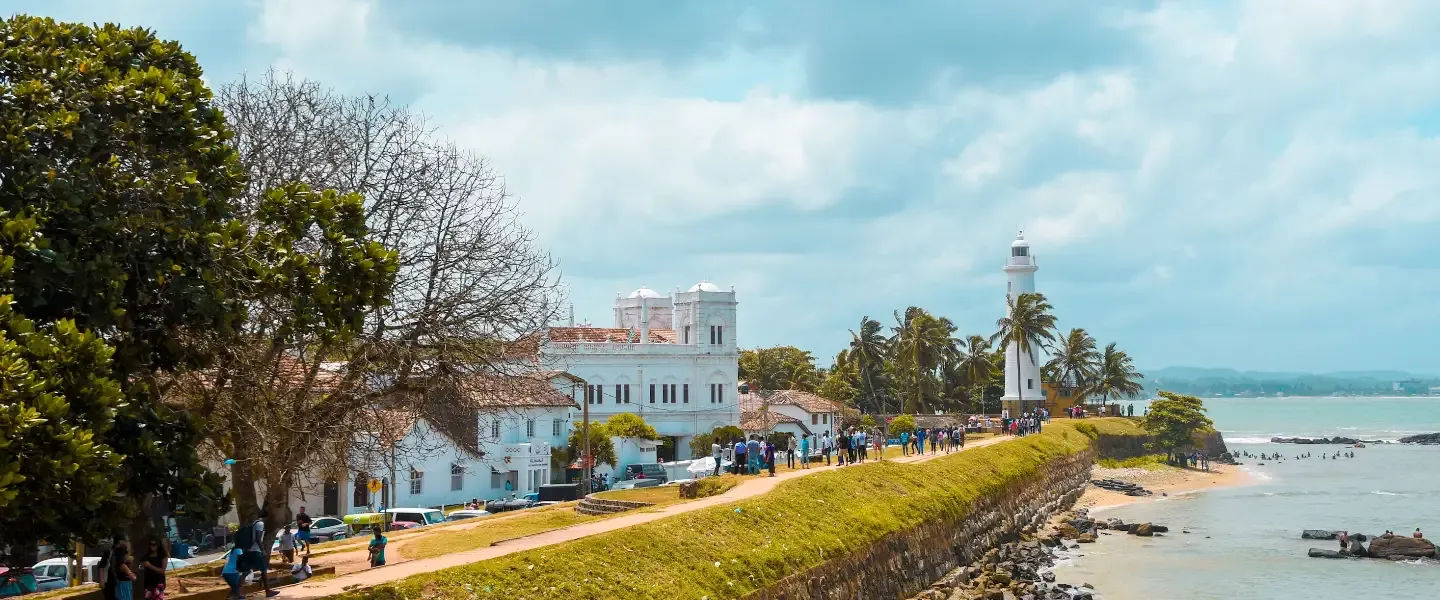
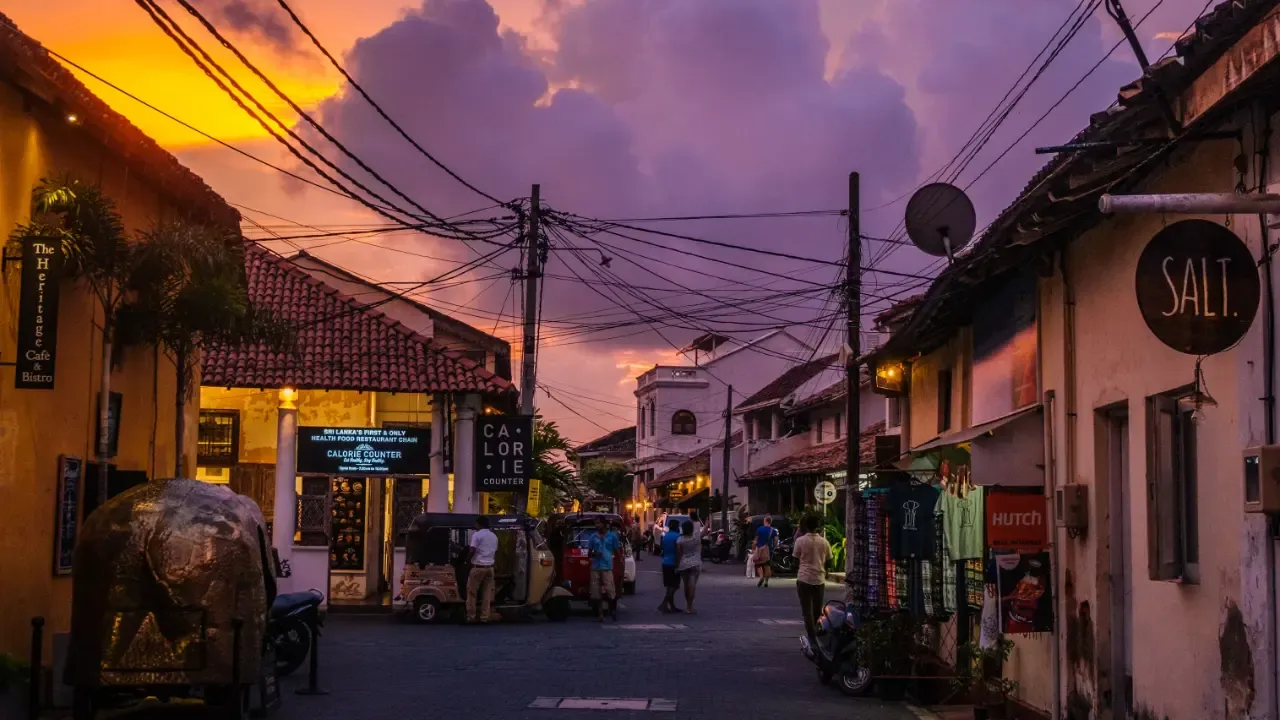
Galle Right Now
Binara Full Moon Poya Day is on September 26, which is a public holiday in Sri Lanka.
Binara Full Moon Poya Day
Best time to visit Galle
Not the best time to visitSouthwest monsoon and rough seas
One of the wetter months, with a rough sea and few visitors.
SCORE BY MONTH
January to March is the dry season on this coast, with a calm sea, and it is also the busiest and most expensive stretch. From May to November the southwest monsoon and the rains after it make the sea rough, and many beach businesses close. The Fort itself works year-round between showers.
Visitor data: RoamFX seasonal estimate
Need to Know
- Currency
- Sri Lankan Rupee (LKR)
- Language
- Sinhala and Tamil; English is widely spoken in Galle Fort and the beach towns.
- Tap water
- Not safe
- Time zone
- GMT+5:30 (SLST)
- Power plug
- Type D / G / M, 230V
- Dialing code
- +94
- Driving side
- Left
- Tipping
- Not expected at small local eateries. Restaurants usually add a 10% service charge, and a little extra is welcome if the service was good.
- Internet
- 4G is good in Galle and along the coast. Wi-Fi in the old Fort buildings can be patchy.
- Emergency
- 119 (Police), 110 (Fire and rescue), 1990 (Suwa Seriya ambulance)
When not to go
-
Skip Galle's beaches in the southwest monsoon
May to Nov · wettest in OctFrom May to November the southwest monsoon and the rains that follow it make the sea off Galle rough, and Unawatuna and the nearby beaches fly red flags on rough days. The Fort itself stays walkable between showers, but a beach trip turns into a string of wet days indoors. Come between December and April, or put the beach part of the trip on the east coast.
Go here instead:
- Trincomalee East-coast beaches are calm and dry through the middle of the year.
- Bali Bali's dry season matches Galle's wettest months.
Upcoming Events & Holidays in Galle
On the horizon
Public holidays & observances, next 12 months
Dates are researched and checked, but events move. Always confirm with the official source before you book anything around them.
Getting To Galle
-
From Bandaranaike International (CMB)
Expressways most of the way from the airport
The drive from the airport uses the Airport Expressway, the Outer Circular Expressway and the Southern Expressway, which avoids central Colombo. The official airport taxi counter in arrivals quotes a fixed rate to Galle. On a budget, take the airport bus to Makumbura, the bus and rail hub at the Kottawa end of the Southern Expressway, and change there to an EX01 expressway bus to Galle.
Safety Advice
Crime is low. The risks are the fast coast road, rough sea and rip currents off Unawatuna from May to November, and touts inside the Fort steering you to gem shops and overpriced tours.
Common Scams in Galle
-
Tuk-tuk overcharging
HIGH RISKTrigger:A driver refuses the meter, claims it is broken, or quotes a flat price that seems too high.
Tuk-tuk drivers in Galle often refuse to use the meter or quote inflated flat fares to tourists, and some take longer routes or stop at shops that pay them commission.
How to avoid: Agree the fare before you get in, or book on PickMe, which shows the price before you ride.
-
Fake gem sales
HIGH RISKTrigger:A friendly stranger or driver suggests a specific gem shop or offers a 'special deal' on stones, often framing it as an investment.
Sri Lanka is known for sapphires, and touts in and around the Fort steer visitors to shops selling treated or low-grade stones at high prices, often with a certificate issued by the shop itself. It usually starts with a friendly local or tuk-tuk driver recommending a 'government-approved' shop.
How to avoid: Don't buy gems as an investment. If you want a stone, buy from a licensed dealer and have it tested at the National Gem and Jewellery Authority's lab before you pay.
-
Unofficial guides
MEDIUM RISKTrigger:Someone starts guiding you or offering information without you asking, then expects payment.
Touts near attractions like Galle Fort may approach you, offer unsolicited information or a short tour, then demand payment. They might also claim an attraction is closed to redirect you to a commission-paying business.
How to avoid: Say no to unasked-for tours. The Fort is small and easy to explore on your own.
-
Staged stilt fishermen
LOW RISKTrigger:You see stilt fishermen posing and then someone asks for money when you point a camera in their direction.
The stilt fishermen along the coast near Koggala now mostly pose for tourists and ask for a tip when you take a photo, even from a distance.
How to avoid: Decide before you raise the camera whether you are willing to pay.
-
Restaurant overpricing
MEDIUM RISKTrigger:The menu lacks clear pricing, or the bill includes unexpected charges or a much higher total than anticipated.
Some restaurants inside Galle Fort and on the Unawatuna strip have menus without prices or add a service charge you were not told about, and the same food costs far less a few streets away.
How to avoid: Check the menu shows prices before you order, and ask what the service charge is.
Mistakes to Avoid
-
Drinking tap water
SERIOUS CONSEQUENCETap water in Sri Lanka is not safe for tourists to drink, even if locals consume it without issues. It can cause traveler's diarrhea and other digestive problems due to different microorganisms and inconsistent treatment standards.
Fix: Drink only bottled or filtered water, and use it for brushing your teeth. Avoid ice in drinks outside of major resorts.
-
Disrespectful temple behavior
SERIOUS CONSEQUENCEPosing with your back to a Buddha statue, sitting on one or touching it offends people, and tourists have been detained for posing disrespectfully with Buddha images.
Fix: Face Buddha statues in photos, don't touch them, and follow each temple's own rules on photography.
-
Flying drones without permits
SERIOUS CONSEQUENCEDrones must be registered with the Civil Aviation Authority of Sri Lanka (CAASL), and whether and where you can fly depends on the drone category and the zone. Galle harbor has a navy base, and flying near it is restricted.
Fix: Register the drone and check the zone and flight approval on the CAASL portal before you fly.
-
Ignoring temple dress codes
Entering temples with uncovered shoulders or knees is considered disrespectful, and you take off your shoes before entering shrine rooms and temple buildings.
Fix: Carry a lightweight scarf or sarong to cover your shoulders and knees. Wear slip-on shoes for easy removal.
Money & Payments
Carry cash for tuk-tuks, local eateries and small guesthouses. Cards work at larger hotels, supermarkets and most restaurants inside the Fort.
-
Cash for tuk-tuks and small places
Tuk-tuks, food stalls, market vendors and many small guesthouses take cash only. Keep 100 and 500 rupee notes, since drivers often cannot break a 5,000.
-
Cards at bigger places, watch for surcharges
Visa and Mastercard work at larger hotels, Cargills Food City and Keells supermarkets, and restaurants in the Fort. Amex is taken in fewer places. Some merchants add a card fee, which the Central Bank does not allow: ask before you pay, and if it is added anyway, keep the receipt and report it to your card issuer.
-
ATMs in town
Commercial Bank, Sampath Bank, HNB and Bank of Ceylon all have ATMs in Galle town. Fees and limits for foreign cards change, so check the screen before you confirm, and use machines inside or next to a bank branch.
-
Dynamic Currency Conversion (DCC) Warning
When using an ATM or paying with a card, always choose to be charged in Sri Lankan Rupees (LKR). If an ATM offers to convert the transaction to your home currency, decline it. Accepting DCC means the ATM or merchant sets an unfavorable exchange rate, costing you more.
-
Mobile Payments
LankaQR, the national QR code, is accepted at over 400,000 merchants across the country, and wallets connected to Alipay+ can scan it to pay. Most local payment apps need a Sri Lankan bank account or phone number.
-
International Transfers
To send money to a bank account in Sri Lanka, for things like rent or day-to-day expenses, services like Wise or Remitly usually offer better rates than traditional banks and faster delivery.
You'll typically need the recipient's full name, account number, and SWIFT/BIC code. Some banks may also require a local address.
Costs in Galle
Budget about $60 to $110 a day mid-range. Where you sleep sets the cost: boutique rooms and cafes inside the Fort cost several times a guesthouse in Unawatuna, and prices climb from December to March.
Save money?
Sign up for our guide on how to save money on your next trip.
SIM Cards & Data
Best option for most travelers: an eSIM you set up before you arrive. You'll be online the moment you land, with no airport line and no tourist pricing.
Travel eSIMs Connect the second you land. Zero hassle. Skip the airport line and paperwork. Activate before you fly and land connected. Find the best eSIM →Prefer a local SIM?
You can easily buy a local physical SIM card in Galle itself, with carrier shops and convenience stores in the city and Galle Fort area selling them. Mobile coverage is generally strong in populated areas like Galle, though signal can vary inside historic buildings or in quieter coastal spots. You will need your passport for registration, and some stores may take a digital photograph or ask for a passport-size photo.
What Galle is Like
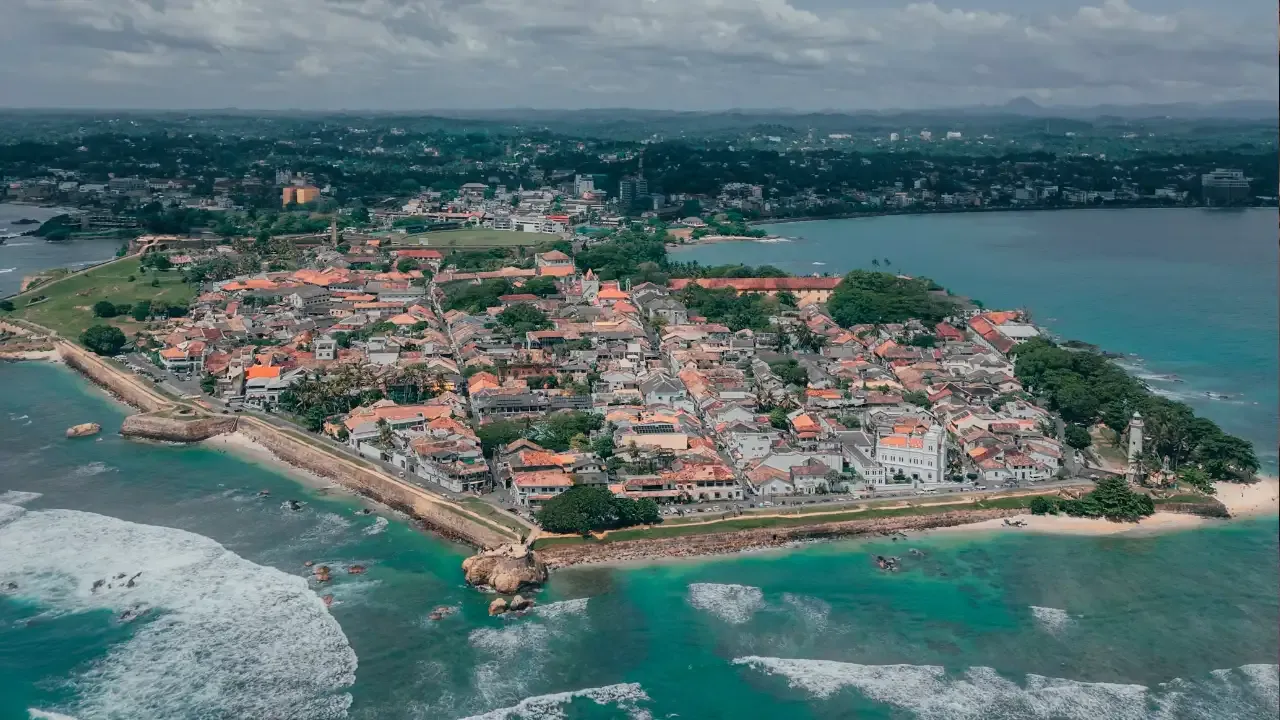
Inside the ramparts, Galle Fort is still a town people live in. Muslim families have held the Dutch-era houses on Leyn Baan Street for generations, the Meeran mosque stands a few steps from the white lighthouse, and the Friday call to prayer carries over the cafe terraces. Walk the walls in the late afternoon, when fishing boats come in below the bastions, kids play cricket on the open ground by the Clock Tower, and couples sit along the stone with umbrellas pulled low over their heads.
Those walls also spared most of the old town in the Boxing Day tsunami. The water tore through the new town and the bus stand beside the cricket stadium, while the thick Dutch ramparts held most of it back from the Fort. The new town across the road is where Galle does its own shopping, at the fish market by the harbor and the crowded stalls around the bus station, and it is the cheaper place for a plate of rice and curry than the cafes inside the walls.
Galle has no beach of its own worth the name. Unawatuna is fifteen minutes east by tuk-tuk, a calm curved bay that suits swimmers far better than surfers, and the stilt fishermen near Koggala now perch mostly for photos and expect payment when you take one. Nightlife is thin. The Fort goes quiet early, and anyone looking for bars and a late crowd will be happier further along the coast in the surf towns.
Where to Stay in Galle
- Cheap, local
Gintota
Gintota sits north of Galle where the Gin River meets the sea, with cheap guesthouses and a working-town feel. You need a tuk-tuk or bus to reach the Fort.
Good for: The cheapest rooms around Galle
Skip if: Visitors who prefer to be within walking distance of major tourist sites and amenities
- Residential, city access
Richmond Hill
Richmond Hill is the residential ridge above Galle town, with apartments and a few guesthouses, a short tuk-tuk ride down to the Fort and the cricket stadium.
Good for: Families or groups who want an apartment near town
Skip if: Travelers who want to be directly on the beach or in the middle of a busy tourist strip
- History, boutique stays
Galle Fort
The walled old town is where most visitors stay, in Dutch-era houses turned into boutique hotels, cafes and galleries along Church Street, Pedlar Street and Leyn Baan Street. The ramparts and lighthouse are a few minutes' walk from anywhere inside, and it is the most expensive place to sleep in the Galle area.
Good for: First visits, couples, and anyone who wants to walk everywhere
Skip if: You're on a tight budget or want nightlife
- Residential, cheaper rooms
Thalapitiya
Thalapitiya is a residential area on the edge of Galle with a few family-run guesthouses, a short tuk-tuk ride from the Fort. Rooms cost less than inside the walls, and there is little else here.
Good for: Cheaper guesthouses close to the Fort
Skip if: Those who prioritize being in the center of tourist activity or upscale amenities
- Beginner surf beach
Dewata
Dewata, a few minutes from the Fort, has a small beach break where surf schools teach beginners on foam boards. Waves are small from November to April and bigger from May to October, and the break gets crowded in peak season.
Good for: Beginner surfers
Skip if: You are an experienced surfer or want an empty beach
- Popular beach town
Unawatuna
Unawatuna's bay is the closest swimming beach to Galle, lined with guesthouses, beach bars and dive shops, and it gets crowded in season. Jungle Beach is a short walk over the headland to the west.
Good for: Swimming and a beach base close to Galle
Skip if: You want a quiet beach
- Luxury villas, quiet beaches
Talpe
Talpe, a few kilometers east of Unawatuna, is a strip of beachfront villas and boutique hotels along a quieter stretch of coast, with natural rock pools at low tide. There is little to walk to, so you rely on tuk-tuks for food and shops.
Good for: Villa stays and quiet beach days
Skip if: You are on a budget or want restaurants on your doorstep
Frequently Asked Questions
Planning & moving around
-
How many days should I spend in Galle?
Most travelers find one to two full days sufficient to explore the historic Dutch Fort and its immediate surroundings. This allows time to walk the ramparts, visit the lighthouse, and enjoy the cafes without feeling rushed. If you want to include day trips to nearby beaches like Unawatuna or Mirissa, plan for three to five days.
-
What are the best neighborhoods to stay in Galle?
For a first visit, Galle Fort is the easiest base, with cafes, shops, the lighthouse and the ramparts all within walking distance. Unawatuna, 10 to 15 minutes east by tuk-tuk, is better for beach days and cheaper rooms. Talpe and Dalawella, further east, have quieter villas.
-
Do you need a license to rent a scooter in Galle?
Yes. A home license alone is not enough. You need a temporary Sri Lankan driving permit from the Department of Motor Traffic, or an International Driving Permit endorsed by the Automobile Association of Ceylon. Without it, a crash is unlikely to be covered by your travel insurance.
-
How do you get around Galle?
Galle Fort is compact and best explored on foot. For Unawatuna or the bus and train stations, take a tuk-tuk or book one on PickMe, which shows the fare first. Buses run along the coast to Hikkaduwa and Matara.
-
Are there good day trips from Galle?
Unawatuna and Jungle Beach are close enough for an afternoon, and Mirissa is about an hour east for whale watching between December and April. Inland, Handunugoda Tea Estate near Koggala is known for its white tea, and the Kanneliya rainforest reserve has forest walks.
-
What is the best time of year to visit Galle?
December to April is the dry season on this coast, with a calm sea for swimming. From May to November the southwest monsoon and the rains after it make the sea rough, though the Fort is still worth a visit between showers.
Safety & medical
-
Is Galle safe for tourists at night?
Inside the Fort, yes. The streets are busy with visitors until late and walking back to your guesthouse is easy. Outside the walls and on beach paths toward Jungle Beach, take a tuk-tuk after dark.
-
What should I do if I get sick in Galle?
Pharmacies in Galle town handle minor problems, and many hotels can call a doctor. For anything serious, Ruhunu Hospital on Karapitiya Road is the main private hospital. Drink bottled water and be careful with salads and ice.
-
Is petty crime a problem in Galle?
Mostly bag snatching from passing motorbikes and theft from beach loungers in Unawatuna. Carry your bag on the side away from the road, and do not leave phones on the sand while you swim.
Laws & local norms
-
What are the laws regarding drugs in Sri Lanka?
Sri Lanka has very strict drug laws, and penalties for drug offenses are severe, including lengthy prison sentences. Do not engage with or possess any illegal drugs.
-
Can you vape in Galle?
Treat vapes as banned. Sri Lanka prohibits importing and selling e-cigarettes, so customs can confiscate one from your bag, and you cannot legally buy refills. Leave it at home.
Culture & etiquette
-
What is the dress code for visiting temples in Galle?
Cover your shoulders and knees at temples and other religious sites, and take off your hat and shoes before entering shrine rooms. A sarong in your bag covers most situations.
Food & drink
-
What are some traditional Sri Lankan dishes to try in Galle?
Rice and curry is the everyday meal: rice with several curries, dhal and a sambol. Hoppers (bowl-shaped rice pancakes), string hoppers and kottu roti (chopped flatbread fried with vegetables, egg or meat) are the other staples, and on this coast order ambul thiyal (a dry, sour fish curry).
-
Where do locals eat in Galle?
Outside the Fort, the canteens around the bus station in the new town serve rice and curry and short eats at local prices. Inside the walls, Lucky Fort Restaurant on Parawa Street does a large rice and curry spread.
-
Is it easy to find vegetarian or vegan food in Galle?
Yes. Most rice and curry spreads are mostly vegetables, dhal and sambols, and cafes in the Fort all have vegetarian dishes. Ask for no fish flakes (umbalakada), which get added to some vegetable curries.
Families & kids
-
Is Galle suitable for families with young children?
Galle can be suitable for families, especially within the Fort with its walkable streets and historical sites. Many hotels and guesthouses are accommodating. However, be mindful of the heat and ensure children stay hydrated.
After dark
-
What is the nightlife like in Galle?
Quiet. The Fort goes to bed early, and the bars are mostly in hotels, like Ropewalk at the Galle Fort Hotel. For beach bars and a later crowd, go to Unawatuna in season.