
Trincomalee Right Now
Heavy rainfall is likely in Northern, Central, Sabaragamuwa, Uva, Western, Galle, Matara, and Batticaloa districts, with major flood warnings for low-lying areas, especially the Deduru Oya Basin and areas along the Mahaweli River Basin.
Binara Full Moon Poya Day
Echoes of Eden · Trincomalee (venue to be announced)
Best time to visit Trincomalee
Good time to visit
Mostly dry, with fewer visitors after the summer peak.
SCORE BY MONTH
March to September is the dry season on the east coast, with a calm sea for Pigeon Island and whale-watching boats, and July and August are the busiest months. October to January brings the northeast monsoon, when the sea turns rough, boat trips stop and many beach guesthouses close.
Visitor data: RoamFX seasonal estimate
Need to Know
- Currency
- Sri Lankan Rupee (LKR)
- Language
- Tamil is the main language in town; Sinhala and English are understood in hotels and dive shops.
- Tap water
- Not safe
- Time zone
- GMT+5:30 (SLST)
- Power plug
- Type D / G / M, 230V
- Dialing code
- +94
- Driving side
- Left
- Tipping
- Not expected at small local eateries. Restaurants usually add a 10% service charge, and a little extra is welcome if the service was good.
- Internet
- Mobile coverage is generally usable in Trincomalee city and main beaches, but can be weaker in remote areas.
- Emergency
- 119 (Police), 110 (Fire and rescue), 1990 (Suwa Seriya ambulance)
When not to go
-
Skip Trincomalee in the northeast monsoon
Oct to Jan · wettest Nov to DecTrincomalee gets most of its year's rain from October to January, when the northeast monsoon turns the sea rough and grey. The boats to Pigeon Island and the whale-watching trips stop, and many guesthouses in Uppuveli and Nilaveli close until the season turns. Come between March and September, when the bay is calm.
Go here instead:
- Galle The south coast is dry while the east is wet.
Upcoming Events & Holidays in Trincomalee
Upcoming events, next 30 days
Public holidays & observances, next 12 months
Dates are researched and checked, but events move. Always confirm with the official source before you book anything around them.
Getting To Trincomalee
-
By road from Bandaranaike International (CMB)
Six hours or more by road
The drive from the airport heads inland through Kurunegala and Dambulla, then northeast to the coast. The official airport taxi counter in arrivals quotes a fixed rate to Trincomalee. By bus, take the 187 into Colombo and pick up route 49 to Trincomalee; the air-conditioned buses cost a little more and are worth it on a trip this long.
-
Night Mail from Colombo Fort
Overnight, about 8 hours
The Night Mail to Trincomalee leaves Colombo Fort in the evening and arrives early the next morning. Book a sleeper berth or a reserved seat on the Sri Lanka Railways e-ticketing site, where bookings open 30 days ahead. From the airport, the 187 bus drops you at Colombo Fort.
Safety Advice
Crime is low. The risks are rough sea and rip currents from November to January, wild elephants on the roads north of town after dark, and bags stolen from the sand at Uppuveli while their owners swim.
Common Scams in Trincomalee
-
Tuk-tuk overcharging
MEDIUM RISKTrigger:A driver refuses the meter or quotes a fixed price much higher than expected.
Tuk-tuk drivers around Uppuveli and Nilaveli often refuse to use the meter and quote tourist prices, especially for the run into town and to the bus station.
How to avoid: Agree the fare before you get in, or book on PickMe where it has drivers.
-
Pigeon Island boat overcharging
MEDIUM RISKTrigger:A boat operator offers a Pigeon Island trip at a price that seems too high.
Boat operators on Nilaveli beach push Pigeon Island trips at inflated prices, and some do not mention that the national park entry fee is charged on top.
How to avoid: Book the boat through your guesthouse or a dive shop, and ask whether the park fee is included before you agree.
-
Fake 'closed' attractions
LOW RISKTrigger:Someone approaches you near a tourist site and says it is closed for an unexpected reason.
A 'helpful' local tells you a temple or site is closed today, then offers to take you somewhere else instead, usually a shop or tour that pays them commission.
How to avoid: Go to the entrance and check for yourself.
-
Unlicensed tour guides
LOW RISKTrigger:Someone starts guiding you around a site without you asking or agreeing to a service.
People at temples and viewpoints start guiding you without being asked, then demand payment at the end.
How to avoid: Politely decline unsolicited guide services. If you want a guide, arrange one through a reputable tour operator or your accommodation.
Mistakes to Avoid
-
Disrespecting religious sites
SERIOUS CONSEQUENCEKoneswaram is a working Hindu temple: cover your shoulders and knees and take off your shoes before the shrine. Separately, posing with your back to a Buddha statue anywhere in Sri Lanka has led to tourists being arrested.
Fix: Dress modestly for temples, and never pose with your back to a Buddha statue.
-
Drinking tap water
SERIOUS CONSEQUENCETap water in Trincomalee, and Sri Lanka generally, is not safe to drink due to inconsistent treatment standards and potential microbial contamination. Consuming it can lead to traveler's diarrhea and other illnesses.
Fix: Drink bottled or filtered water, and ask your guesthouse whether it has a filter for refills.
-
Swimming at night or in rough seas
SERIOUS CONSEQUENCESwimming alone at night on quiet stretches of beach leaves your things on the sand and you out of sight. During the northeast monsoon, from October to January, the sea is rough and swimming is dangerous.
Fix: Swim in daylight, in calm conditions, near other people.
-
Flying drones without permission
SERIOUS CONSEQUENCEDrones must be registered with the Civil Aviation Authority of Sri Lanka (CAASL) and flights approved through its portal. Trincomalee has a navy dockyard, an air force base at China Bay and an army base at Fort Frederick, and flying near any of them is restricted.
Fix: Register the drone and check the zone and flight approval on the CAASL portal before you fly.
Money & Payments
Carry cash for tuk-tuks, local eateries and small guesthouses. Cards work at larger hotels and dive shops.
-
Cash for tuk-tuks and small places
Tuk-tuks, street food, local eateries and many small guesthouses take cash only. Keep 100 and 500 rupee notes, since drivers often cannot break a 5,000.
-
Cards at bigger places, watch for surcharges
Visa and Mastercard work at larger hotels, resorts and dive shops, and Amex is taken in fewer places. Some businesses add a card fee, which the Central Bank does not allow: ask before you pay, and if it is added anyway, keep the receipt and report it to your card issuer.
-
ATMs in town
Bank of Ceylon, Commercial Bank and Sampath Bank have ATMs in town, mostly on Main Street, and there are a few in Uppuveli. Fees and limits for foreign cards vary by bank, so check the screen before you confirm.
-
Always Pay in Local Currency
When using your card at an ATM or point-of-sale, you may be asked if you want to pay in your home currency or Sri Lankan Rupees. Always choose to pay in LKR. Opting for your home currency triggers Dynamic Currency Conversion (DCC), which often results in unfavorable exchange rates and additional fees.
-
QR payments
LANKAQR is the national QR code, and wallets connected to Alipay+ can scan it to pay at shops that display it. Local apps like FriMi and Pay&Go need a Sri Lankan bank account.
-
International Transfers
To send money to a bank account in Sri Lanka, for things like rent or day-to-day expenses, services like Wise or Remitly usually offer better rates than traditional banks and faster delivery.
You'll typically need the recipient's full name, account number, and SWIFT/BIC code. Some banks may also require a local address.
Costs in Trincomalee
A comfortable mid-range day is about $55 to $100. Rooms are cheap, but Pigeon Island park fees, boat trips and whale watching add up, and beachfront rooms cost more in the dry season.
Save money?
Sign up for our guide on how to save money on your next trip.
SIM Cards & Data
Best option for most travelers: an eSIM you set up before you arrive. You'll be online the moment you land, with no airport line and no tourist pricing.
Travel eSIMs Connect the second you land. Zero hassle. Skip the airport line and paperwork. Activate before you fly and land connected. Find the best eSIM →Prefer a local SIM?
Dialog and SLT-Mobitel have shops in Trincomalee town, though the airport counters on arrival are the easiest place to buy a tourist SIM. Coverage is good in town, Uppuveli and Nilaveli, and weaker at remote beaches and out at sea. You need your passport to register.
What Trincomalee is Like
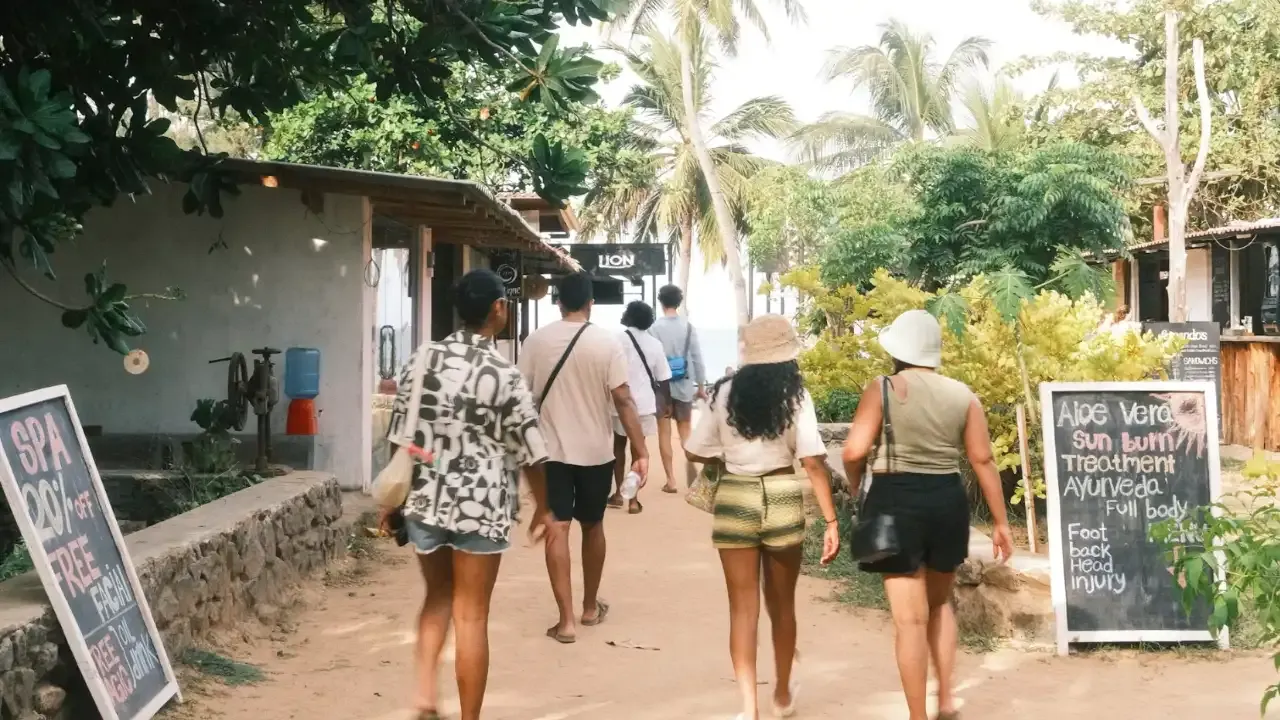
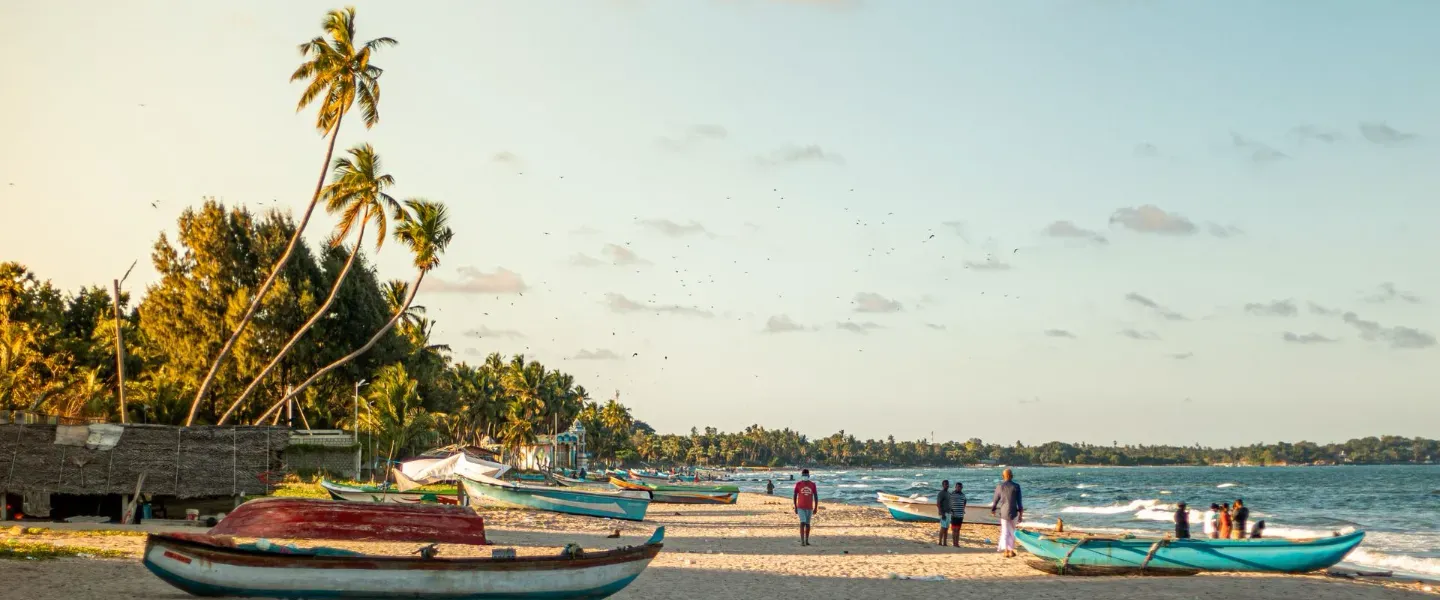
Trincomalee is a port town first, and the beaches most visitors come for start about ten minutes north of it. The harbor is the reason the town is here at all: one of the deepest natural harbors in the world, deep enough that Portuguese, Dutch and British fleets all wanted it, and the navy still keeps ships at anchor in the bay. Its streets mix Tamil, Sinhala and Muslim neighborhoods more closely than anywhere on the south coast. Most people stay in Uppuveli, which is close to town and its shops, or further up the coast in Nilaveli, which is quieter and nearer the boats.
Fort Frederick, the old Portuguese and Dutch fort on the headland, is still an army base, and you walk in through the gate past soldiers to reach Koneswaram temple at the end of the road. The kovil (Hindu temple) sits on Swami Rock high above the sea, rebuilt after the Portuguese pushed the original off the cliff, and spotted deer wander the path up to it. Go late in the afternoon, when families tie small wooden cradles to a tree near the edge, a prayer for children, and the light turns gold over the bay.
The water is the reason to come in the middle of the year. From Nilaveli, boats cross to Pigeon Island, a small national park where blacktip reef sharks cruise over the coral in water shallow enough to snorkel from the beach, and from about March to August the whale-watching boats head out past the harbor mouth. The snorkeling is better on a calm day and when fewer boats are in, and the reef off the beach gets busy by mid-morning. On a rough-sea day the Kanniya hot springs inland are the local alternative, seven walled wells where families splash buckets over each other.
Away from the hotel strip, the town still carries its recent history. The 2004 tsunami came ashore along this coast, and the war that ended in 2009 left its own marks here, so rebuilt blocks stand next to older walls. Behind the harbor, the ordinary neighborhoods are where the food matches the mix of people: Tamil rice and curry, Muslim short eats (pastries and patties you pay for by the piece), and whatever came off the boats that morning at the town fish market.
Where to Stay in Trincomalee
- Quiet beach, Pigeon Island boats
Nilaveli
Nilaveli, about 16 km north, is quieter and more spread out, and the boats to Pigeon Island National Park leave from its beach. There are few places to eat within walking distance, so most people eat at their hotel.
Good for: Snorkeling trips and a quieter beach
Skip if: You prefer a wider variety of dining and nightlife options within walking distance.
- Air Force resort, calm water
Marble Beach
Marble Beach, south of town near China Bay, is on Air Force land and has clear, calm water and a resort run by the Sri Lanka Air Force with cabanas and rooms. There are no independent restaurants nearby.
Good for: A quiet swim away from Uppuveli
Skip if: You want easy access to a variety of independent restaurants or a lively atmosphere.
- Harbor views
Orr's Hill
Orr's Hill is the headland above the inner harbor, with views over the harbor and Dutch Bay. It is a stop on a drive around town, not a place to stay.
Good for: Harbor views
Skip if: You are looking for beach access or a wide selection of dining options, as it is primarily a day-visit area.
- Banks, markets, transport
Trincomalee Town
Trincomalee town has the bus station, banks, markets and the fish market, and it is the base for Fort Frederick and Koneswaram temple. Few visitors stay here, and rooms are basic.
Good for: Budget stays and early buses
Skip if: You prioritize a beach resort atmosphere or quiet surroundings.
- Beach, most guesthouses
Uppuveli
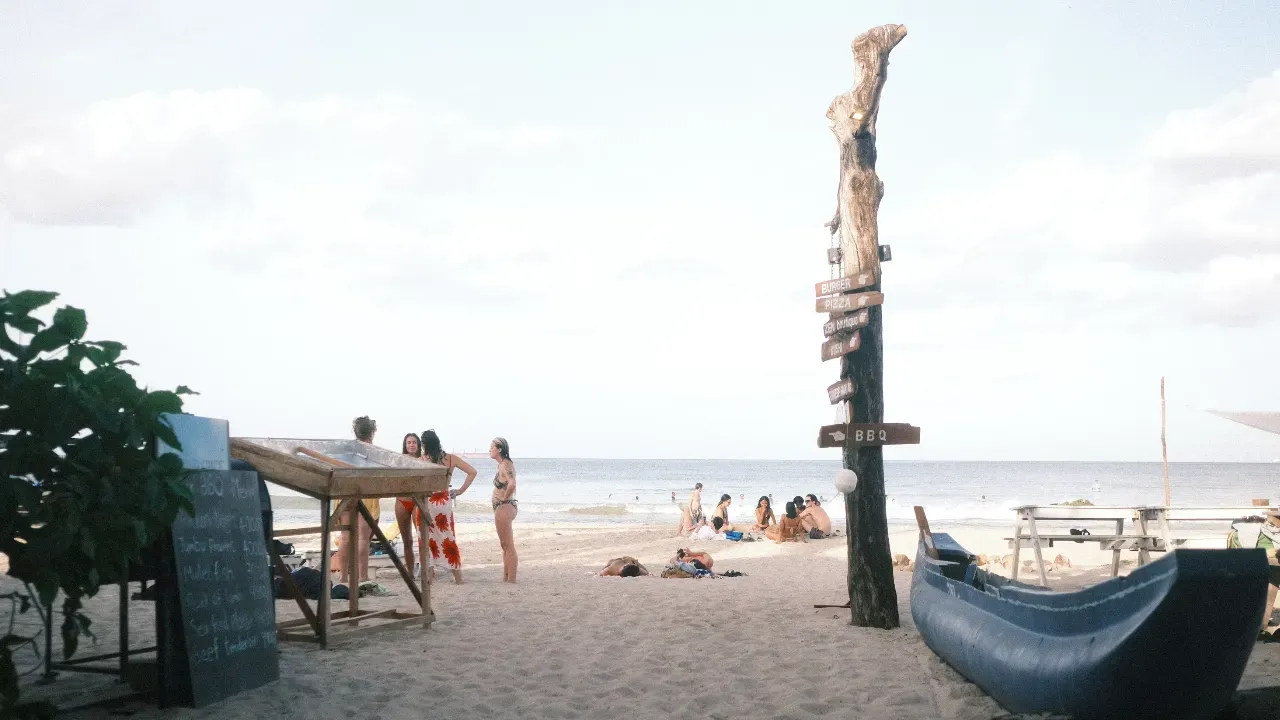
Uppuveli, about 5 km north of town, is where most visitors stay: a long beach backed by guesthouses, dive shops and beach restaurants like Fernando's Beach Bar, with calm water for swimming from March to September.
Good for: First visits and a beach base with restaurants
Skip if: You want a quiet beach
- Town beach, fort views
Dutch Bay
Dutch Bay is the small beach between the town and Fort Frederick, with the fort's walls at one end and deer wandering along the shore. It is a place for a walk, not a beach base.
Good for: A walk before or after Fort Frederick
Skip if: You want to swim or stay on the beach
- Temples, headland
Fort Frederick
The headland fort holds Koneswaram temple and the Buddhist Gokanna Vihara, with the harbor on one side and the open sea on the other. It is a day visit; there is nowhere to stay inside.
Good for: Temples and the view
Skip if: You are looking for a place to stay
Frequently Asked Questions
Planning & moving around
-
How many days do you need in Trincomalee?
Plan on three to four days. That gives you enough time for Uppuveli Beach, a boat trip to Pigeon Island, and a visit to Koneswaram Temple without rushing. If you want to dive or snorkel extensively, add another day or two.
-
What's the best neighborhood to stay in Trincomalee?
Uppuveli is the most popular base, with the most guesthouses, restaurants and dive shops. Nilaveli, further north, is quieter and closer to the Pigeon Island boats.
-
Can you do day trips from Trincomalee?
Pigeon Island is a half-day snorkeling trip from Nilaveli, and Fort Frederick and Koneswaram temple are in town. Further out, the elephant safaris at Minneriya and Kaudulla national parks are about two hours' drive each way.
-
When can you go whale watching in Trincomalee?
Boats run from about March to August, when the sea off the harbor mouth is calm enough. Blue whales and sperm whales pass this coast, and trips stop once the northeast monsoon arrives. Boats leave not long after first light.
-
Is Pigeon Island worth the trip?
Yes, if you want to snorkel rather than lie on the sand. The reef is shallow enough to swim out to from the island beach, with coral, reef fish and blacktip reef sharks. The park charges an entry fee on top of the boat, and the reef gets crowded when several boats land together, so take the first boat of the day.
-
What happens if the sea is too rough for a boat trip?
Operators cancel, and that is the right call. From October to January the sea is often too rough for Pigeon Island, and the whale trips stop as well. Ask about refunds when you book, and keep a spare day if the trip is the reason you came.
-
Do you need a scooter in Trincomalee?
A scooter is handy between Uppuveli and town and costs about LKR 1,500 to 2,500 a day, but you need a Sri Lankan permit on top of your home license. Tuk-tuks are easy to find if you would rather not ride.
-
What apps should you download for Trincomalee?
PickMe has drivers in Trincomalee and Uppuveli, though fewer than in Colombo, and Google Maps works well for getting around.
-
Is it safe to drive around Trincomalee at night?
Wild elephants cross the roads north of Nilaveli and inland toward Habarana after dark, and the buses do not slow down for much. Do the long drives in daylight if you can.
Safety & medical
-
Is it safe to walk alone at night in Trincomalee?
Stick to well-lit, populated areas like the main beach road in Uppuveli. Solo female travelers should exercise extra caution and consider taking a tuk-tuk after dark, even for short distances.
-
Is it safe to walk in the countryside around Trincomalee?
Stay on roads and cleared paths. Mine clearance is still going on in parts of the Eastern Province, and land away from the main roads has not all been cleared. The beaches, the town and the main roads are not affected.
-
What kind of illnesses should you watch out for?
Dengue fever is a risk, so use mosquito repellent consistently. Traveler's diarrhea is also common; drink bottled water and be careful with street food. Seek medical attention for persistent symptoms.
-
Do you need travel insurance for Sri Lanka?
It isn't required, but take a policy that covers medical evacuation, and diving if you plan to dive.
Laws & local norms
-
What are the drug laws in Sri Lanka?
Sri Lanka has very strict anti-drug laws, including for cannabis. Penalties are severe and can include long prison sentences. Do not carry or use any illicit substances.
-
Is vaping allowed in Trincomalee?
Treat vapes as banned. Sri Lanka prohibits importing and selling e-cigarettes, so customs can confiscate one from your bag, and you cannot legally buy refills. Leave it at home.
Culture & etiquette
-
What's the dress code for temples in Trincomalee?
When visiting religious sites like Koneswaram Temple, dress modestly. Shoulders and knees must be covered. It is respectful to remove your shoes before entering.
-
Can you take photos of locals in Trincomalee?
Ask before photographing people, especially children, and put the camera away if someone says no.
Food & drink
-
Where do locals eat in Trincomalee?
Small rice and curry shops in town and along the road to Uppuveli serve a lunch plate for a few dollars. The fish market in town is where to see what came in that morning.
-
What local dishes should you try in Trincomalee?
Seafood is the thing to eat here, especially crab curry. Kottu roti (chopped flatbread fried with vegetables or meat) is the evening staple, and hoppers (bowl-shaped rice pancakes) are for breakfast.
Families & kids
-
Is Trincomalee good for families with kids?
Yes. The calm water at Uppuveli is good for swimming with children from March to September, and Pigeon Island is a good outing for older kids who can snorkel.
Staying longer
-
Is Trincomalee a good place to work remotely?
Not really, and it is not where Sri Lanka keeps its remote workers. There is no coworking space, the cafes are beach restaurants rather than laptop spots, and guesthouse Wi-Fi is inconsistent enough that most people run a local SIM as the main connection. The nomad scene is on the south coast, around Weligama, Ahangama and Hiriketiya, where the flat whites and the coworking desks are. Trincomalee works for a week of working half-days between snorkel trips, not for a month of calls.
After dark
-
What's the nightlife like in Trincomalee?
Trincomalee is not a party destination. Nightlife is very low-key, centered around beachside restaurants and a few bars in Uppuveli that close relatively early. Expect quiet evenings.