
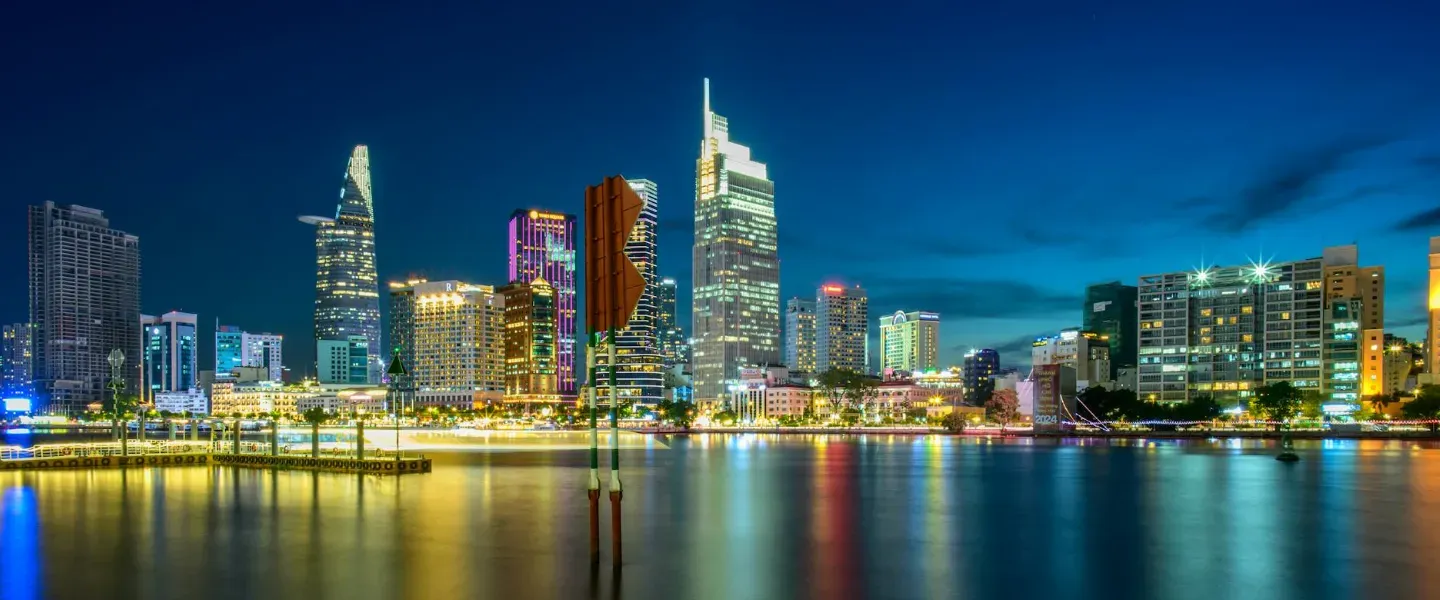
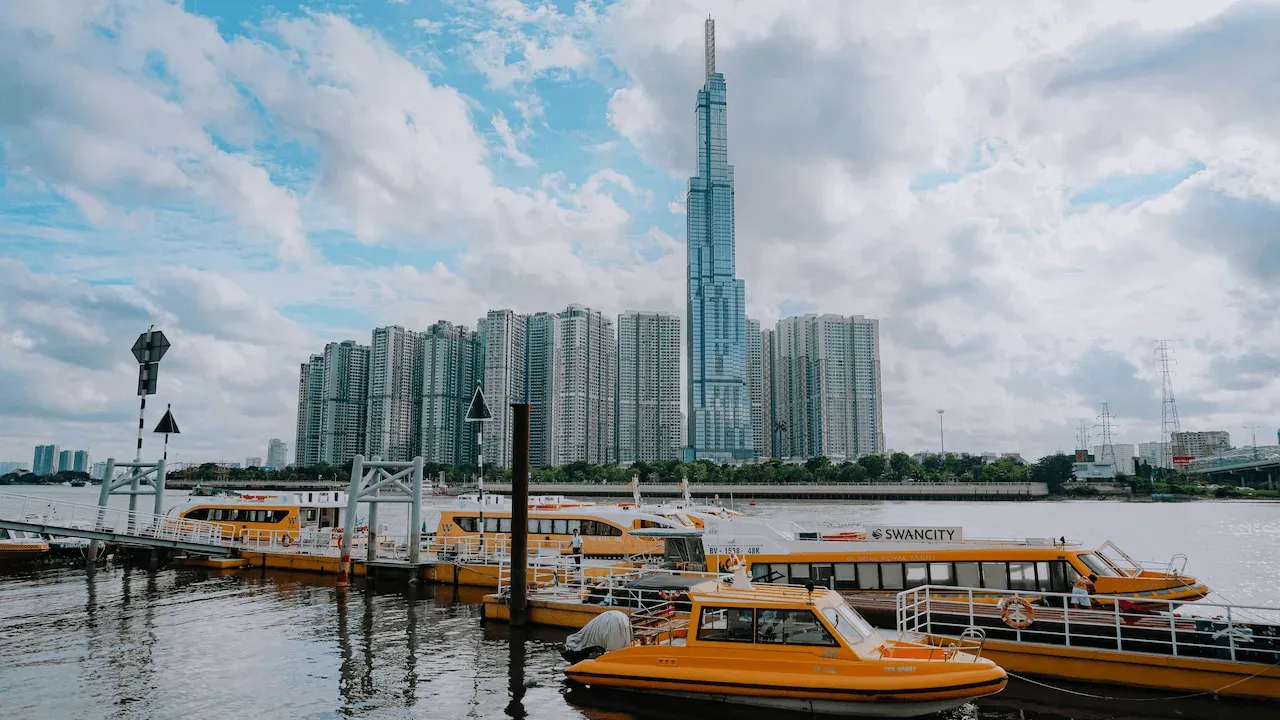
Ho Chi Minh City Right Now
Ongoing flooding is affecting several roads in Ho Chi Minh City due to heavy rainfall and high tides. Localized traffic disruptions are likely to continue.
1st International Ethnic Folklore Festival · Ho Chi Minh City
General Levy Live in Saigon · Blue Monkey Saigon, Ho Chi Minh City
Interest in travel to Ho Chi Minh City rose 32% from a year ago, suggesting demand is growing.
Best time to visit Ho Chi Minh City
Not the best time to visitUrban flooding
Heavy rain still hits often, but the season starts easing late in the month as skies slowly clear.
Score by month
Visit between December and March for the driest weather, lower humidity, and the most comfortable conditions for exploring the city's markets, cafes, and historic districts on foot. Avoid the heart of the wet season from June through September, when heavy afternoon downpours regularly disrupt sightseeing and worsen traffic. Christmas, New Year, and Lunar New Year bring bigger crowds, so book early or aim for the quieter weeks around them.
Day-to-day in Ho Chi Minh City
Walkability
42/100
Central Ho Chi Minh City keeps food, cafes, shops, and major sights fairly close, but walking is rarely smooth. Pavements are often blocked, and crossing wide scooter-filled roads demands patience and confidence.
Pavements are often narrow, uneven, or interrupted by parked motorbikes, vendors, construction, and street furniture, forcing pedestrians into the road.
District 1 and nearby parts of District 3 place restaurants, cafes, shops, and major sights within manageable walking distance, though trips between districts usually need transport.
Heavy scooter traffic, turning vehicles, limited pedestrian priority, and inconsistent crossings make road crossings stressful even in central districts.
Heat and humidity make twenty-minute walks uncomfortable for most of the year, and wet months pile on top.
-
Monthly cost
$964 / month
AFFORDABLESolo mid-range stay including rent, daily eating out, groceries, and routine costs.
-
Food and Markets
Daily life often revolves around eating outside, from early rice and noodle stalls to late seafood tables. Co Giang is useful near District 1, Vinh Khanh in District 4 is known for seafood and snails, and Cholon adds markets and Chinese-Vietnamese cooking.
-
Coworking
$98 / month
VERY AFFORDABLEDedicated coworking is easy to find in District 1 and Thao Dien, with established operators including Dreamplex, the Hive, and Toong. These spaces generally have dependable air conditioning, wifi, and meeting rooms; working from cafes is easy but noise, seating, and power access are inconsistent.
-
Local gym
$39 / month
AFFORDABLEGym quality varies widely, from basic neighborhood weight rooms to polished chains such as California Fitness and Yoga, with branches across central districts and Thao Dien. Saigon Sports Club in District 7 is a stronger pick for boxing, Muay Thai, and combat sports, while drop-in access varies and larger clubs often push memberships.
Need to Know
- Population
- 9,521,886 GSO · 2024 (city)
- Currency
- Vietnamese dong (VND)
- Language
- Vietnamese; English is common in tourist-facing businesses but limited elsewhere.
- Tap water
- Not safe to drink
- Time zone
- ICT (UTC+7)
- Power plug
- Type A / C, 220V
- Dialing code
- +84
- Driving side
- Right
- Tipping
- Not expected; small tips are appreciated for guides, spa staff, and good service.
- Internet
- Reliable 4G and 5G are widely available in central areas; cafe and hotel Wi-Fi is common but quality varies.
- Emergency
- 112 (search and rescue), 113 (police), 114 (fire), 115 (ambulance)
When not to go
-
Skip Tet for Normal City Life
Late Jan – mid-Feb · lunar calendarAvoid Ho Chi Minh City during Tet if you want its normal street-food and cafe rhythm. Many family-run restaurants, markets, and services close as residents leave the city, while flights, trains, and buses around the holiday are heavily strained. Come outside Tet week, or choose Bangkok for a city break that keeps running.
Go here instead:
- Bangkok Street food and city services keep operating through Lunar New Year.
Upcoming Events & Holidays in Ho Chi Minh City
Upcoming events, next 30 days
On the horizon
Public holidays & observances, next 12 months
Dates are researched and checked, but events move. Always confirm with the official source before you book anything around them.
Getting To Ho Chi Minh City
-
From Tan Son Nhat Airport (SGN)
About 7 km from District 1; allow 25 to 60 minutes
International flights use Terminal 2, while domestic flights use Terminals 1 and 3. Follow signs to the official taxi rank or the designated ride-hailing pickup area, and allow extra time during weekday commuter traffic.
Direct flights to Ho Chi Minh City
Serves 78 direct destinations, 64 international and 14 domestic, about 379 flights a day.
International 64- Bangkok BKK Thailand
 Thai Airways International
  Thai Vietjet Air V VECA VietJetAir
  Vietnam Airlines 14/day
 - Singapore SIN Singapore
 Scoot
Scoot  Singapore Airlines VietJetAir Vietnam Airlines 13/day
 - Taipei TPE Taiwan
 China Airlines
  EVA Air
  Starlux Airlines VietJetAir Vietnam Airlines 10/day
 - Kuala Lumpur KUL Malaysia
 AirAsia
  Malaysia Airlines VietJetAir Vietnam Airlines 9/day
- Seoul ICN South Korea
 Asiana Airlines
  Korean Air VietJetAir Vietnam Airlines 9/day
 - Guangzhou CAN China
 China Southern Airlines
  Spring Airlines VietJetAir Vietnam Airlines 7/day
 - Hong Kong HKG Hong Kong
 Cathay Pacific
  United Airlines VietJetAir Vietnam Airlines 7/day
 - Shanghai PVG China
 China Eastern Airlines China Southern Airlines
  Juneyao Airlines VietJetAir Vietnam Airlines 6/day
 - Phnom Penh KTI Cambodia
 Cambodia Angkor Air
  Qatar Airways Vietnam Airlines 5/day
 - Manila MNL Philippines
 Cebu Pacific Air
  Philippine Airlines VietJetAir Vietnam Airlines 4/day
 - Siem Reap SAI Cambodia Cambodia Angkor Air Vietnam Airlines 4/day
- Tokyo NRT Japan
 ANA
ANA  Japan Airlines Vietnam Airlines 3/day
 - Shenzhen SZX China China Southern Airlines
 Shenzhen Airlines 3/day
 - Bangkok DMK Thailand Thai AirAsia 3/day
- Kaohsiung City KHH Taiwan VietJetAir Vietnam Airlines 3/day
- Sydney SYD Australia
 Jetstar VietJetAir Vietnam Airlines 3/day
 - Melbourne MEL Australia Jetstar VietJetAir Vietnam Airlines 3/day
- Bali DPS Indonesia VietJetAir Vietnam Airlines 1-2/day
- Xiamen XMN China
 Xiamen Airlines 1-2/day
 - Busan PUS South Korea VietJetAir Vietnam Airlines 1-2/day
- Taichung City RMQ TaiwanM Mandarin Airlines VietJetAir 1-2/day
- Osaka KIX Japan VietJetAir Vietnam Airlines 1-2/day
- New Delhi DEL India
 Air India VietJetAir Vietnam Airlines 1-2/day
 - Beijing PKX China VietJetAir Vietnam Airlines 1-2/day
- Phuket HKT Thailand VietJetAir Vietnam Airlines 1-2/day
- Perth PER Australia VietJetAir Vietnam Airlines ~1/day
- Hangzhou HGH China China Eastern Airlines Xiamen Airlines ~1/day
- Dubai DXB United Arab Emirates
 Emirates ~1/day
 - Mumbai BOM India VietJetAir Vietnam Airlines ~1/day
- Senai JHB Malaysia AirAsia ~1/day
- Kunming KMG China China Eastern Airlines ~1/day
- Penang PEN Malaysia AirAsia ~1/day
- Vientiane VTE Laos VietJetAir ~1/day
- Nanjing NKG China China Eastern Airlines ~1/day
- Jakarta CGK Indonesia VietJetAir Vietnam Airlines ~1/day
- Frankfurt FRA Germany Vietnam Airlines ~1/day
- Tokoname NGO Japan Vietnam Airlines ~1/day
- Tokyo HND Japan VietJetAir ~1/day
- Chengdu TFU ChinaS Sichuan Airlines~1/day
- Qingdao TAO ChinaQ Qingdao Airlines
 Shandong Airlines ~1/day
 - Bangalore BLR India VietJetAir 5/week
- Brisbane BNE Australia VietJetAir 5/week
- San Francisco SFO United States Vietnam Airlines 5/week
- Sihanukville KOS Cambodia Cambodia Angkor Air 5/week
- Wuhan WUH China China Southern Airlines 5/week
- Ahmedabad AMD India VietJetAir 4/week
- Bandar Seri Begawan BWN BruneiR Royal Brunei Airlines4/week
- Kolkata CCU India
 IndiGo 4/week
 - Paris CDG FranceA Air France4/week
- Beijing PEK China
 Air China 4/week
 - Chongqing CKG China Air China 4/week
- Guiyang KWE ChinaC Colorful Guizhou Airlines4/week
- Copenhagen CPH Denmark Vietnam Airlines 3/week
- Fukuoka FUK Japan Vietnam Airlines 3/week
- Hyderabad HYD India VietJetAir 3/week
- Yangon RGN Myanmar
 Myanmar Airways International 3/week
 - Haikou HAK China
 Hainan Airlines 3/week
 - Lijiang LJG ChinaR Ruili Airlines3/week
- London LHR United Kingdom Vietnam Airlines 2/week
- Moscow SVO Russia
 Aeroflot 2/week
 - Munich MUC Germany Vietnam Airlines 2/week
- Kota Kinabalu BKI Malaysia AirAsia 1/week
- Paris LBG France Vietnam Airlines 1/week
- Jinan TNA China Shandong Airlines 1/week
Within Vietnam 14
- Hanoi HAN9 9G Rail V VECA VietJetAir Vietnam Airlines 71/day
- Da Nang DAD9 9G Rail V VECA VietJetAir Vietnam Airlines 44/day
- Duong Dong PQC9 9G Rail V VECA VietJetAir Vietnam Airlines 25/day
- Vinh VIIV VECA VietJetAir Vietnam Airlines 16/day
- Haiphong HPH VietJetAir Vietnam Airlines 16/day
- Huế HUI VietJetAir Vietnam Airlines 15/day
- Nha Trang CXR VietJetAir Vietnam Airlines 11/day
- Quy Nohn UIH VietJetAir Vietnam Airlines 9/day
- Dung Quat Bay VCL VietJetAir Vietnam Airlines 8/day
- Buon Ma Thuot BMV VietJetAir Vietnam Airlines 5/day
- Dong Hoi VDH VietJetAir Vietnam Airlines 5/day
- Pleiku PXU VietJetAir Vietnam Airlines 5/day
- Tuy Hoa TBB VietJetAir Vietnam Airlines 1-2/day
- Van Don VDO9 9G Rail5/week
Nonstop routes only. Flights per day are an average, each way. Data: AeroDataBox, updated July 2026.
Visa rules apply at the country level. See the full Vietnam visa guide, with every visa and its official do-it-yourself cost. -
Safety Advice
Petty theft, especially bag snatching from scooters, is common. Traffic is chaotic; scooter accidents are frequent. Avoid political demonstrations.
Common Scams in Ho Chi Minh City
-
Motorbike Rental Damage Claims
HIGH RISKTrigger:A rental shop demands your passport and skips a damage inspection
The shop later blames you for existing scratches or mechanical problems and demands an inflated repair payment. Refusing can become difficult if staff still hold your passport.
How to avoid: Photograph every panel, wheel, mirror, and gauge with staff present, and get the condition recorded in writing. Leave a cash deposit or passport copy, never the original passport.
-
Bui Vien Bar Tab Padding
HIGH RISKTrigger:Staff push a running tab or add drinks you never ordered
Some bars around Bui Vien add mystery drinks, service charges, or altered totals after customers have been drinking. Disputes can bring aggressive staff or security into the conversation.
How to avoid: Check menu prices before ordering and pay after each round. Photograph the menu and receipt, and leave early if staff refuse to explain charges.
-
ATM Skimming
HIGH RISKTrigger:The card slot feels loose or someone offers help nearby
A modified card slot or hidden camera captures card details and the PIN, allowing later unauthorised withdrawals. Distraction or assistance from a stranger can be part of the setup.
How to avoid: Use ATMs inside staffed bank branches, reputable hotels, or shopping centers. Cover the keypad, inspect the slot, and lock the card immediately if the machine behaves oddly.
-
Rigged Taxi Meters
MEDIUM RISKTrigger:A driver avoids the official rank or the meter climbs unusually fast
Unlicensed or imitation taxis use fast meters, long detours, or invented flat fares, especially around Tan Son Nhat Airport and tourist areas. The usual result is a heavily inflated fare.
How to avoid: Book through Grab or Be, or use clearly marked Vinasun or Mai Linh taxis from official ranks. Confirm the plate and driver details before entering.
-
Cyclo Fare Switching
MEDIUM RISKTrigger:A cyclo driver quotes a cheap ride without defining the total fare
At the end, the driver claims the price was per person, per minute, or only one way. The argument often happens after the ride, when walking away is less simple.
How to avoid: Book through a hotel or established tour operator. Agree in writing on the full route, duration, and total fare before sitting down.
Mistakes to Avoid
-
Drinking Tap Water
SERIOUS CONSEQUENCETap water is unsafe to drink and can cause gastrointestinal illness. A short stay can turn into several days spent near a bathroom.
Fix: Use sealed bottled water or a reliable filter for drinking and brushing teeth. Boil tap water for at least one minute when no safer option is available.
-
Riding Without a Helmet
SERIOUS CONSEQUENCEMotorbike passengers and riders must wear helmets, and riding without one leaves the head unprotected in dense, unpredictable traffic. A collision can cause severe injury.
Fix: Wear a properly fastened helmet that fits and has a solid shell. Refuse a ride if the driver cannot provide one.
-
Freezing Midway Across Traffic
SERIOUS CONSEQUENCEStopping or suddenly reversing in a stream of scooters makes your movement difficult for riders to predict. The result can be a collision, not merely an awkward crossing.
Fix: Use marked crossings where possible, wait for a manageable gap, and walk at a steady, predictable pace. Never step out assuming vehicles will stop.
-
Dressing Poorly at Temples
Pagodas and temples are active places of worship, and exposed shoulders or very short clothing can cause genuine offense. Visitors may also be refused entry.
Fix: Cover shoulders and knees, lower your voice, and follow posted rules. Carry a light layer rather than improvising at the entrance.
Money & Payments
Carry cash for street food, use cards at larger businesses, and always choose VND to avoid DCC.
-
Carry Small Dong Notes
Street-food stalls, wet markets, small shops, and many independent vendors still expect cash. Carry VND 10,000, 20,000, 50,000, and 100,000 notes, since Ben Thanh and neighborhood-market sellers may struggle to change VND 500,000 notes.
-
Cards Work at Larger Businesses
Visa and Mastercard work reliably at major hotels, malls, supermarkets, and many higher-end restaurants in District 1 and Thao Dien; Amex and Discover have thinner acceptance. Some smaller hotels, tour operators, and restaurants add a 2-3% card surcharge, so ask before paying.
-
ATM Fees Vary by Bank
ATMs from Vietcombank, BIDV, Techcombank, and VPBank are easy to find across central Ho Chi Minh City. Foreign-card limits often sit around VND 2,000,000-5,000,000 [USD 80-200] per withdrawal, while local fees range from zero at some machines to roughly VND 22,000-55,000 [USD 1-2], plus any home-bank charge.
-
Choose VND at Every Terminal
Card terminals and ATMs may offer to charge your home currency instead of VND. Decline that conversion and choose VND, because dynamic currency conversion usually uses a worse exchange rate.
-
Local Wallets Need Local Setup
MoMo, ZaloPay, VNPAY, and VietQR are common around Ho Chi Minh City, but most short-stay visitors cannot use their full functions without local banking or identity verification. Grab and Xanh SM remain easier for tourists because their apps accept supported international cards.
-
Departure Tax Is Included
International and domestic passenger charges at Tan Son Nhat Airport are normally built into the airline ticket. Ignore anyone asking for a separate departure-tax payment at SGN.
-
Use Licensed Exchange Counters
Exchange foreign cash only at banks or licensed counters, including authorised desks at Tan Son Nhat Airport and established central-city branches. Decree 340/2025 took effect on 9 February 2026 and strengthened penalties for unauthorised foreign-currency trading, so do not assume every gold shop is legal.
-
International Transfers
To send money to a bank account in Vietnam, for things like rent or day-to-day expenses, services like Wise or Remitly usually offer better rates than traditional banks and faster delivery.
You'll typically need the recipient's full name, account number, and SWIFT/BIC code. Some banks may also require a local address.
Costs in Ho Chi Minh City
Vietnam is one of the cheapest countries in the region. Local food, coffee and a scooter cost very little, and rent is low outside the big cities. Imported goods and Western restaurants are the pricey exceptions.
Save money?
Sign up for our guide on how to save money on your next trip.
SIM Cards & Data
Best option for most travelers: an eSIM you set up before you arrive. You'll be online the moment you land, with no airport line and no tourist pricing.
Travel eSIMs Connect the second you land. Zero hassle. Skip the airport line and paperwork. Activate before you fly and land connected. Find the best eSIM →Prefer a local SIM?
Physical SIMs are sold at kiosks in the Terminal 2 international arrivals area at Tan Son Nhat Airport, but some counters are resellers rather than official Viettel, VinaPhone, or MobiFone stores. Airport packs are convenient but often cost more and offer less choice than official carrier shops in the city. Bring your original passport for mandatory registration, confirm the SIM is registered in your name, and test data before leaving the counter. All three major networks provide strong 4G and 5G coverage across Ho Chi Minh City; Viettel is usually the safer pick if you are continuing into rural areas or the Mekong Delta.
What Ho Chi Minh City is Like
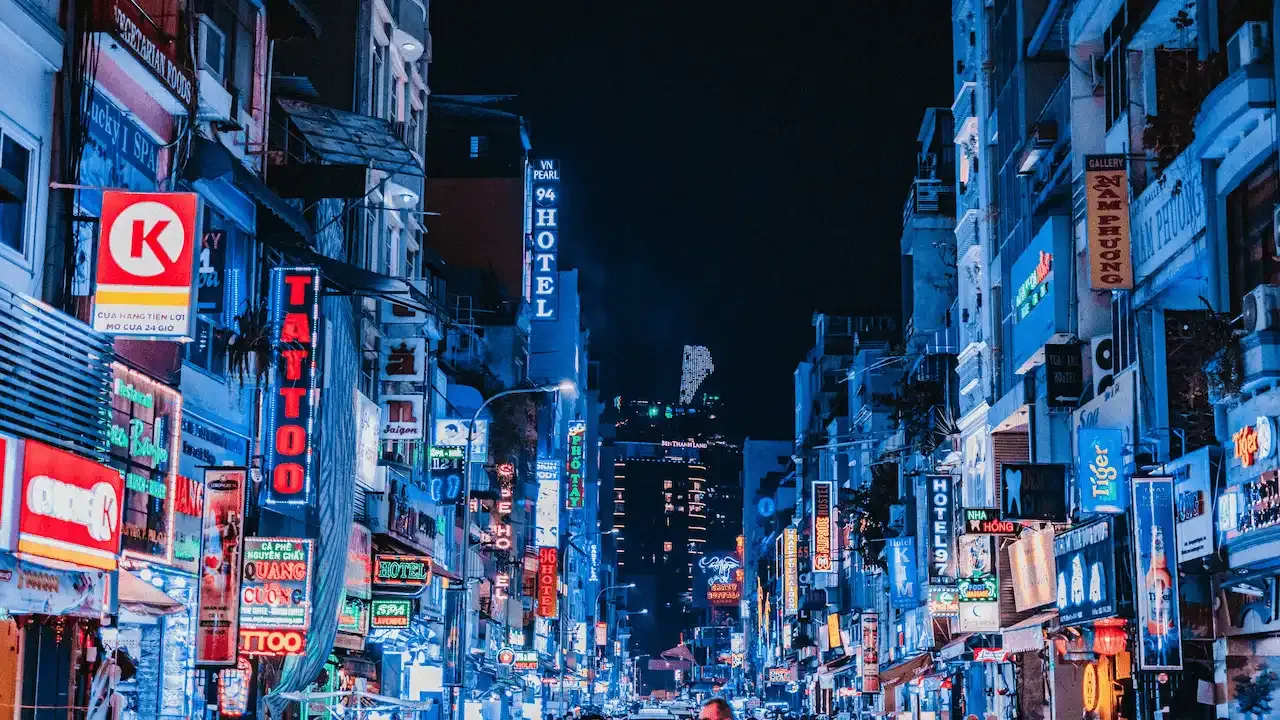
The reason to come is not one monument or museum, but the daily habit of eating and drinking in public. Mornings begin with metal coffee filters dripping onto condensed milk, lunches arrive on plastic stools beside parked scooters, and dinner can stretch from grilled shellfish on Vinh Khanh Street to a bowl of noodles eaten under fluorescent light. The best meals rarely announce themselves with polished signage; they reveal themselves through a full row of motorbikes and a cook who has made the same dish all afternoon.
History sits close to the surface, but it is rarely presented with the clean distance visitors expect. The War Remnants Museum is blunt, Reunification Palace feels preserved in an uneasy pause, and older apartment blocks hide cafes, workshops, and families behind facades that look ready to surrender. Colonial buildings around Dong Khoi remain photogenic, but the more revealing moments happen when a military-era structure is being used for something entirely ordinary. The city does not package its past neatly. That discomfort is part of the point.
District 1 gets most first-time visitors because it keeps major sights close, but staying there too long can flatten the city into rooftop bars, tour desks, and Bui Vien noise. District 3 is better for shaded streets and old villas, Cholon carries a denser Chinese-Vietnamese identity through temples and markets, and Thao Dien feels like a separate expatriate bubble with polished cafes and imported habits. None of these areas tells the whole story. The city changes character every few kilometers, often without warning.
Anyone who needs quiet streets, graceful public space, or a gentle introduction to Southeast Asian cities will find the place exhausting. The heat lingers, construction noise starts early, and even pleasant streets can become awkward once scooters claim the sidewalk and traffic thickens. Ho Chi Minh City works better for travelers who are willing to sit, watch, eat, and let the day unfold around them rather than force it into a sightseeing schedule. It is demanding, but rarely dull.
Palace Interiors
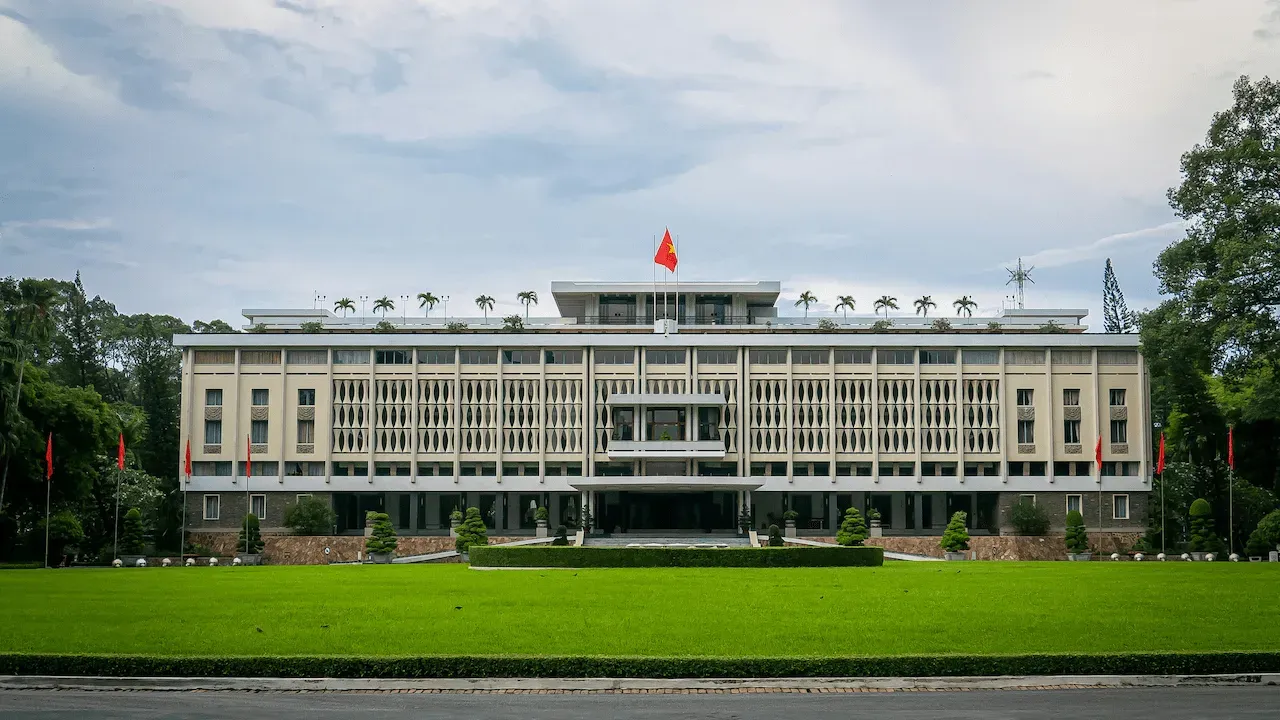
The least interesting thing at Reunification Palace is the photo everyone takes outside. The better reason to visit is inside, where banquet halls, reception rooms, maps, radios, and heavy furniture seem to have been left mid-meeting rather than lovingly restored. The building is tropical modernism doing government work, all clean lines, shaded corridors, polished floors, and rooms designed for decisions made by men who expected history to wait outside the door. It feels less like a monument than an office where nobody came back after lunch.
Move slowly through the upper floors and the odd details start doing the work: a circular sofa arrangement built for controlled conversation, thick carpets under hard official portraits, telephones placed with the seriousness of military equipment. The rooftop helipad gets the attention, but the basement command rooms are stronger. Down there, the air turns stale, the ceilings drop, and the maps and radio gear make the palace feel less theatrical and more nervous. That is where the building stops posing.
The mistake is treating the palace as a quick stop between the War Remnants Museum and coffee. The famous tanks at the gate are useful context, but they flatten the visit into a single image. Inside, the appeal is slower and stranger: not nostalgia, not beauty, but the preserved texture of power before it became a museum label. Give it time, read the rooms, and ignore anyone rushing straight back to the courtyard. The interiors are the point.
Where to Stay in Ho Chi Minh City
- Cafes, local food, old villas
District 3
District 3 sits close to the center without feeling arranged around visitors, mixing old villas, apartment lanes, government buildings, cafes, and excellent neighborhood food. The War Remnants Museum is here, while many central sights remain a short ride away rather than an easy continuous walk. Accommodation is more scattered than around Ben Thanh, so the exact street matters. It is one of the better bases for seeing ordinary city life without giving up central access.
Good for: Cafe hopping, neighborhood food, longer stays, quieter central streets.
Skip if: You want every major sight and tour pickup within a short walk.
- Backpackers, nightlife, cheap stays
Pham Ngu Lao / Bui Vien
Pham Ngu Lao / Bui Vien is built around hostels, tour desks, cheap meals, bars, and travelers looking for company without much effort. Bui Vien becomes a walking street in the evening, when speakers, bar staff, and crowds compete for the same narrow strip. Quieter rooms exist on surrounding lanes, but bass and late-night traffic travel farther than hotel listings admit. Stay here for the social scene, not for sleep.
Good for: Backpackers, nightlife, meeting other travelers, cheap accommodation.
Skip if: You are a light sleeper or want evenings without bar noise.
- Central sights, markets, first visits
Ben Thanh
Ben Thanh puts first-time visitors beside the market, transport connections, tour offices, and many of the central sights they came to see. The streets stay busy with vendors, hotel entrances, buses, and motorbikes from morning into the evening, so the area rarely feels restful. Food choices are plentiful, though restaurants closest to the market often trade more on location than quality. It is practical rather than lovable.
Good for: First visits, central sightseeing, markets, short stays.
Skip if: You want quiet evenings or a neighborhood that feels removed from tourism.
- Local food, apartments, Landmark 81
Binh Thanh
Binh Thanh spreads from dense residential streets and traditional markets to the high-rise apartments around Landmark 81 and Vinhomes Central Park. Staying near the riverfront development gives you modern apartments, green space, and quick rides into the center, while deeper parts of the district feel far less visitor-oriented. Pavements and traffic vary sharply from one pocket to the next. Choose the exact location carefully.
Good for: Apartment stays, local food, riverfront walks, repeat visitors.
Skip if: You want major historical sights within walking distance or a clearly defined tourist district.
- Luxury hotels, architecture, shopping
Dong Khoi
Dong Khoi lines up landmark hotels, designer shops, colonial-era buildings, and the riverfront within an easy central pocket. Pavements are broader than in much of the city, and the immediate streets feel more controlled, though construction and traffic still break the illusion. Accommodation and dining here skew expensive, while everyday street life is thinner than in surrounding districts. After business hours, parts of the area become surprisingly subdued.
Good for: Luxury stays, architecture, central walks, polished restaurants.
Skip if: You want cheap rooms, late street life, or a neighborhood with a stronger local rhythm.
- Expat scene, international dining, families
Thao Dien
Thao Dien is the city's strongest international bubble, filled with apartment compounds, international schools, wine bars, studios, and restaurants serving food from far beyond Vietnam. Side streets can feel calmer and greener than the center, though flooding, construction, and rough sidewalks still interrupt the polished image. The metro improves central access, but sightseeing days still require more travel than a District 1 base. It works best when the neighborhood itself is part of the plan.
Good for: Families, longer stays, international dining, slower daily routines.
Skip if: You want Vietnamese street life outside your door or plan to sightsee on foot.
Frequently Asked Questions
Planning & moving around
-
How many days do you need in Ho Chi Minh City?
Three full days is enough for the central museums, neighborhoods, and a serious run at the food scene. Allow four or five days if you want one excursion, since squeezing both Cu Chi and the Mekong Delta into a short stay turns the trip into bus-window tourism.
-
What are the best day trips from Ho Chi Minh City?
Cu Chi is the easiest historical day trip, though the quality depends heavily on the tour and guide. Ben Tre gives a better introduction to the Mekong Delta than the most rushed package routes, but it is a long day and works better with an overnight stay. Vung Tau is useful for sea air, not for an exceptional beach.
-
What apps help you get around Ho Chi Minh City?
Grab, Be, and Xanh SM cover most ride-hailing needs, with Grab also useful for food delivery. GoMo by BusMap is the practical option for bus routes and arrival estimates, while HCMC Metro HURC covers stations and fares on Metro Line 1. Google Maps is useful for orientation but can be optimistic about walking routes.
-
What is the most common first-time mistake in Ho Chi Minh City?
The common mistake is treating the city as a checklist between two day trips. Reunification Palace, one museum, and Ben Thanh do not explain the place, and back-to-back excursions leave no time for District 3, Cholon, or a long lunch. Give the city at least one unscheduled day.
-
Is Ho Chi Minh City's metro useful for tourists?
Metro Line 1 is useful for trips between Ben Thanh, central District 1, Binh Thanh, Thao Dien, and eastern Thu Duc. It does not reach Tan Son Nhat Airport or most western districts, so it complements ride-hailing rather than replacing it. The HCMC Metro HURC app shows stations, entrances, and fares.
-
Which markets are worth visiting in Ho Chi Minh City?
Ben Thanh is central and easy, but it is built around visitors and persistent selling. Binh Tay in Cholon is better for understanding wholesale trade, while Tan Dinh mixes food, fabric, and neighborhood shopping. Visit early, when the markets are working rather than posing.
Safety & medical
-
Is Ho Chi Minh City safe at night?
Central areas remain busy late, but crowds do not protect phones or bags from snatch theft and pickpocketing. Bui Vien is noisy and heavily policed, yet drunken disputes and padded bills are more likely there than on quieter streets. Keep your phone away from the curb and book a Grab, Be, or Xanh SM ride when the streets thin out.
-
Is Ho Chi Minh City LGBTQ+ friendly?
Ho Chi Minh City has Vietnam's most visible queer scene, and same-sex couples can usually share rooms and visit nightlife venues without trouble. Same-sex relationships are legal, but marriages are not legally recognized and attitudes become more conservative outside queer-friendly spaces. Public affection attracts more attention than it would in many Western cities.
-
Where can children get medical care in Ho Chi Minh City?
CarePlus clinics and Vinmec Central Park offer paediatric services that are easier for many English-speaking visitors to navigate, while FV Hospital is another established private option. Children's Hospital 1 handles specialist and emergency paediatric cases, but language support can be less predictable. Call ahead for routine care and use a hospital emergency department for urgent symptoms.
-
Where should travelers seek medical care in Ho Chi Minh City?
FV Hospital, Vinmec Central Park, Raffles Medical, and CarePlus are common choices for English-speaking visitors seeking private care. Pharmacies are easy to find, but do not rely on counter advice for serious symptoms or prescription substitutions. Contact your insurer before non-emergency treatment when possible.
-
Is street food safe to eat in Ho Chi Minh City?
Busy stalls cooking food to order are usually a better bet than quiet counters holding prepared dishes in the heat. Choose places with fast turnover, clean utensils, and ingredients kept covered or cold. Ice from established restaurants and busy cafes is normally commercially produced, but skip anything that looks improvised or poorly stored.
Laws & local norms
-
Can you vape in Ho Chi Minh City?
No. Vietnam bans buying, using, possessing, selling, and bringing in e-cigarettes, vaping devices, and vaping liquids. Leave the device and cartridges at home rather than relying on uneven enforcement.
-
What are Vietnam's drug laws for travelers?
Vietnam imposes severe penalties for possessing, using, manufacturing, or trafficking illegal drugs, including cannabis. Travelers can face heavy fines and long prison sentences, and serious trafficking offenses can carry the death penalty. Do not carry recreational drugs, CBD products, or someone else's package through an airport.
-
What local etiquette matters in Ho Chi Minh City?
Remove shoes when a host does and follow signs at temples rather than assuming every doorway has the same rule. Use a calm tone during disagreements, dress modestly at religious sites, and avoid treating people or working alleys as photo props. Bargaining belongs in markets, not ordinary shops or restaurants.
Culture & etiquette
-
Should you call it Saigon or Ho Chi Minh City?
Ho Chi Minh City is the official name, while Saigon remains common in everyday speech, business names, and references to the older central city. Visitors can use either without causing offense. Follow the wording used by the person or organization you are speaking with.
Food & drink
-
Where should you eat pho in Ho Chi Minh City?
Phở Lệ in District 5 is a dependable stop for a rich southern-style bowl, while Phở Phượng in District 1 is another established choice. Go at breakfast or lunch, order what the room is eating, and do not expect every famous shop to have air conditioning or patient service.
-
Which dishes should you try in Ho Chi Minh City?
Start with cơm tấm, hủ tiếu Nam Vang, bánh xèo, bánh mì, and an evening plate of ốc. These dishes say more about southern eating than chasing pho at every meal. Busy specialist stalls usually outperform restaurants trying to serve the entire national menu.
-
Is vegetarian food easy to find in Ho Chi Minh City?
Yes. Look for the word chay, especially around Buddhist temples and on lunar observance days when vegetarian menus become more common. Hum Garden and Chay Garden are polished options, while neighborhood cơm chay shops are simpler and cheaper.
Families & kids
-
Is Ho Chi Minh City good for families with kids?
School-age children who enjoy food, museums, and busy city life can have a strong trip here. Toddlers are harder work because sidewalks are unreliable, traffic is intense, and midday heat limits outdoor time. Choose a hotel with a pool and plan fewer stops than you would without children.
-
Is Ho Chi Minh City stroller-friendly?
Not really. Broken sidewalks, parked scooters, steps, and heavy road crossings turn many short walks into repeated lifts and detours. A compact stroller works inside malls and parks such as Tao Dan or Vinhomes Central Park, but a baby carrier is often easier on ordinary streets.
After dark
-
What are the best nightlife areas in Ho Chi Minh City?
Bui Vien is the loud backpacker strip, while Dong Khoi and the streets around the Opera House lean toward cocktail bars and rooftops. Nguyen Hue is better for an evening walk than serious drinking, and Thao Dien has gastropubs and bars aimed at expatriates. Pick the area first because the nights are not interchangeable.
-
What is dating like in Ho Chi Minh City?
Dating apps are widely used, and the city has a large mix of locals, overseas Vietnamese, expatriates, and travelers. Social life is more private than Bui Vien suggests, so loud bar approaches are not a reliable picture of the wider dating culture. Meet in a public place and treat sudden requests for money as a firm exit signal.