
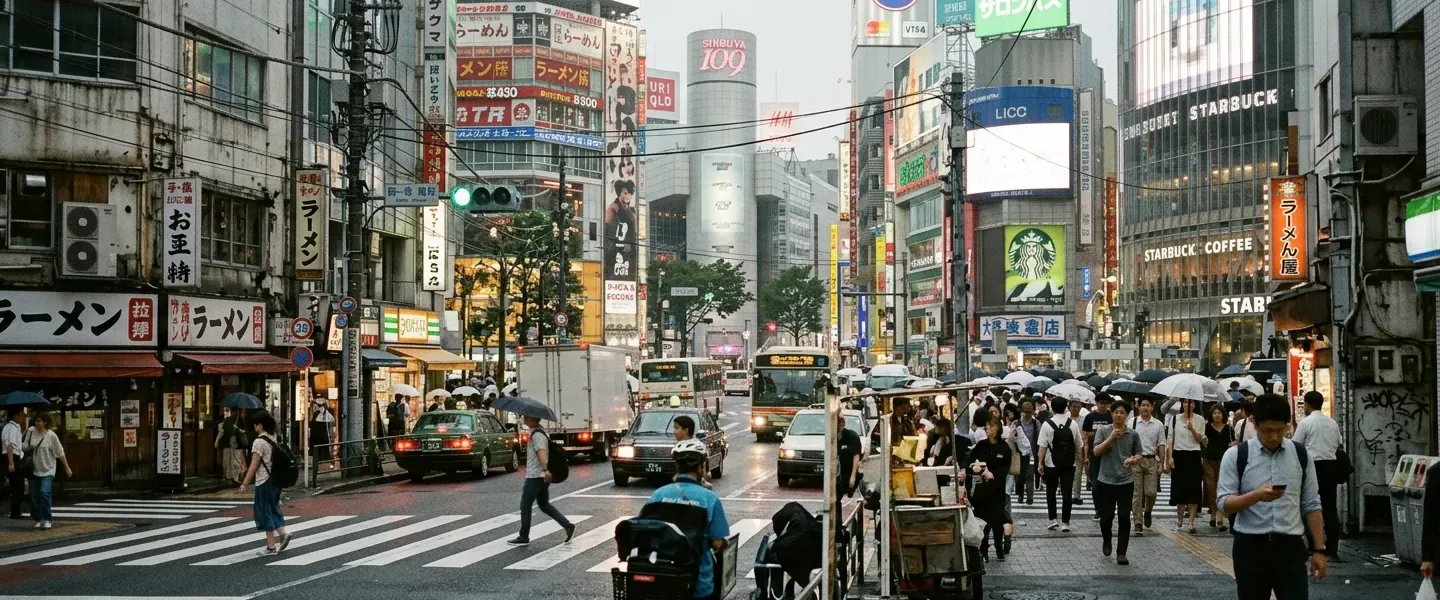
Tokyo Budget Calculator
- Housing + utilities $1,515 45%
- Food & drink $1,049 31%
- Getting around $229 7%
- Work + connectivity $311 9%
- Health, gym, fun $251 7%
These are mid-market figures. Paying with a typical bank card in Tokyo adds roughly 3% on top, about $101 a month on this budget. Find the best travel card for Tokyo →
A solo digital-nomad month, per person, side by side with places in the region.
A month here is about 120% of a mid-size US city, so it costs more than home.
See the cost breakdown
- Rent (1-bed) 1× 1-bed $1,420
- Utilities + internet flat estimate $95
- Eating out (local) 32 × $8.95 $286
- Eating out (mid-range) 16 × $25 $401
- Groceries (cooking in) 32 meals × $2.66 $85
- Coffees 45 × $4.85 $218
- Beers out 10 × $5.80 $58
- Getting around transit pass + 12 taxis $229
- Coworking $215/mo $215
- SIM / data 7-day SIM × 4 $96
- Gym $72/mo $72
- Massages 2 × $44 $87
- Health (amortised) GP + dentist ÷ 12 $12
- Nightlife / buffer flat estimate $80
Figures assume a long-term stay (30+ days) and cover rent, food, transport, internet and everyday spending. Flights, visas and insurance aren't included. Rent, utilities and internet are shared across the household; everything else is per person. Rent, food and transport use the prices listed below. Utilities, health costs spread over the year and a buffer for extras are estimates.
Prices last checked between May and August 2026
Average prices in Tokyo
Tokyo is a city where rent is a significant expense, with a one-bedroom apartment in the city center averaging around ¥172,672 per month. While a Big Mac is relatively affordable at ¥3.15, the influx of foreign investment and a weak yen have driven up property prices and rents in prime locations.
Where a business publishes a price we use it and name it: 68 of them sit behind the rows above, last checked between May and August 2026, and the i beside a price shows which. Where no business publishes one, a taxi fare or a long-term rent, the figure is an estimate drawn from published local sources. How these prices are collected ↗
Rent in Tokyo by area
Rent is the line that moves the total most, and it varies a lot by ward. Wards below are ordered most to least expensive against the city average, using our own estimates from local listings:
- Minato (Roppongi / Azabu) Pricier Minato covers Roppongi, Azabu and Akasaka, the most international and most expensive part of Tokyo. Rents here are well above the city average.
- Shibuya / Meguro Pricier Shibuya and neighboring Meguro are central, fashionable and full of cafes, with rents to match. Nakameguro and Daikanyama are the pricier pockets.
- Shinjuku Mid Shinjuku puts you on top of the busiest train hub in the world, with endless food and nightlife. Rents are around the city average, a touch above.
- Setagaya Mid Setagaya is where a lot of families and long-stayers live: leafy, calm and still well connected, with rents around or just below average.
- Nakano / Suginami Cheaper Nakano and Suginami are just west of the center, cheaper than the prime wards but still an easy train ride in. Popular with people who want space for less.
- Kita / Adachi Cheaper The northern outer wards like Kita and Adachi have the lowest rents on this list. The trade-off is a longer ride into the central districts.
Is Tokyo expensive?
Tokyo is expensive for rent and a night out, and surprisingly reasonable for daily basics. Trains, konbini food and a doctor visit around $45 all cost less than people expect. Where it climbs is central rent, izakaya evenings and imported groceries like cheese and fruit.
A comfortable month here is well above Thailand or Vietnam, and on our numbers it lands a little above a mid-size US city, though below the priciest Western capitals. What you get for it is Tokyo's trains and safety. Osaka and the smaller cities are cheaper again, which the Japan cost of living page breaks down.
Sending money to Tokyo
If you earn abroad, you are converting to yen, and the yen has swung hard lately. A weak rate plus a transfer fee can cost 3 to 5% each time, and it stings more here because the bills are bigger.
Move-in costs are the shock: a Tokyo rental often wants several months up front, including non-refundable key money, and landlords expect a Japanese bank transfer. Line up a cheap way to send money before you sign. Check what you would receive today, then the full Japan money guide covers IC cards, ATMs and cash.
What you'll receive today

Compare Providers









Paying rent, using ATMs, tapping a card? See the full Japan money guide.
Thinking about the move?
Sign up for our guide on living well abroad for less.
Frequently Asked Questions
-
How much do you need per month to live in Tokyo?
For one person, plan on about $1,520 for a basic setup, $3,350 for a comfortable digital-nomad month with a central one-bed and coworking, and $5,700 for a larger apartment with taxis and eating out often. Set your own household size, ward and currency in the calculator above.
-
Can you live in Tokyo on $2,000 a month?
It is tight but doable solo. You would rent a small place a few stops out, ride the trains, cook a lot and keep izakaya nights occasional. Central rent and a busy social life are what break that budget.
-
Is Tokyo really that expensive?
Less than its name suggests, outside rent. A nomad month averages around $3,350, more than double a Thai city, but daily costs like trains, konbini food and healthcare are cheap. It is central rent, key money and nights out that make the number.
-
What costs do people forget when budgeting for Tokyo?
The move-in bill, mostly. A rental can want several months up front, including key money you do not get back, plus a guarantor-company fee. After that it is how fast izakaya evenings add up, and the residence tax and health insurance if you stay long enough to owe them.
-
Do you need a car in Tokyo?
No. The train and subway network covers everything and is faster than driving, so the calculator budgets a metro and JR pass instead of a scooter or car. Most residents own neither. Taxis are there for late nights but add up quickly.