
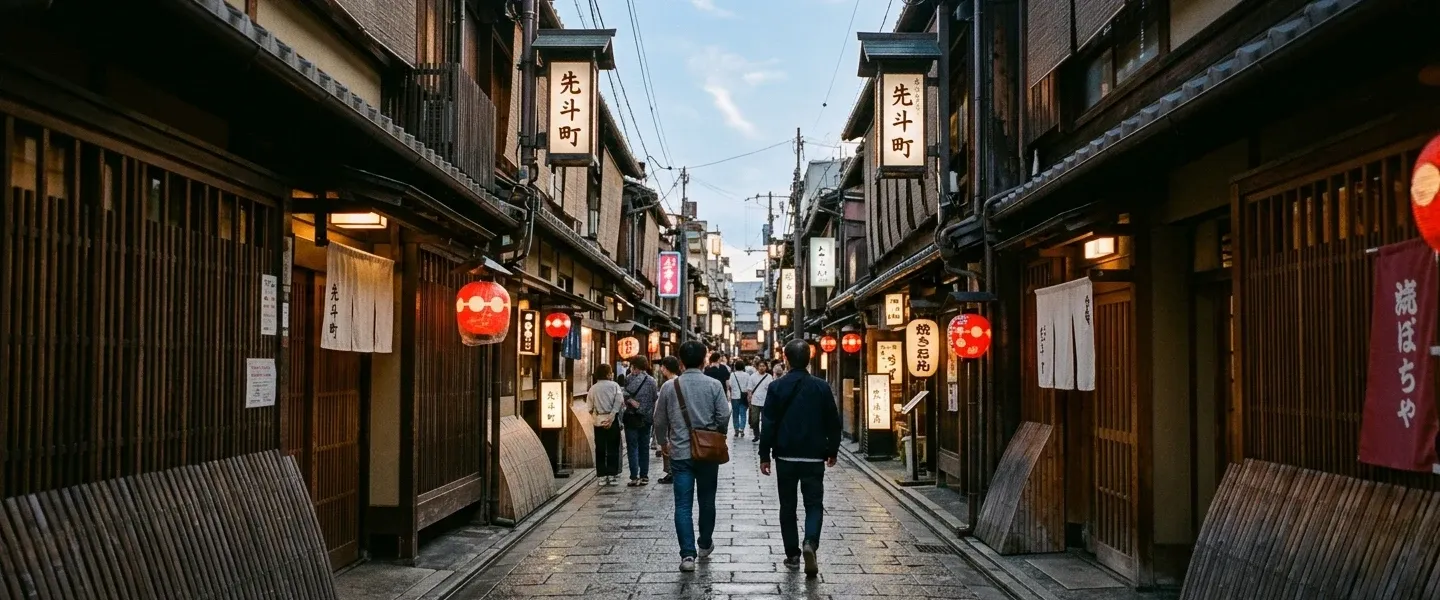
Japan is such a big country, with such different weather types, that no single set of numbers describes it. A national average falls between Hokkaido snow and Kyushu heat and matches neither, so the month-by-month answer here is by region. Below are the six cities we cover, each with its own best and worst months.
Best time to visit by region
These are the six cities we cover, each with its own best months.
- Tokyo April, May, October, November Mildest of the big cities in winter and reliably dry in autumn. August is hot and humid; September carries the most typhoon disruption.
- Kyoto April, May, October, November Kyoto is in a basin, which makes it stickier in summer than its numbers suggest and the coldest of the three main cities in winter. Late November is one of the busiest weeks of its year.
- Osaka April, May, October, November Close to Kyoto's pattern but a degree or two warmer year-round and slightly drier. A cheaper base for the same spring and autumn windows.
- Nara April, May, October, November A day trip for most people, so time it by weather rather than season. Spring and autumn are best for walking between the temples and the deer park.
- Hiroshima April, May, October, November Mild winters by Japanese standards, and summers as hot and humid as Osaka's. Typhoons tracking up the Seto Inland Sea are the main disruption risk.
- Hokkaido June to September for summer, December to February for snow The exception to everything above. No declared rainy season in June, cooler and less humid summers than the mainland, and a second peak in deep winter for skiing. Spring is late and thin here.
Green is a month we rate as one of that city's best. Amber ones are worth avoiding.
| City | Jan | Feb | Mar | Apr | May | Jun | Jul | Aug | Sep | Oct | Nov | Dec |
|---|---|---|---|---|---|---|---|---|---|---|---|---|
| Tokyo | Fine 10 | Fine 11 | Fine 14 | Best month 19 | Best month 24 | Fine 26 | Avoid 30 | Avoid 32 | Avoid 28 | Best month 22 | Best month 17 | Fine 12 |
| Kyoto | Fine 8 | Fine 9 | Fine 13 | Best month 19 | Best month 24 | Fine 27 | Avoid 31 | Avoid 33 | Fine 29 | Best month 23 | Best month 17 | Fine 11 |
| Osaka | Fine 9 | Fine 10 | Fine 14 | Best month 20 | Best month 25 | Fine 28 | Avoid 32 | Avoid 34 | Fine 30 | Best month 24 | Best month 18 | Fine 12 |
| Nara | Fine 8 | Fine 9 | Fine 13 | Best month 19 | Best month 24 | Fine 27 | Avoid 31 | Avoid 32 | Fine 28 | Best month 22 | Best month 16 | Fine 11 |
| Hiroshima | Fine 9 | Fine 10 | Fine 14 | Best month 20 | Best month 25 | Fine 28 | Avoid 32 | Avoid 33 | Fine 29 | Best month 23 | Best month 17 | Fine 11 |
| Hokkaido | Best month -1 | Best month 0 | Fine 4 | Avoid 11 | Fine 17 | Best month 22 | Best month 25 | Best month 26 | Best month 22 | Fine 16 | Avoid 8 | Fine 2 |
Numbers are the average daily high in °C.
When is cherry blossom season in Japan?
Cherry blossom moves from south to north over roughly six weeks, from March into May. It starts in Kyushu and the southern cities, reaches Tokyo and Kyoto between the last days of March and the first days of April, and gets to Hokkaido a month later, from late April into May. Full bloom lasts about a week in any one place, and heavy rain or wind can end it early.
Forecasts start coming out in January and get refined as the season approaches, because the timing depends on how warm the winter has been. The problem is that flights and hotels for late March and early April sell out long before anyone knows when the trees will open. Most people book anyway and accept that they might arrive earlier or later.
If seeing the blossom matters more to you than the dates, travel north with it. Any one city gives you about a week. Following the bloom from Kansai through April and into Hokkaido in early May gives you several, and the northern cities are far less crowded than Kyoto in early April.
When are the autumn leaves in Japan?
Autumn color follows the opposite direction, north to south. Hokkaido can turn from September, the mountains of central Honshu through October, and Kyoto and the Kansai temples from late November, sometimes into the first days of December. Tokyo is on much the same schedule as Kansai.
Autumn is easier to plan for. The color holds longer in one place than blossom does, and the weather is more stable. Autumn has its own public holidays, but none of them empties the country the way Golden Week does.
When is ski season in Japan?
Japan's ski season lasts from December to April, and the best snow falls in January and February. Cold Siberian air crosses the Sea of Japan, picks up moisture and drops it on the west-facing mountains of Hokkaido, Nagano and Niigata. That is why resorts here measure snowfall in meters, and why the snow is so dry.
December can be hit or miss. Hokkaido usually has a base of snow by mid-month, but the lower Honshu resorts often do not, so an early-December trip can mean half the slopes are open. From late December most resorts are open, and that week is the most expensive of the winter.
March is underrated. The snow is heavier and wetter, but the days are longer, it is warmer at the top of a lift, and lift passes and hotels get cheaper. The higher Hokkaido resorts keep going into April, and Niseko into early May, though that is spring snow by then.
- Hokkaido has the longest and most reliable season, broadly December to April depending on the resort, and the highest lifts at Niseko stay open later. It is also the coldest.
- Nagano and Niigata, a shinkansen ride from Tokyo, open from around mid-December into April, with the exact dates set by altitude and resort. Easier to combine with a city trip, and warmer.
- New Year is the busiest week, and Lunar New Year fills the Hokkaido resorts with overseas visitors. Book well ahead for both.
What is the worst time to visit Japan?
For weather, it is late July through August. Highs at or above 30°C (86°F) with humidity in the seventies make long days of walking hard, and it is also when typhoons are most likely to disrupt trains and flights.
For crowds and prices, the three domestic holiday blocks matter more than the season. Trains, hotels and flights sell out weeks ahead, rates rise, and much of the country is on the move at the same time:
- New Year, roughly 29 December to 3 January, though there is no fixed national shutdown. Many small restaurants, shops and some attractions close for several days, so check opening hours rather than assuming.
- Golden Week, 29 April to 5 May. The biggest domestic travel week of the spring; its own section is below.
- Obon, centered on 13 to 15 August. Not a public holiday as such, but a large share of the country travels to family around it. Shinkansen seats get hard to reserve late.
Japan Golden Week
Golden Week is four public holidays falling close together from 29 April to 5 May, and it is the busiest domestic travel period of the Japanese spring. The weather is some of the best of the year, and that is the only good thing about it.
Shinkansen reservations go early, hotel rates in the tourist cities climb well above their April level, and the famous sights are as busy as they get outside cherry blossom. Unlike New Year, this is about crowds and prices rather than closures.
If your trip overlaps with it, book well ahead and avoid traveling between cities that week.
The cheapest time to visit Japan
Late January through February is usually the cheapest period of the year for flights and city hotels, with two exceptions: ski towns are in peak season, and rates go up over Lunar New Year. Cities are cold but dry and bright.
June is the second-cheapest period, because the rainy season keeps most visitors away. If gray mornings and a fold-up umbrella do not bother you, it gets you Kyoto with far fewer people in it.
See what a month in Japan actually costs, and the Japan money guide for how to stop losing 3 to 5% every time you convert.
Planning a trip?
Sign up for our guide.
Frequently Asked Questions
-
What is the best month to visit Japan?
October, on our scoring. You get the mild, dry weather of spring without Golden Week and without cherry blossom pricing, and autumn color starts in the north and the mountains. May is the closest runner-up on weather, and April if you are coming for the blossom.
-
Is Japan expensive during cherry blossom season?
Yes, noticeably. Late March and the first half of April is the highest-demand period of the year, and flights and hotels in Tokyo and Kyoto are priced accordingly. Booking six months out helps more than trying to time the forecast, which only firms up close to the season.
-
What is the rainy season in Japan?
Tsuyu lasts from around early June to mid-July across most of the country, arriving earlier in the south and later in the north. It brings gray skies and heavy bursts rather than continuous rain, so travel is workable, just damp. Hokkaido is the exception: no rainy season is declared there, and June is one of its better months.
-
When is typhoon season in Japan?
August through September, with September the most affected month, and storms still possible into October. Typhoons mostly mean a day or two of canceled trains and flights rather than a ruined trip, but build slack into a tight itinerary if you travel then.
-
When is the best time to ski in Japan?
January and February, for the most consistently deep and dry snow of the year. December is less reliable early on and expensive over New Year, and March trades powder for longer days, warmer temperatures and cheaper lift passes. Hokkaido has the longest season, broadly December into April depending on the resort.
-
Is it worth visiting Japan in winter?
For snow and for prices, yes. January and February are the cheapest months to fly and stay in the cities, the weather in Tokyo is cold but dry and clear, and Hokkaido and Nagano get reliable powder all season. The trade-off is short daylight and a genuinely cold north.
-
How far ahead should I book a trip to Japan?
For late March to early May, or the second half of November, six months is not too early. For anything else, two to three months is usually enough. Book the New Year, Golden Week and Obon weeks further ahead than that or expect to pay for the shortfall.